Easy Jazz Conception Tenor Saxophone Cover Image

Easy Jazz Conception Tenor Saxophone: Saxophone Book & Online Audio

$24.95 USD
Sale price  $24.95 USD Regular price 
Skip to product information
Easy Jazz Conception Tenor Saxophone Cover Image

Easy Jazz Conception Tenor Saxophone: Saxophone Book & Online Audio

15 Solo Etudes for Jazz Phrasing, Interpretation and Improvisation

By Jim Snidero

Level: Easy - Intermediate

Item: 01-ADV14761

$24.95
Shipped

One moment…

Description
A new and exciting way for tenor and soprano saxophone players to learn and practice basic jazz style.
This book/audio set features 15 solo etudes based on blues and standard chord progressions, demonstrated by Eric Alexander on tenor saxophone along with a world-class rhythm section: Mike LeDonne, piano; Peter Washington, bass; and Kenny Washington, drums.
The recording features two separate versions of each etude: one with the soloist and rhythm section and one with the rhythm section only. See and hear how the soloist phrases, play with or without the soloist and learn basic jazz style first-hand.

Easy Jazz Conception Tenor Saxophone: Saxophone Book & Online Audio isn't in MakeMusic Cloud just yet...but it could be. Let us know you'd like to see it, and you'll help shape what comes next. In the meantime, start a free trial and dive into thousands of interactive titles your students can play along with today.

Sample Pages

Sample Audio

track 1

0:00
0:00
Sample Video
Additional Details
Series: Advance Music: Easy Jazz Conception
Publisher: Advance Music
UPC: 805095147612
SKU: 01-ADV14761
Instrumentation: Saxophone In Bb

More about this title

About the Author: Jim Snidero
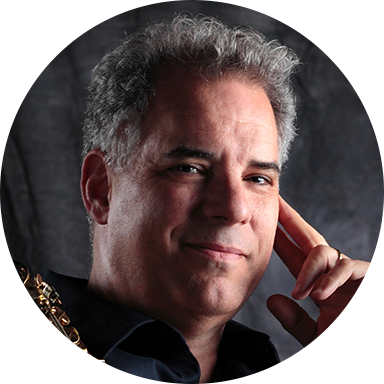
Jim Snidero

Jim Snidero has spent more than three decades establishing himself as a significant voice in jazz composition, arranging, and pedagogy. A alto saxophonist whose mastery earned him recognition from Downbeat Magazine as both a "master musician" and "alto saxophone virtuoso," Snidero's influence extends across the international jazz scene, including a placement in the 2017 Downbeat Critic's Poll.

Snidero's path to New York began in Camp Springs, Maryland, where early mentorship from Phil Woods and studies with Dave Liebman shaped his musical foundation. His arrival in the city at age 23 marked the start of a prolific career: he recorded with Brother Jack McDuff, appeared in the Mingus Big Band, collaborated with Frank Wess and the Toshiko Akiyoshi Jazz Orchestra, and performed on Frank Sinatra's Duets II. As a bandleader, Snidero has built a substantial discography spanning multiple decades, marked by consistency and stylistic range across labels including Criss Cross and others.

Why we love this

Eric Alexander's tenor saxophone performance on the recorded etudes cuts through with the kind of clarity and swing that makes students understand immediately what "jazz phrasing" actually means rather than just reading about it. The rhythm section anchoring these tracks represents serious musicianship, so your students aren't learning from a backing track but from a genuine conversation between musicians. The dual versions of each etude give you flexibility: use the full version to absorb the language, then strip it down and let your students own the solo line.

What to expect

Straightforward and grounded. These etudes stay close to the harmonic and rhythmic conventions of blues and standard changes, giving your students the vocabulary they need to move through jazz material with confidence. The recorded performances swing naturally without flash, making the music feel attainable rather than intimidating.

Who it's for

Tenor and soprano saxophone players in the easy-intermediate range who are encountering jazz style for the first time and need both the written page and the aural model to understand how blues and standard progressions actually sound. Teachers seeking a structured, method-based introduction to jazz phrasing and articulation that doesn't rely on improvisation as the entry point.

How to get the most out of it

  • Listen to the recorded etudes multiple times before attempting to play along. Notice how Eric Alexander phrases across the bar line and anticipates the harmonic movement; this is the curriculum that can't exist on the page alone.
  • Lock into the rhythm section's pocket during playback rather than rushing ahead. The bass line and drum comping will reveal where the beat really lives in a jazz context.
  • Work through the etudes slowly at first, focusing on the articulation and note choice rather than matching the tempo. Speed comes once the language sits in your ear.
  • Sing the melody on a neutral syllable before playing it. This reinforces the interval relationships and helps you hear the shape of the phrase.

How to use it

Slot this into your curriculum during the early spring when students are developing reading fluency and can benefit from exposure to new phrasing conventions. The 15 etudes work well as a sequence within a single semester, or you can pull individual pieces to precede full-length jazz arrangements at the end of the year. For jazz bands just beginning to work with student soloists, these serve as a practical foundation before tackling ensemble repertoire.

Skills your students will build

  • Reading and performing jazz articulation (tonguing styles, swing eighth notes)
  • Understanding blues and ii-V-I progressions in practical context
  • Phrasing across bar lines and responding to harmonic rhythm
  • Listening for and matching the swing feel and rhythmic placement of a recorded soloist
  • Building independence from a written melody toward stylistic interpretation

You May Also Like