Easy Jazz Conception: Baritone Saxophone Cover Image

Easy Jazz Conception: Baritone Saxophone: Saxophone Book & CD

$24.95 USD
Sale price  $24.95 USD Regular price 
Skip to product information
Easy Jazz Conception: Baritone Saxophone Cover Image

Easy Jazz Conception: Baritone Saxophone: Saxophone Book & CD

15 Solo Etudes for Jazz Phrasing, Interpretation, and Improvisation

By Jim Snidero

Item: 01-ADV14773

$24.95
Shipped

One moment…

Description
A new and exciting way for baritone saxophone players to learn and practice basic jazz style. Easy Jazz Conception: Baritone Saxophone Book & CD features 15 solo etudes based on blues and standard chord progressions, demonstrated by Scott Robinson on baritone saxophone along with a world-class rhythm section: Mike LeDonne, piano; Peter Washington, bass; and Kenny Washington, drums. The recording features two separate versions of each etude: one with the soloist and rhythm section and one with the rhythm section only. See and hear how the soloist phrases, play with or without the soloist on the CD and learn basic jazz style first-hand.

Titles include: Basie's Blues * Bird's Backyard * Bossa at Night * Caliente Blues * Duke's Convoy * Hot and Humid * Important Events * Love Is Easy * Mist and Grits * Morning Calm * Prince Charming * Rock On * Shufflin' in F * So Long Birdie * Us.

Easy Jazz Conception: Baritone Saxophone: Saxophone Book & CD isn't in MakeMusic Cloud just yet...but it could be. Let us know you'd like to see it, and you'll help shape what comes next. In the meantime, start a free trial and dive into thousands of interactive titles your students can play along with today.

Sample Pages

Sample Audio

track 1

0:00
0:00
Sample Video
Additional Details
Series: Advance Music: Easy Jazz Conception
Publisher: Advance Music
UPC: 805095147735
SKU: 01-ADV14773

More about this title

About the Author: Jim Snidero
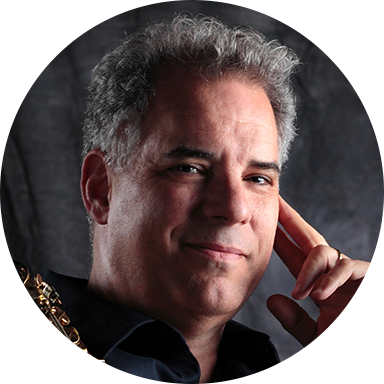
Jim Snidero

Jim Snidero has spent more than three decades establishing himself as one of the most respected alto saxophonists in contemporary jazz. Downbeat Magazine has recognized him as both a "master musician" and "alto saxophone virtuoso," and his placement in the 2017 Downbeat Critic's Poll underscores his lasting influence on the international jazz scene.

After studying with Phil Woods and Dave Liebman, and performing with the One O'Clock Lab Band at the University of North Texas, Snidero moved to New York in 1981 and quickly built a reputation through sideman work with Brother Jack McDuff, the Mingus Big Band, Frank Wess, Toshiko Akiyoshi, and others. His recorded output as a leader spans decades of stylistic range and musical substance, including landmark releases like Mixed Bag and Blue Afternoon that earned him recognition as one of jazz's most consistent voices.

Why we love this

Snidero designed these etudes around the actual harmonic language of jazz standards and blues forms, so students aren't just practicing scales over changes, they're absorbing the phrasing and melodic thinking of a working professional. The dual-track format (with and without the soloist) lets players hear exactly how interpretation sits against a swinging rhythm section before stepping into that role themselves, making the learning process transparent and direct.

What to expect

These etudes have the working swagger of real jazz without overcomplicating things. Built on blues grooves and familiar harmonic territory, they sit comfortably under the fingers while the accompaniment, anchored by Peter Washington's solid bass lines and Kenny Washington's responsive drumming, pushes you to swing with conviction.

Who it's for

Baritone saxophonists moving from classical or concert band settings into jazz for the first time, as well as intermediate players looking to strengthen their foundation in blues and standard changes. Any student ready to move beyond generic chord progressions and learn from a working professional's actual phrasing and sound.

How to get the most out of it

  • Listen through both versions of each etude before attempting to play along. Notice where Robinson breathes, how he sits relative to the beat, and which chord tones he emphasizes in his lines.
  • Sing each melody first without the CD. Once it lives in your voice, add the accompaniment and focus on matching Robinson's tone color and articulation.
  • Play the rhythm-section-only tracks repeatedly until the harmonic movement feels intuitive. This builds the ear faster than counting changes on paper.
  • Record yourself playing each etude and compare directly to Robinson's version. The small details in swing feel and note placement become obvious when you hear them side by side.

How to use it

Ideal for winter sectionals or individual practice assignments when you want baritone players developing jazz literacy independently from the main ensemble. You could also excerpt these as listening examples during a jazz history unit, letting students track Robinson's approach across different harmonic contexts before attempting their own solos.

Skills your students will build

  • Phrasing over blues and ii-V-I progressions
  • Swing articulation and rhythm feel
  • Call-and-response listening with a professional model
  • Interpreting chord changes through melody rather than notation
  • Balancing rhythmic flexibility with ensemble synchronization

You May Also Like