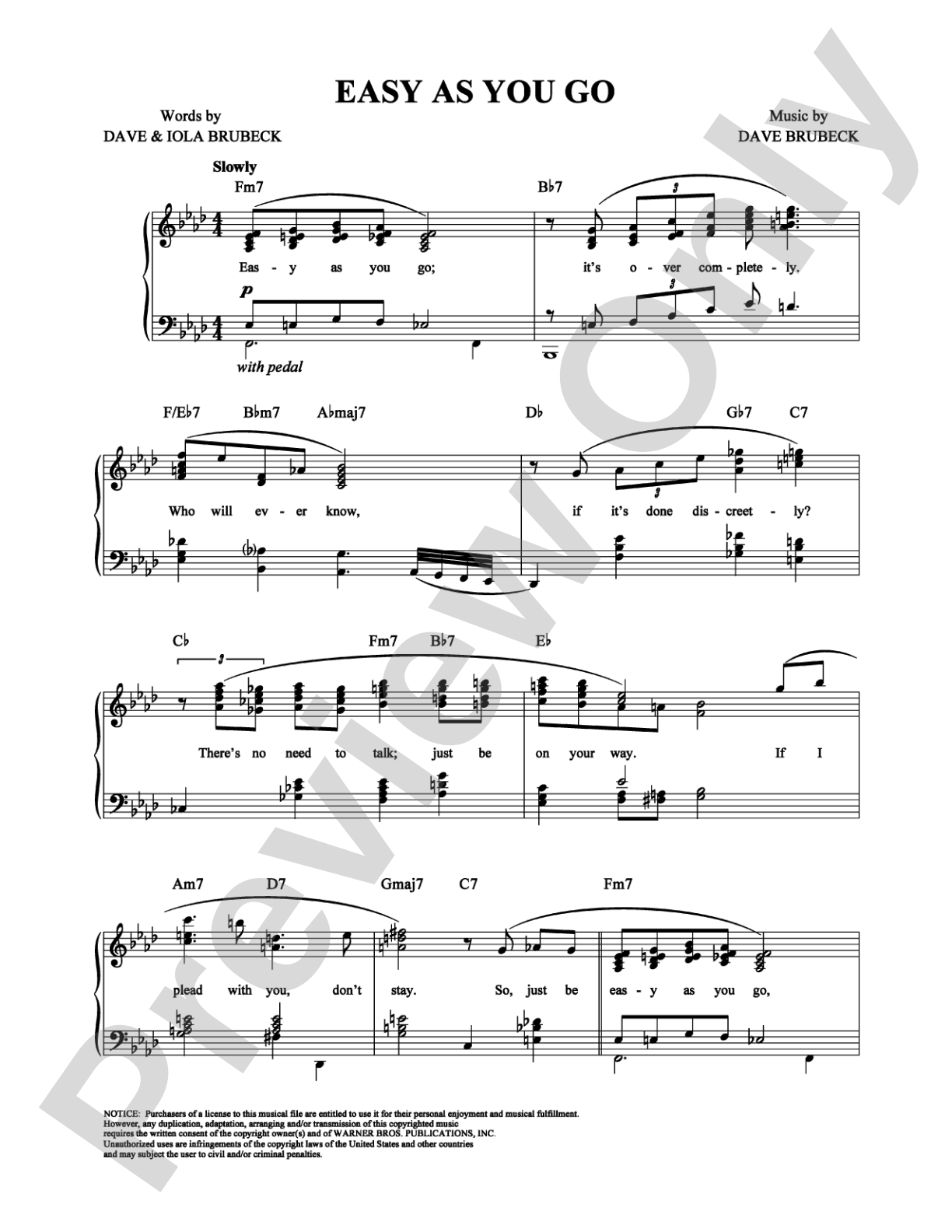
Easy As You Go: Piano/Vocal/Chords Digital Sheet Music

Easy As You Go: Piano/Vocal/Chords Digital Sheet Music

Dave Brubeck

Item: 00-PS-0000752

Digital Download
$3.99
Description

Easy As You Go: Piano/Vocal/Chords Digital Sheet Music isn't in MakeMusic Cloud just yet...but it could be. Let us know you'd like to see it, and you'll help shape what comes next. In the meantime, start a free trial and dive into thousands of interactive titles your students can play along with today.

Sample Audio
No sample audio found.
Sample Video
Additional Details
SKU: 00-PS-0000752

More about this title

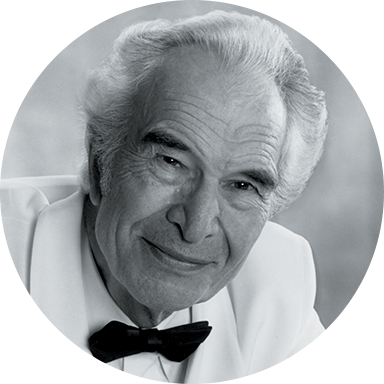
About the Artist: Dave Brubeck

Dave Brubeck

Dave Brubeck shaped modern jazz through both performance and composition. A pianist whose improvisational command was matched by his gift for structured, notated works, he created across multiple idioms: choral pieces, hymns, orchestral works, chamber music, and solo repertoire for piano, violin, and voice. His album "Time Out" became the first jazz recording to sell over a million copies, and "Take Five" remains a cultural landmark. Beyond music, Brubeck was a champion of racial integration in mid-twentieth-century America, using his platform and artistry to advance social change.

Brubeck's compositional voice drew from both classical and jazz vocabularies, a path encouraged by his studies with Darius Milhaud at Mills College following World War II. His sacred works—including the mass "To Hope!" and oratorios like "The Voice of the Holy Spirit" and "Beloved Son"—have been recorded by major ensembles including the London Symphony Orchestra and performed worldwide. Recognition came throughout his career in the form of a Grammy Lifetime Achievement Award, the Presidential Medal of the Arts, and induction into the American Classical Music Hall of Fame.

Why we love this

Brubeck's jazz standards offer pianists and singers an accessible entry point into authentic jazz repertoire without sacrificing musical sophistication. The combination of melody, chord changes, and vocal line in this digital format makes it practical for solo performers, duos, or teaching contexts where you want to develop jazz vocabulary and interpretation skills. His voice as a composer brings harmonic depth and melodic integrity that rewards repeated study.

What to expect

There's an easiness to this tune that belies its sophistication. The melody unfolds conversationally, supported by harmonies that feel inevitable yet full of subtle color, inviting both pianist and vocalist into a collaborative groove that feels less like concert performance and more like intimate musical conversation.

Who it's for

Pianists exploring jazz standards and singers looking for repertoire that bridges popular and art song traditions will find a natural fit here. Music teachers working with students at the intermediate level can use this to introduce chord-reading, jazz phrasing, and the interplay between voice and accompaniment in a real performance context.

How to get the most out of it

  • Treat the chord symbols as a conversation starter rather than law. Brubeck's notated voicings suggest his intentions, but jazz tradition invites you to voice chords in ways that sit comfortably under your hands and support the singer's phrasing.
  • Pay attention to the rhythm section's role. Even in a small ensemble, the piano needs to establish both harmonic and rhythmic clarity; lock into the pulse rather than rushing ahead of it.
  • Let the vocal line breathe. Brubeck wrote melodies that sing naturally, so avoid over-complicating accompaniment rhythms in ways that compete with or crowd the voice.

How to use it

Program this in a jazz or American music concert, or pair it with other standards from the mid-twentieth century to explore continuity in melodic writing. It also works beautifully in a chamber or recital setting where you want to include jazz alongside art songs, demonstrating how Brubeck's compositional thinking transcends genre boundaries.

Skills your students will build

  • Reading jazz chord symbols and building appropriate voicings
  • Singing over chord changes and navigating harmonic movement
  • Rubato and rhythmic flexibility within a steady jazz pulse
  • Communication between vocalist and pianist in ensemble settings
  • Interpreting notation in jazz contexts where standards allow for personalization

You May Also Like