
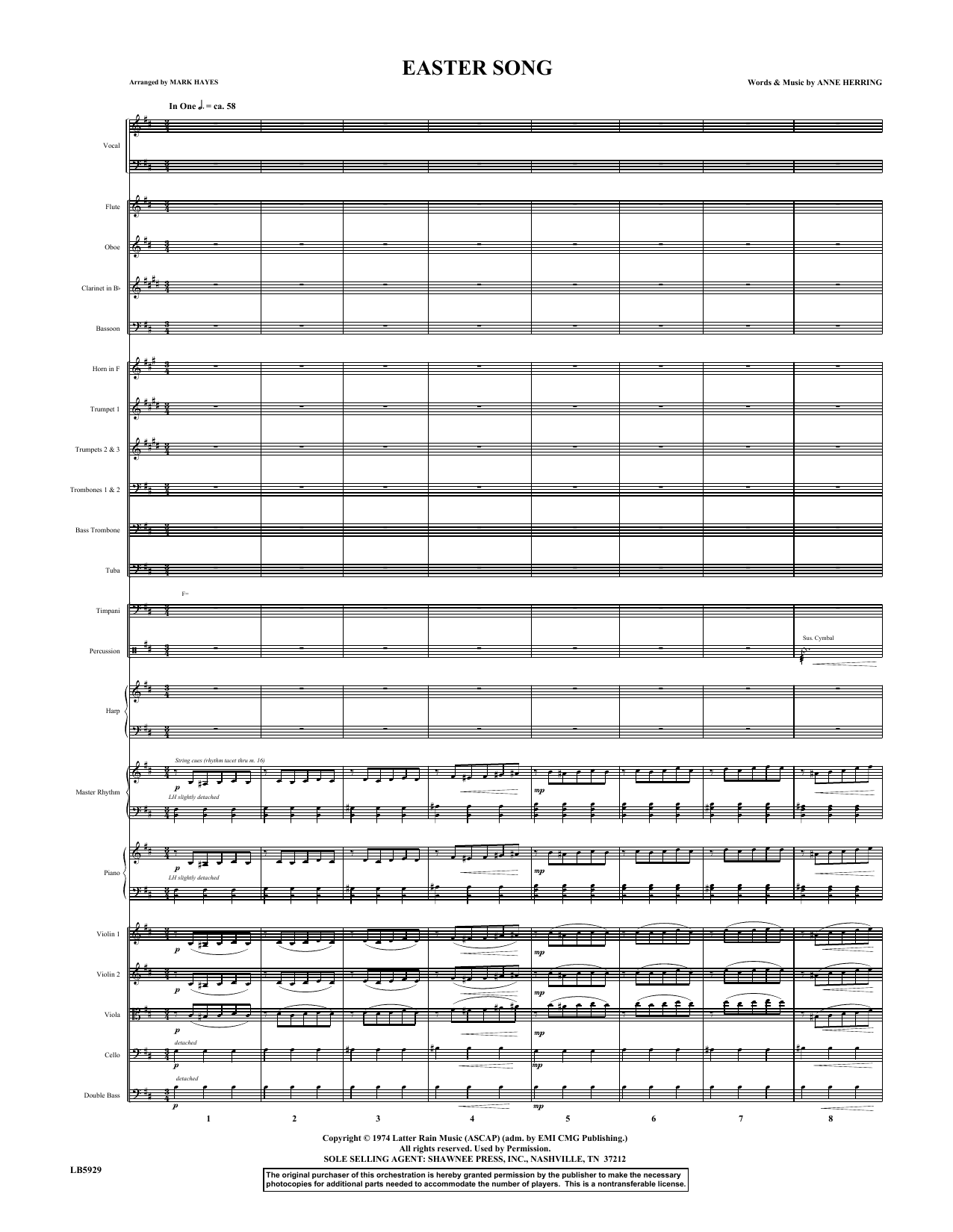

Easter Song: Choral Instrumental Pak
As performed by 2nd Chapter Of Acts / As performed by Glad / Arranged by Mark Hayes
Item: 35-PK00371610
$60.00
Pickup currently not available
Buy Extra Parts (Digital PDF Download)
Parts Added to Cart!
Description
Here is a fresh arrangement of a modern classic. Anne Herring's brilliant contemporary masterpiece is presented fully realized with a rich orchestration by the incomparable Mark Hayes. The neo-classic strains of the song are accentuated by the arranger and
his thoughtful approach will make this anthem resonate in sanctuaries of any worship style.


Easter Song: Choral Instrumental Pak isn't in MakeMusic Cloud just yet...but it could be. Let us know you'd like to see it, and you'll help shape what comes next. In the meantime, start a free trial and dive into thousands of interactive titles your students can play along with today.
Request This Title
Tell us you want it.
Start Your Free Trial
Explore everything that's ready to play right now.
Sample Audio
No sample audio found.
Sample Video
No sample videos found.
Additional Details
Publisher:
Hal Leonard
SKU:
35-PK00371610
More about this title
About the Artist: 2nd Chapter Of Acts
2nd Chapter of Acts emerged from the Jesus movement of the 1970s as one of contemporary Christian music's most influential vocal groups. Founded by Annie Herring along with her siblings, the ensemble pioneered a sound that blended folk sensibility with sophisticated harmonies, creating songs that became cornerstones of modern worship. Their work established a template for how contemporary faith music could achieve both artistic depth and spiritual authenticity.
Their catalog includes numerous songs that have become standards in churches across denominations. "Easter Song" stands as one of their most enduring compositions, capturing the joy and theological weight of resurrection in language that remains fresh decades after its composition. The group's influence on contemporary Christian music education and worship practice continues to shape how music directors approach the integration of modern songs into liturgical settings.
Why we love this
Mark Hayes's orchestration transforms this modern hymn into something that feels both reverent and radiant without sacrificing any of the song's melodic appeal or emotional directness. The arrangement respects the original's accessibility while giving it architectural substance, making it genuinely rewarding for both singers and instrumentalists to perform. Programming this gives you a piece that lands powerfully in any Easter service while demonstrating to your ensemble how a well-crafted arrangement can deepen rather than obscure a beloved song.
What to expect
Bright without being trivial, the piece carries an unshakeable confidence in its central message while maintaining musical elegance. Hayes's orchestration shimmers with neo-classical restraint, avoiding the sentimentality trap while keeping the song's celebratory spirit intact. There's a sense of something timeless being affirmed here, rather than chased.
Who it's for
This Pak works for worship leaders seeking a contemporary Easter anthem with genuine musical substance, as well as for choirs that want to feature a modern spiritual classic without resorting to overly simplified arrangements. It's equally suited to church musicians in traditional liturgical settings and those in contemporary worship contexts.
How to get the most out of it
- Balance the chorus texture so the melody stays prominent even when the orchestration builds. Hayes has written generous harmonic support that can easily overshadow the main line if section balances aren't clear from rehearsal one.
- Take time with the orchestral introduction to establish the piece's character. This instrumental opening sets the emotional tone, so your accompaniment musicians need to shape it with intention rather than rushing through to the vocal entry.
- Shape phrases through the text rather than simply by dynamics. The theological arc of the lyrics deserves attention to diction and phrasing that reinforces what's being proclaimed.
- Communicate the neo-classic sensibility Hayes references in his arrangement. This isn't a contemporary pop setting, and the piece benefits from articulation choices and ensemble discipline that honor its harmonic sophistication.
How to use it
Consider this as your lead anthem for Easter morning, where it can open the service or anchor a larger choral moment. The arrangement's formal sophistication also makes it suitable for a spring concert where you want to represent contemporary sacred music alongside more traditional repertoire, demonstrating the depth available in modern spiritual songwriting.
Skills your students will build
- Balancing melody against harmonic accompaniment in contemporary settings
- Phrasing through text and theological content rather than melodic contour alone
- Interpreting neo-classical harmonic language in modern contexts
- Ensemble articulation and diction at moderate to faster tempos