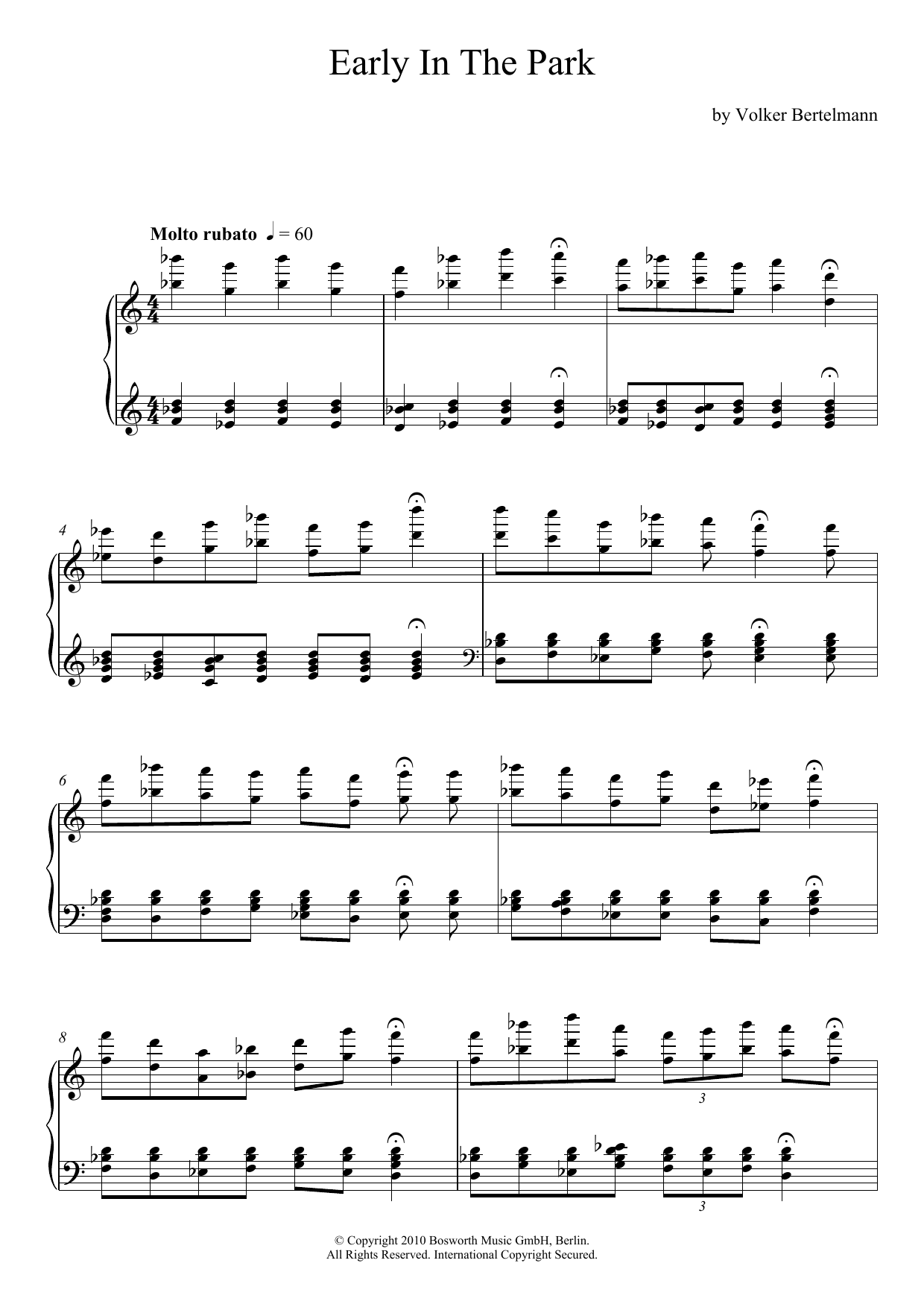
Hauschka is a German composer and pianist known for blending classical training with experimental approaches to the instrument. His work often explores prepared piano techniques and unconventional sound design, creating pieces that sit at the intersection of contemporary classical music and ambient soundscapes.
Why we love this
Hauschka's approach to the solo piano repertoire feels refreshingly direct. The piece unfolds naturally without pretension, offering students a chance to explore contemporary sensibilities while working with accessible materials that reward close listening and subtle control.
What to expect
A contemplative walk through familiar surroundings where small details suddenly matter: light shifting through trees, the texture of a path underfoot, moments of quiet clarity. The music unfolds without urgency, inviting the listener into a world of subtle observation.
Who it's for
Intermediate to advancing pianists seeking contemporary repertoire that prioritizes musicality over technical display. Teachers looking to introduce students to modern compositional thinking will find this accessible yet substantive.
How to get the most out of it
Pay attention to dynamic shaping across longer phrases. The piece relies on gentle shifts in volume and color rather than dramatic gestures, so consistency in touch becomes essential.
Let silence breathe. Resist the urge to fill space; silence is part of the musical architecture here.
Experiment with pedal layering to create depth, especially as textures accumulate. The three pages suggest evolving sonic landscapes rather than static harmonic fields.
How to use it
Position this as a bridge piece between traditional and contemporary concert programming. It works well alongside other modern miniatures or as an intermission piece that signals a shift in mood without jarring the audience.
Skills your students will build
Control of dynamics in the soft to moderate range (pp through mp)
Sustaining musical narrative across a longer form without relying on dramatic variation
Pedal coordination and awareness of harmonic resonance
Touch differentiation for contemporary timbral effects
You May Also Like
Scan to Complete Your Purchase
Use your phone's camera to scan the code below
You'll log in on your phone and the order will be added to your account