
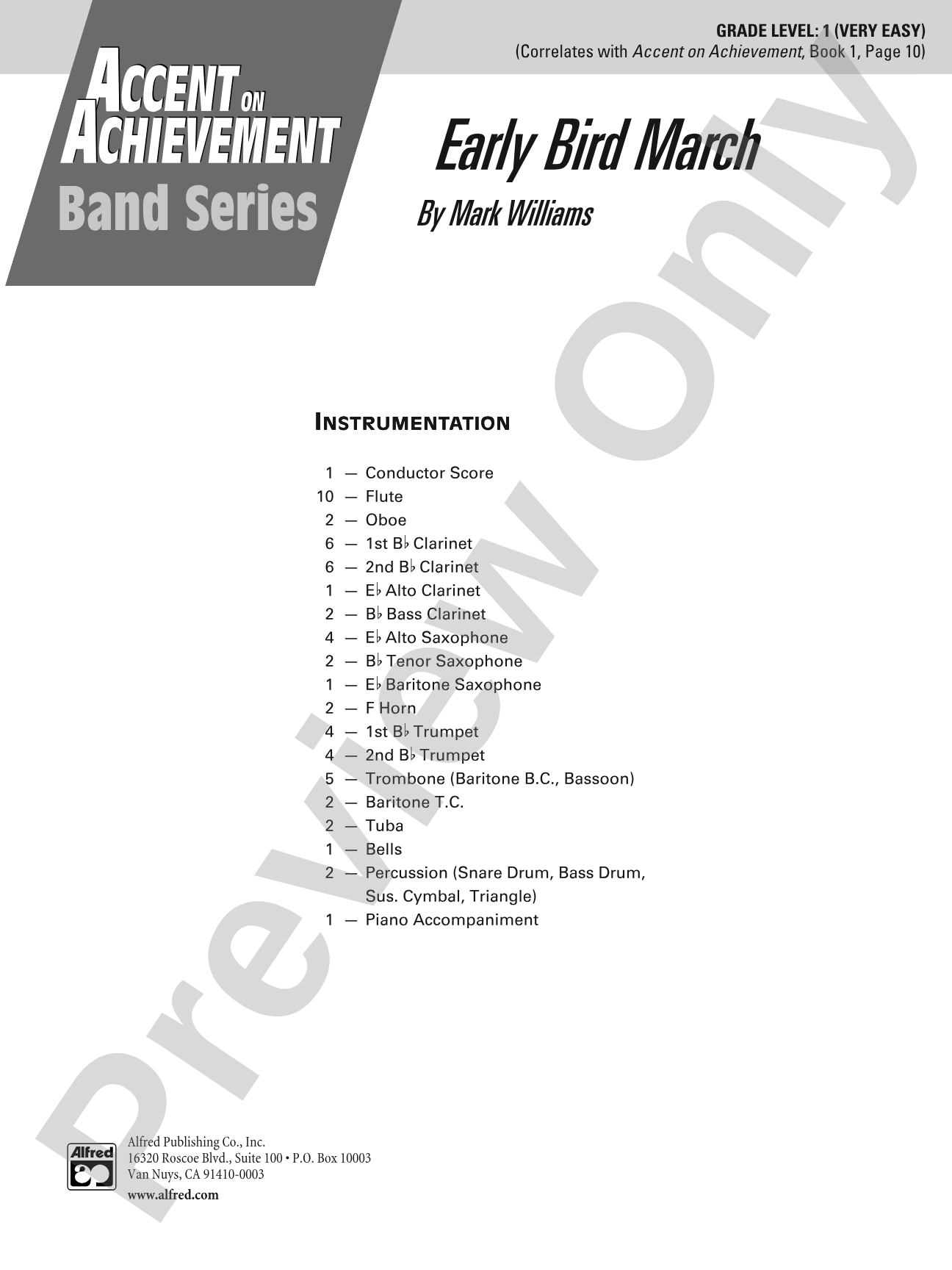
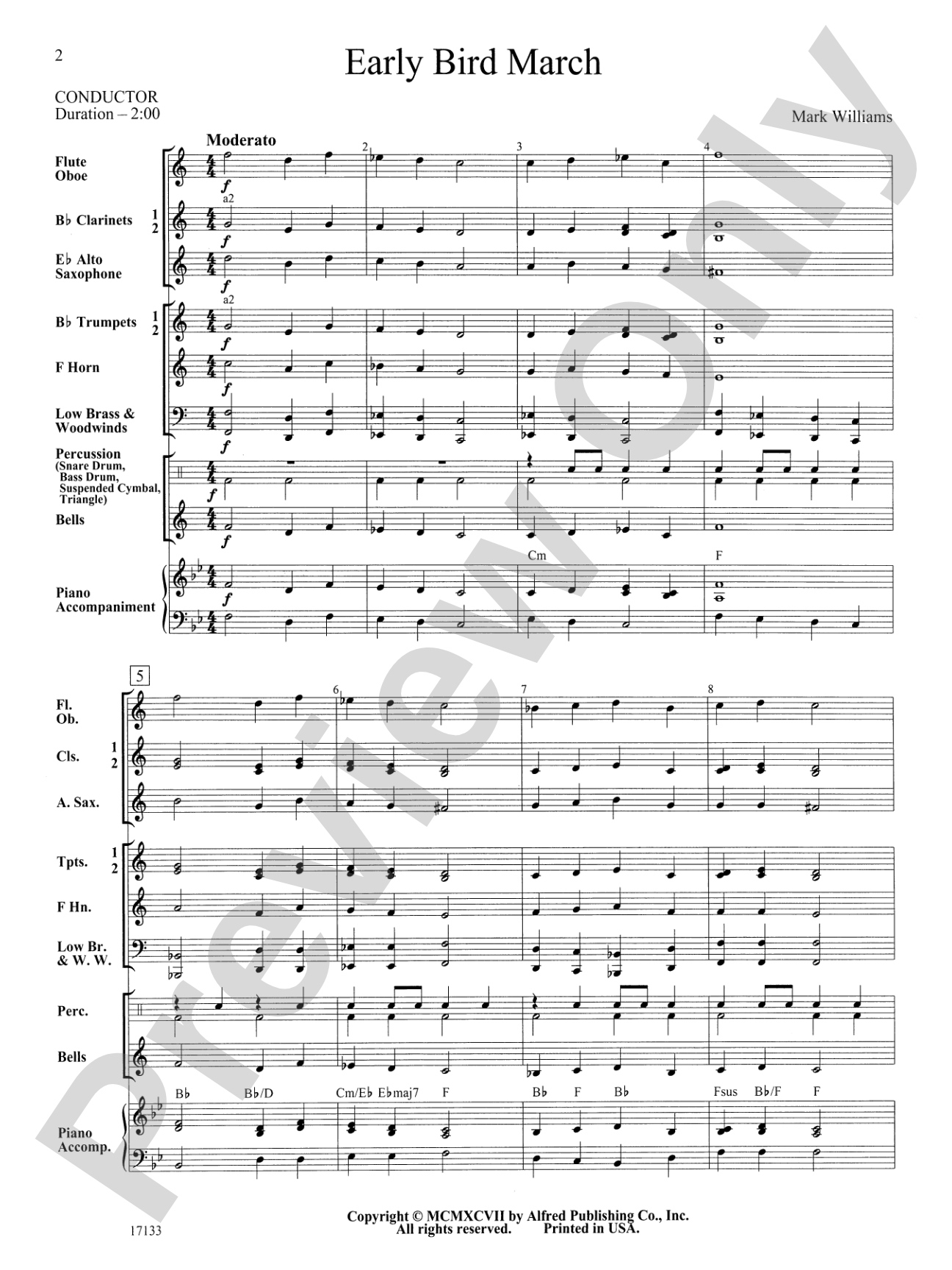
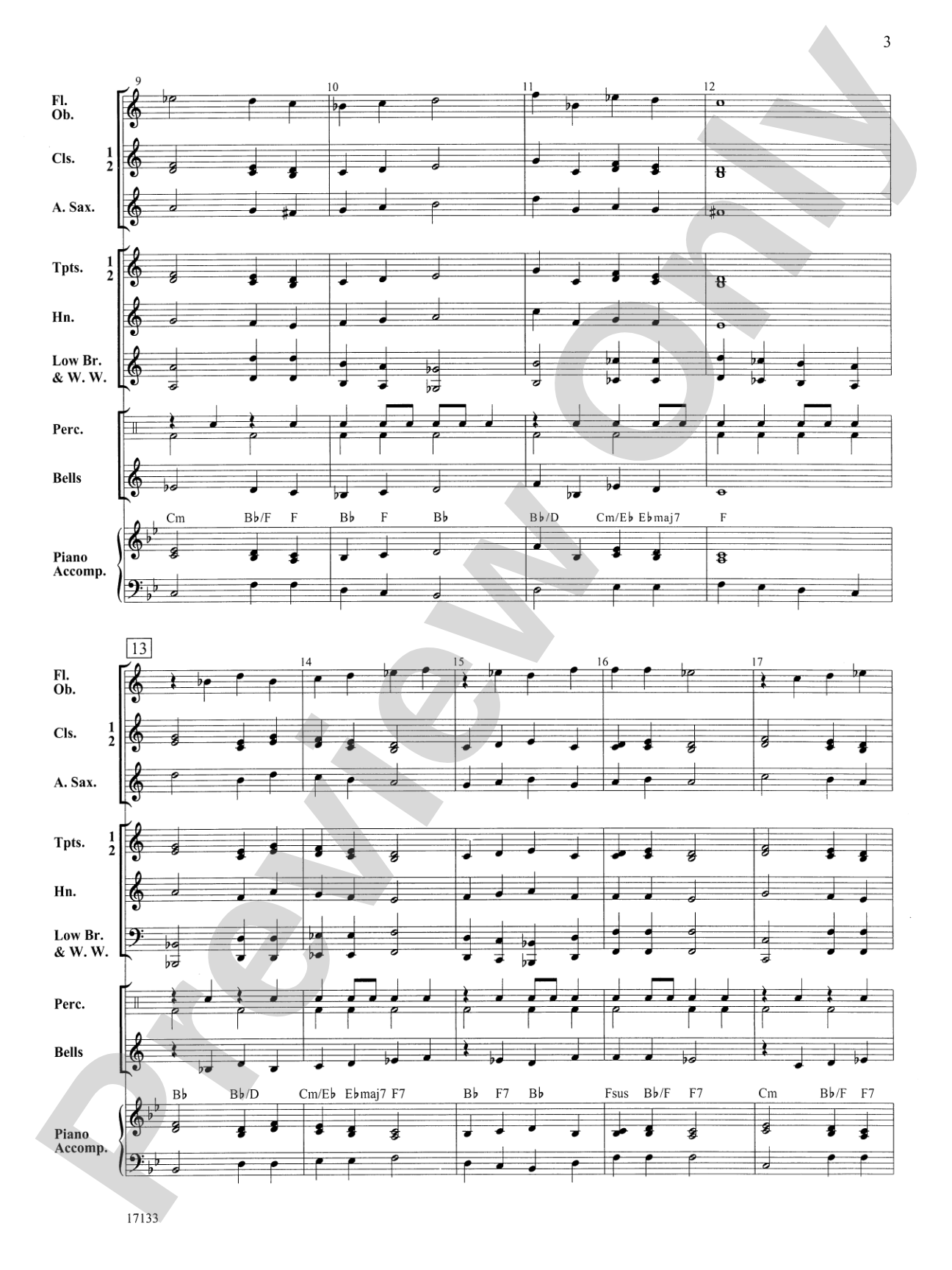
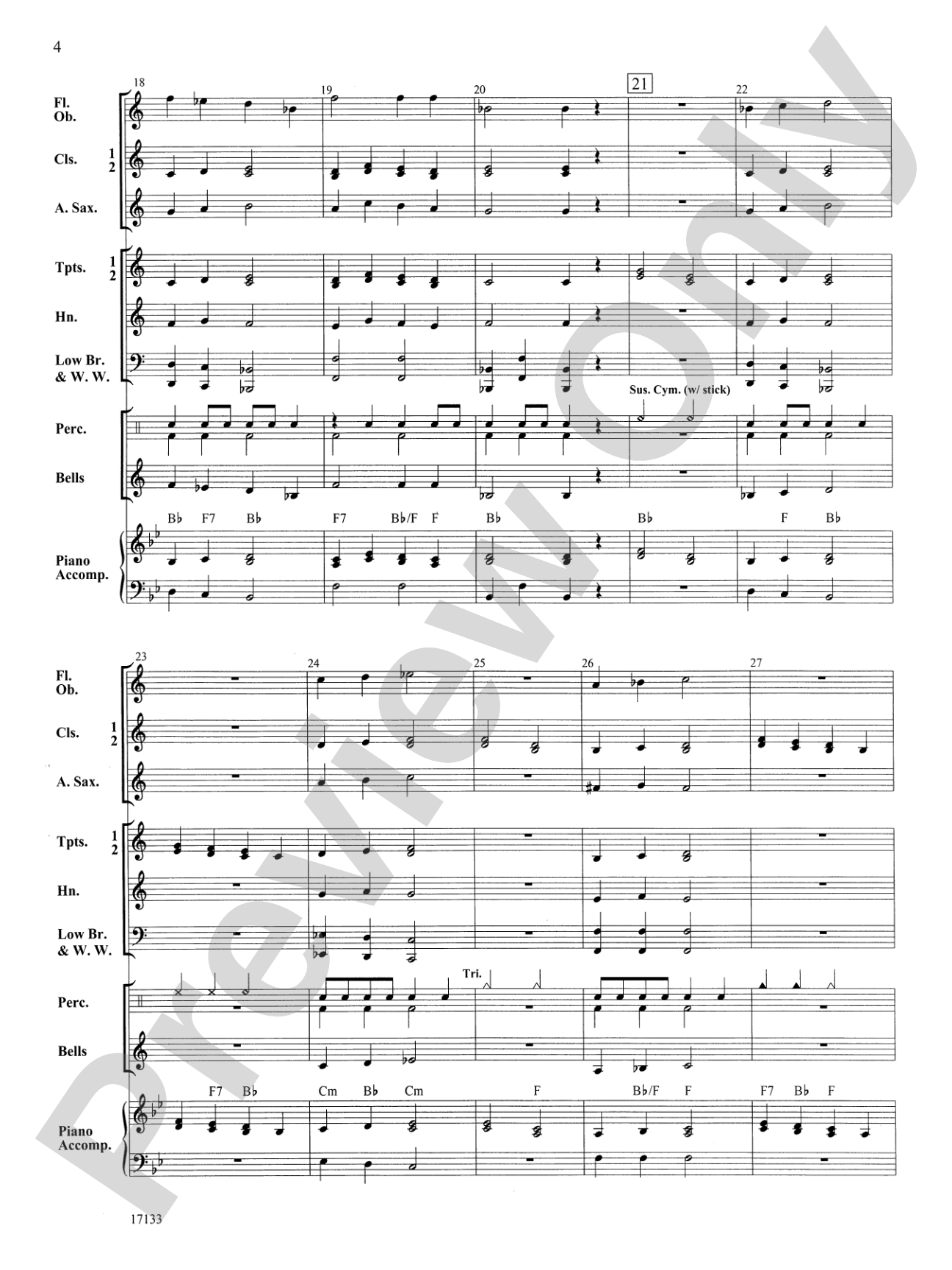
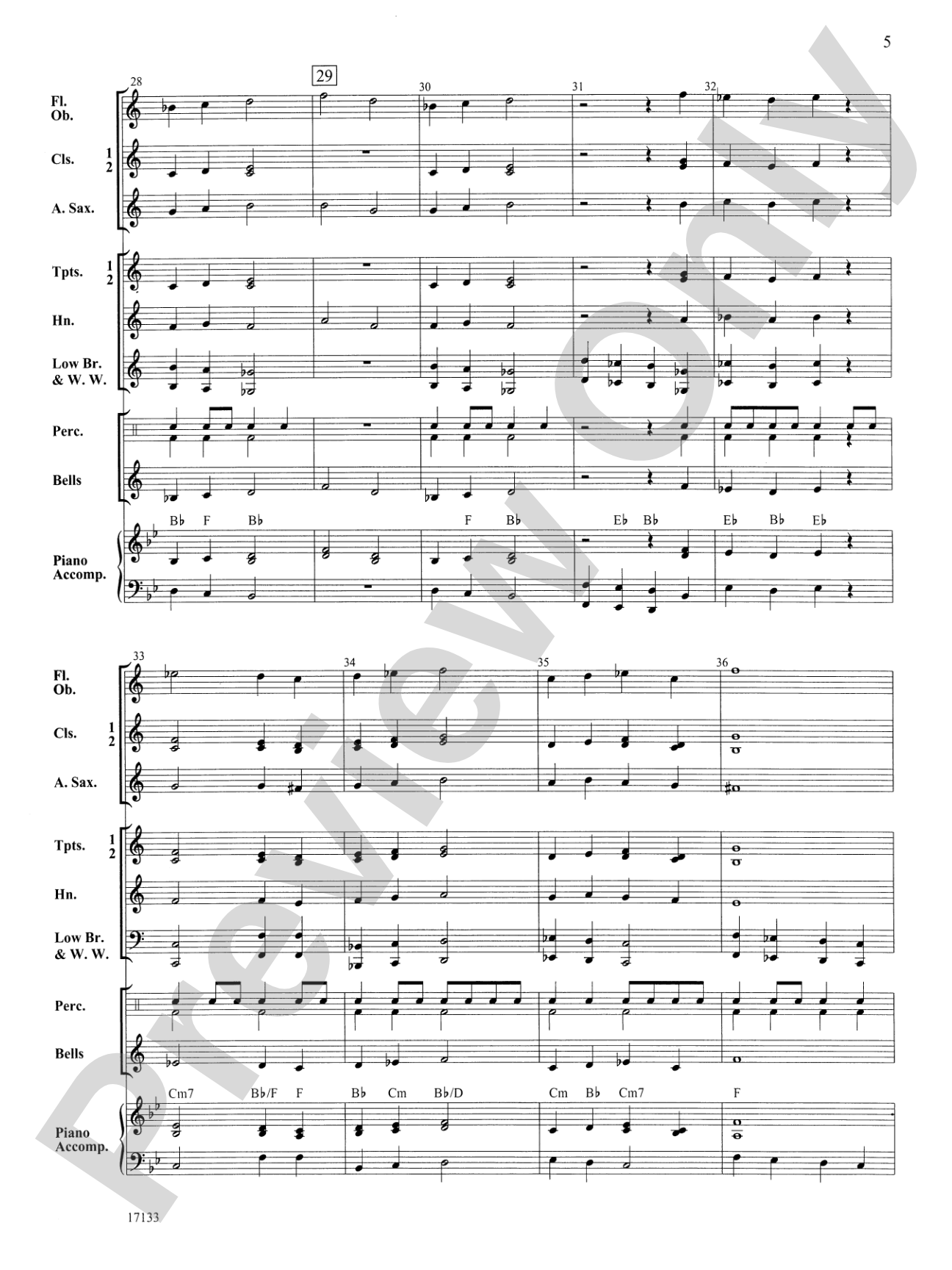
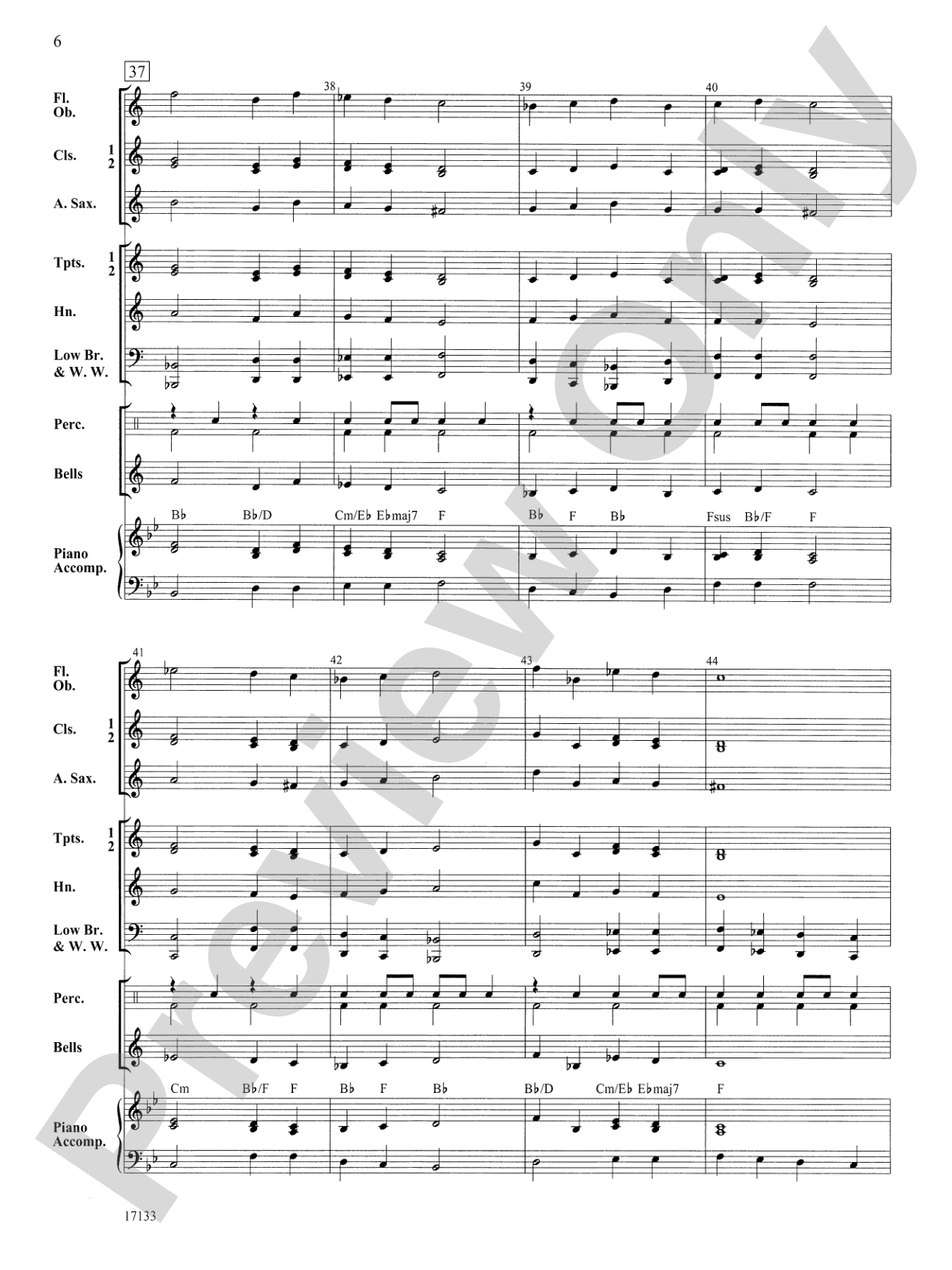
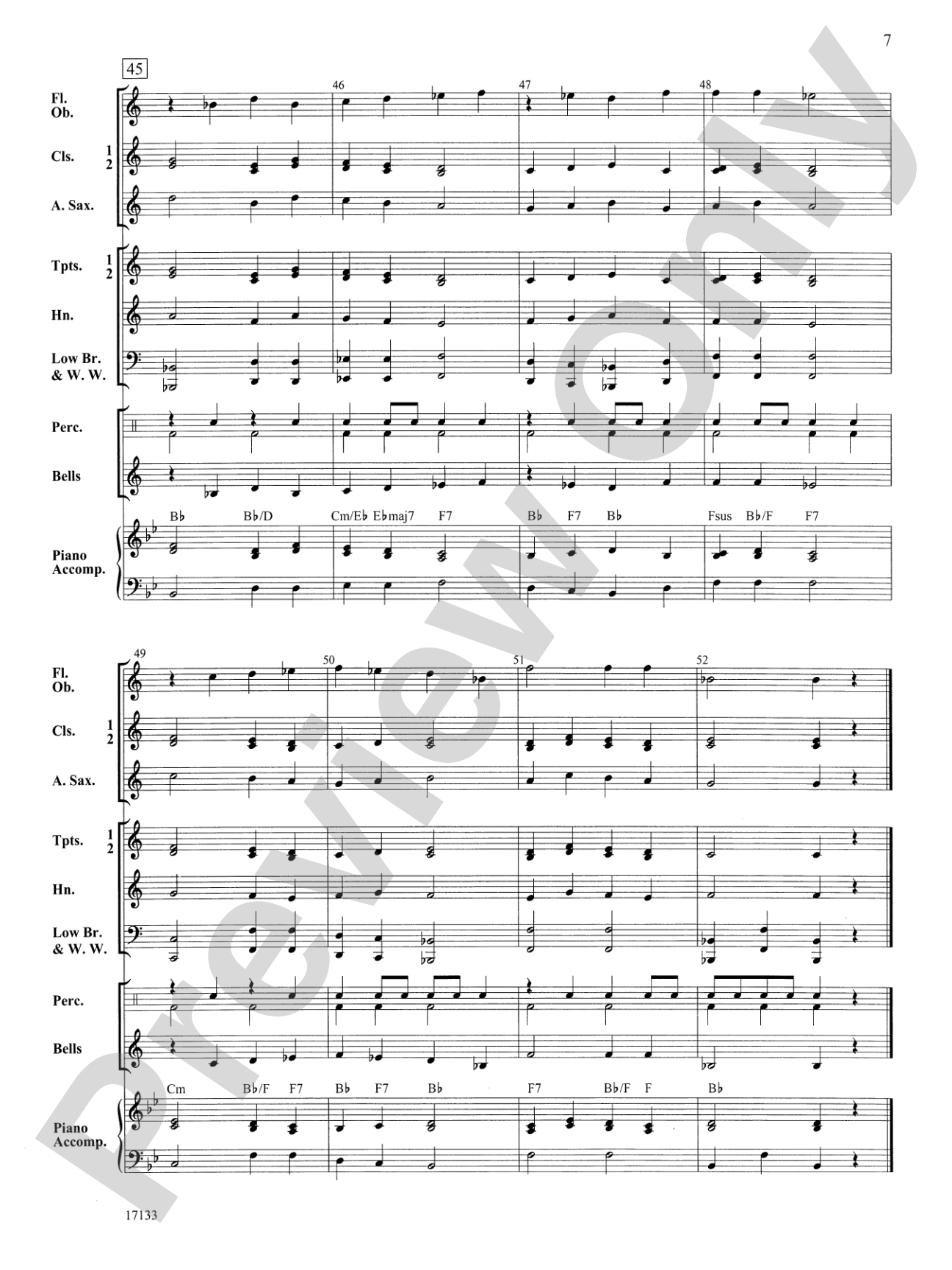


Early Bird March: Concert Band Conductor Score & Parts
By Mark Williams
Grade: 1 (Very Easy)
Item: 00-PK-0000217

$48.00
Pickup currently not available
Buy Extra Parts (Digital PDF Download)
| Product | Price | Quantity |
|---|---|---|
| Early Bird March: Score | $7.00 | |
| Early Bird March: Flute | $5.99 | |
| Early Bird March: Oboe | $5.99 | |
| Early Bird March: 1st B-flat Clarinet | $5.99 | |
| Early Bird March: 2nd B-flat Clarinet | $5.99 | |
| Early Bird March: E-flat Alto Clarinet | $5.99 | |
| Early Bird March: B-flat Bass Clarinet | $5.99 | |
| Early Bird March: E-flat Alto Saxophone | $5.99 | |
| Early Bird March: B-flat Tenor Saxophone | $5.99 | |
| Early Bird March: E-flat Baritone Saxophone | $5.99 | |
| Early Bird March: 1st B-flat Trumpet | $5.99 | |
| Early Bird March: 2nd B-flat Trumpet | $5.99 | |
| Early Bird March: 1st F Horn | $5.99 | |
| Early Bird March: 1st Trombone | $5.99 | |
| Early Bird March: Baritone T.C. | $5.99 | |
| Early Bird March: Tuba | $5.99 | |
| Early Bird March: Bells | $5.99 | |
| Early Bird March: 1st Percussion | $5.99 | |
| Early Bird March: Piano Accompaniment | $5.99 |
Parts Added to Cart!
Description
Using only 6 notes and no eighth notes, this easy march is an ideal choice for that important first concert. You won't believe that a piece this easy could sound this good. Correlated with Accent on Achievement, Book 1, page 10.


Don't just read it, hear it, play along with it, and watch your students grow with it. In MakeMusic Cloud, Early Bird March: Concert Band Conductor Score & Parts comes alive with professional accompaniment, adjustable tempo, and built-in practice tools that turn solo practice into real progress.
Open in the Player
Jump straight in and assign it today.
Start Your Free Trial
Open this title and explore the full library in minutes.
Sample Audio
1
Audio File
--:--
0:00
0:00
Sample Video
No sample videos found.
Additional Details
Series:
Accent on Achievement
Publisher:
Alfred Music
Page Count:
116
SKU:
00-PK-0000217
More about this title
About the Composer: Mark Williams

Mark Williams composed more than 200 works for school bands, orchestras, and choirs during a career that shaped elementary and middle school music programs across North America. A co-author of the Accent on Achievement Band Method, he spent years teaching music in Washington state with a particular focus on building strong elementary band programs. His expertise extended beyond the classroom; he performed bassoon professionally with the 560th Air Force Band and later served as conductor and artistic director for the Spokane British Brass Band.
As a clinician and guest conductor, Williams traveled extensively across 34 states, five Canadian provinces, and Australia, sharing his philosophy of accessible, well-crafted music for young musicians. His contributions to the field earned him recognition including the Western International Band Clinic's Gralia Competition and multiple ASCAP Special Awards. Williams held degrees from Eastern Washington University in music education and demonstrated a lifelong commitment to writing music that young musicians could perform with genuine musicality from their very first concert.
Why we love this
This march proves that constraint breeds clarity. With only six notes and no eighth notes, Williams eliminates every distraction from what matters: solid rhythm, confident pulse, and genuine musical shape. Your band will sound unified and assured from the opening downbeat, giving new musicians their first real experience of corporate musicianship.
What to expect
Straightforward and spirited, Early Bird March moves with purpose and optimism. The writing feels open and uncluttered, letting each player hear themselves in the texture while contributing to something bigger and more formal than they may have attempted before.
Who it's for
This piece is built for musicians at the very start of their band journey, particularly those in their first year of instruction. It works equally well in a grade school setting or as an opening vehicle for a new middle school ensemble learning to play together for the first time.
How to get the most out of it
- Keep the tempo steady and brisk but comfortable; this march breathes best when the pulse feels inevitable rather than rushed.
- Balance the melody across sections so the tune sings clearly while lower voices anchor the foundation without overpowering.
- Mark breath points clearly at rehearsal so players know where the phrase ends, creating natural lift into the next section.
- Let the front row of each section lead the articulation so the ensemble's tonguing settles into one unified approach.
How to use it
Program this as your opening number at a first concert or festival appearance to give young musicians a rousing success from the stage. Its brevity and clarity also make it ideal for community events or assembly performances where you want immediate impact without demanding extensive rehearsal time.
Skills your students will build
- Maintaining steady pulse in a march context
- Balancing volume between melody and harmonic parts
- Breath placement and phrase shaping with limited note material
- Unified articulation across a full ensemble
- Reading basic conductor gestures while playing