
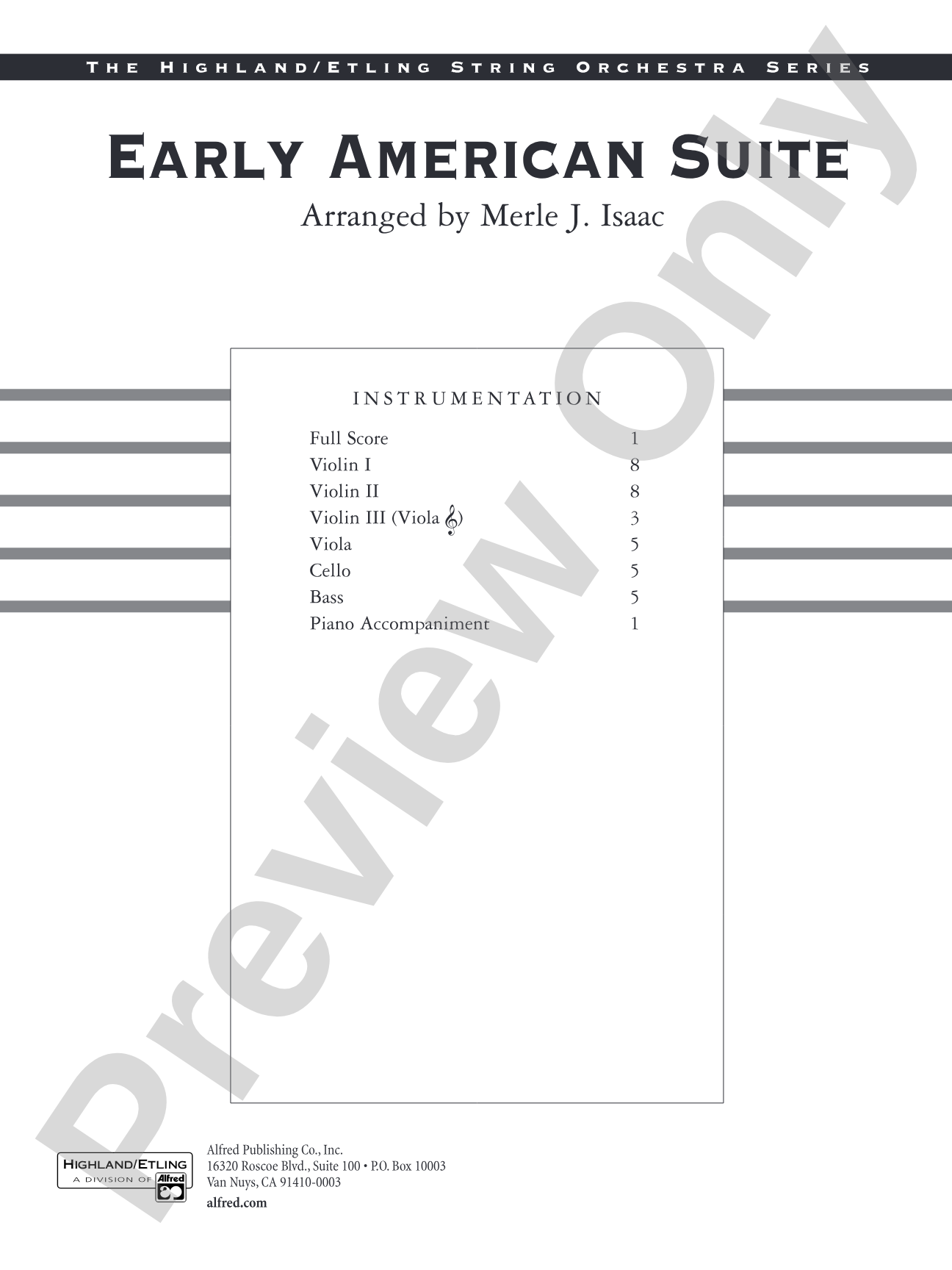
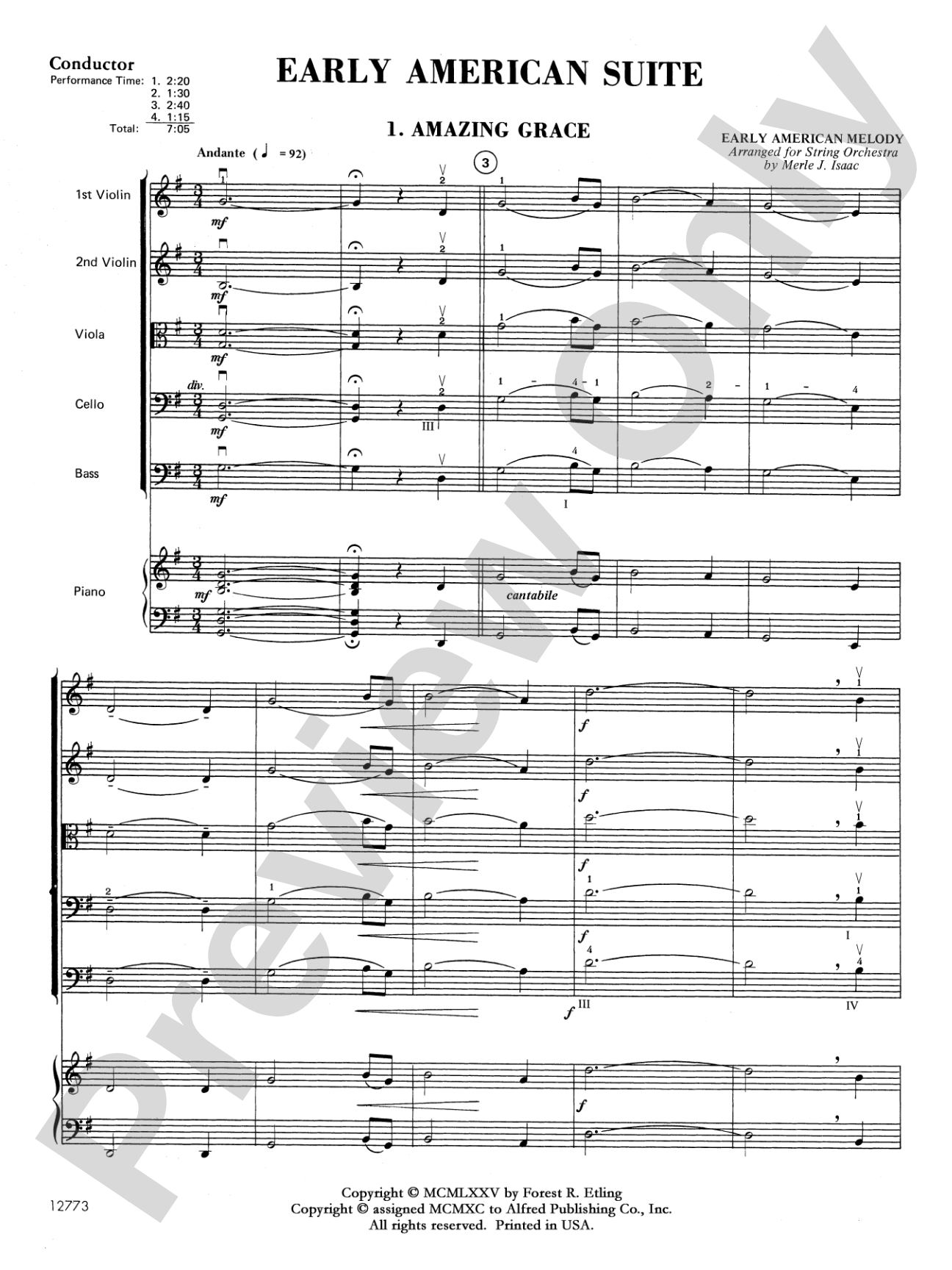
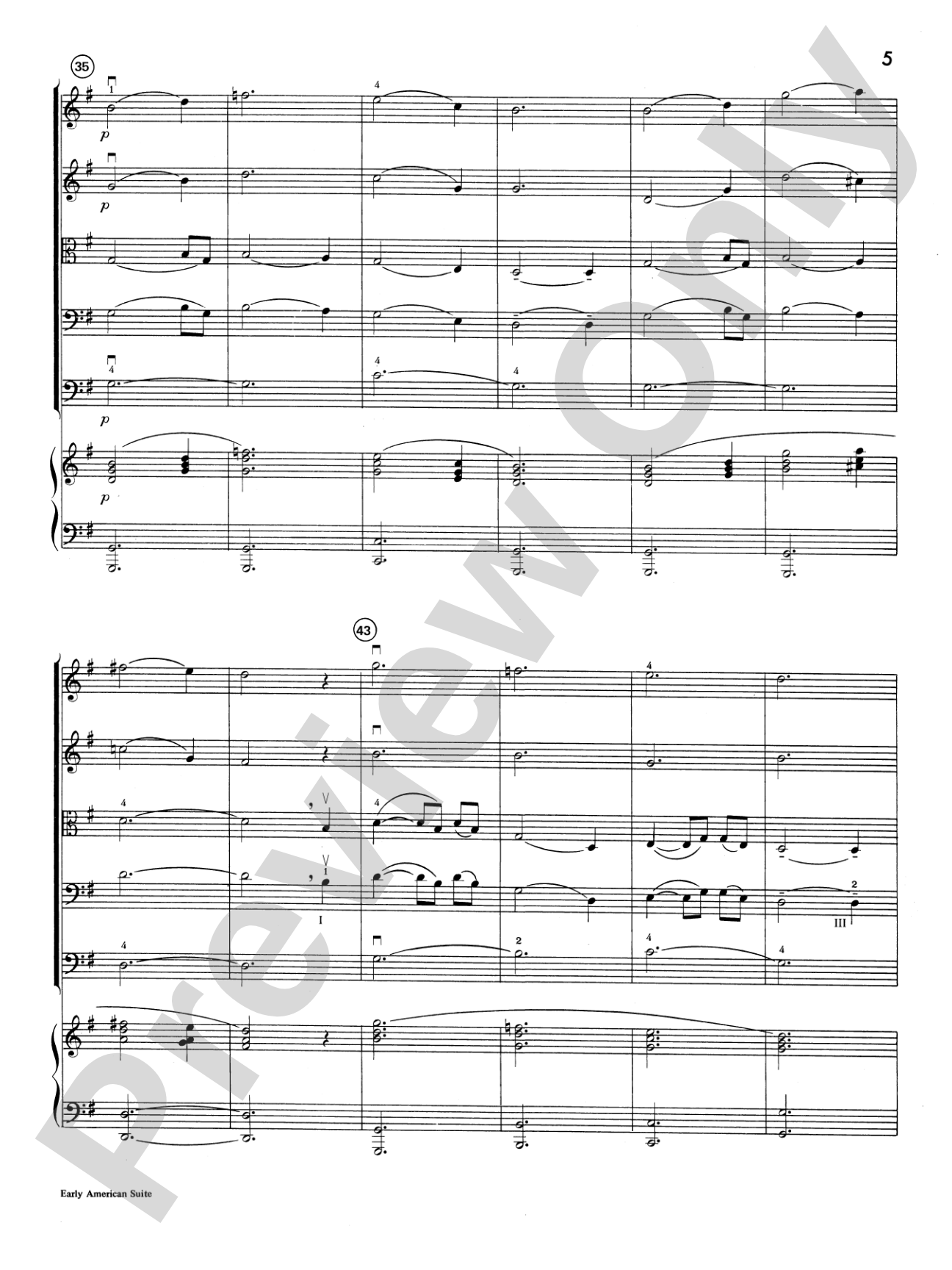
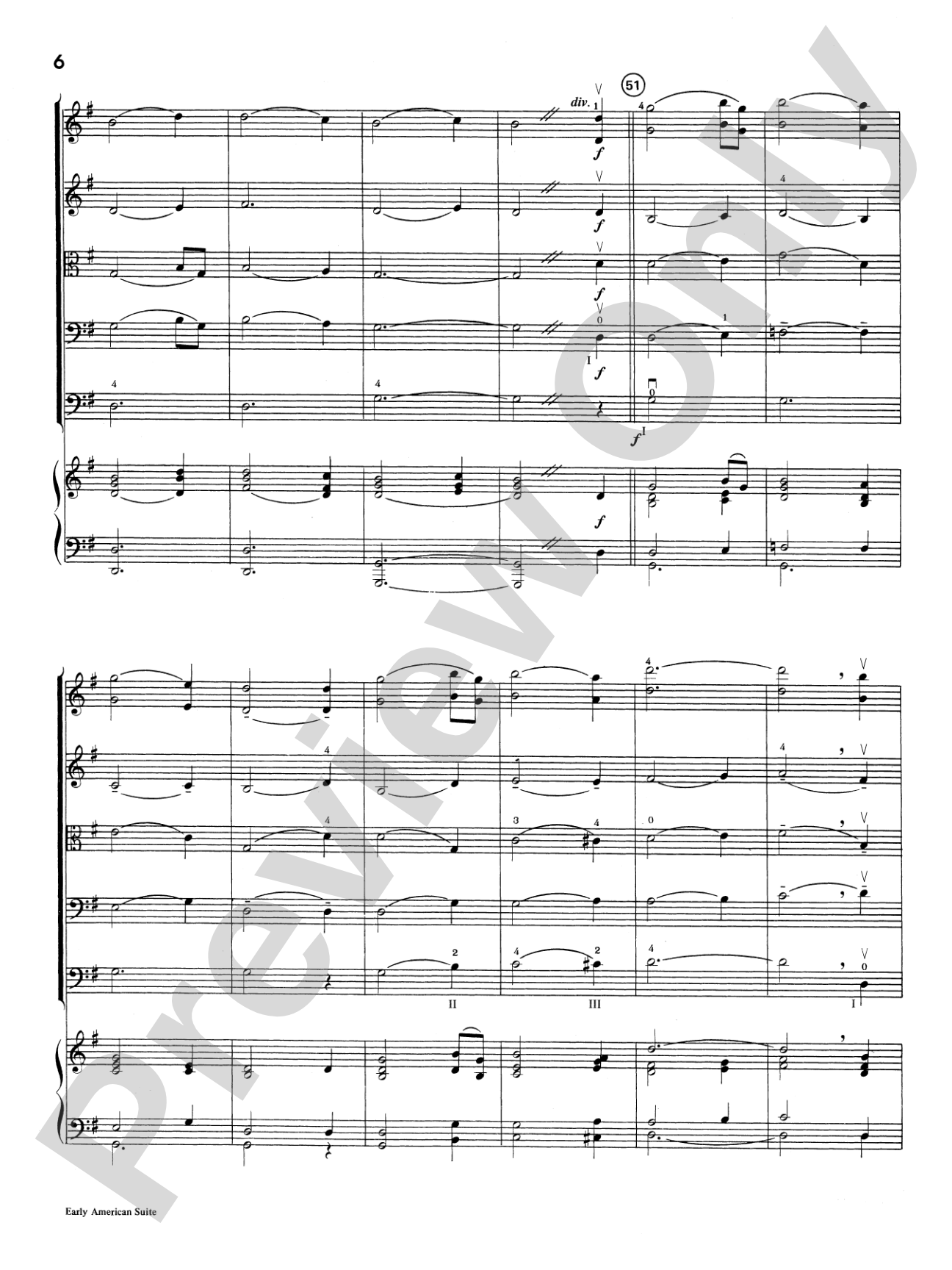
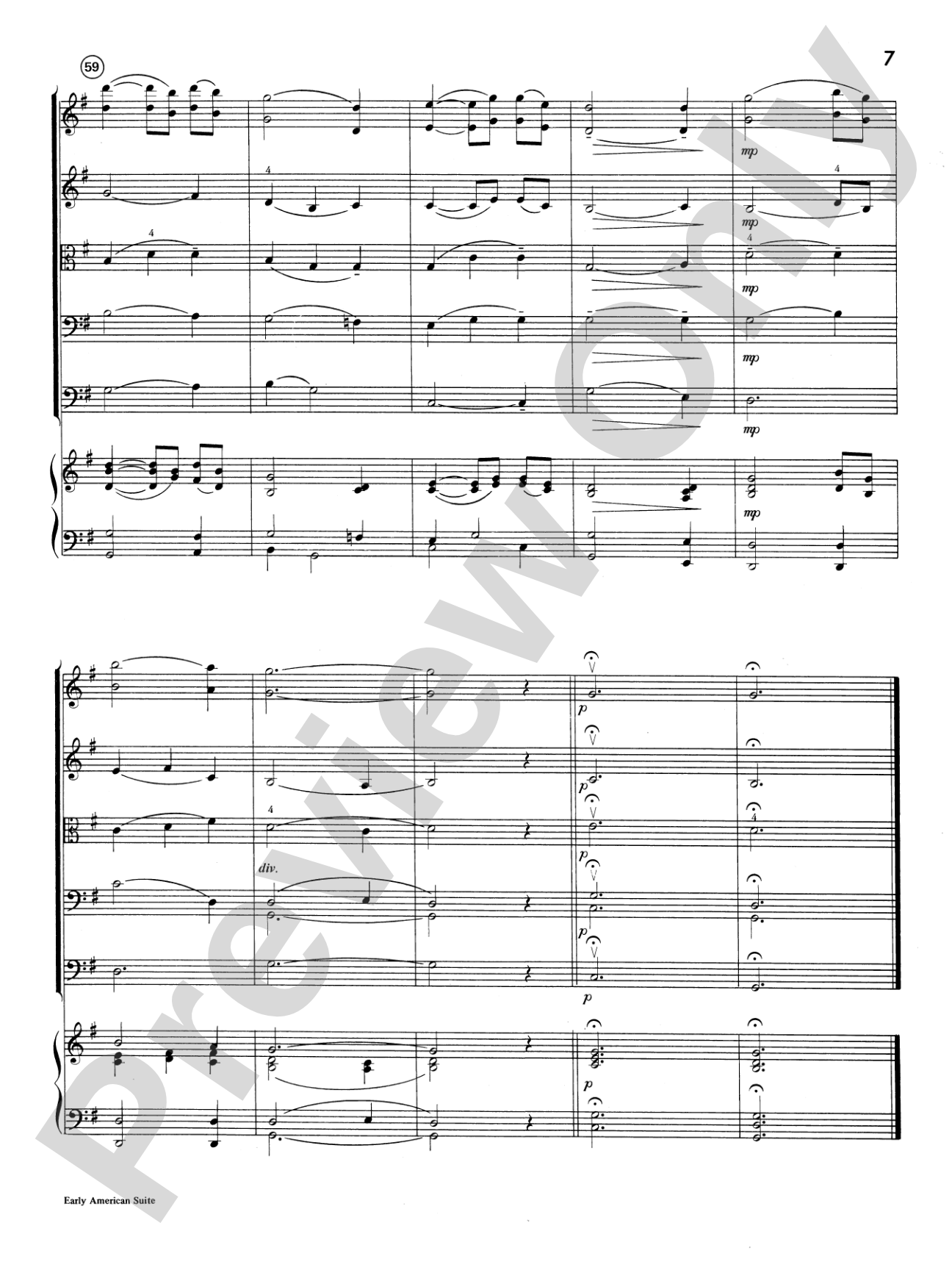
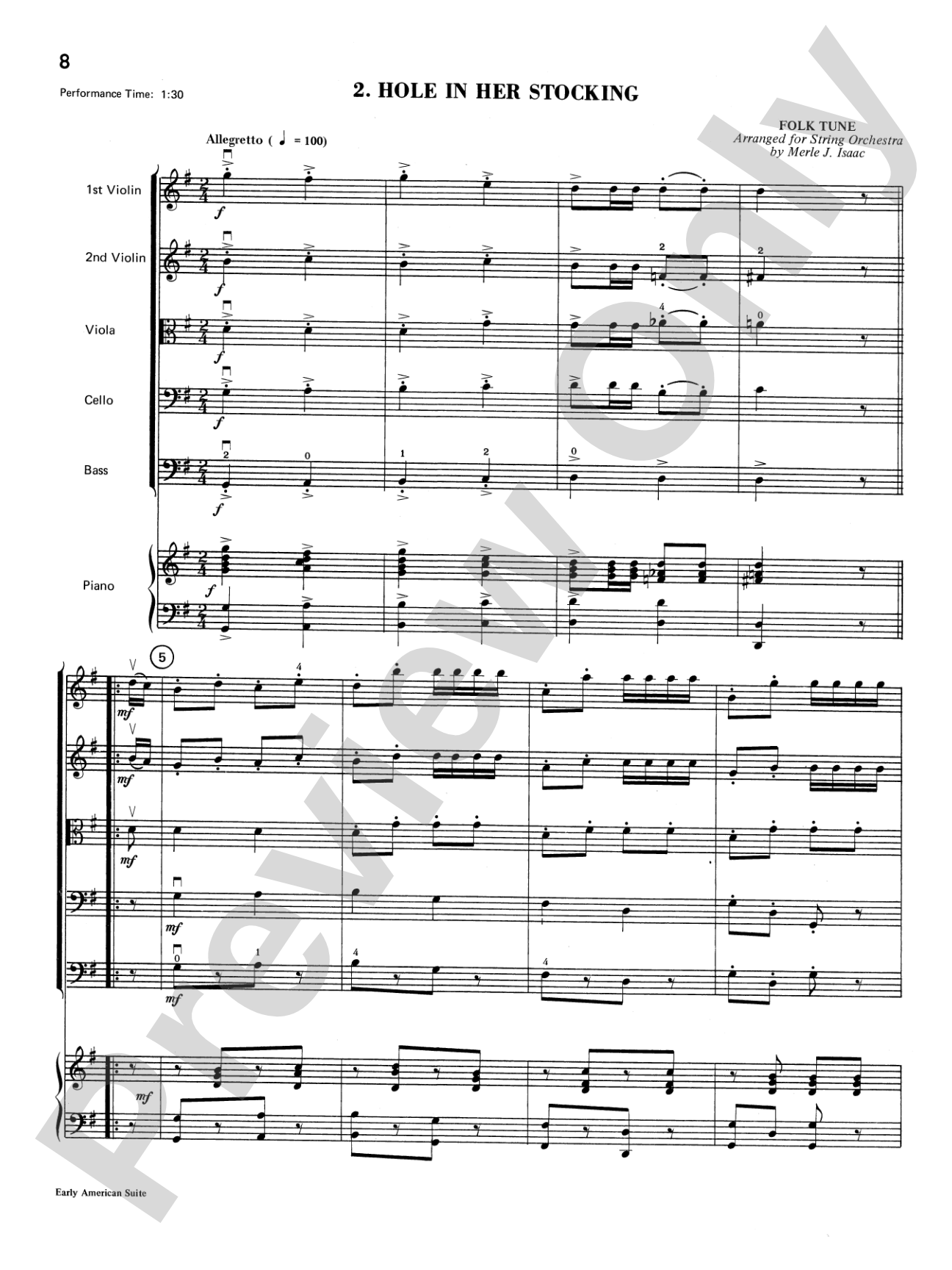
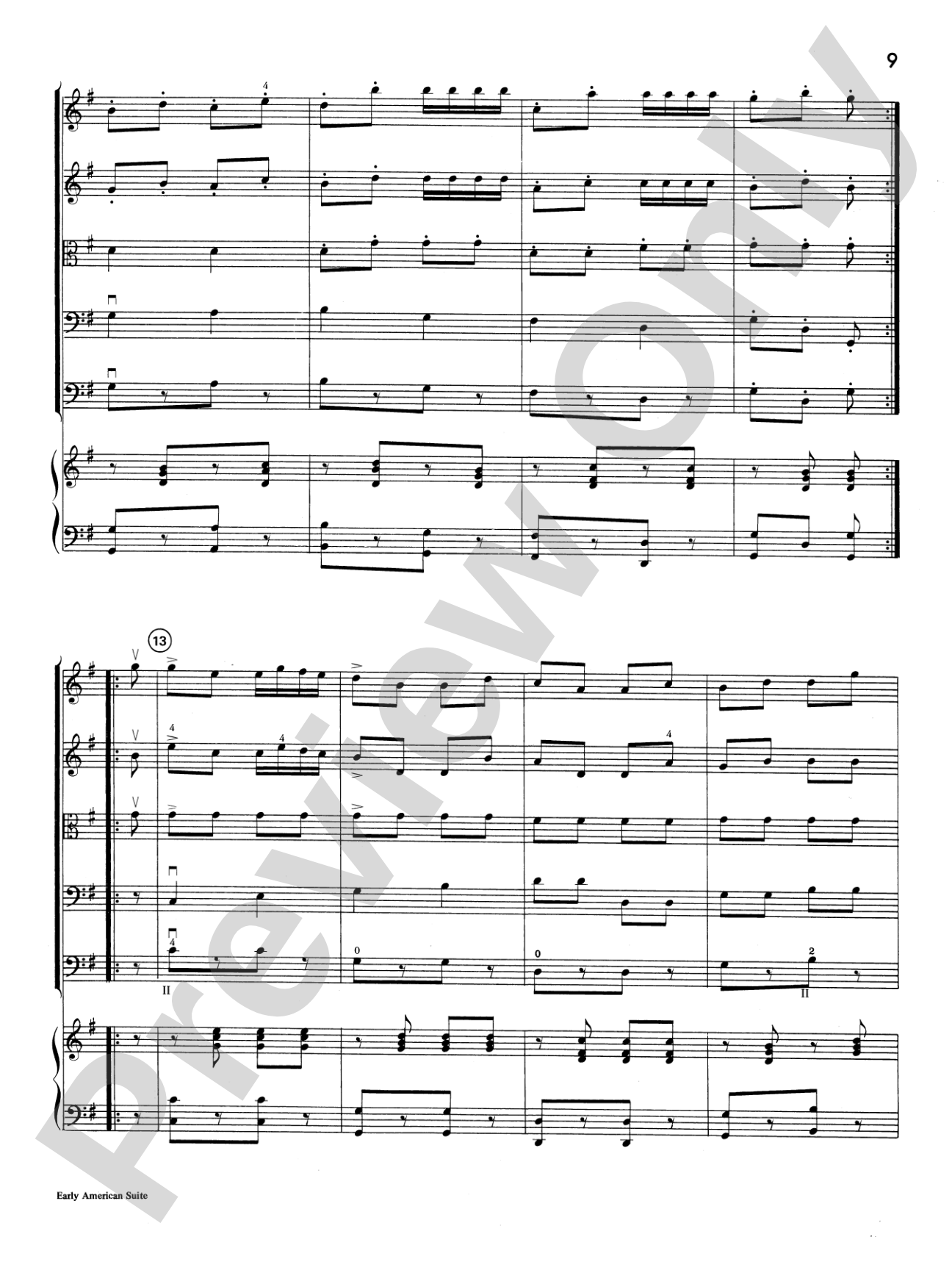
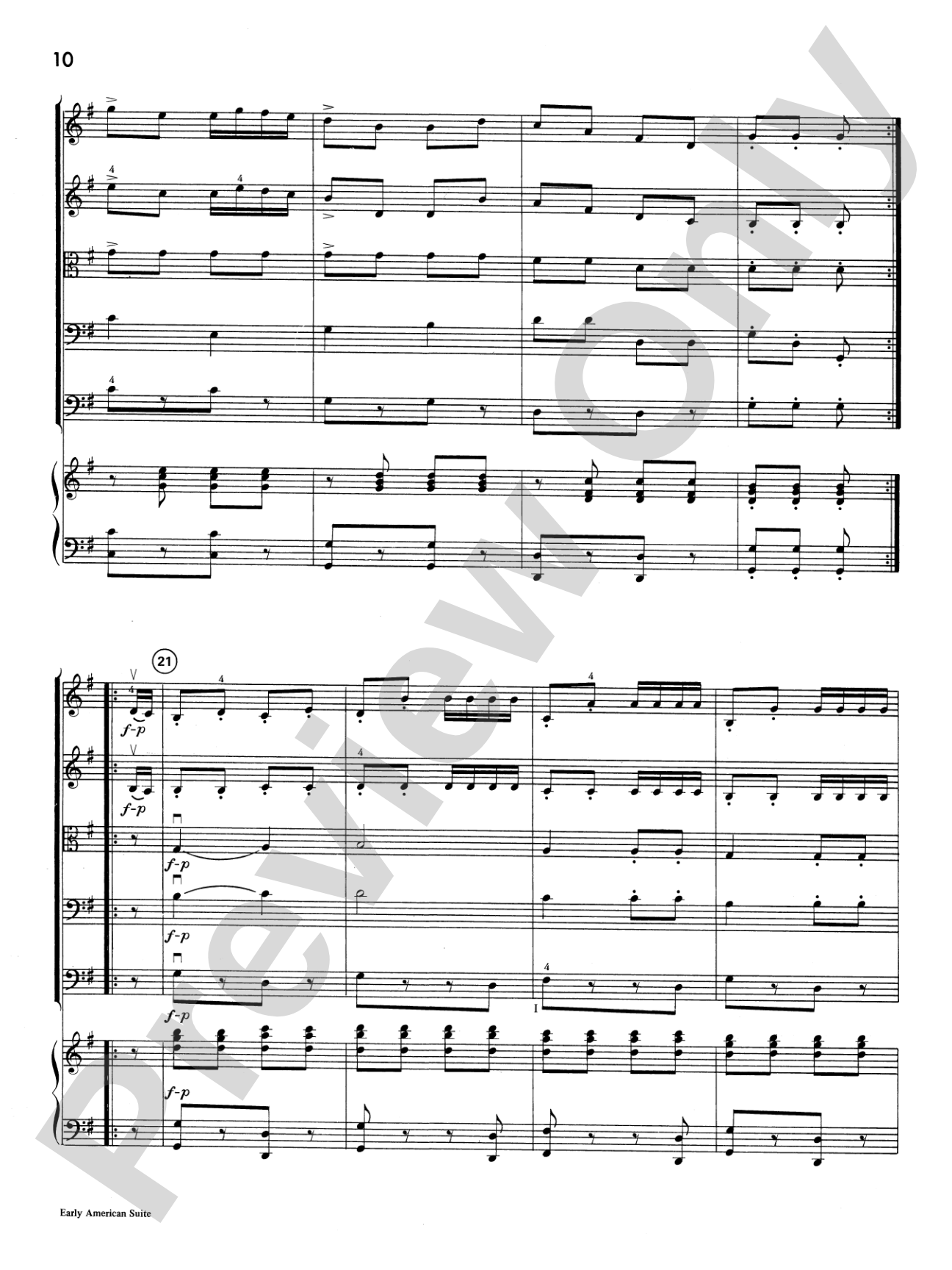
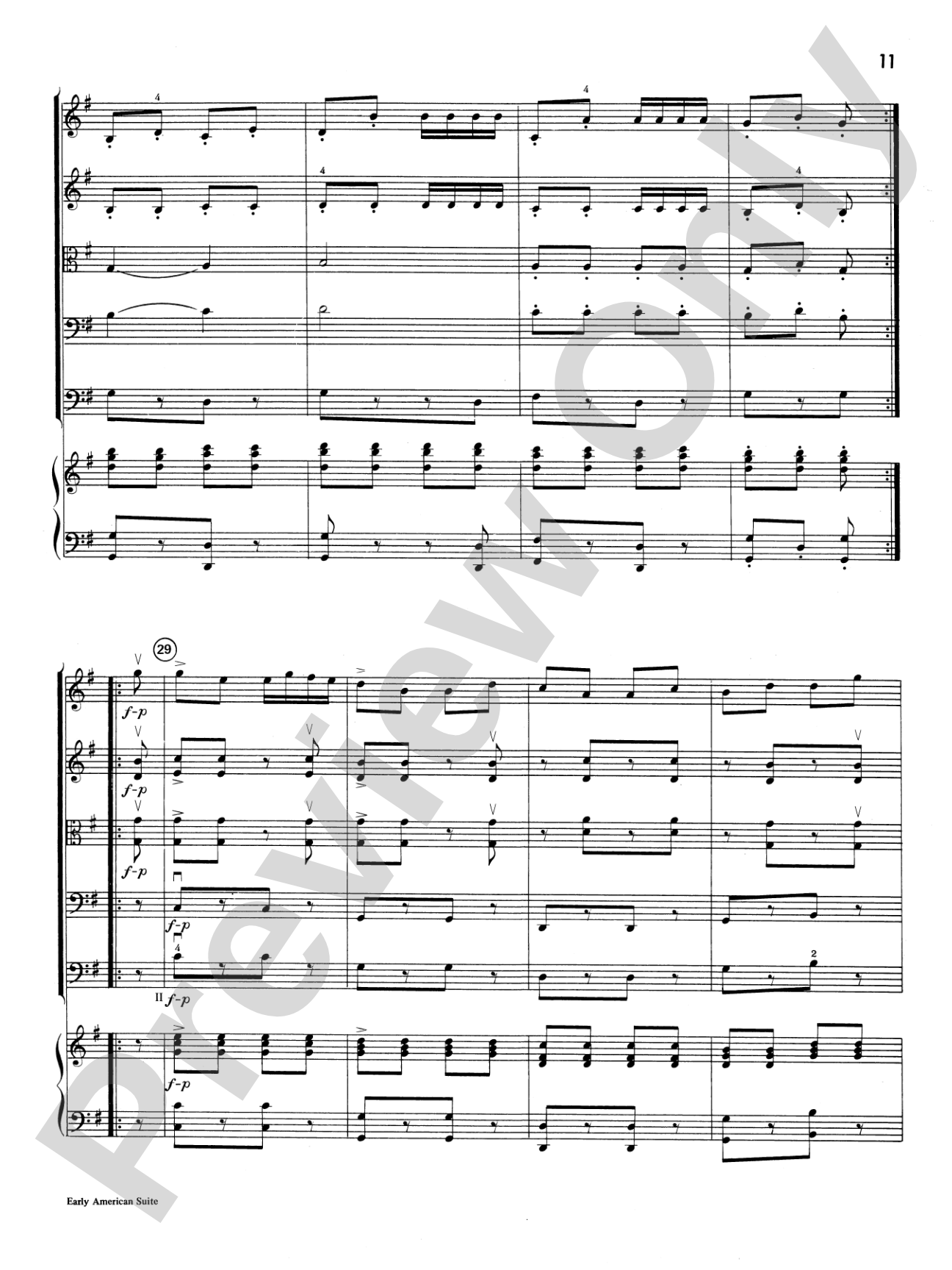
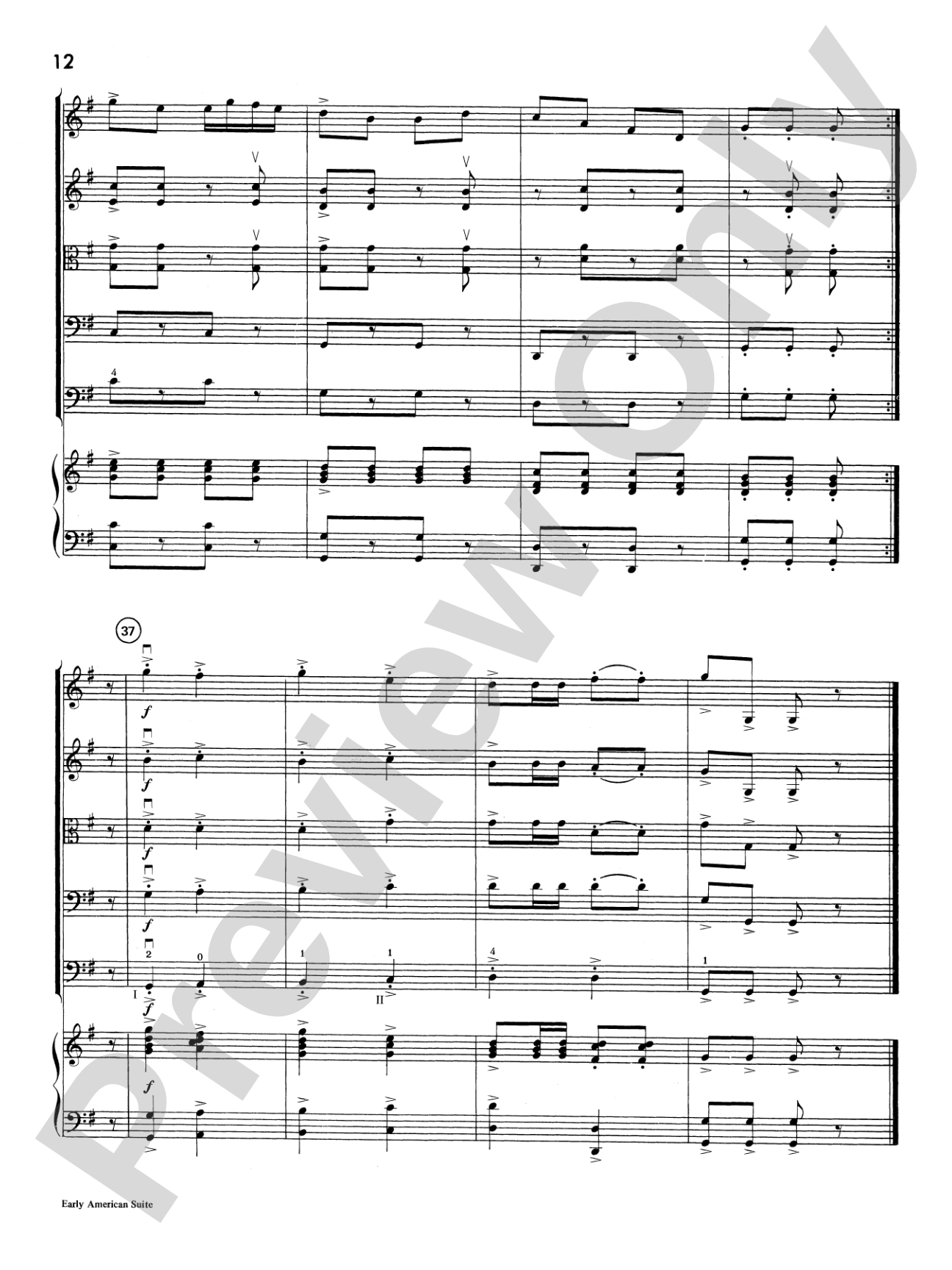
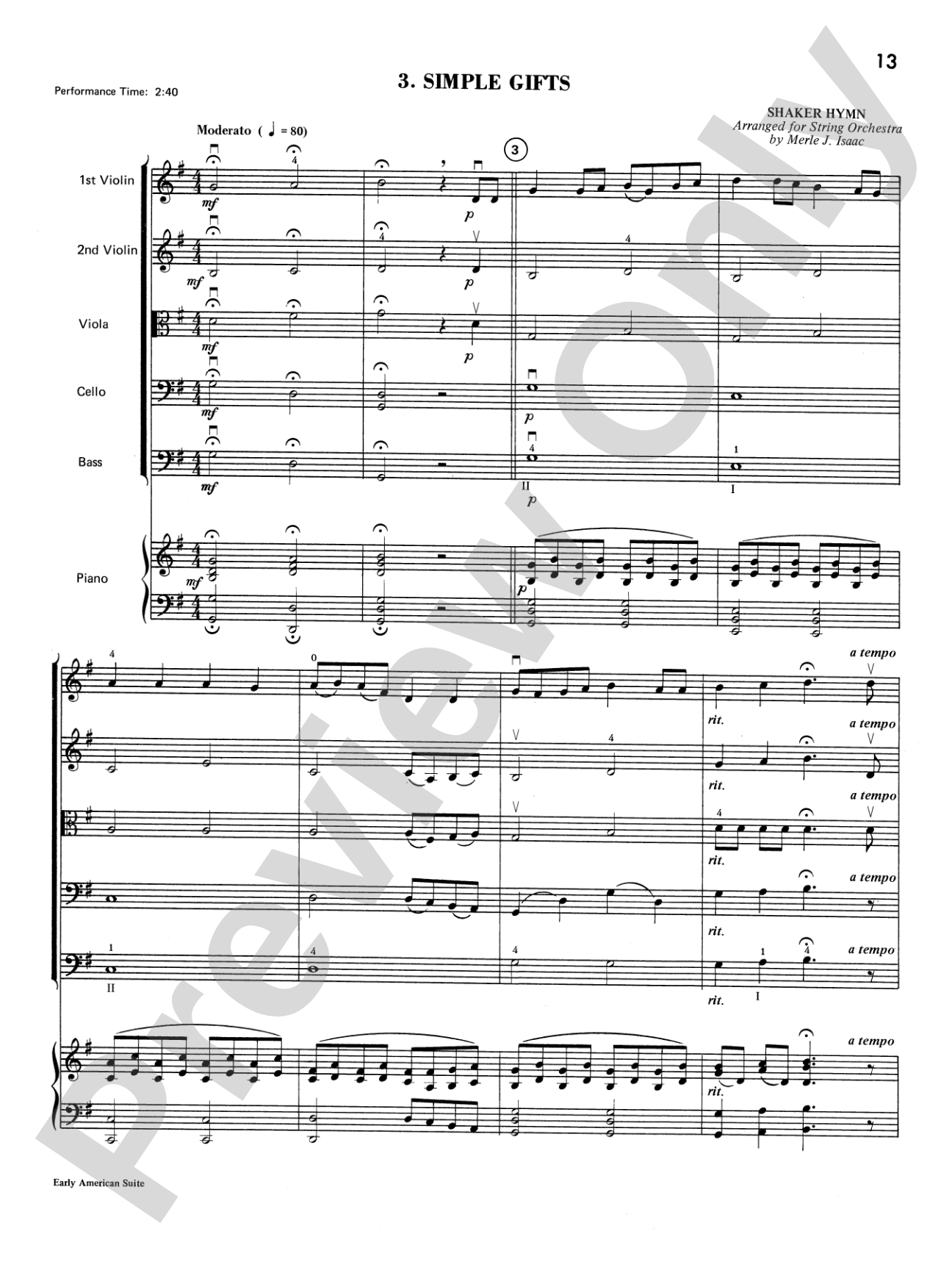
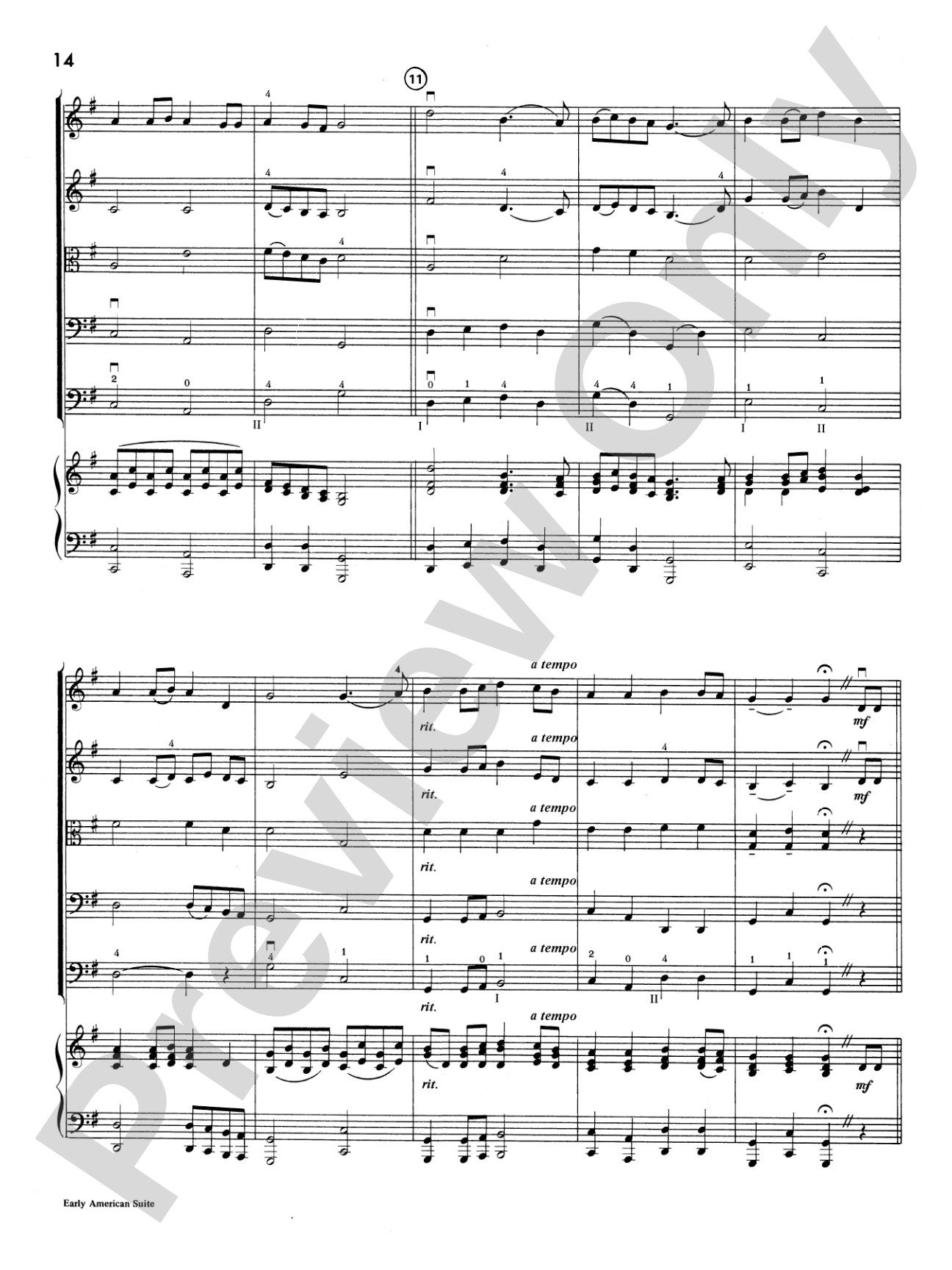
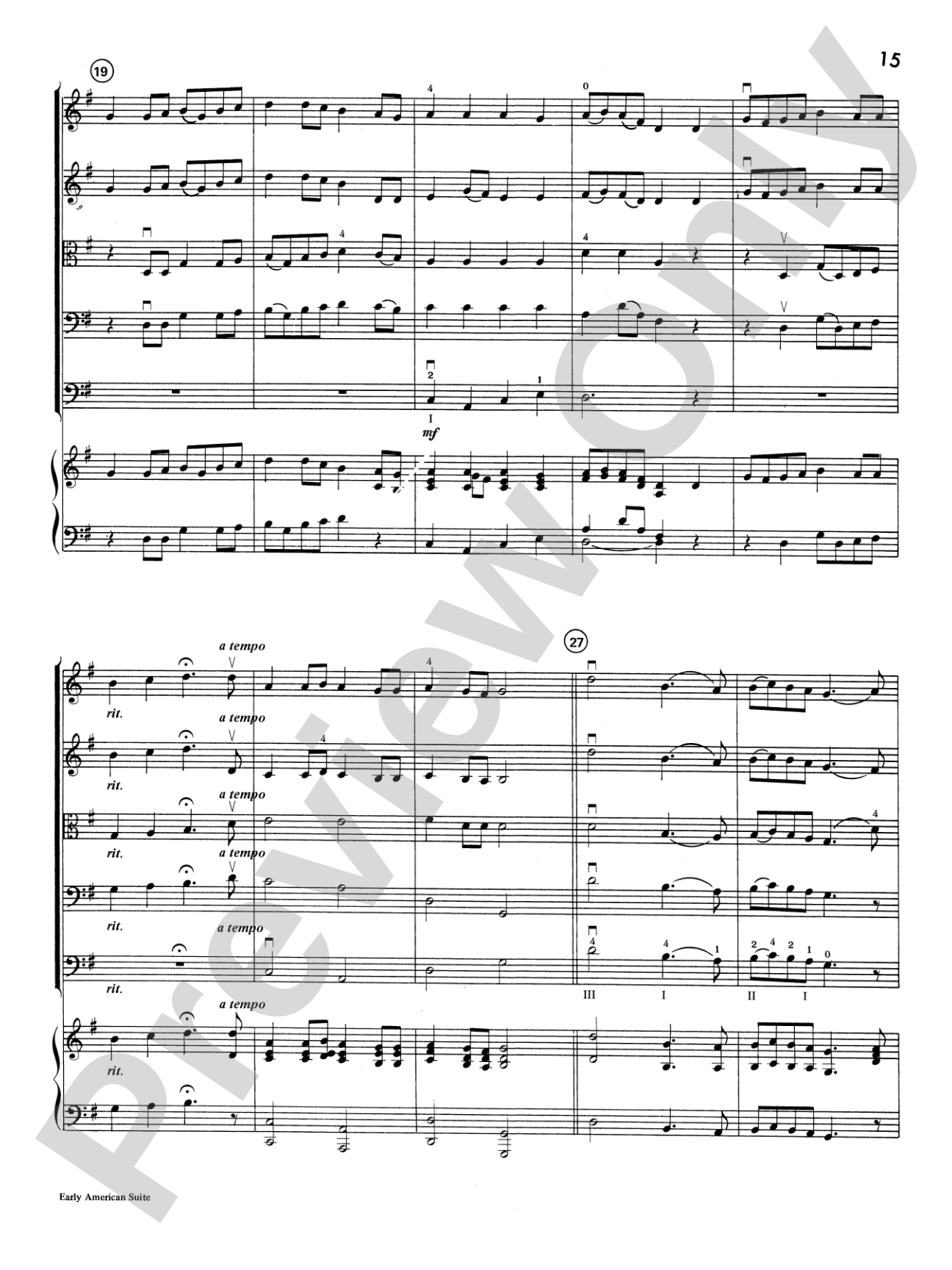
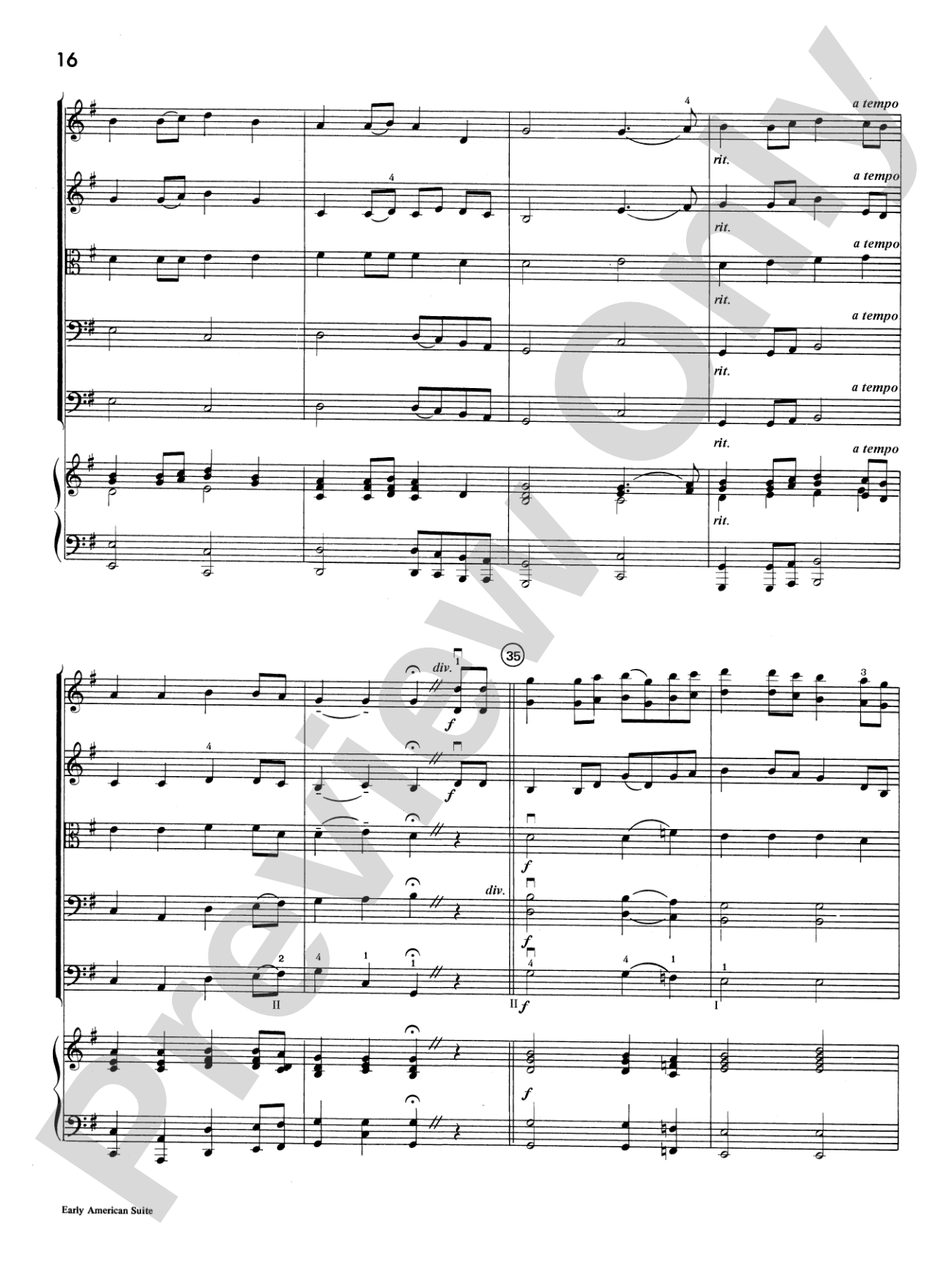
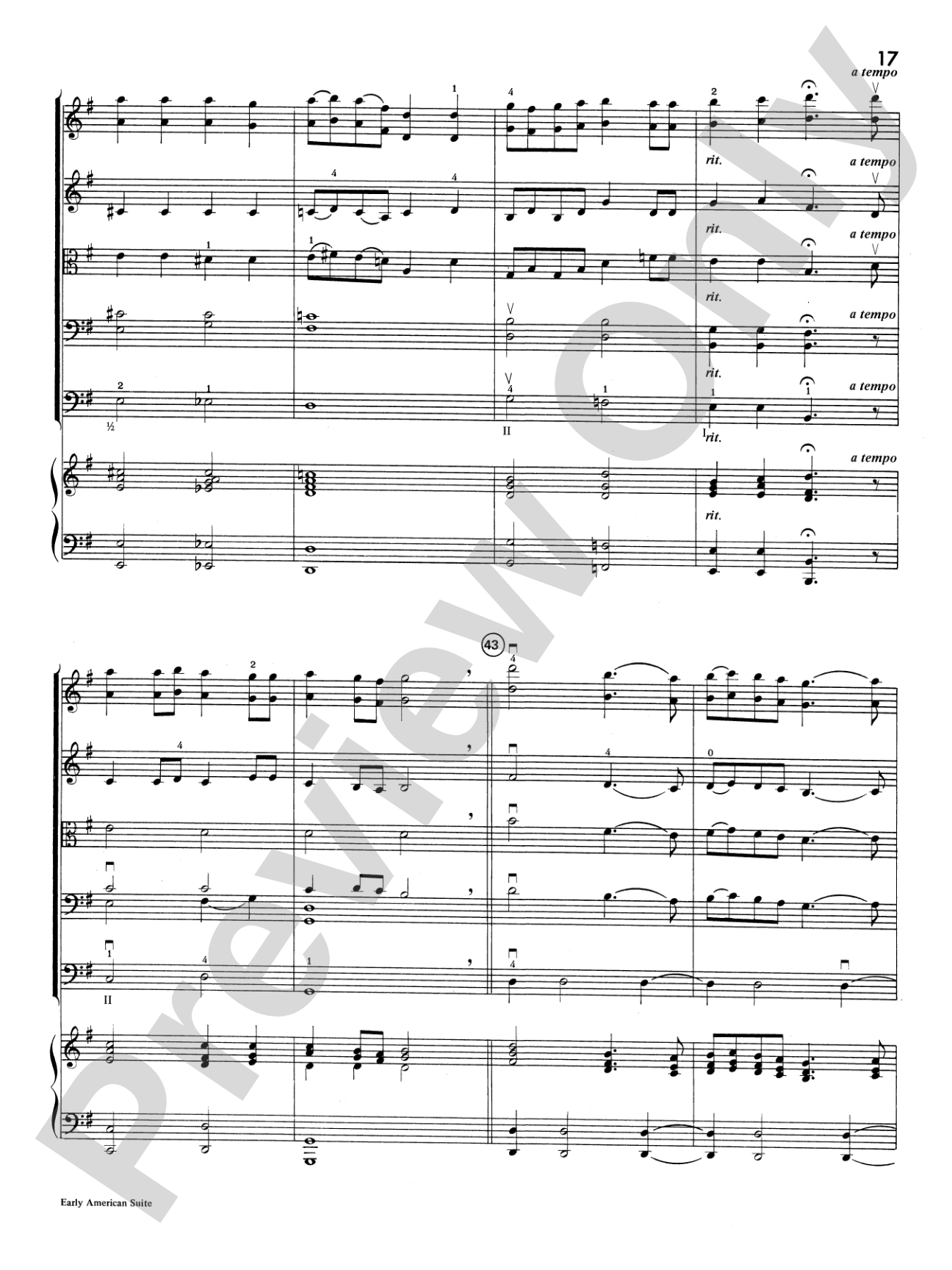
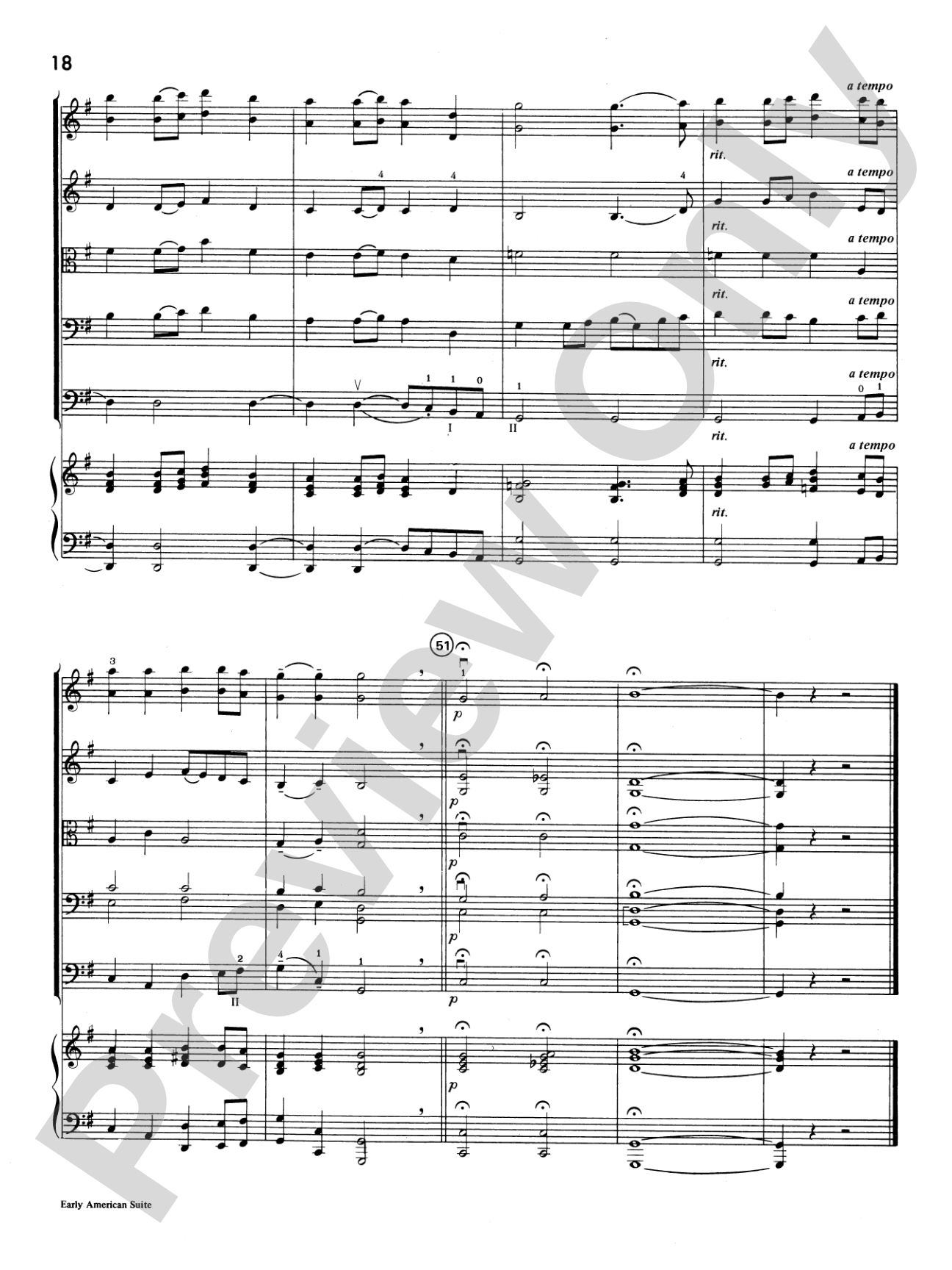
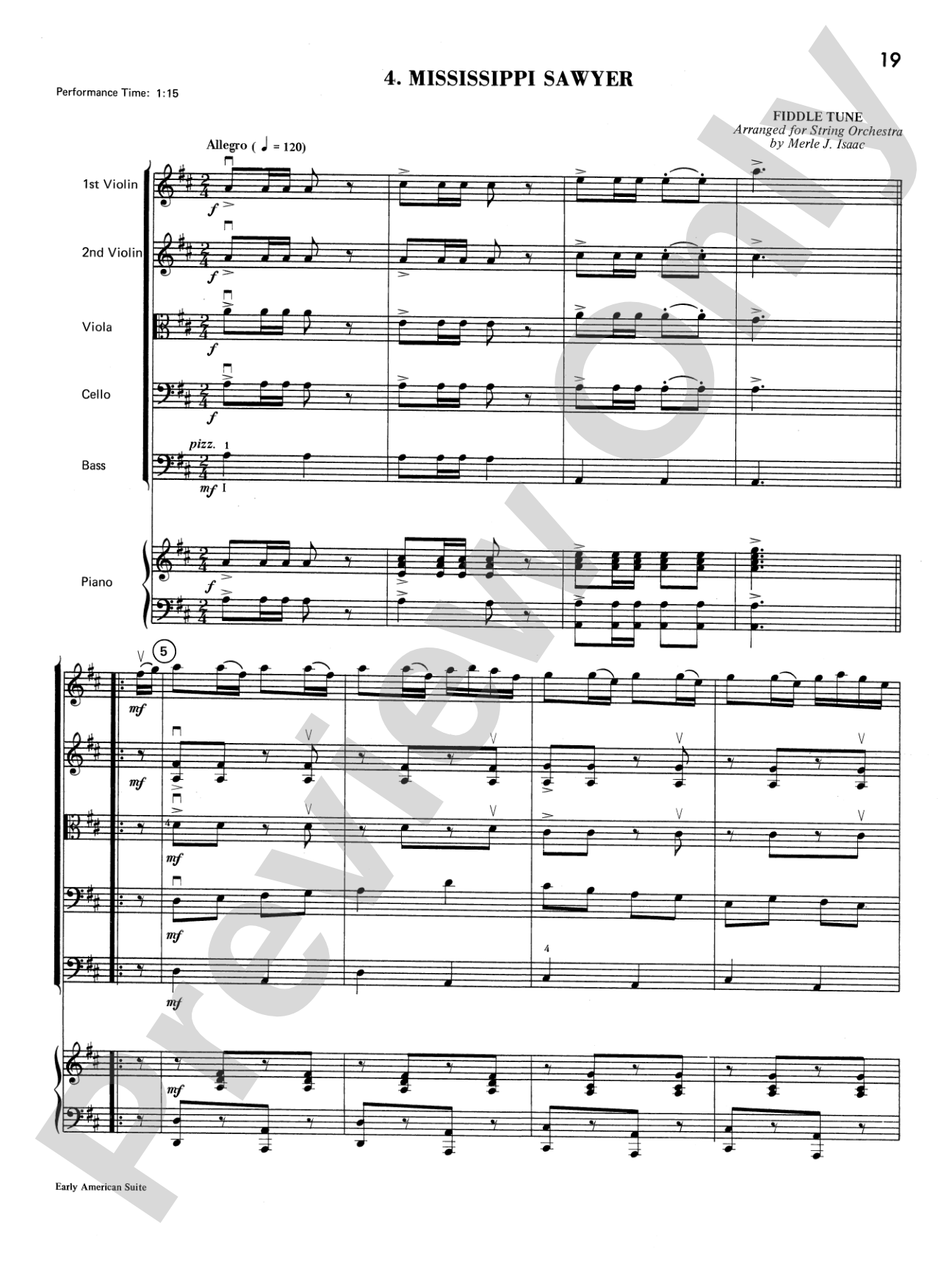
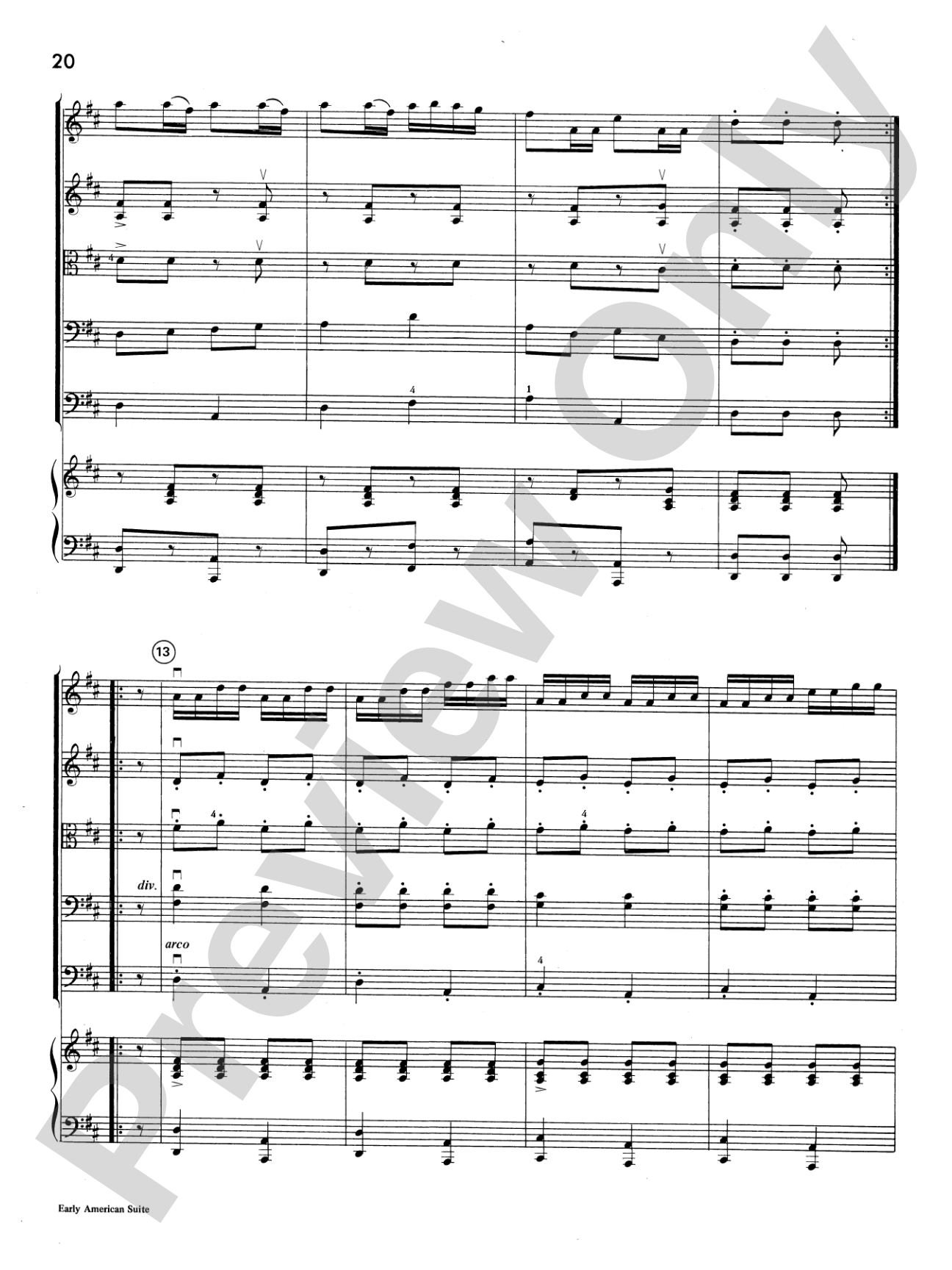
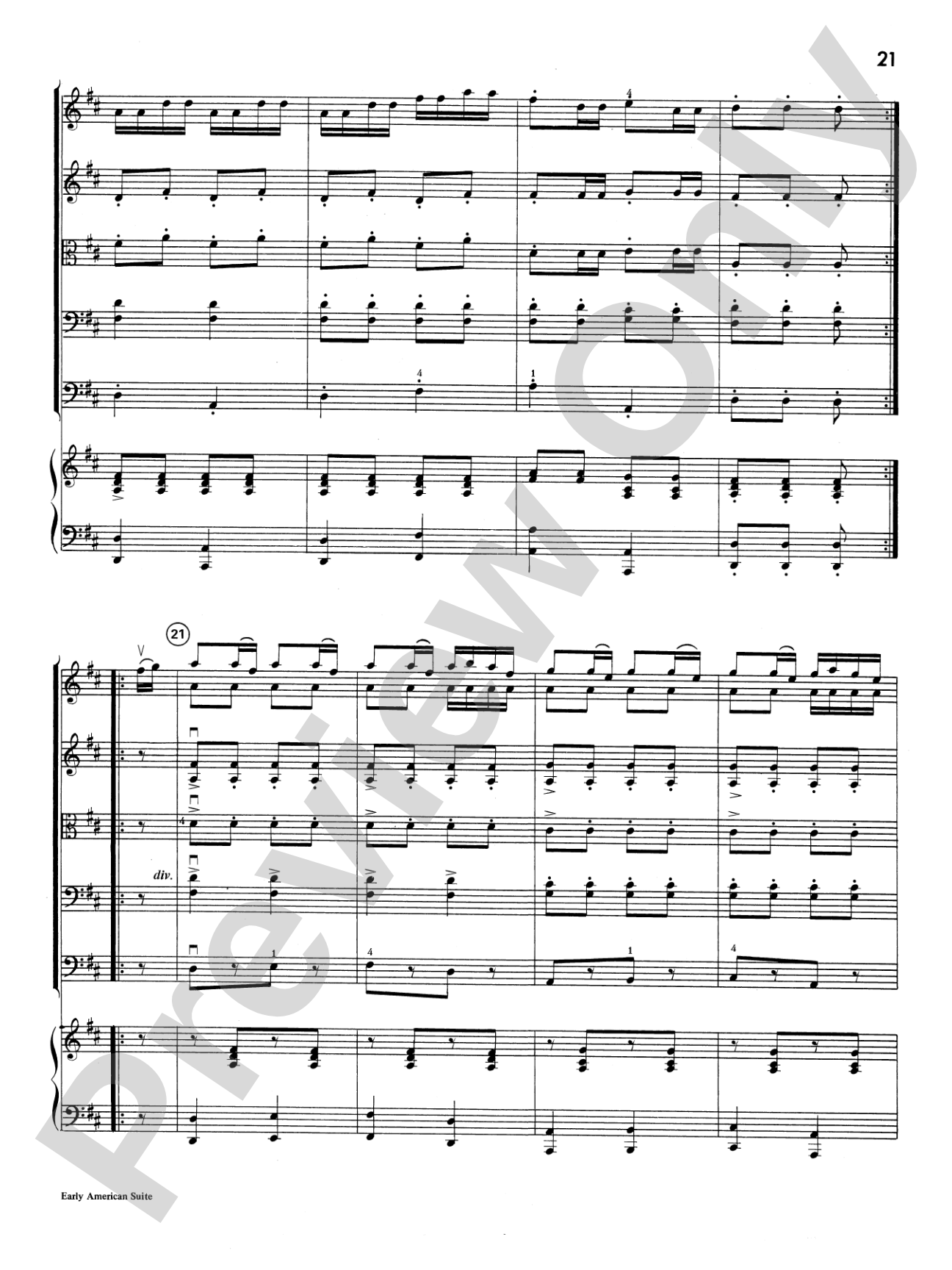
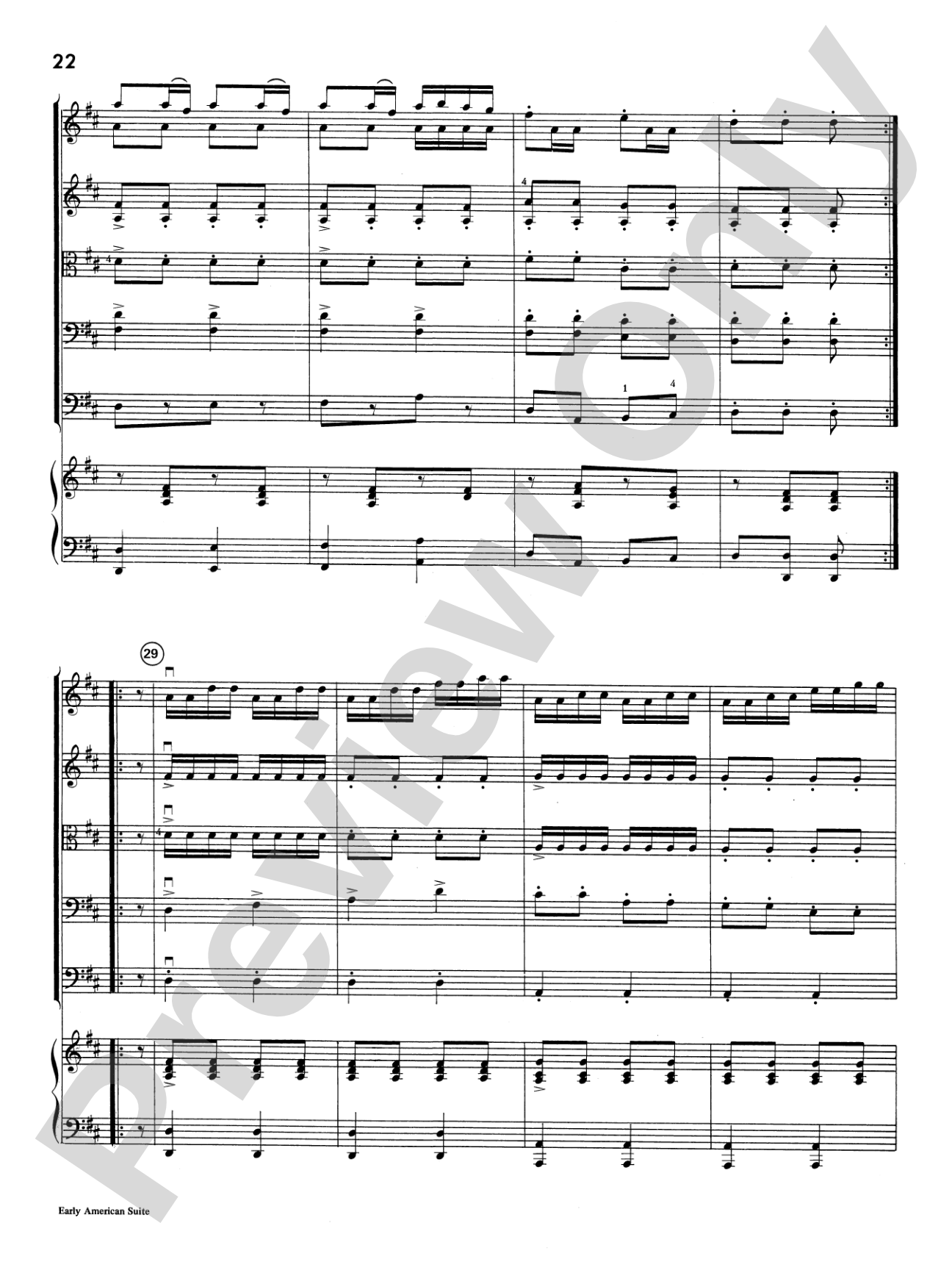
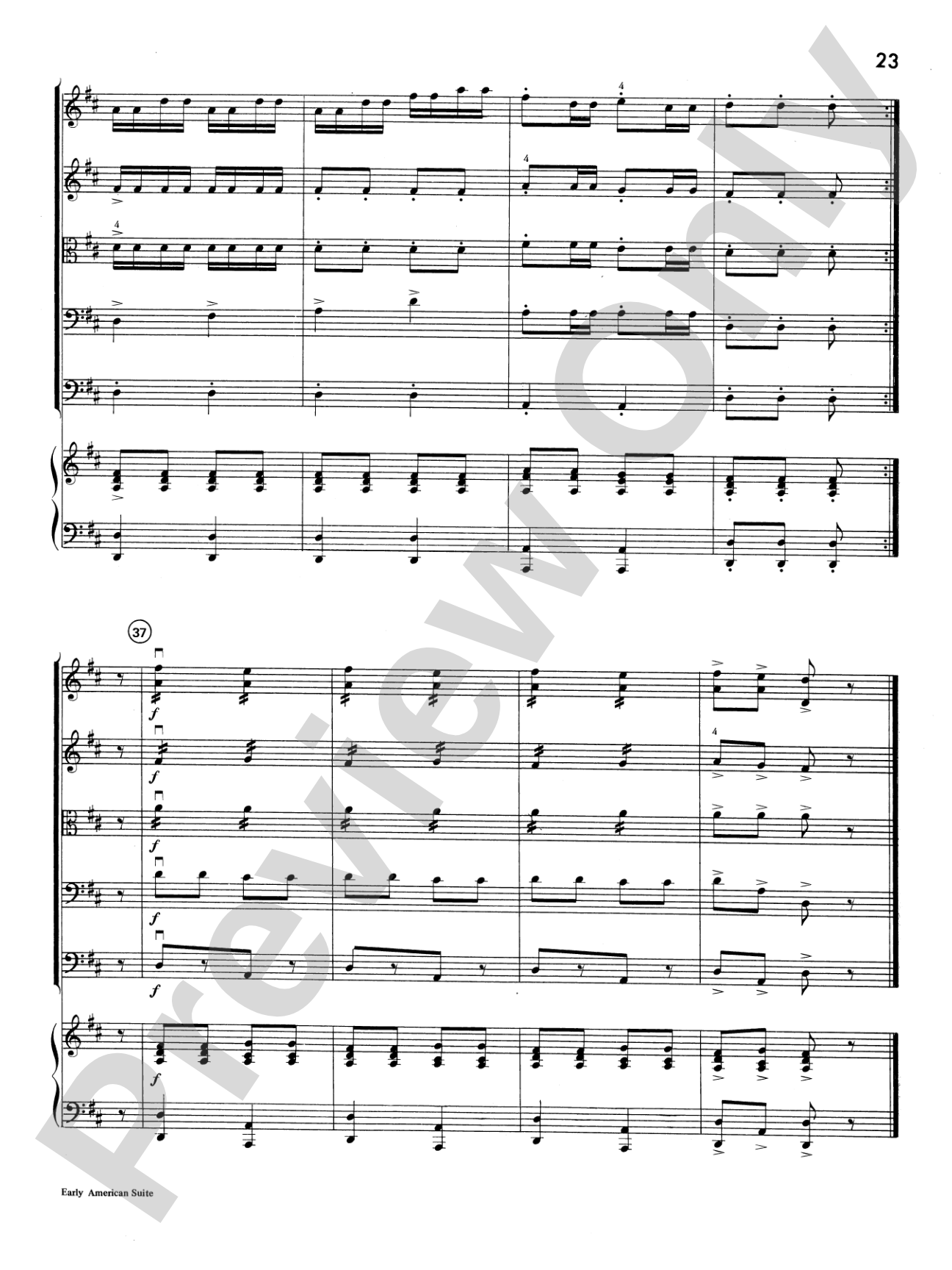


Early American Suite: String Orchestra Conductor Score & Parts
Arr. Merle J. Isaac
Grade: 3
Item: 00-PK-0000100

$60.00
Pickup currently not available
Buy Extra Parts (Digital PDF Download)
| Product | Price | Quantity |
|---|---|---|
| Early American Suite: Score | $6.00 | |
| Early American Suite: Piano Accompaniment | $5.99 | |
| Early American Suite: String Bass | $5.99 | |
| Early American Suite: Cello | $5.99 | |
| Early American Suite: Viola | $5.99 | |
| Early American Suite: 3rd Violin (Viola [TC]) | $5.99 | |
| Early American Suite: 2nd Violin | $5.99 | |
| Early American Suite: 1st Violin | $5.99 |
Parts Added to Cart!
Description


Don't just read it, hear it, play along with it, and watch your students grow with it. In MakeMusic Cloud, Early American Suite: String Orchestra Conductor Score & Parts comes alive with professional accompaniment, adjustable tempo, and built-in practice tools that turn solo practice into real progress.
Open in the Player
Jump straight in and assign it today.
Start Your Free Trial
Open this title and explore the full library in minutes.
Sample Audio
No sample audio found.
Sample Video
No sample videos found.
Additional Details
Series:
Highland/Etling String Orchestra
Publisher:
Alfred Music
Page Count:
148
SKU:
00-PK-0000100
More about this title
Why we love this
This suite captures the spirit of early American music through accessible string writing that sits perfectly at Grade 3. The arrangements balance authentic source material with playable passage work, making it ideal for orchestras building confidence and musicianship without sacrificing genuine character.
What to expect
The music carries the directness and earnestness of early American sources, arranged with warmth and clarity. You'll hear genuine melodic content expressed through a string ensemble without unnecessary technical complications getting in the way of the singing line.
Who it's for
String orchestras at the Grade 3 level looking for substantial programming that connects to American musical heritage. Directors who want their ensemble to work with authentic arranging, clean writing that respects both the source material and student capability.
How to get the most out of it
- Balance the dialogue between sections carefully; the string arrangements often feature independent melodic lines that need to blend rather than compete for attention.
- Pay attention to dynamic contrast within movements. Early American forms often rely on subtle shifts in volume to shape phrasing and architectural sense.
- Attend to the rhythmic precision in accompaniment figures. Clean, steady support from lower strings and violas anchors the entire ensemble's sound.
How to use it
Program individual movements at different points in your season to break up the rehearsal routine, or perform the entire suite as a standalone concert feature. This repertoire pairs naturally with contemporary American works or regional composer projects.
Skills your students will build
- Maintaining steady rhythmic accompaniment patterns across ensemble voices
- Balancing independent string parts to create musical texture
- Shaping longer melodic lines across multiple phrases
- Responding to dynamic and articulation cues within American source material