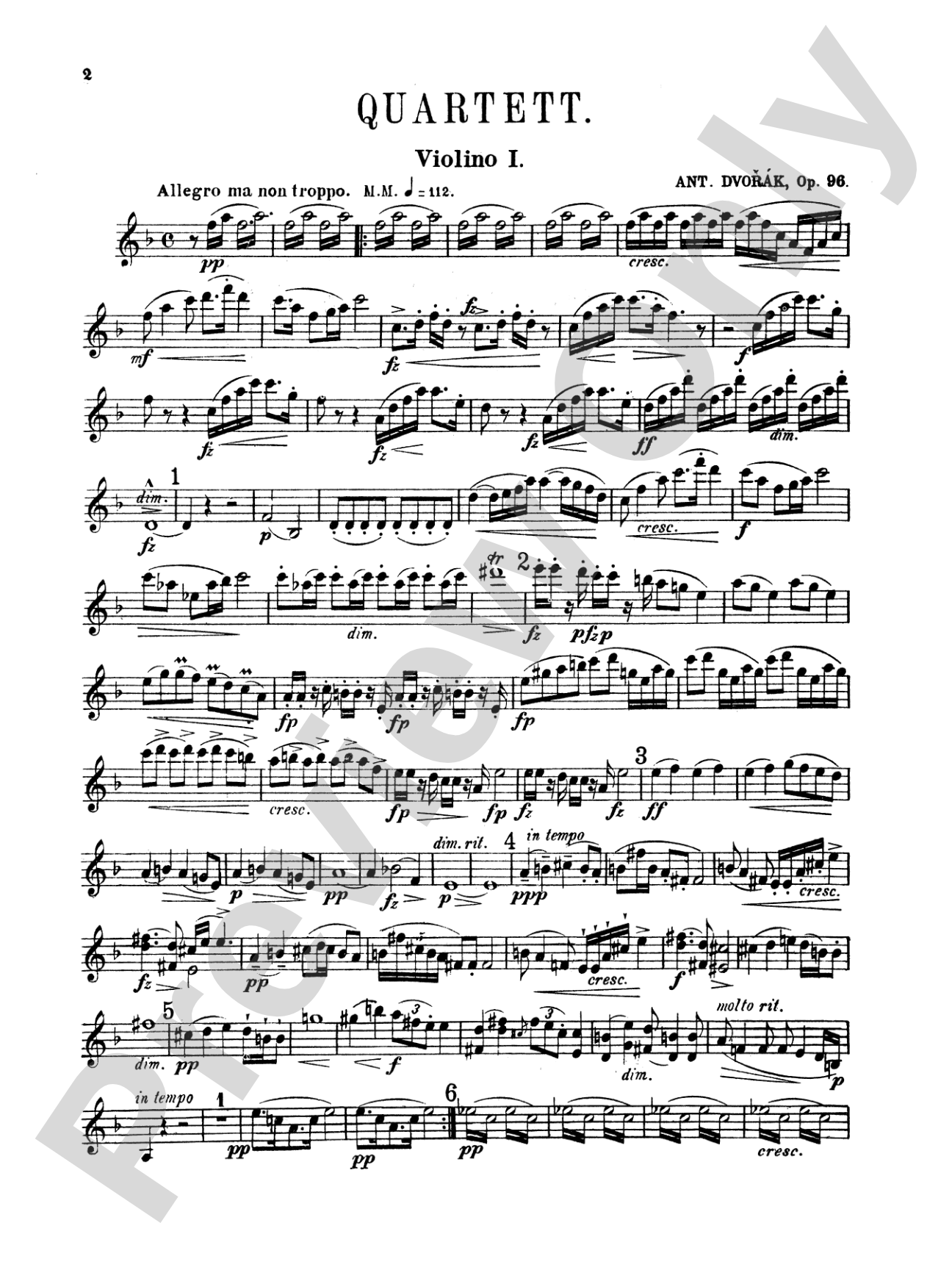
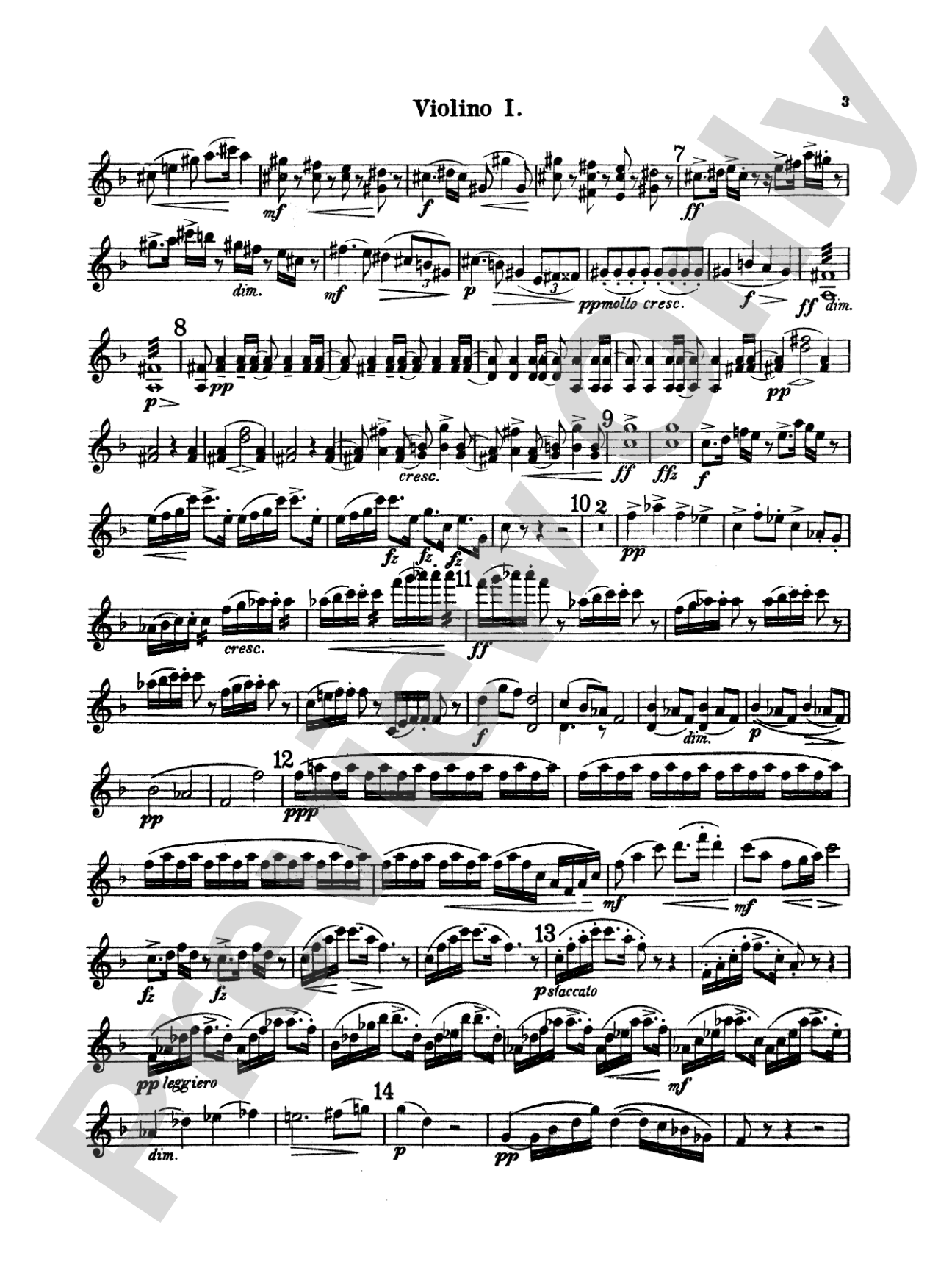
Dvorák: String Quartet in F, Op. 96 Sheet Music Preview

Dvorák: String Quartet in F, Op. 96

By Antonín Dvorák

Item: 00-PC-0007073

Digital Download
$2.99
Description
A string quartet, composed by Antonin Dvorák.

Dvorák: String Quartet in F, Op. 96 isn't in MakeMusic Cloud just yet...but it could be. Let us know you'd like to see it, and you'll help shape what comes next. In the meantime, start a free trial and dive into thousands of interactive titles your students can play along with today.

Sample Audio
No sample audio found.
Sample Video
Additional Details
Series: Kalmus Edition
Publisher: Alfred Music
Page Count: 48
SKU: 00-PC-0007073

More about this title

About the Composer: Antonín Dvorák

Antonín Dvorák (1841-1904) stands as one of the most significant composers of the Romantic era, bridging European classical traditions with the musical idioms of his native Bohemia. His ability to write with formal sophistication while infusing his work with melodic warmth and folk-inflected harmony made him a dominant force in chamber music, orchestral writing, and opera throughout the latter half of the nineteenth century.

For string quartet players and educators, Dvorák represents an essential link between the Brahmsian quartet tradition and the modern ensemble repertoire. His string quartets, particularly the late works, demand mature musicianship and reward deep interpretive engagement. They remain cornerstones of the quartet canon and offer students a pathway to understanding how Romantic harmonic language can enhance rather than obscure structural clarity.

Why we love this

The F major quartet (Op. 96, the 'American') combines lyrical generosity with genuine structural substance. Dvorák's gift for memorable melody never compromises the intellectual architecture of the work; each movement unfolds with purpose and inevitability, making it equally rewarding for groups seeking repertoire that speaks immediately and for ensembles ready to probe deeper interpretive questions.

What to expect

Warmth without sentimentality; lyricism grounded in structural clarity. The F major quartet unfolds with the generosity of a leisurely conversation among friends, yet beneath the flowing melodies runs a sophisticated harmonic language that rewards close listening. Dvorák invites the ensemble into an intimate musical space where European formality and folk-rooted simplicity coexist naturally.

Who it's for

Advanced high school quartets and undergraduate ensembles working toward performance maturity; professional or community quartets seeking core Romantic repertoire; students preparing for chamber music competitions and festivals. This work demands secure intonation, rhythmic coordination, and the ability to balance individual line integrity with ensemble cohesion.

How to get the most out of it

  • Balance the first violin's soaring lines with sensitive accompaniment from the lower voices; the beauty of this work depends on the quartet breathing as one unit rather than featuring a soloist.
  • Pay close attention to Dvorák's articulation markings and dynamic shadings in the inner voices, particularly in the slower sections. These details shape the harmonic color and prevent passages from becoming thick or static.
  • The scherzo movement benefits from crisp rhythmic precision and lightness of touch; resist the temptation to play too heavily, as the Bohemian dance character requires buoyancy.
  • Approach the finale's folk-song themes with directness and warmth, allowing the natural lyricism of the melodies to emerge without oversentimental rubato.

How to use it

Program this quartet alongside other late-Romantic chamber works to demonstrate the vitality of the string quartet idiom in the 1890s; it pairs naturally with works by Brahms or Smetana in a concert emphasizing Central European string writing. For a festival or competition program, the quartet's substantial length and expressive range showcase ensemble maturity and provide judges with clear evidence of technical and musical growth.

Skills your students will build

  • Sustaining long lyrical lines without sacrificing rhythmic precision
  • Balancing harmonic texture when multiple voices carry melodic material simultaneously
  • Executing Dvorák's characteristic rhythmic figures and syncopations with idiomatic flair
  • Responding to subtle dynamic and articulation markings that shape Romantic form
  • Maintaining intonation stability across extended passages in multiple key areas

You May Also Like