
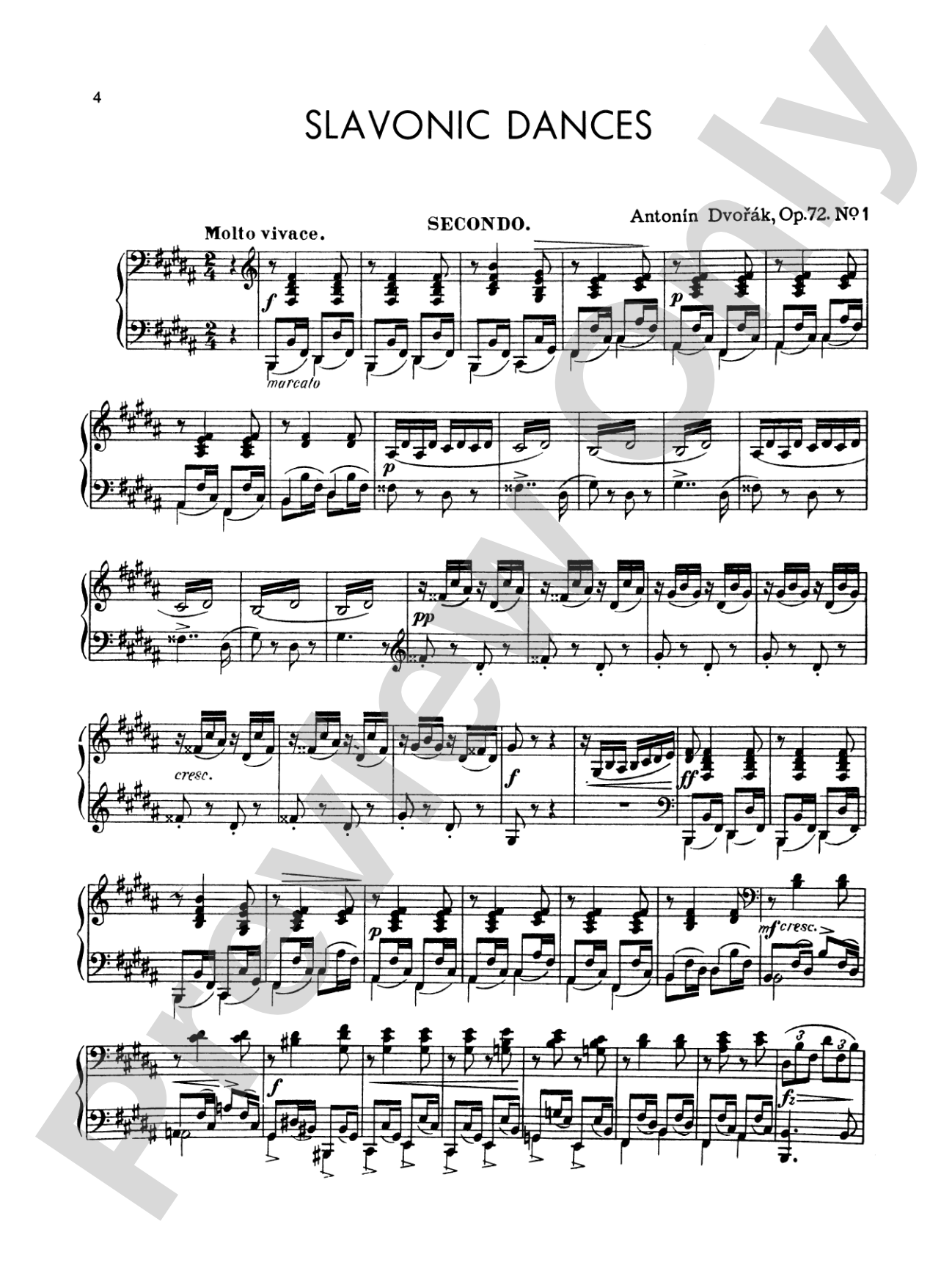
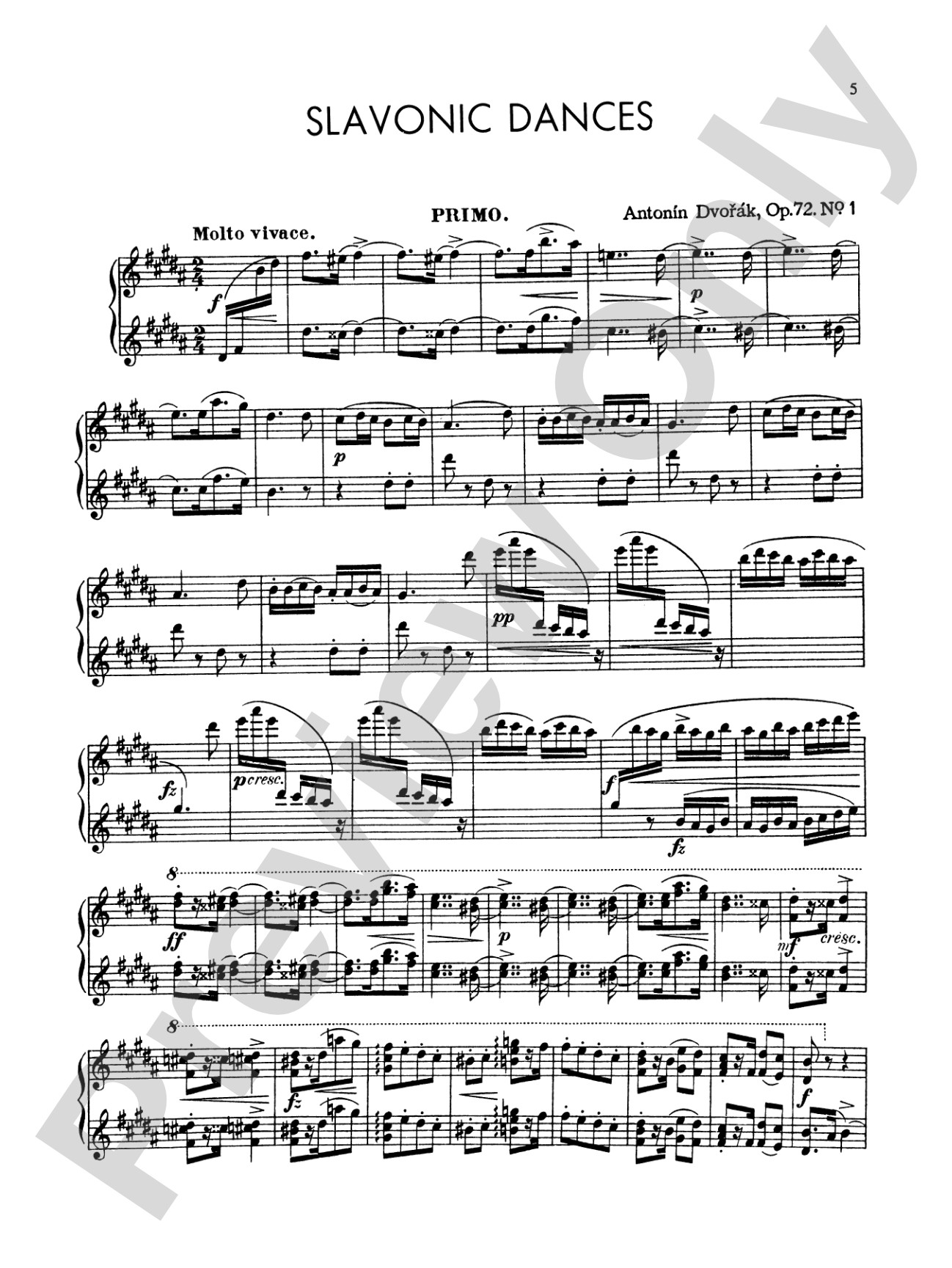
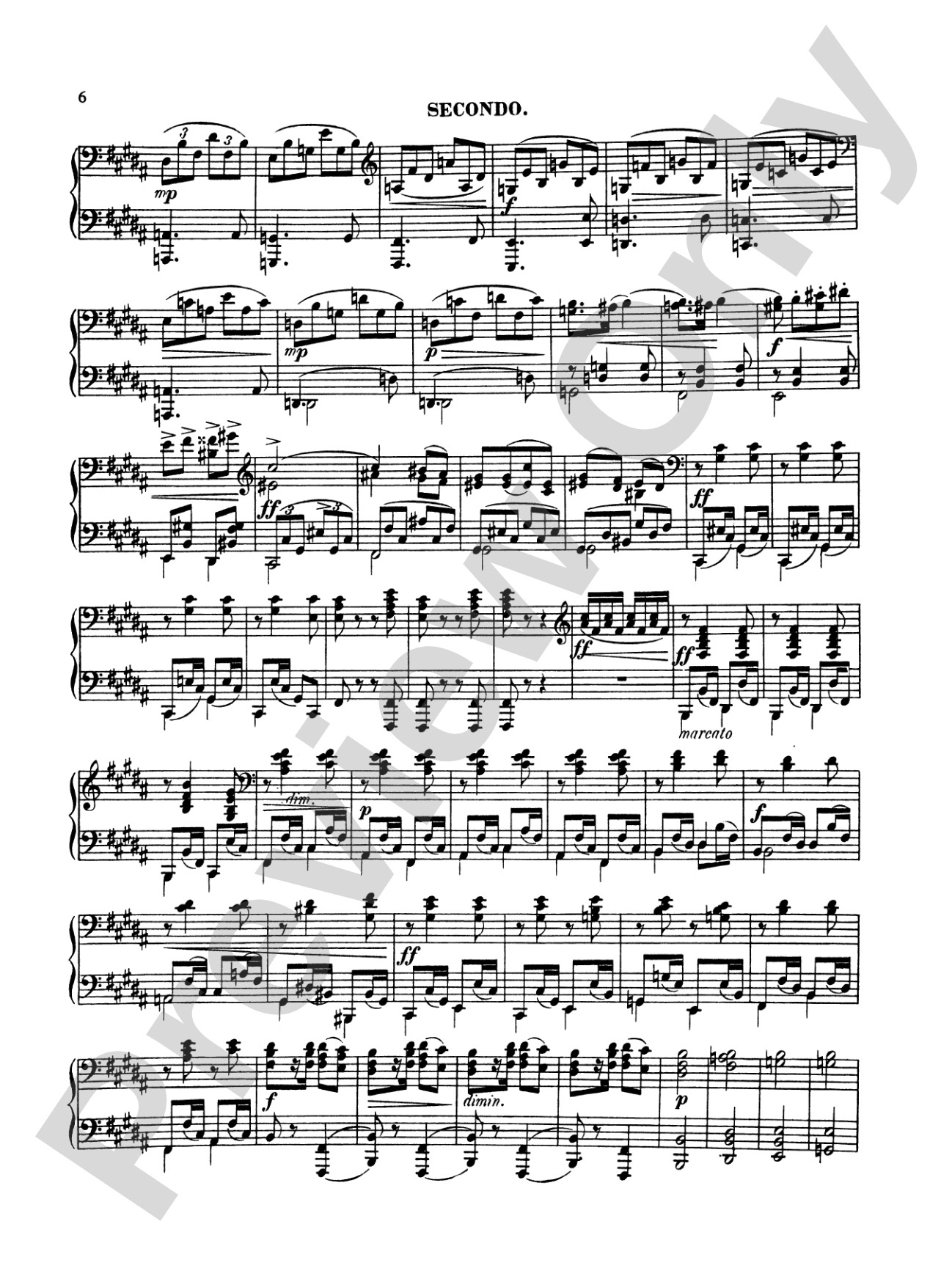
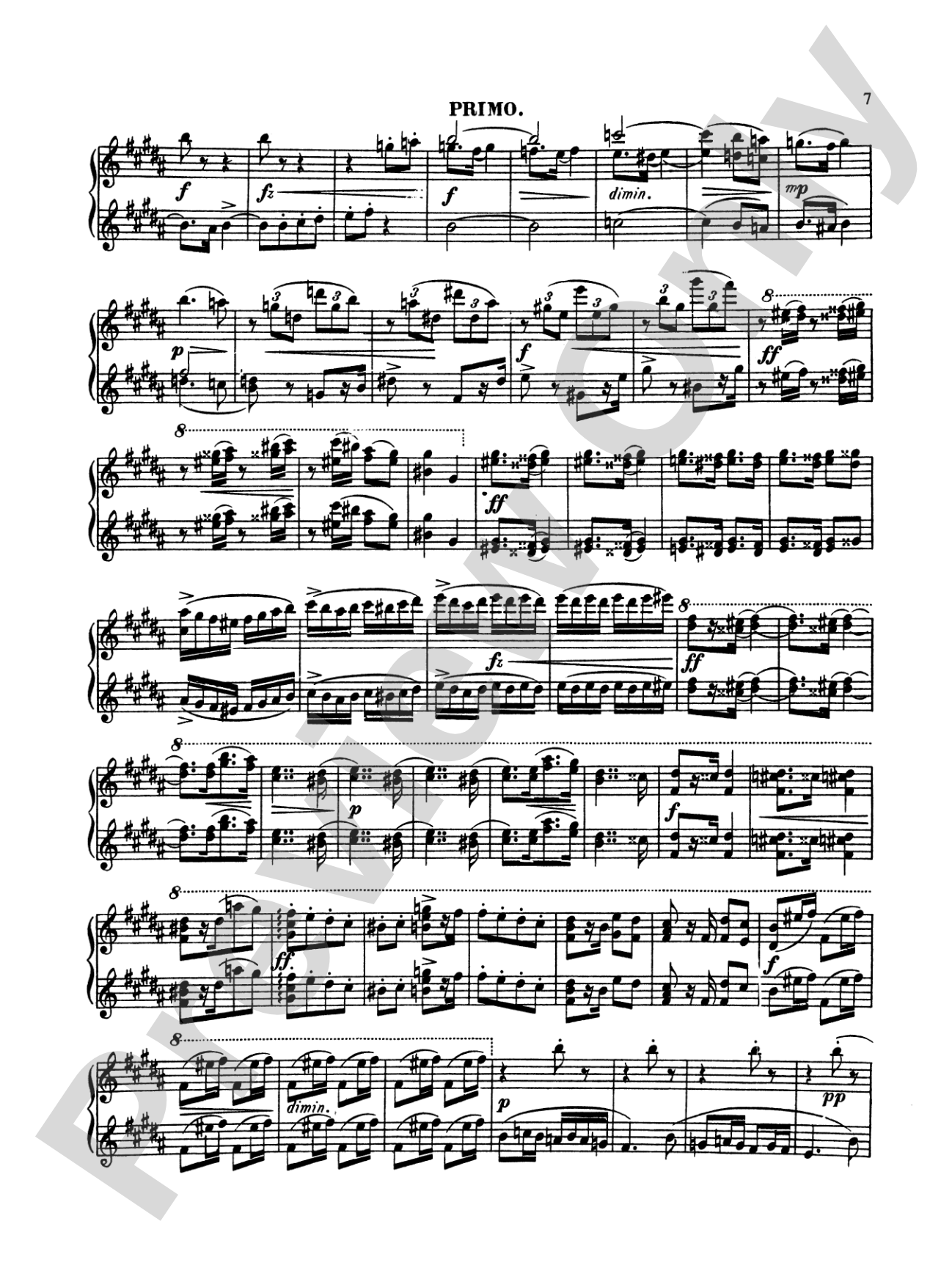
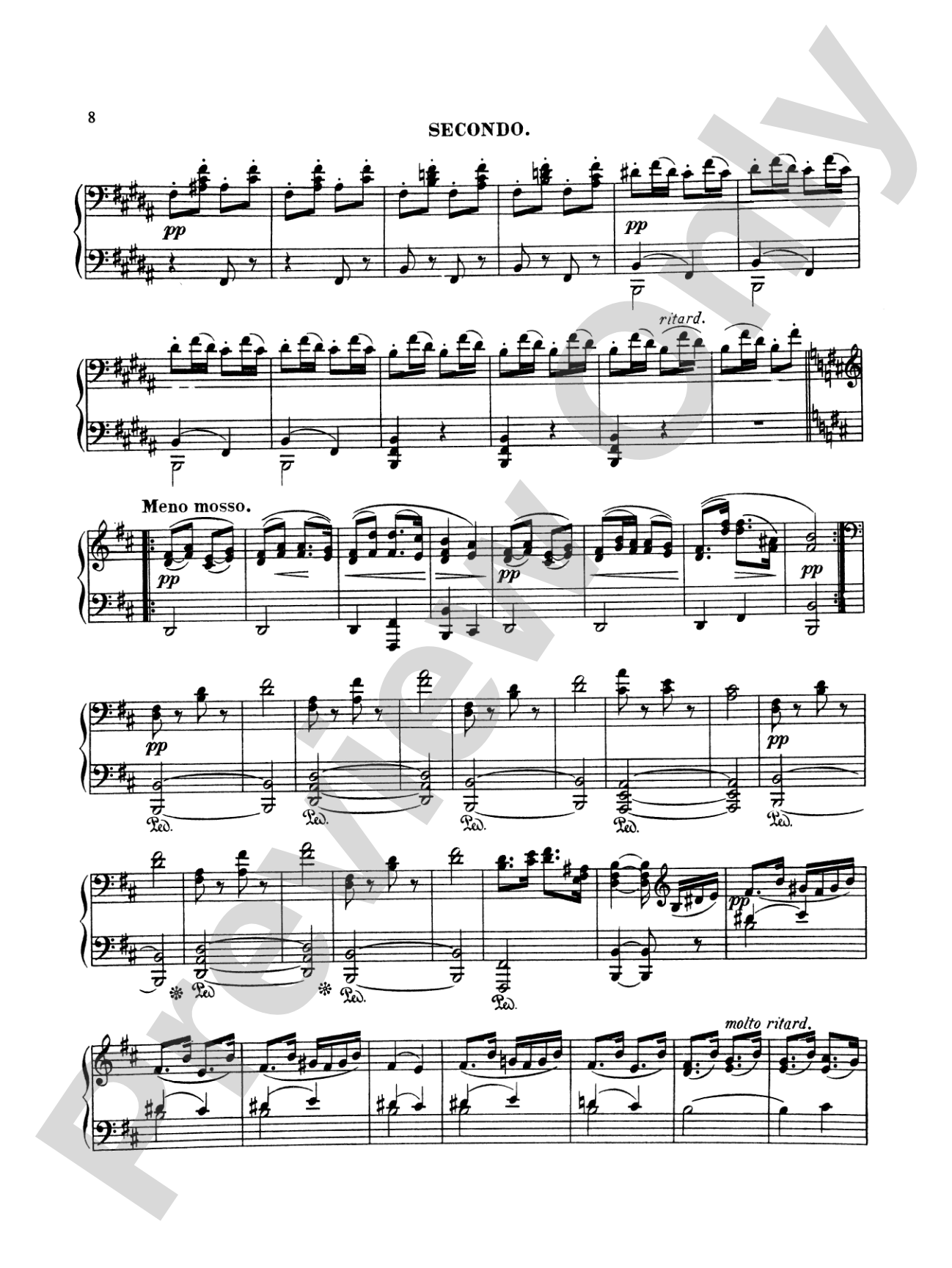
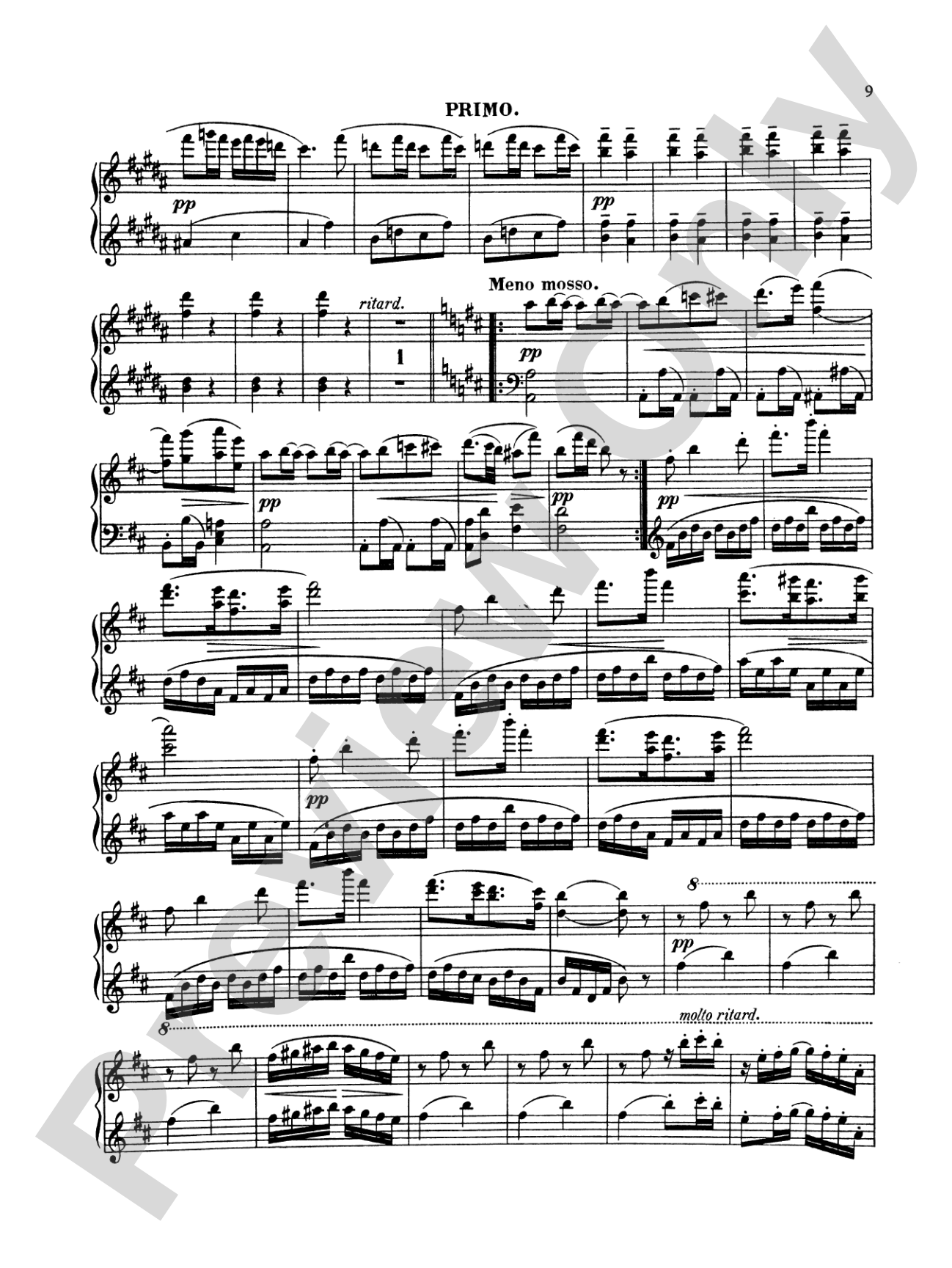
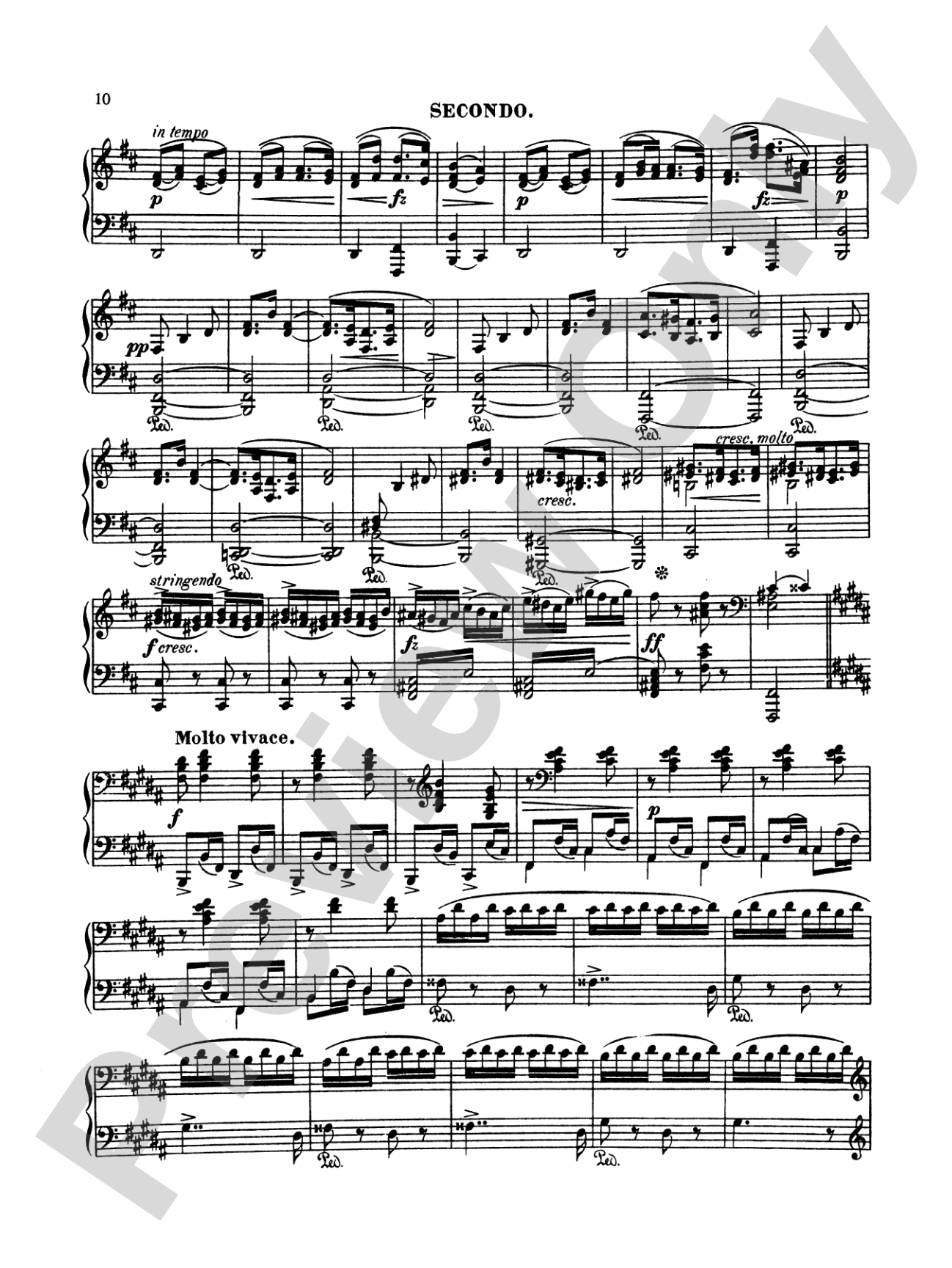
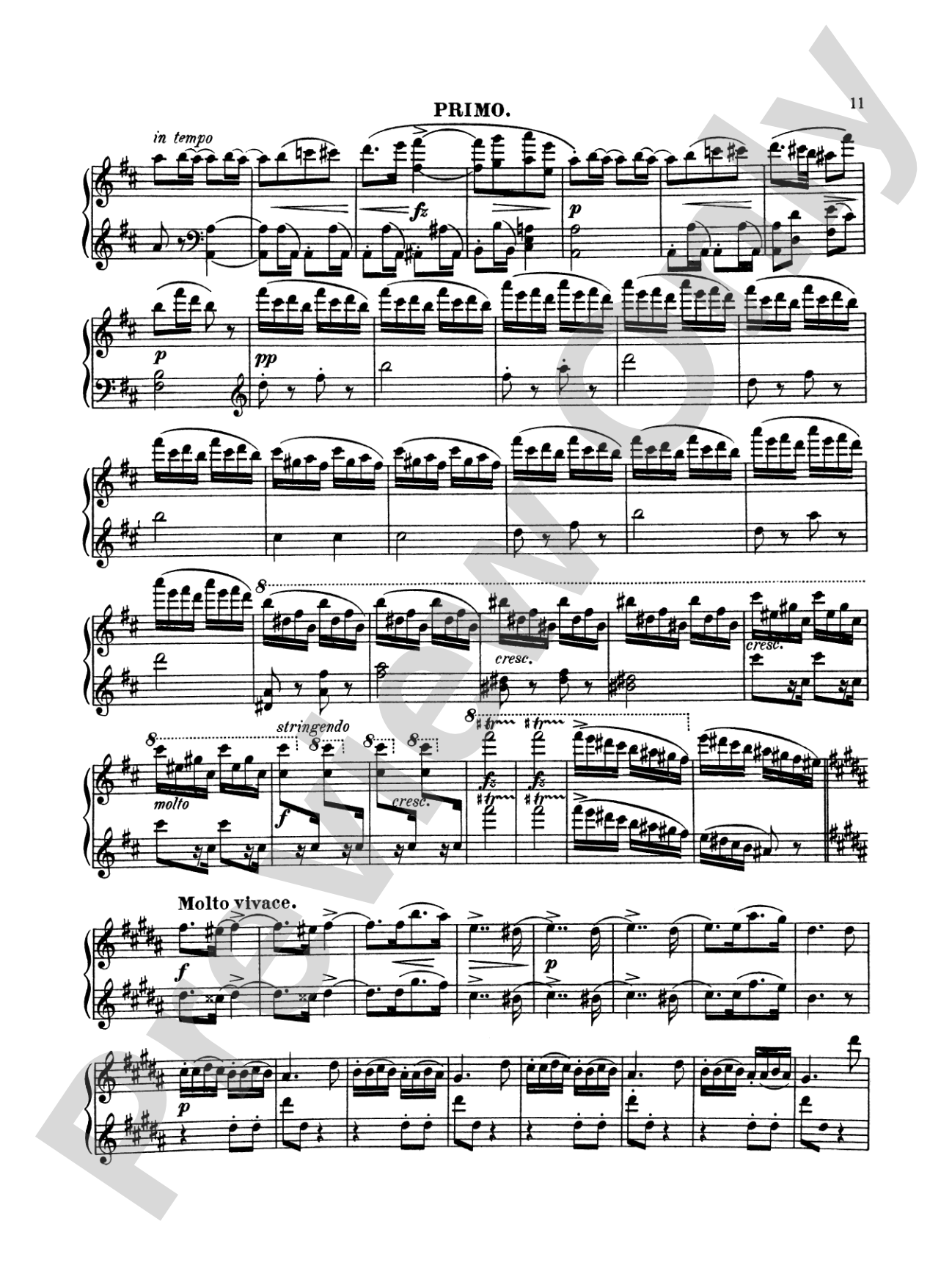
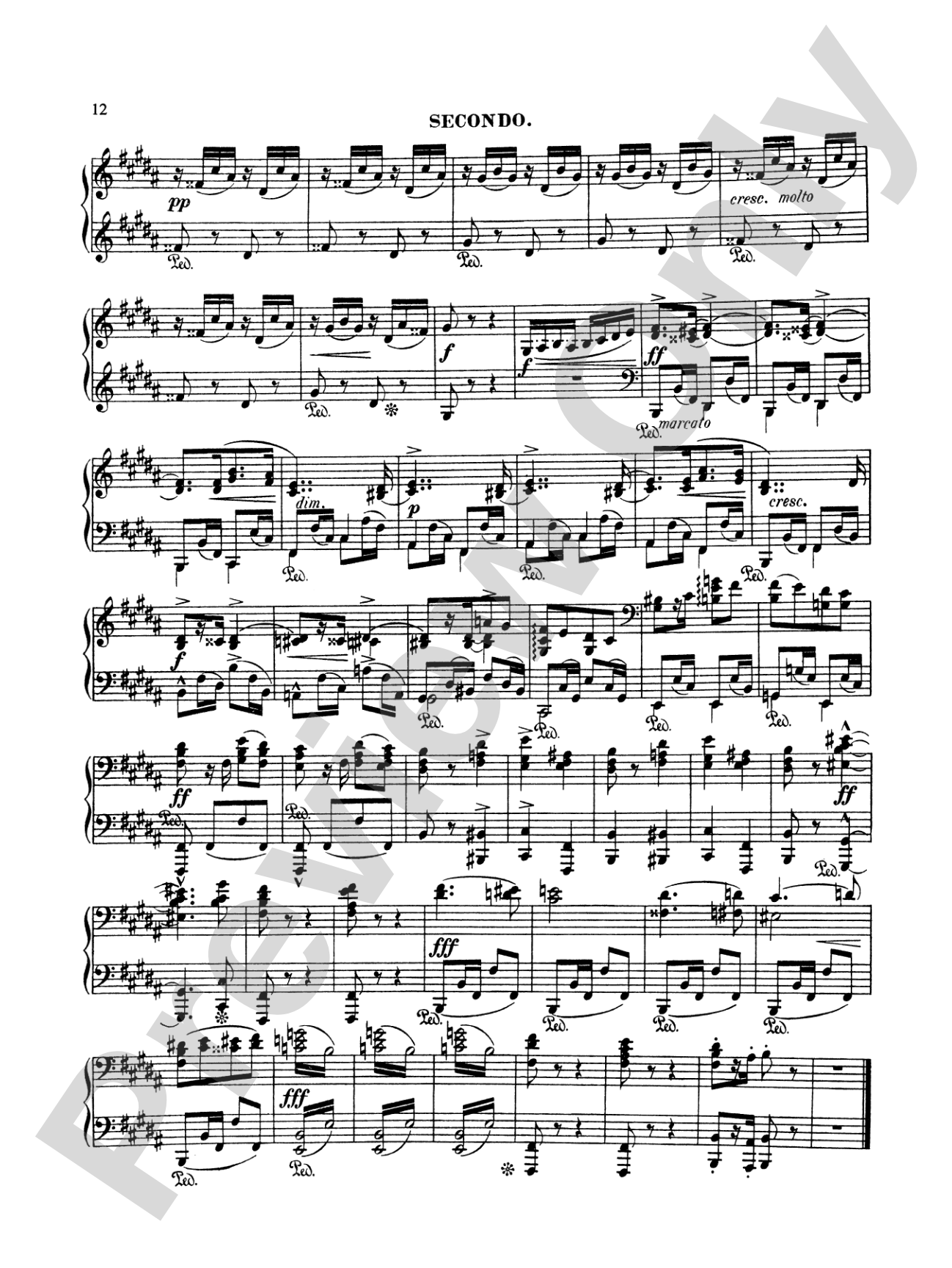
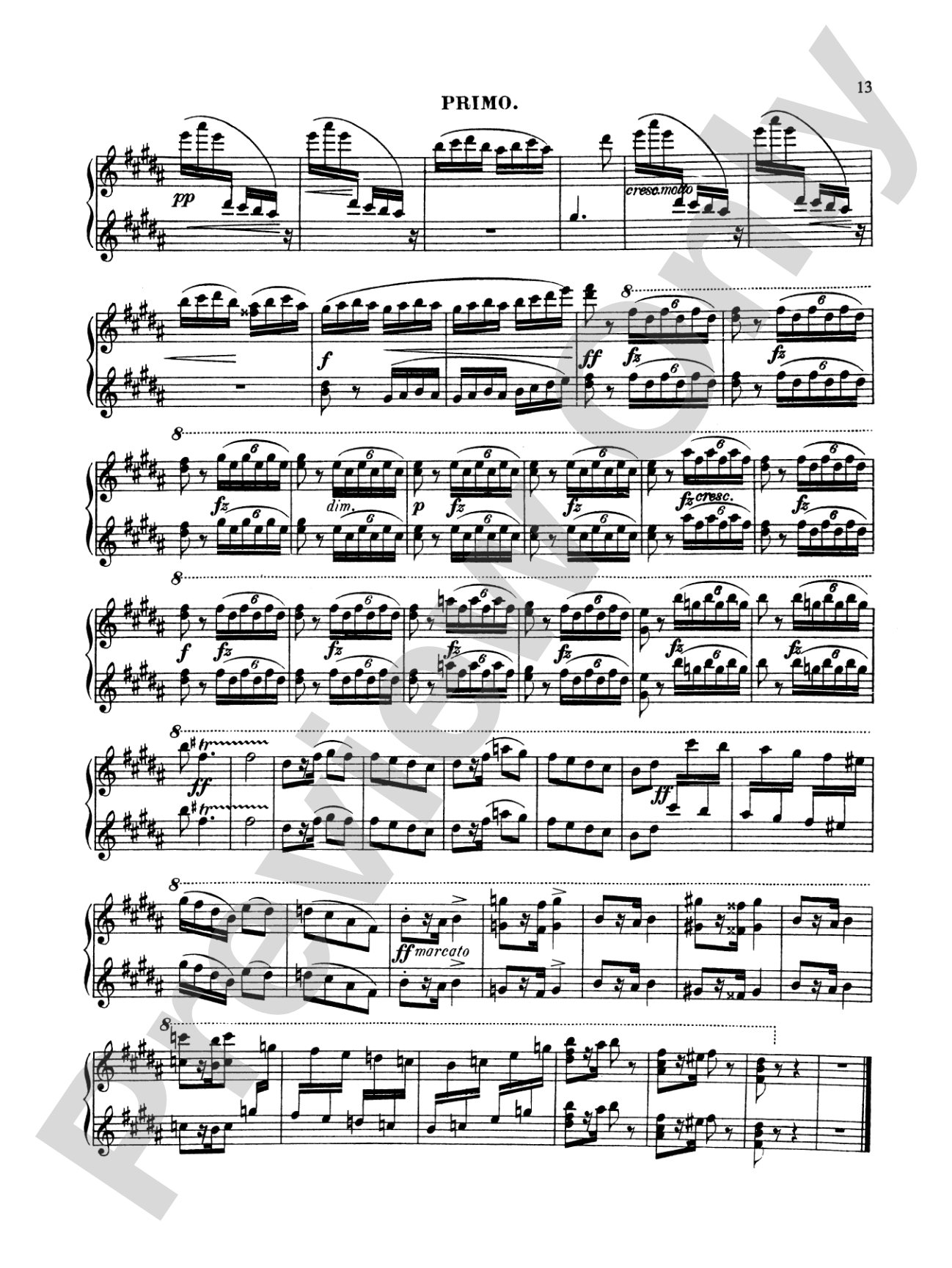

Dvorák: Slavonic Dances, Op. 72: Piano Duet (1 Piano, 4 Hands) Book
By Antonín Dvorák
Item: 00-PK-0002738

$9.99
Pickup currently not available
Buy Extra Parts (Digital PDF Download)
| Product | Price | Quantity |
|---|---|---|
| Dvorák: Slavonic Dances, Op. 72 | $0.99 | |
| Dvorák: Slavonic Dances, Op. 72 | $0.99 | |
| Dvorák: Slavonic Dances, Op. 72 | $0.99 | |
| Dvorák: Slavonic Dances, Op. 72 | $0.99 | |
| Dvorák: Slavonic Dances, Op. 72 | $0.99 | |
| Dvorák: Slavonic Dances, Op. 72 | $0.99 | |
| Dvorák: Slavonic Dances, Op. 72 | $0.99 | |
| Dvorák: Slavonic Dances, Op. 72 | $0.99 |
Parts Added to Cart!
Related Items
Slavonic Dances, Opus 72: Piano Duet (1 Piano, 4 Hands) Book |
$9.95
|
View |
Description
From the Czech composer Antonín Dvorák. Titles: Slavonic Dance, Opus 72, No. 1 * Slavonic Dance, Opus 72, No. 2 * Slavonic Dance, Opus 72, No. 3 * Slavonic Dance, Opus 72, No. 4 * Slavonic Dance, Opus 72, No. 5 * Slavonic Dance, Opus 72, No. 6 * Slavonic Dance, Opus 72, No. 7 * Slavonic Dance, Opus 72, No. 8.


Don't just read it, hear it, play along with it, and watch your students grow with it. In MakeMusic Cloud, Dvorák: Slavonic Dances, Op. 72: Piano Duet (1 Piano, 4 Hands) Book comes alive with professional accompaniment, adjustable tempo, and built-in practice tools that turn solo practice into real progress.
Open in the Player
Jump straight in and assign it today.
Start Your Free Trial
Open this title and explore the full library in minutes.
Sample Audio
No sample audio found.
Sample Video
No sample videos found.
Additional Details
Series:
Kalmus Edition
Publisher:
Alfred Music
Page Count:
60
SKU:
00-PK-0002738
More about this title
About the Composer: Antonín Dvorák
Antonín Dvorák (1841-1904) was a Czech composer who drew deeply from his country's folk traditions to create works of international significance. His ability to infuse nationalist character into forms that appealed to concert audiences across Europe made him a bridge between Romantic idealism and musical authenticity.
Dvorak's gift for melody was extraordinary, and his willingness to write for pianists at all levels—from amateurs to professionals—expanded access to his music. The Slavonic Dances represent some of his most immediate and engaging works, balancing technical brilliance with genuine warmth.
Why we love this
These eight dances translate the orchestral energy of Dvorák's beloved cycle into something collaborative and intimate. Four hands at one keyboard create a natural dialogue between partners, with both players constantly engaged in conversation rather than hierarchy, making this an ideal repertoire choice for adult duet partnerships or advanced student pairs.
What to expect
These dances pulse with vitality and genuine Slavonic character. Underneath the exuberance and rhythmic energy lies an unmistakable warmth and lyricism that makes Dvorák's writing so beloved; you'll find yourself dancing at the keyboard even as you navigate the technical demands.
Who it's for
This book serves advanced pianists and serious amateur duet players who want to explore substantial repertoire together. Adult students, collaborative partners preparing for recital, and musicians who thrive on Romantic-era melody and Bohemian character will find these dances rewarding and accessible.
How to get the most out of it
- Establish clear communication about phrasing before rehearsing together. Dvorák's melodies are generous, and allowing them room to breathe prevents the music from feeling rushed.
- Balance the primo and secondo parts carefully; even when one hand dominates melodically, the accompaniment should pulse with its own energy and color.
- Pay attention to the folk character embedded in each dance. These are not ballroom pieces played at drawing-room tempo; they should move with vigor and personality.
- Use the full dynamic range available across all eight dances. The contrasts between the livelier numbers and more lyrical ones will make the set feel like a complete journey.
How to use it
Program a selection of dances as a four-hand feature on a recital, or present all eight as a complete evening suite. These works also integrate well into a concert exploring Romantic piano literature or duet repertoire, serving equally well as an intermission lift or a substantial programmatic statement.
Skills your students will build
- Ensemble balance and listening between primo and secondo
- Phrasing across shared melodic material between two players
- Rhythmic independence in hands that must lock without losing individual character
- Pedaling coordination in a duet context
- Stylistic understanding of nationalist idiom in Romantic composition