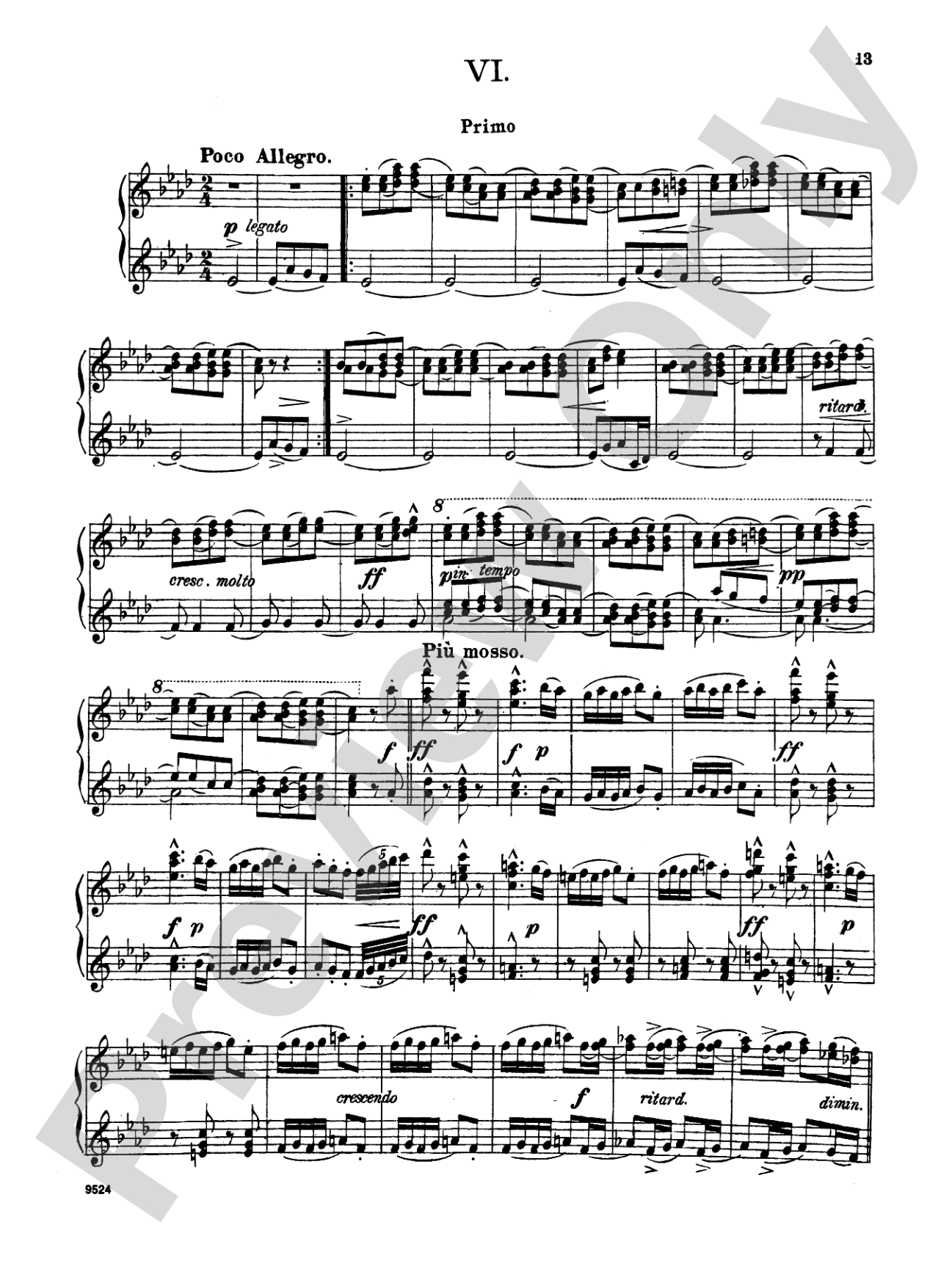
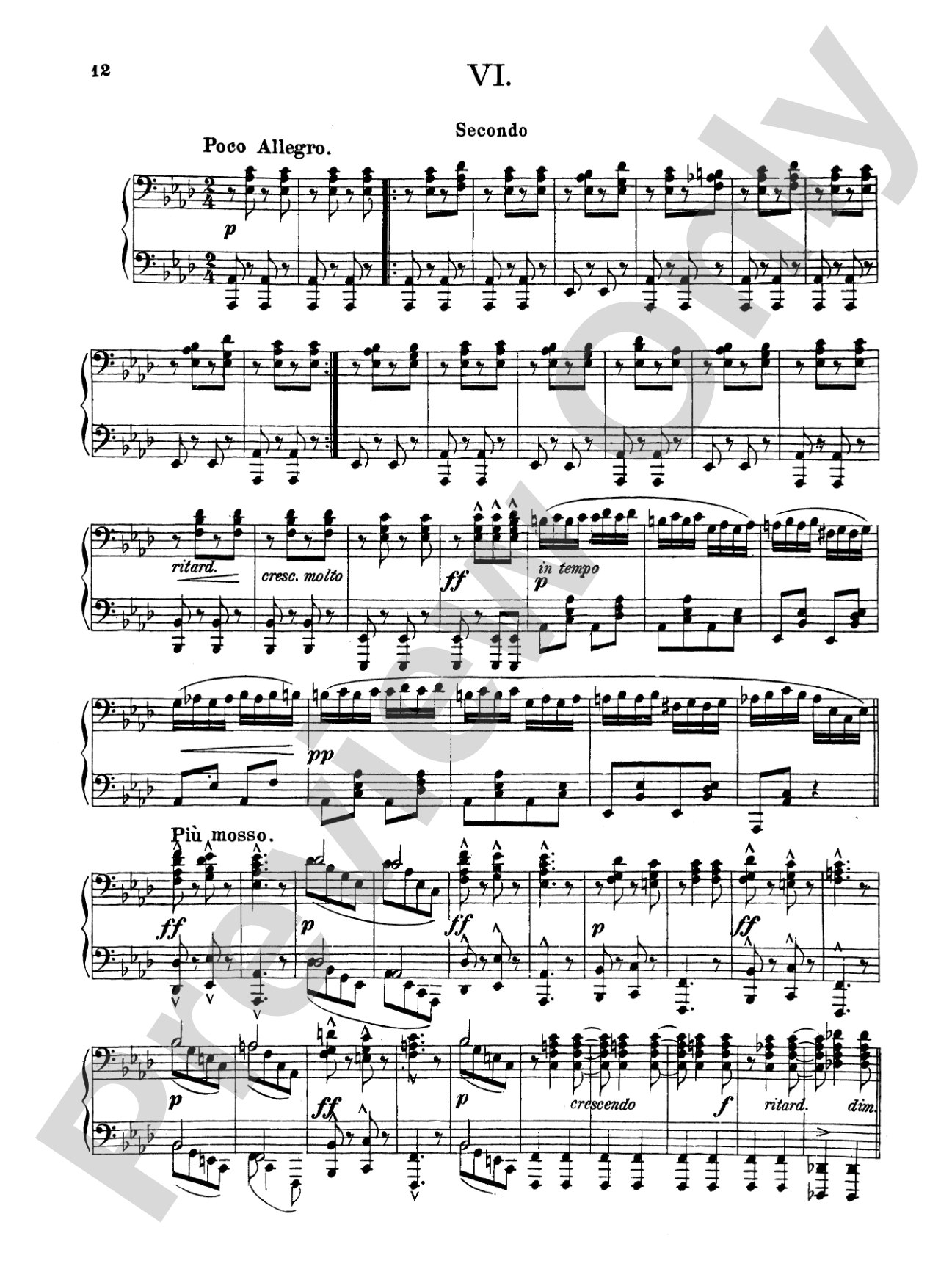
Dvorák: Slavonic Dances, Op. 46 (Volume II) Sheet Music Preview

Dvorák: Slavonic Dances, Op. 46 (Volume II)

By Antonín Dvorák

Item: 00-PC-0012763

Digital Download
$1.99
Description
5-8. From the Czech composer Antonín Dvorák.

Don't just read it, hear it, play along with it, and watch your students grow with it. In MakeMusic Cloud, Dvorák: Slavonic Dances, Op. 46 (Volume II) comes alive with professional accompaniment, adjustable tempo, and built-in practice tools that turn solo practice into real progress.

Sample Audio
No sample audio found.
Sample Video
Additional Details
Series: Kalmus Edition
Publisher: Alfred Music
Page Count: 40
SKU: 00-PC-0012763

More about this title

About the Composer: Antonín Dvorák

Antonín Dvorák (1841-1904) shaped the Romantic era by drawing from Czech folk idioms while maintaining mastery of large-scale European forms. He studied composition in Prague, later earning international recognition through his symphonies, concertos, and chamber works. His gift for melody and his ability to weave national character into universal musical language made him one of the most performed composers of his time.

Dvorak's influence extends directly into music education through works like the Slavonic Dances, which demonstrate how folk elements and sophisticated orchestration can coexist. Generations of pianists and ensemble players have learned from his clear textures, balanced counterpoint, and unfailing melodic gift. His work remains central to the Romantic piano repertoire.

Why we love this

These dances arrive at the intersection of genuine folk character and refined compositional craft. The four-hand format makes them accessible to intermediate pianists while preserving the orchestral color and rhythmic vitality of the original; paired students can grasp how texture, balance, and dialogue create rich ensemble sound without needing separate instruments. They work beautifully in student recitals, festivals, and rehearsals because they sound accomplished while remaining within reach.

What to expect

The Slavonic Dances pulse with the energy of a village celebration, yet they never shed their sophistication. Rhythmic vitality meets lyrical melody; folk simplicity appears alongside unexpected harmonic turns. You'll hear both the joy of the original dances and Dvorák's compositional imagination refining that material into art song for the piano.

Who it's for

Intermediate to advanced pianists preparing duet repertoire for recitals, festivals, or ensemble performance. Two players of similar level will find both parts engaging without either feeling subordinate. Teachers seeking substantial four-hand literature that connects students to the Romantic canon will return to these dances repeatedly.

How to get the most out of it

  • Let the primo and secondo parts breathe as distinct characters. The secondo often anchors rhythmic and harmonic foundation; the primo carries melody and dialogue. Clarity between the two parts strengthens the sense of orchestration.
  • Honor the dance rhythms without rushing them. Slavonic dances rely on their characteristic meters and syncopations to convey folk character; flexibility in tempo within a phrase often matters more than strict metronomic precision.
  • Balance volume between the two players so the fuller textured part does not obscure thinner lines. Duets demand constant awareness of who is featured in each moment.
  • Watch for key changes and chromatic passages that can blur intonation on the piano. Rhythmic synchronization becomes even more critical when the harmonic language shifts.

How to use it

Pair these dances with other Romantic duet literature, or use them as a standalone suite in a student or faculty recital to showcase ensemble awareness and interpretive maturity. They also anchor a concert theme exploring nationalism in Romantic music, bridging chamber practice and the concert stage within a single rehearsal season.

Skills your students will build

  • Coordinating tempo and rhythm between two independent players at one keyboard
  • Balancing melody and accompaniment roles to create orchestral texture on piano
  • Reading and interpreting folk-inflected rhythms, including characteristic Slavonic meters
  • Managing hand independence, part separation, and shared pedal on one instrument
  • Understanding how arrangement adapts orchestral color for four-hand format

You May Also Like