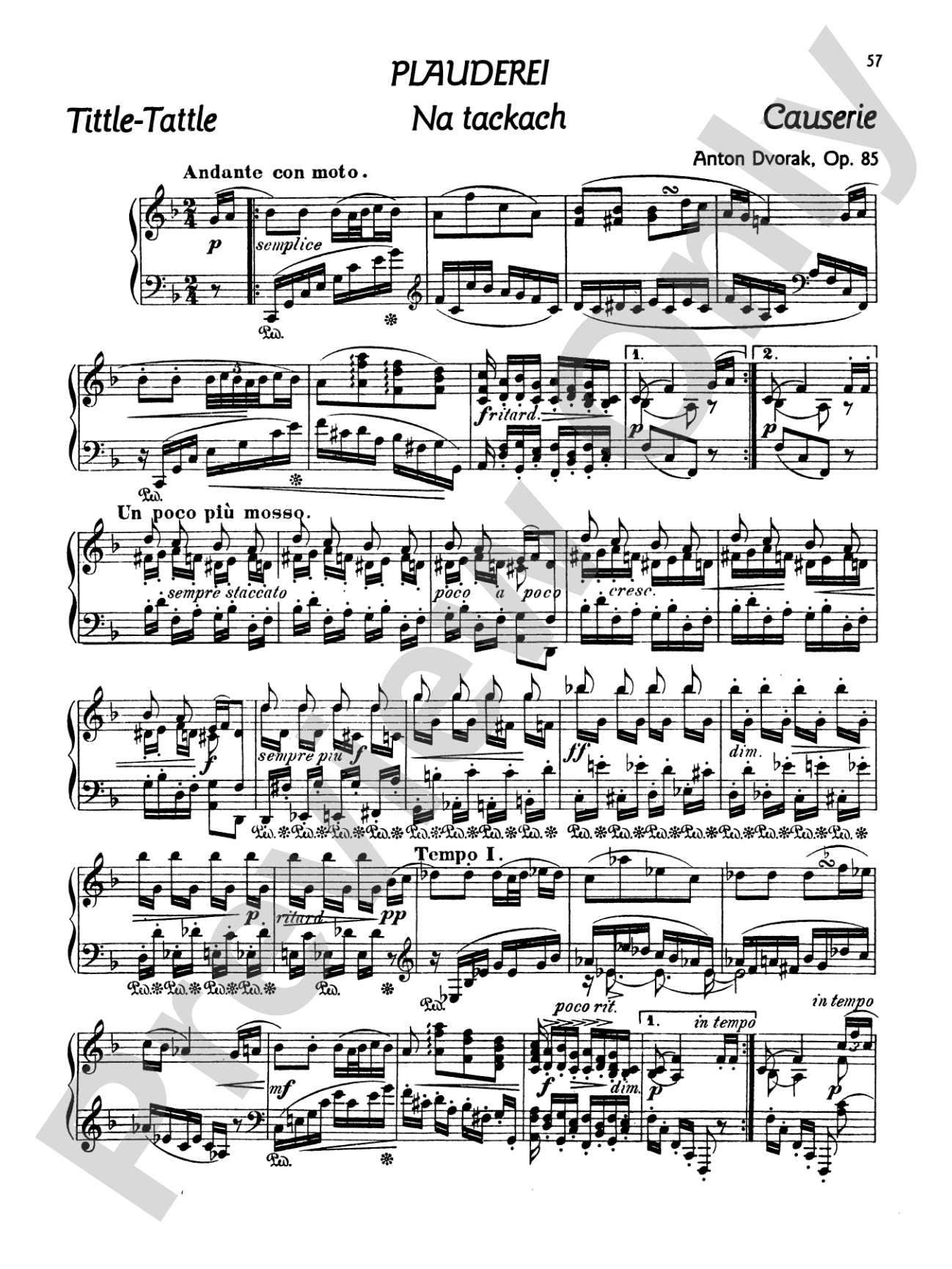
Dvorák: Poetical Tone Pictures, Op. 85 Sheet Music Preview

Dvorák: Poetical Tone Pictures, Op. 85

By Antonín Dvorák

Item: 00-PC-0013851

Digital Download
$0.99
Description
13 pieces from the Czech composer Antonín Dvorák.

Don't just read it, hear it, play along with it, and watch your students grow with it. In MakeMusic Cloud, Dvorák: Poetical Tone Pictures, Op. 85 comes alive with professional accompaniment, adjustable tempo, and built-in practice tools that turn solo practice into real progress.

Sample Audio
No sample audio found.
Sample Video
Additional Details
Series: Kalmus Edition
Publisher: Alfred Music
Page Count: 72
SKU: 00-PC-0013851

More about this title

About the Composer: Antonín Dvorák

Antonín Dvorák (1841-1904) stands as one of the most significant composers of the Romantic era, bridging European tradition with distinctly Czech musical identity. Born in Bohemia, he drew deeply from folk melodies and dance rhythms of his homeland while mastering the large forms and harmonic language of German Romanticism, earning him recognition across Europe and America.

Dvorak's gift for melody and orchestration made him a natural voice in the concert hall, but his piano works remain essential for pianists seeking to understand his compositional voice in its most intimate form. His pedagogical instincts shine through in works written for intermediate and advanced students, where technical demands serve the music rather than overshadow it.

Why we love this

Poetical Tone Pictures reveals Dvorák as a miniaturist with genuine substance. Each piece functions as a complete musical thought rather than a technical exercise, giving students repertoire that builds interpretive maturity without requiring virtuosic facility. The collection balances accessibility with artistic depth, making it a rewarding choice for pianists developing their interpretive voice during the intermediate-to-advanced transition.

What to expect

Poetical Tone Pictures inhabits the intimate Romantic world of Schumann and Brahms, but with a distinctly Central European flavor. Melodies sing with folk simplicity while underlying harmonies shift with subtle chromatic color, creating pieces that feel both direct and emotionally complex. There is poetry here without sentimentality, and substance without weight.

Who it's for

This collection serves intermediate-to-advanced pianists seeking Romantic repertoire that combines lyrical appeal with genuine musical substance. It works equally well in studio recitals or as study material for students developing interpretive independence and understanding of 19th-century harmonic language.

How to get the most out of it

  • Attend to Dvorák's pedal markings carefully; they define the harmonic color palette and are essential to the Romantic sound world these pieces inhabit.
  • Shape each melodic phrase with attention to its underlying dance or song origin. Many pieces echo Czech folk character, and that cultural rootedness should animate your phrasing choices.
  • Differentiate the weight and character of left-hand accompaniment patterns from piece to piece. The texture that serves one Tone Picture would cloud another; clarity of texture matters as much as precise fingerings.
  • Balance rubato with structural clarity. Dvorák's harmonic language can accommodate expressive flexibility, but the underlying phrase architecture must remain audible.

How to use it

Select individual pieces for student recitals where a Czech Romantic voice would add programmatic variety. The collection's brevity also makes it suitable for collaborative programming alongside vocal works or chamber music that draws on similar folk-influenced material. These pieces work particularly well in thematic recitals exploring nationalist Romanticism or 19th-century miniature forms.

Skills your students will build

  • Sustaining long melodic lines within the constraints of piano voicing
  • Balancing textural clarity across multiple registers
  • Responding to harmonic color through pedal technique and voice leading
  • Interpreting rubato within structured harmonic progressions
  • Understanding nationalist compositional voice and its relationship to folk source material

You May Also Like