
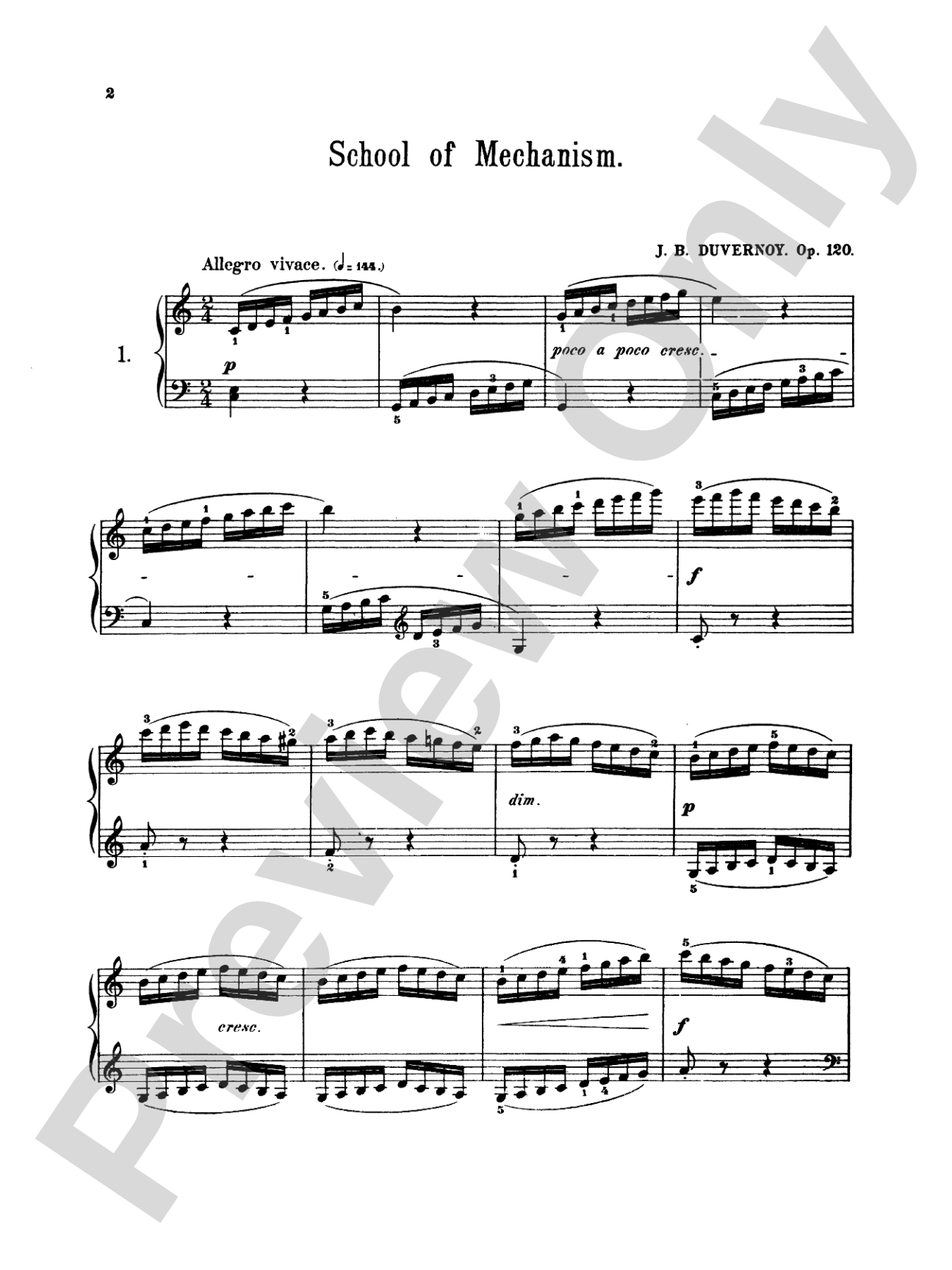
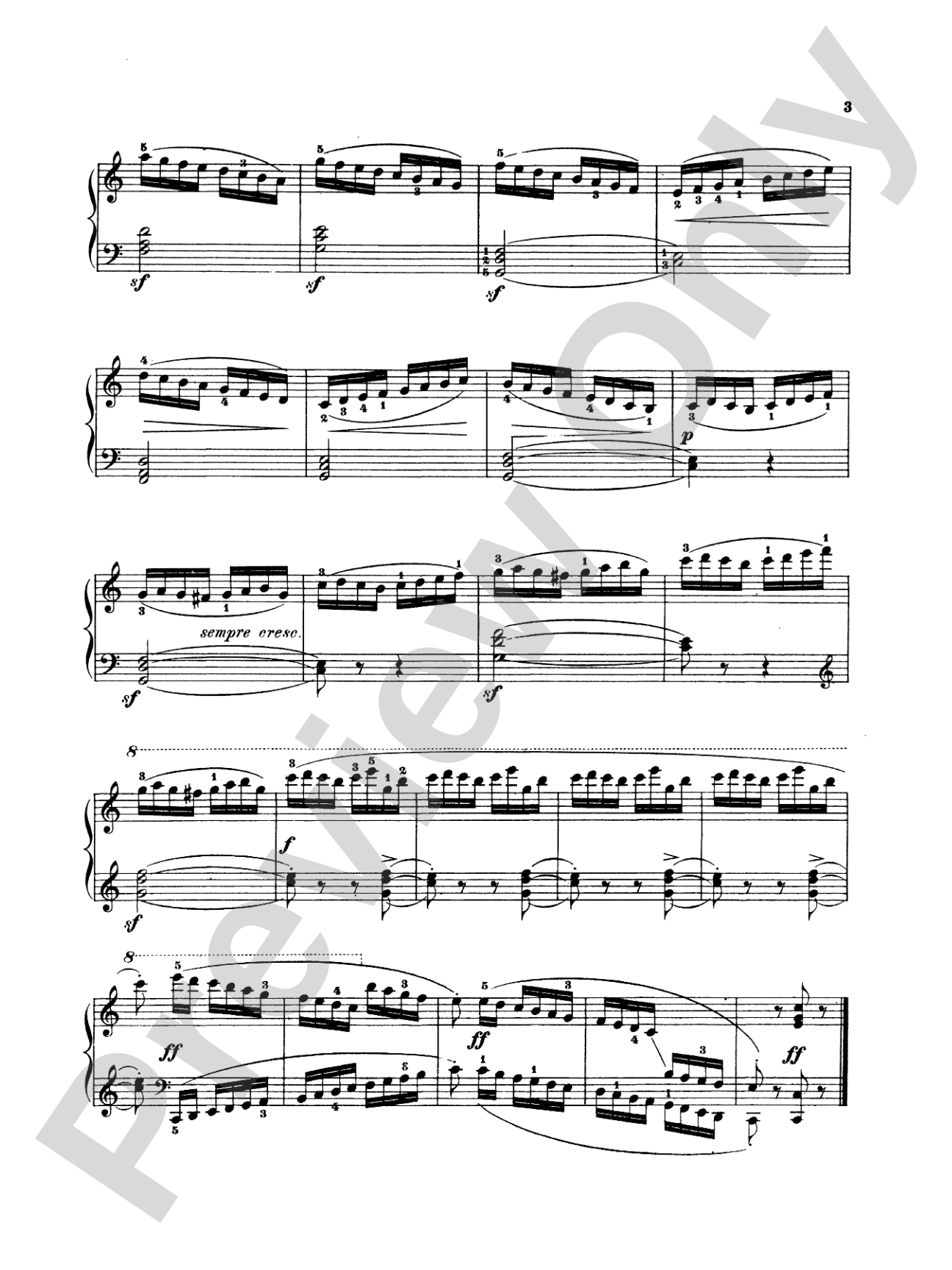

Duvernoy: School of Mechanism, Op. 120
By Victor Duvernoy
Item: 00-PK-0003078

$9.99
Pickup currently not available
Buy Extra Parts (Digital PDF Download)
Parts Added to Cart!
Description


Don't just read it, hear it, play along with it, and watch your students grow with it. In MakeMusic Cloud, Duvernoy: School of Mechanism, Op. 120 comes alive with professional accompaniment, adjustable tempo, and built-in practice tools that turn solo practice into real progress.
Open in the Player
Jump straight in and assign it today.
Start Your Free Trial
Open this title and explore the full library in minutes.
Sample Audio
No sample audio found.
Sample Video
No sample videos found.
Additional Details
Series:
Kalmus Edition
Publisher:
Alfred Music
Page Count:
36
SKU:
00-PK-0003078
More about this title
About the Composer: Victor Duvernoy
Victor Duvernoy (1806-1884) was a French pianist and pedagogue whose technical studies remain central to Romantic-era piano training. A student of Moscheles and contemporary of Czerny, Duvernoy understood the particular demands of amateur and semi-professional pianists and composed accessible yet musically substantial etudes that build genuine facility without sacrificing musicality.
Op. 120 stands as his most comprehensive methodological work, synthesizing decades of teaching experience into a systematic approach to keyboard mechanism. Unlike purely mechanical studies, these pieces embed technical challenges within musical contexts that reward both the student and listener.
Why we love this
Duvernoy occupies a pedagogical sweet spot that modern curricula often miss: technically rigorous without being emotionally hollow. Where Czerny can feel relentless and some Romantic character pieces demand more maturity than intermediate students possess, Op. 120 delivers real musical satisfaction alongside finger work that translates directly to standard repertoire.
What to expect
These studies breathe with the optimism and grace characteristic of mid-Romantic piano writing. Melodies emerge from figurative textures with natural phrasing, harmonic progressions feel purposeful rather than arbitrary, and even the most technically demanding passages carry a sense of musical conversation rather than mere display.
Who it's for
Intermediate to early-advanced pianists (roughly RCM Grade 6-8 or ABRSM Grade 5-7 level) who are building velocity, finger independence, and legato control while still developing musical taste. Teachers seeking repertoire that bridges technical studies and character pieces will find this essential for curriculum planning.
How to get the most out of it
- Approach each study as a complete musical statement, not a technical checklist; shape phrases even in passages marked by rapid figuration to maintain voice in the underlying harmonic progression.
- Anchor the practice routine by studying the handed score rather than relying on memorized muscle patterns, as Duvernoy's harmonic vocabulary often rewards sight-reading development.
- Layer technical work systematically by isolating passage work at a slow tempo first, then gradually increasing speed only when evenness and clarity are secure.
How to use it
Assign individual studies as supplementary practice to students working through contemporary repertoire at similar technical levels; many pair well with Schubert impromptus, Schumann album leaves, or easier Mendelssohn songs without words. The 36 pages also make this suitable for a full recital program of character studies when grouped thematically or by technical focus.
Skills your students will build
- Finger velocity and evenness across repeated note figures and scale passages
- Hand independence in pieces requiring separate melodic and accompanying lines
- Legato pedaling and control of harmonic color within Romantic harmonic language
- Sight-reading in varied key centers and time signatures
- Musical phrasing and voicing within technically demanding contexts