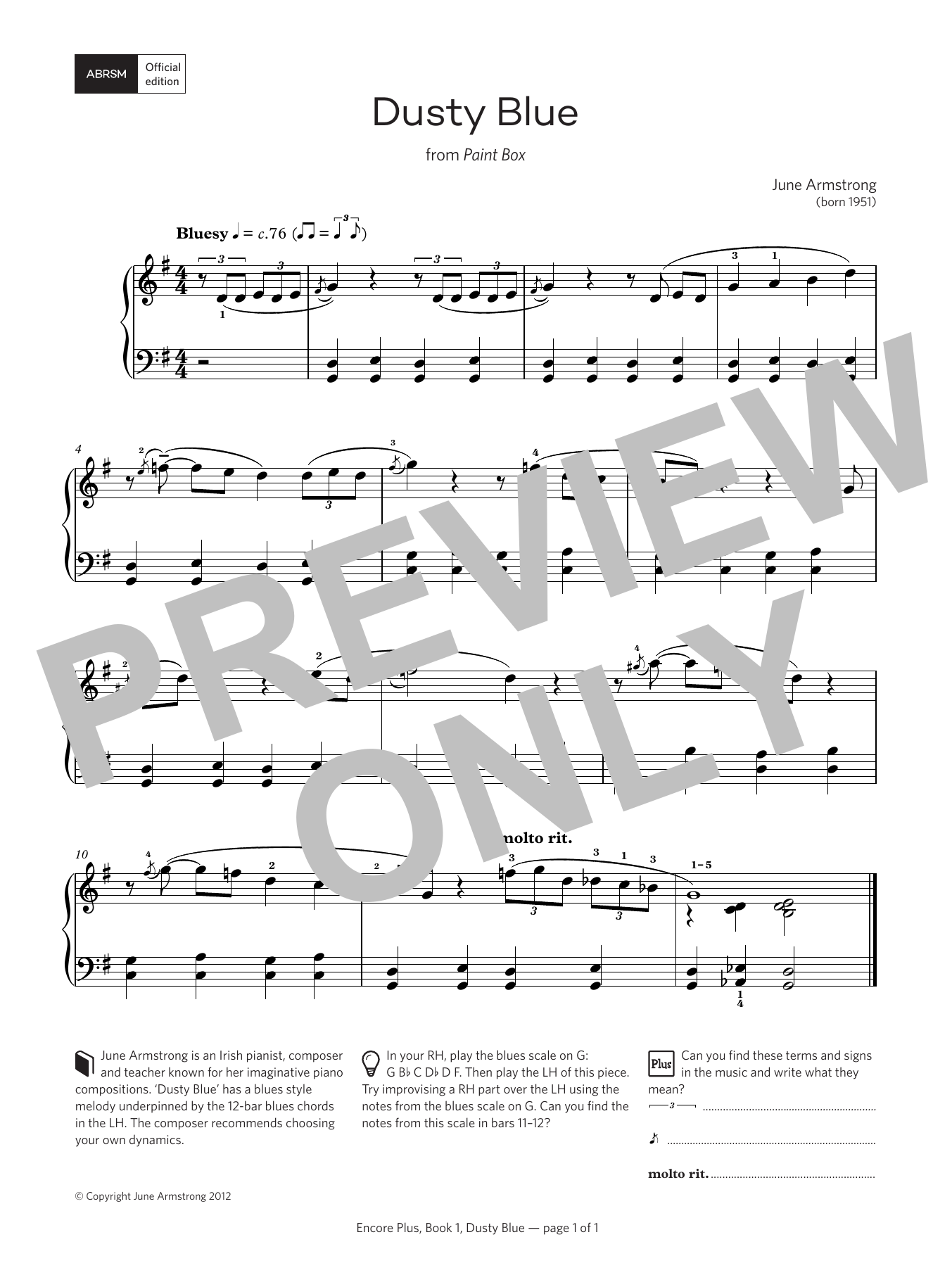
Dusty Blue captures that sweet spot where early intermediate students feel genuinely accomplished playing something musically substantial. Armstrong's writing respects the pianist's developing technique without patronizing the ear; the piece unfolds with real harmonic interest across its single page.
What to expect
The title evokes a reflective, gently moody atmosphere. Dusty Blue unfolds with a contemplative quality that appeals to young pianists discovering how color and texture shape a musical statement.
Who it's for
Early intermediate pianists (around grade 2) looking for repertoire that builds confidence without sacrificing musicality. Teachers seeking a single-page piece that students can prepare quickly but still savor.
How to get the most out of it
Listen for the character shift between sections. The piece asks for contrasting touches that reveal maturity in your phrasing, even at this level.
Pay attention to tempo stability. Grade 2 pieces often benefit from a metronome check in the first week of learning to establish the foundation before expressive work begins.
Let the harmony breathe. Armstrong's chord progressions are worth lingering on; resist rushing through transitions between harmonic areas.
How to use it
Pair this with a brighter companion piece to create contrast on a student recital. Its intimate scope makes it ideal for early spring solo programs or as a program opener that draws listeners in quietly.
Skills your students will build
Legato pedaling across harmonic changes
Voicing chords with independence between hands
Sustaining musical line through rests and transitions
Responding to key modulation and harmonic color shifts
You May Also Like
Scan to Complete Your Purchase
Use your phone's camera to scan the code below
You'll log in on your phone and the order will be added to your account