
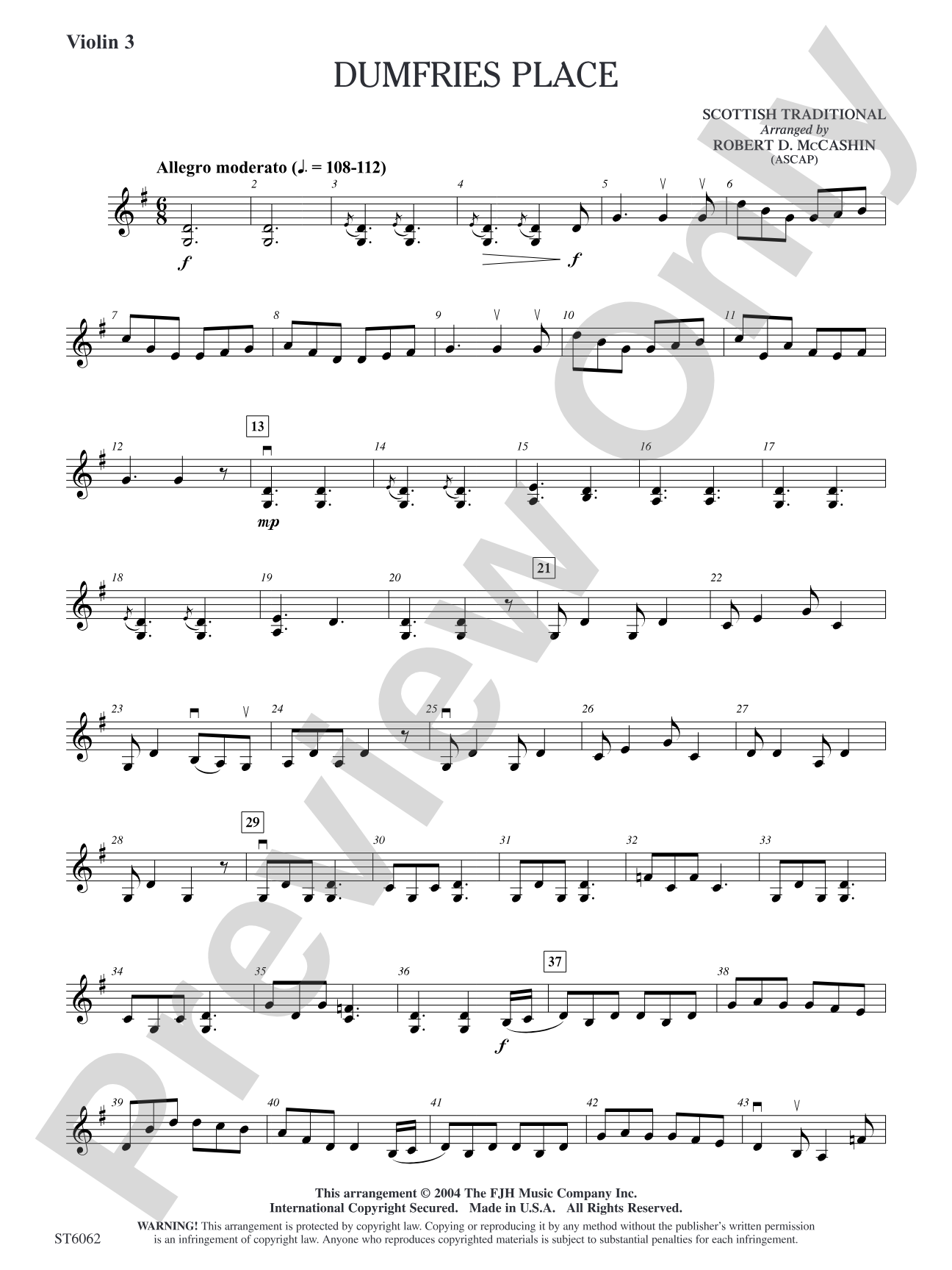

Dumfries Place: Optional Violin 3 (Viola)
Arranged by Robert D. McCashin
Grade: 2.5
Item: 98-PC-DST6062_VN3
$7.00
Pickup currently not available
Description
This fun-to-play dance music is based on a Scottish jig and reel. The two traditional Scottish melodies, Highlander's Jig and Dumfries Place, are combined in an intriguing arrangement by Robert D. McCashin. An occasional drone is heard among the rhythmic drive of the supporting instruments, giving everyone an exciting role in this tribute to some of the most popular types of Scottish music!


Dumfries Place: Optional Violin 3 (Viola) isn't in MakeMusic Cloud just yet...but it could be. Let us know you'd like to see it, and you'll help shape what comes next. In the meantime, start a free trial and dive into thousands of interactive titles your students can play along with today.
Request This Title
Tell us you want it.
Start Your Free Trial
Explore everything that's ready to play right now.
Sample Audio
1
Audio File
--:--
0:00
0:00
Sample Video
No sample videos found.
Additional Details
Series:
FJH Developing Strings
Publisher:
The FJH Music Company, Inc.
SKU:
98-PC-DST6062_VN3
More about this title
About the Arranger: Robert D. McCashin
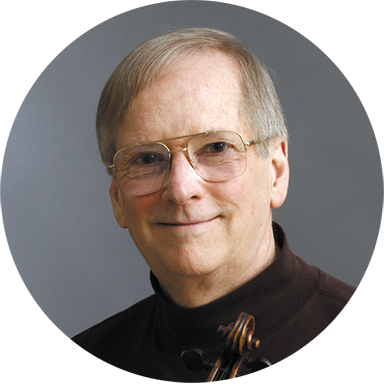
Robert D. McCashin holds a Doctor of Musical Arts in conducting from the University of Arizona and studied violin performance at Louisiana State University. He served as Professor Emeritus and former Director of Orchestras at James Madison University, where he spent 43 years teaching conducting and applied strings at the university level. During his tenure, he directed the JMU Symphony, Chamber Orchestra, and Opera Orchestras while maintaining an active private violin studio.
McCashin has become a prolific arranger and composer for educational ensembles, publishing nearly 80 works across grades 1 through 5. Many of his arrangements have earned bestseller status and Editors' Choice recognition in music education circles. Before joining JMU, he taught at the University of Texas at Arlington and Texas Wesleyan University, performed with regional orchestras and opera companies throughout North Texas, and founded the Arlington Youth Symphony. He is co-author of the string class methods New Directions for Strings and A Scale in Time.
Why we love this
McCashin's gift for combining authentic Scottish material with transparent orchestration shines here. Students get rhythmic energy and melodic interest without complicated textures, making this a natural choice for intermediate orchestras that want to program something spirited and cultural without sacrificing clarity or balance.
What to expect
Spirited and approachable, with the joy of Scottish dance embedded in every phrase. The blend of two traditional melodies and the rhythmic pulse underneath create instant forward momentum, while the occasional drone adds warmth and authenticity without slowing the ensemble down.
Who it's for
String orchestras in grades 2.5 through 3 looking for engaging, culturally grounded music that doesn't demand advanced technique. This arrangement works well for ensembles ready to handle independent rhythmic parts and light counterpoint, and for groups exploring world music traditions.
How to get the most out of it
- Anchor the rhythmic drive through the supporting instruments (violas and lower strings) so the drone and melody sit clearly on top; a slight emphasis on the downbeat helps the jig character emerge without forcing it.
- Shape the melodies with gentle phrase breathing rather than relentless articulation; Scottish dance music thrives on forward motion, not choppiness.
- Balance the occasional drone carefully so it colors the texture without overpowering the dancing rhythms underneath.
- Use the dynamic range (likely modest at this level) to highlight when the two melodies trade material or when texture shifts between melody-driven and rhythm-driven sections.
How to use it
Program this alongside other world music selections to build a thematic concert around dance traditions and cultural heritage. It pairs well with Irish or other Celtic pieces and works equally well as a concert opener (for its lift and energy) or as a lighter moment in a mixed program of concert and character music.
Skills your students will build
- Reading and executing rhythmic independence (active rhythm section versus melodic parts)
- Balancing melody, harmony, and accompaniment texture in a single score
- Playing with forward rhythmic drive and dance character
- Listening through a drone to maintain ensemble cohesion
- Interpreting traditional music idioms on orchestral instruments