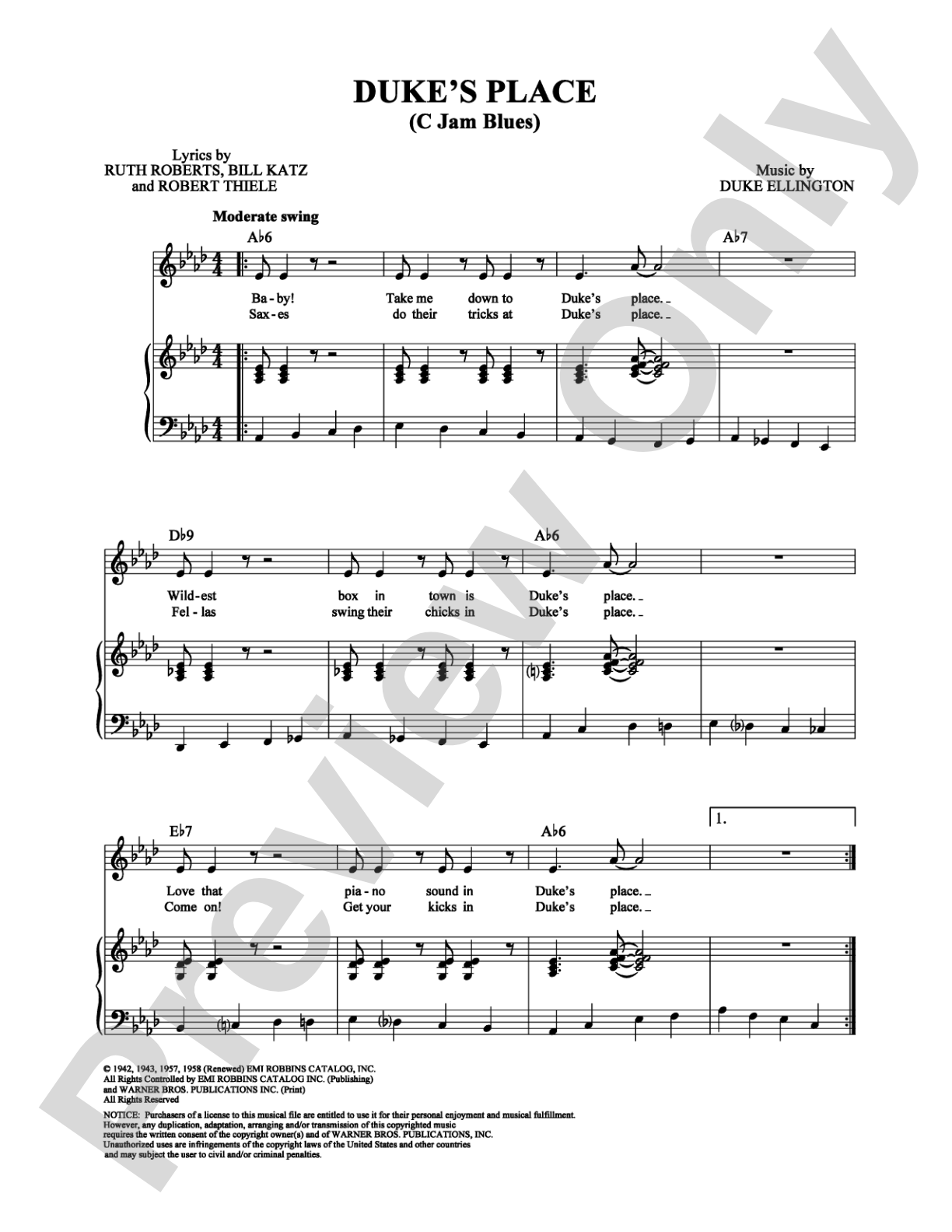
Duke's Place (C Jam Blues): Piano/Vocal/Chords Digital Sheet Music

Duke's Place (C Jam Blues): Piano/Vocal/Chords Digital Sheet Music

Duke Ellington

Item: 00-PS-0007395

Digital Download
$3.99
Description

Duke's Place (C Jam Blues): Piano/Vocal/Chords Digital Sheet Music isn't in MakeMusic Cloud just yet...but it could be. Let us know you'd like to see it, and you'll help shape what comes next. In the meantime, start a free trial and dive into thousands of interactive titles your students can play along with today.

Sample Audio
No sample audio found.
Sample Video
Additional Details
SKU: 00-PS-0007395

More about this title

About the Artist: Duke Ellington

Duke Ellington (1899, 1974) was a pianist, composer, and bandleader who fundamentally shaped American music across seven decades. His output spans thousands of compositions, from three-minute popular songs to extended concert works, all marked by harmonic sophistication, orchestral imagination, and an unfailing ear for what swings. In the classroom and rehearsal room, Ellington's music teaches students how to balance accessibility with complexity, and how strong compositional voice can shine through any instrumentation.

Why we love this

Duke's Place is a blues with real teeth, built on a solid 12-bar foundation but wrapped in Ellington's harmonic language. The piano and vocal lines interweave naturally, making this accessible enough for students learning jazz standards while offering plenty of interpretive room for more experienced musicians to explore swing, phrasing, and the particular coloristic choices that define the Duke's style.

What to expect

Intimate and sly. The melody sits comfortably in a speaking voice range, and the harmonic moves feel like a good conversation between pianist and singer, reflective, occasionally witty, never showy. This is Duke's blues, which means it carries dignity alongside swagger.

Who it's for

Jazz vocalists and pianist-singers preparing repertoire for recitals, jam sessions, or recordings will find a clean, playable lead sheet here. Students studying jazz harmony and blues form benefit from seeing how Ellington constructs melody and chord movement within a familiar 12-bar structure.

How to get the most out of it

  • Shape the melody through dynamic control rather than tempo fluctuation; let the rhythm section lock in while your voice floats over the changes with restraint
  • Use the chord symbols as a guide for comping on the piano, but listen to how Ellington voices his harmonies and adapt your left-hand voicings to match that sound
  • Land on the blues notes (b3, b5, b7) with intention; they anchor the emotional weight of the tune and shouldn't be glossed over
  • Trust the silence between phrases; this blues breathes, and rushing will flatten the swagger

How to use it

Pair this with other Ellington standards or compositions to build a set that shows his range across the American songbook. It works particularly well in a jazz vocal recital, especially alongside spirituals, standards from the Great American Songbook, or other blues-based repertoire that lets you explore different facets of American musical tradition.

Skills your students will build

  • Reading and improvising over a 12-bar blues form
  • Interpreting jazz chord symbols and creating piano voicings
  • Phrasing blues melodies with swing feel and expressive control
  • Understanding Ellington's harmonic language and melodic sensibility

You May Also Like