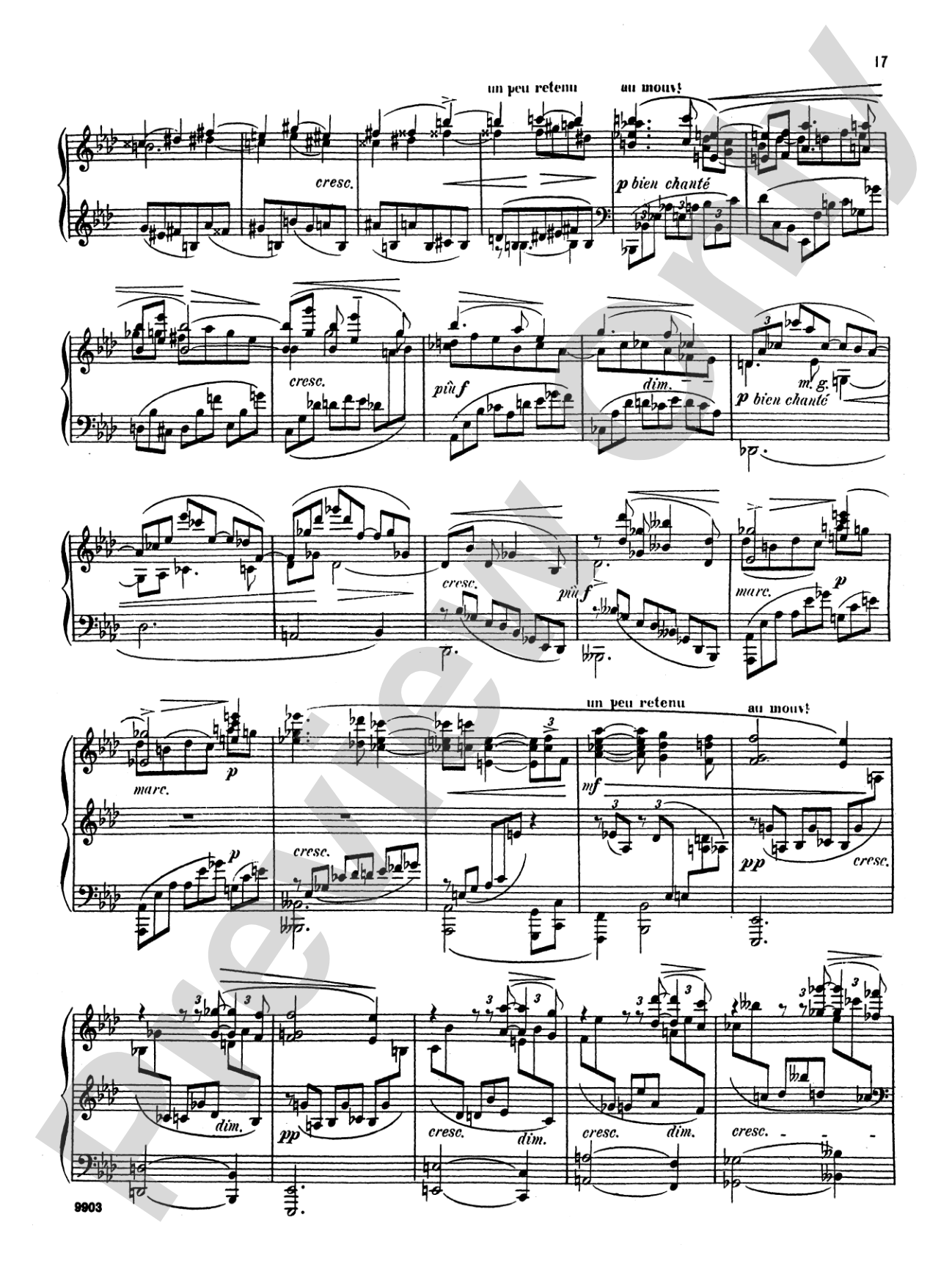
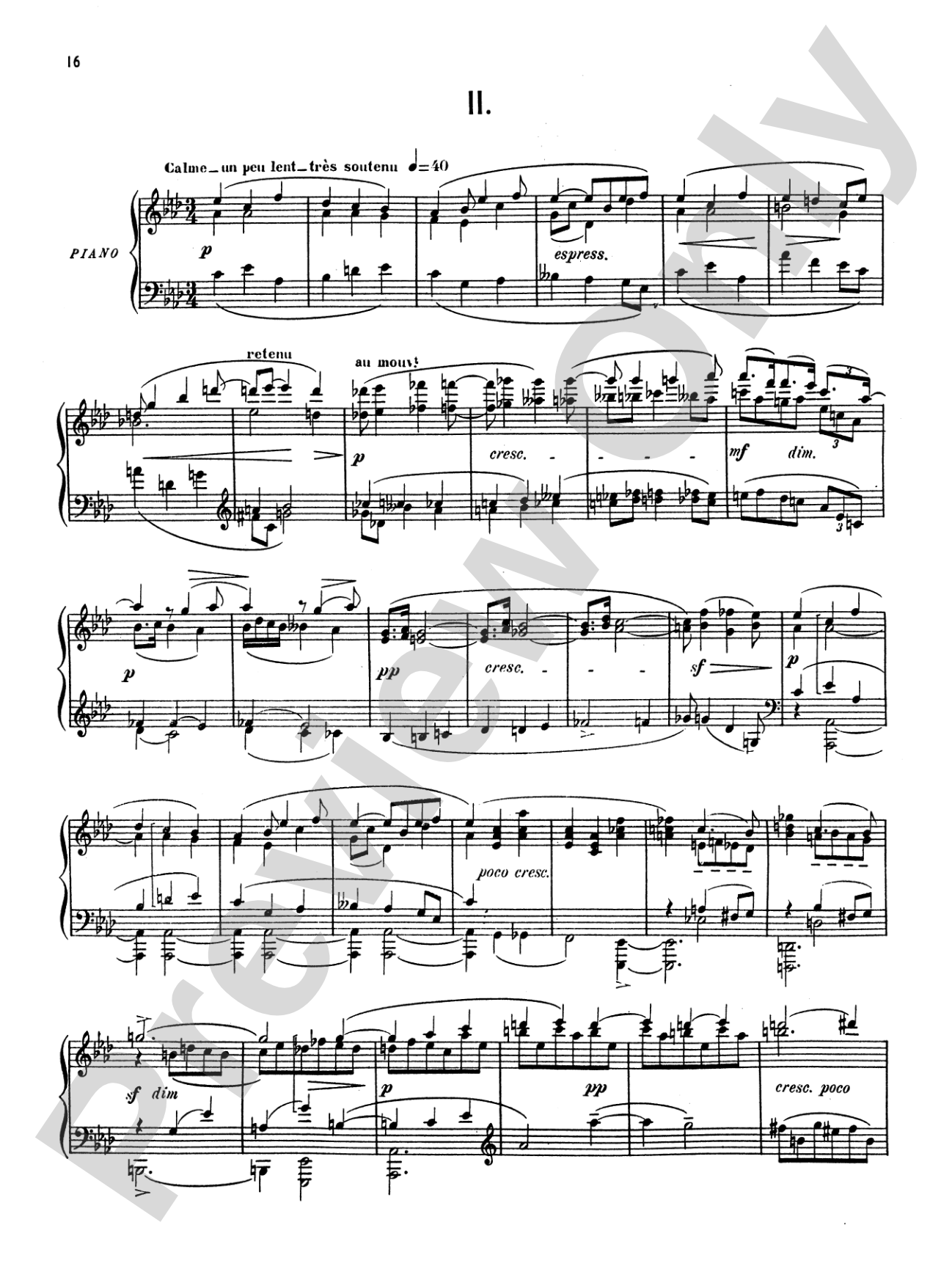
Dukas: Sonata in E flat Minor Sheet Music Preview

Dukas: Sonata in E flat Minor

By Paul Dukas

Item: 00-PC-0013863

Digital Download
$2.99
Description

Don't just read it, hear it, play along with it, and watch your students grow with it. In MakeMusic Cloud, Dukas: Sonata in E flat Minor comes alive with professional accompaniment, adjustable tempo, and built-in practice tools that turn solo practice into real progress.

Sample Audio
No sample audio found.
Sample Video
Additional Details
Series: Kalmus Edition
Publisher: Alfred Music
Page Count: 60
SKU: 00-PC-0013863

More about this title

About the Composer: Paul Dukas

Paul Dukas (1865-1935) was a French composer whose fastidious approach to craft and relentless self-criticism produced a relatively small catalog of works, each polished to exceptional finish. Though best known for the orchestral scherzo The Sorcerer's Apprentice, Dukas was a serious symphonist and pianist whose chamber and solo works reveal a sophisticated harmonic language rooted in late Romanticism with distinctly modern sensibilities.

Dukas taught composition at the Paris Conservatoire and shaped generations of French composers through his uncompromising standards. His piano works, including this sonata, showcase the same architectural precision and emotional depth that define his orchestral writing, making them essential repertoire for advanced pianists exploring the French piano tradition.

Why we love this

This sonata stands apart from the Impressionist-era piano works students often encounter, offering instead a work of formal rigor and harmonic sophistication that rewards detailed score study. Dukas's writing here balances late-Romantic virtuosity with the structural clarity of the Classical sonata tradition, giving advanced pianists a genuinely substantial piece that feels both historically informed and musically substantial.

What to expect

The work unfolds with the inevitability of a well-constructed argument, moving through dense harmonic terrain with moments of unexpected lyricism. Though written in a minor key, it avoids pathos, instead cultivating an introspective quality marked by subtle color shifts and architectural grandeur.

Who it's for

This sonata is designed for advanced pianists preparing for conservatory-level study or recital performance. It demands secure technique, strong harmonic literacy, and the interpretive maturity to navigate a large-scale work that does not announce its emotional content through obvious drama.

How to get the most out of it

  • Shape the harmonic progressions with awareness of color and weight; Dukas's chromaticism functions architecturally, not decoratively, and each shift should feel purposeful.
  • Give yourself time with the form before memorization; understanding the large-scale relationships between themes will make the technical passages sit more naturally.
  • Attend closely to dynamic markings and tempo indications. Dukas notated with precision, and these details are integral to the work's character rather than ornamental.
  • Balance clarity in the right hand against the harmonic foundation in the left; the piano texture often requires distinguishing between melodic line and supporting voices simultaneously.

How to use it

Program this as a centerpiece for a recital devoted to French piano masterworks, pairing it with works by Franck or Saint-Saëns to contextualize Dukas's position in the tradition. Its substantial length and emotional weight make it an ideal anchor for an advanced student recital.

Skills your students will build

  • Reading complex chromatic harmony and voice leading across both staves
  • Sustaining formal architecture across a large-scale single-movement or multi-movement work
  • Managing rapid figurational passages while maintaining structural clarity
  • Balancing virtuosity with musical substance and interpretive restraint
  • Understanding late-Romantic harmonic language and its structural function

You May Also Like