Ducky Bumps: Lead Sheet Digital Sheet Music

Ducky Bumps: Lead Sheet Digital Sheet Music

Neal Hefti

Item: 00-PS-0009433

Digital Download
$1.99
Description

Ducky Bumps: Lead Sheet Digital Sheet Music isn't in MakeMusic Cloud just yet...but it could be. Let us know you'd like to see it, and you'll help shape what comes next. In the meantime, start a free trial and dive into thousands of interactive titles your students can play along with today.

Sample Audio
No sample audio found.
Sample Video
Additional Details
SKU: 00-PS-0009433

More about this title

About the Artist: Neal Hefti

Neal Hefti composed and arranged for some of the most important big bands of the swing era, including Harry James and Count Basie. His gift for writing accessible, swinging charts made him one of the most recorded arrangers in jazz history, with a catalog that spans everything from film scores to television themes.

Hefti's writing is marked by clear voicings, memorable melodic hooks, and arrangements that sit naturally under the soloist's fingers. For educators, his work represents a masterclass in functional jazz orchestration, every note serves the ensemble sound and the soloists who play over it.

Why we love this

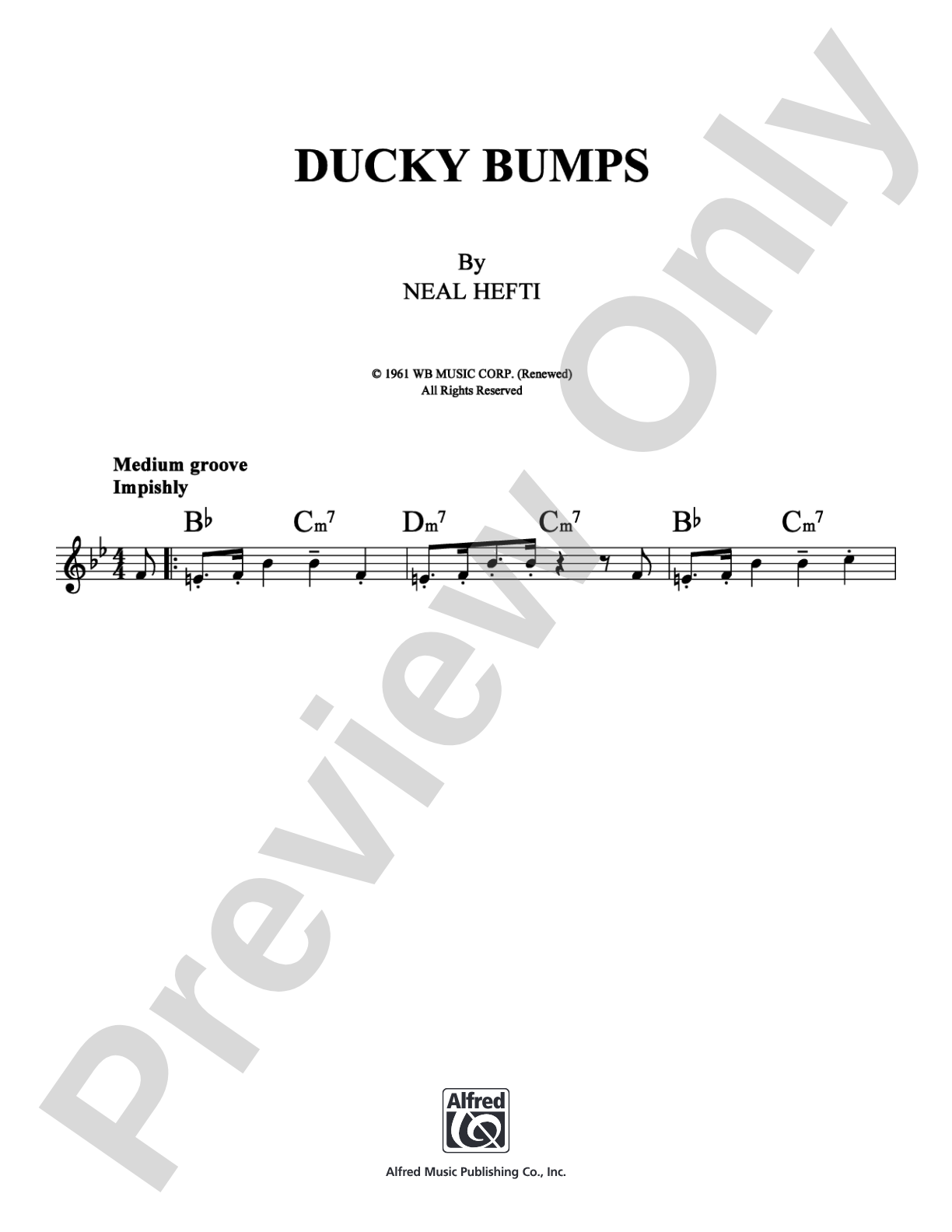
Hefti's lead sheets offer a direct window into how a master arranger thinks about melody, harmony, and the space between them. This particular chart gives students and educators a chance to explore sophisticated jazz voicings without the complexity of a full big band score, making it ideal for small group or solo study.

What to expect

Playful and swinging, with a lightness that belies its harmonic sophistication. The melody bounces with humor while the chords underneath provide elegant support, creating the kind of relaxed groove that defines small-group jazz at its best.

Who it's for

Jazz pianists, guitarists, and other chord-playing musicians who want to understand Hefti's compositional approach up close. Educators using lead sheets to teach jazz harmony and improvisation will find this a teachable example of how melody and chord function work together.

How to get the most out of it

  • Read through the melody first to understand its contour and phrasing, then layer in the chord changes so neither element overshadows the other.
  • Pay attention to guide tones (the thirds and sevenths of each chord) as you voice the harmony; they create the strongest sense of direction through a progression.
  • Experiment with different rhythmic comping approaches (playing on the beat, behind it, or with syncopation) to find what serves the melody best.

How to use it

Use this in a jazz ensemble context as a vehicle for soloing, or feature it in a recital that highlights different approaches to the same chart across multiple players. It works equally well as a rehearsal tool for teaching chord-melody relationships or as a performance piece in a jazz standards program.

Skills your students will build

  • Reading and interpreting jazz chord symbols
  • Understanding guide tone lines and voice leading
  • Developing melodic phrasing that complements harmonic movement
  • Building personal interpretive choices within a composed framework

You May Also Like