

Drums of the Saamis: Concert Band Conductor Score & Parts
By Samuel R. Hazo
Grade: 3.5
Item: 35-PK00292309
$80.00
Pickup currently not available
Buy Extra Parts (Digital PDF Download)
Parts Added to Cart!
Description
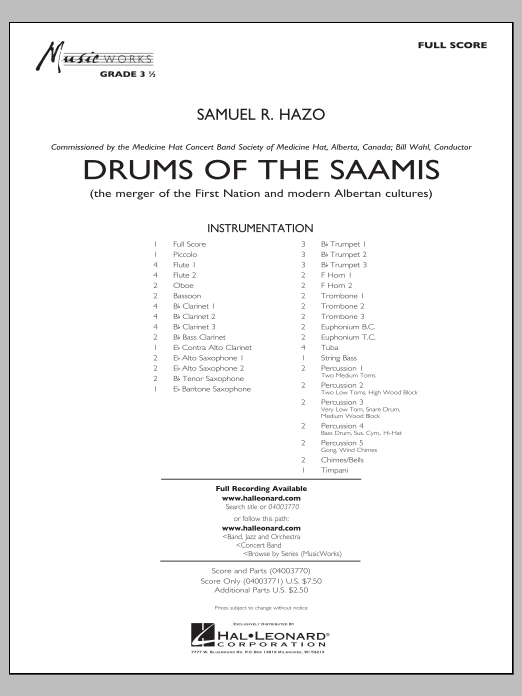
"Drums of the Saamis" was commissioned by the Medicine Hat Concert Band Society of Medicine Hat, Alberta, Canada. The piece chronicles the merger of the First Nation (first natives) and modern Albertan cultures. The opening tribal drums followed by the haunting melody simulating the traditional wooden flute comprise two themes that are the foundation for the entire piece. Both elements are developed, varied and enhanced throughout as the listener senses the increasing influence of modern day Alberta through the use of modern sounding chords and rhythms. By the end, the marriage of the old and the new is complete. This powerful work closes as it began; a restatement of themes representing the musical and historical foundation of the region. Dur: 5:00


Discover MakeMusic Cloud: thousands of interactive titles your students can play along with today.
Sample Audio
No sample audio found.
Sample Video
Additional Details
Publisher:
Hal Leonard
SKU:
35-PK00292309
More about this title
About the Composer: Samuel R. Hazo
Samuel R. Hazo is a composer and educator whose works span concert band, wind ensemble, and choral genres. His compositions often draw on cultural narratives and historical themes, translating human experience into instrumental music that speaks directly to student musicians and audiences alike.
Why we love this
Hazo crafts a genuine musical narrative here rather than simply juxtaposing two contrasting sections. The opening tribal drums establish an unshakable foundation, and watching that kernel develop through modern harmonic language mirrors the actual cultural dialogue the piece describes. Your band will engage with something architecturally coherent that also carries real meaning.
What to expect
Grounded and meditative at first, with sparse tribal percussion and a mournful flute voice creating intimate space. Gradually the soundworld expands; contemporary harmonic language seeps in, the rhythm section gains momentum, and what began as a solitary voice becomes part of a fuller ensemble conversation. By the conclusion, old and new feel genuinely integrated rather than in conflict.
Who it's for
Concert bands at the Grade 3.5 level seeking repertoire with cultural substance and clear musical architecture. This works particularly well for programs that value programming with context or communities interested in celebrating First Nations perspectives through music.
How to get the most out of it
- Invest in the opening drum statement. This isn't decoration; it's the piece's heartbeat. Make sure your percussion section owns the tribal character before melody enters.
- Balance the wooden flute melody against the drums carefully during the exposition. The haunting quality depends on restraint from the accompanying voices.
- Track how modern chords enter the texture throughout the middle section. Mark these shifts in rehearsal so players hear the harmonic evolution as a compositional choice, not random instrumentation.
- The final restatement should feel like a return home, not a repeat. Bring slightly more weight to the familiar themes now that the band has traveled through the modern idiom.
How to use it
Pair this with other works exploring cultural fusion or place-based storytelling to create a thematic concert segment. It also stands alone as a substantial single work for a shorter concert, offering audiences a complete musical journey in five minutes. The commissioning story makes it ideal when you want to program something with documented context you can share in program notes.
Skills your students will build
- Listening for and responding to harmonic color shifts within a single piece
- Sustaining ensemble balance when accompanimental and thematic roles shift between sections
- Percussion independence and musicality in establishing and maintaining rhythmic foundation
- Interpreting cultural or narrative content through tonal quality and expression choices
- Following large formal architecture where themes develop rather than simply repeat