
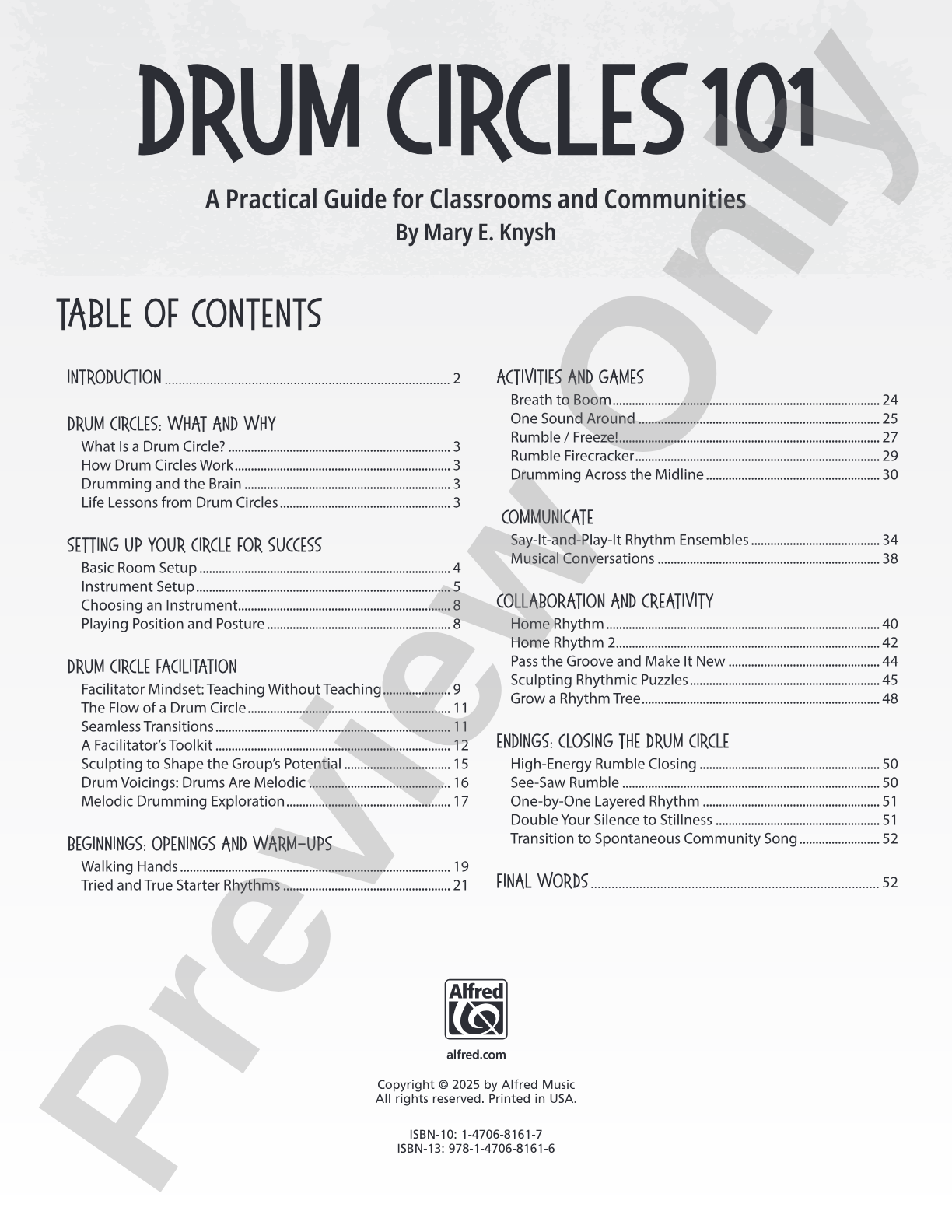

Drum Circles 101: A Practical Guide for Classrooms and Communities: Percussion Ensemble
A Practical Guide for Classrooms and Communities
By Mary E. Knysh
Item: 00-PB-0000915
$34.99
Pickup currently not available
Description
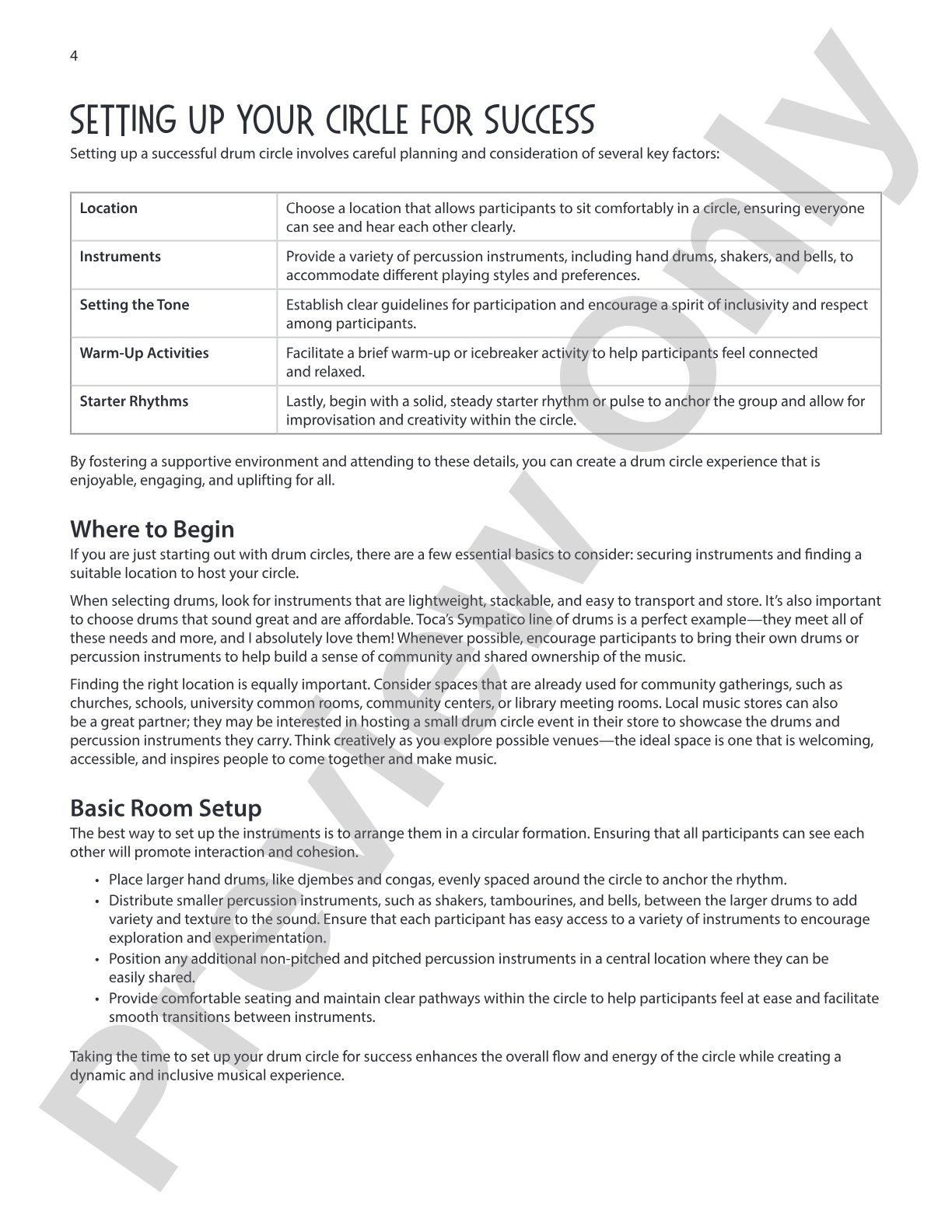
Cultivate joy and connection! Packed with step-by-step instructions, games, and tips, this useful resource guides educators and community musicians in crafting a meaningful drum circle experience—from opening warm-ups to an engaging sequence of unfolding discoveries, plus a reflective closing that celebrates growth. Author and educator Mary Knysh has spent decades inspiring people of all ages to tap into the transformative power of music, and her expertise will empower you to lead your own circle with confidence.


Discover MakeMusic Cloud: thousands of interactive titles your students can play along with today.
Sample Audio
1
Audio File
--:--
0:00
0:00
Sample Video
Additional Details
Publisher:
Alfred Music
Page Count:
52
SKU:
00-PB-0000915
More about this title
About the Composer: Mary Knysh
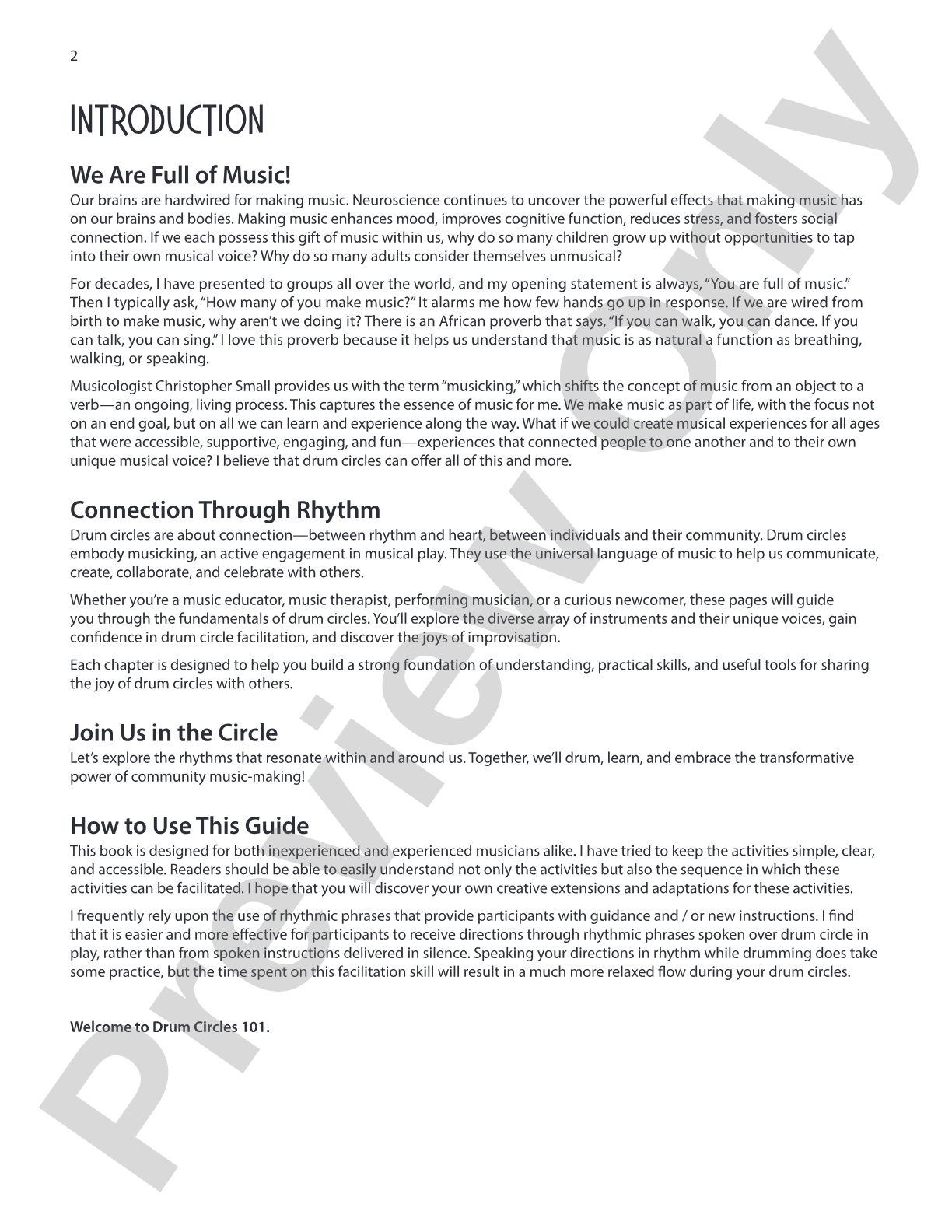
Mary Knysh has built her career on a straightforward conviction: rhythm and community belong together. Over decades of work with students, teachers, and musicians across all ages and backgrounds, she has developed practical frameworks for making drum circles accessible and genuinely transformative, not just performative.
Why we love this
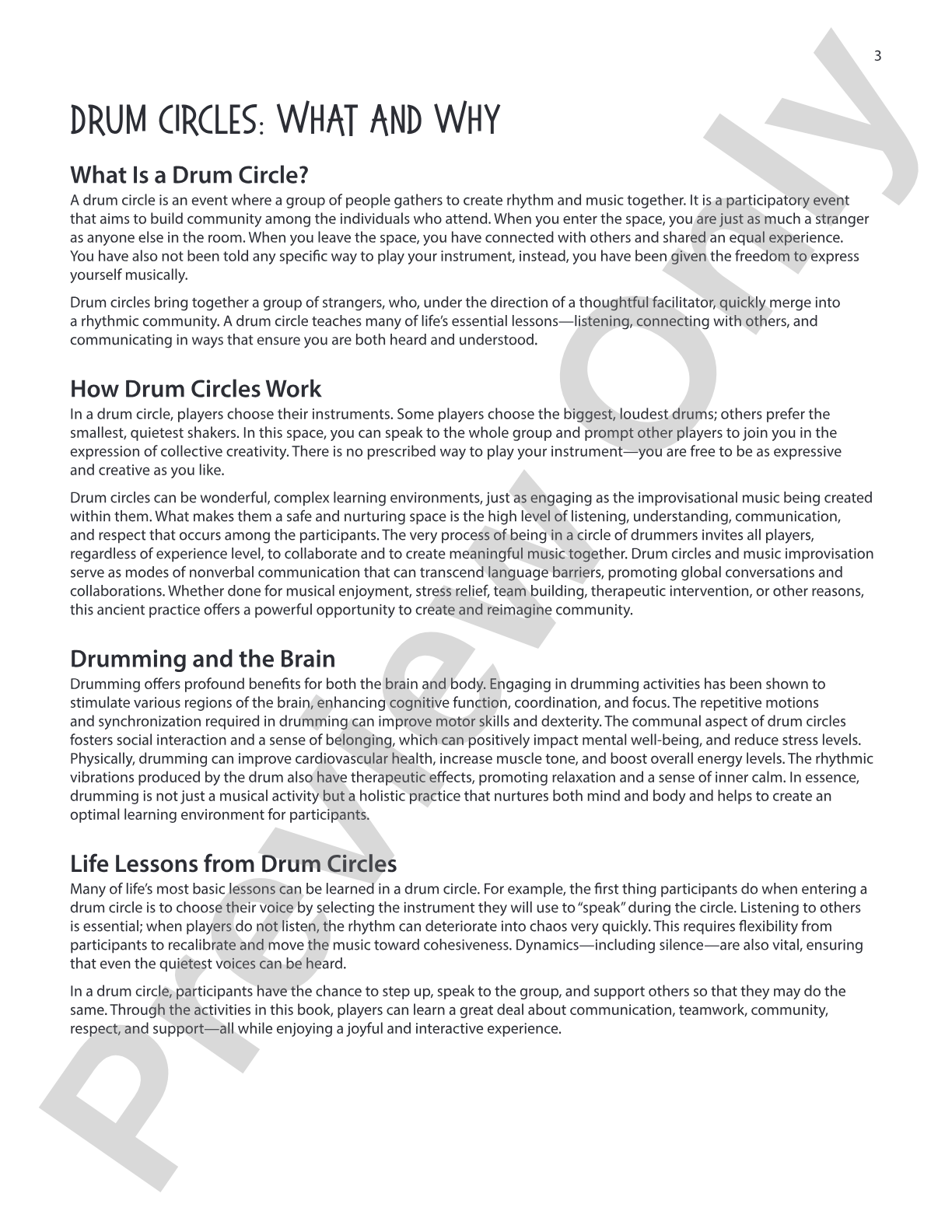
Knysh brings decades of real classroom and community experience into a resource that treats drum circles as genuine musical and social learning, not just a fun filler activity. The structure moves deliberately from warm-up through structured exploration to reflection, giving facilitators a framework that honors both the joy and the intentionality of ensemble percussion work.
What to expect
The arc moves from grounded, centering warm-ups into layers of collaborative sound-making where listening becomes as active as playing. Participants experience the shift from individual percussion sounds into a unified sonic whole, building connection through rhythm rather than notation.
Who it's for
Classroom teachers seeking to build community and musical engagement without formal training; music educators wanting to expand beyond traditional ensemble formats; community musicians and facilitators working with mixed-age or mixed-ability groups.
How to get the most out of it
- Start with a clear opening ritual or call-and-response that establishes focus; this signals to participants that the circle is a structured musical space, not free-for-all exploration.
- Build your sequence gradually, introducing rhythmic or textural elements incrementally so players can listen and respond rather than feeling overwhelmed by simultaneous demands.
- Use the closing reflection time to anchor what happened musically and socially; this transforms a fun activity into a learning experience participants remember and carry forward.
How to use it
Use this as a foundation for a semester-long general music unit on ensemble communication and listening. It also works as a community-building opener at the start of the school year, a mid-year reset for groups that need reengagement, or a culminating celebration activity that welcomes families into the music space.
Skills your students will build
- Active listening within a group percussion ensemble
- Responding to sonic cues and adjusting dynamics and tempo in real time
- Building ensemble cohesion through non-notated communication
- Malleability with multiple percussion instruments and sound sources
- Rhythmic independence and interdependence in unison and layered settings
- Confidence in musical leadership and facilitation