

Drum Circle: A Guide to World Percussion
By Chalo Eduardo and Frank Kumor
Item: 00-PB-0002142
$11.99
Pickup currently not available
Description
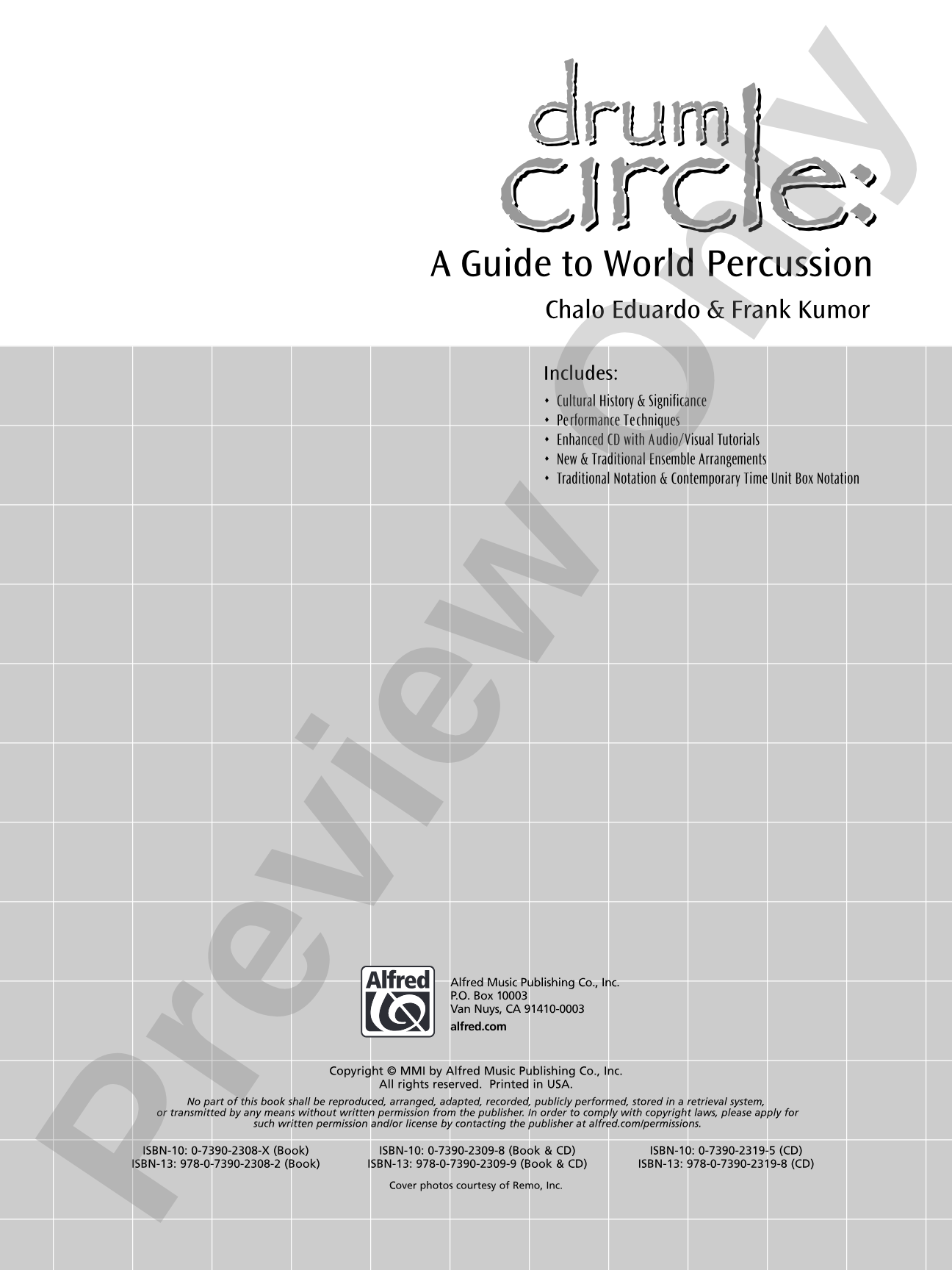
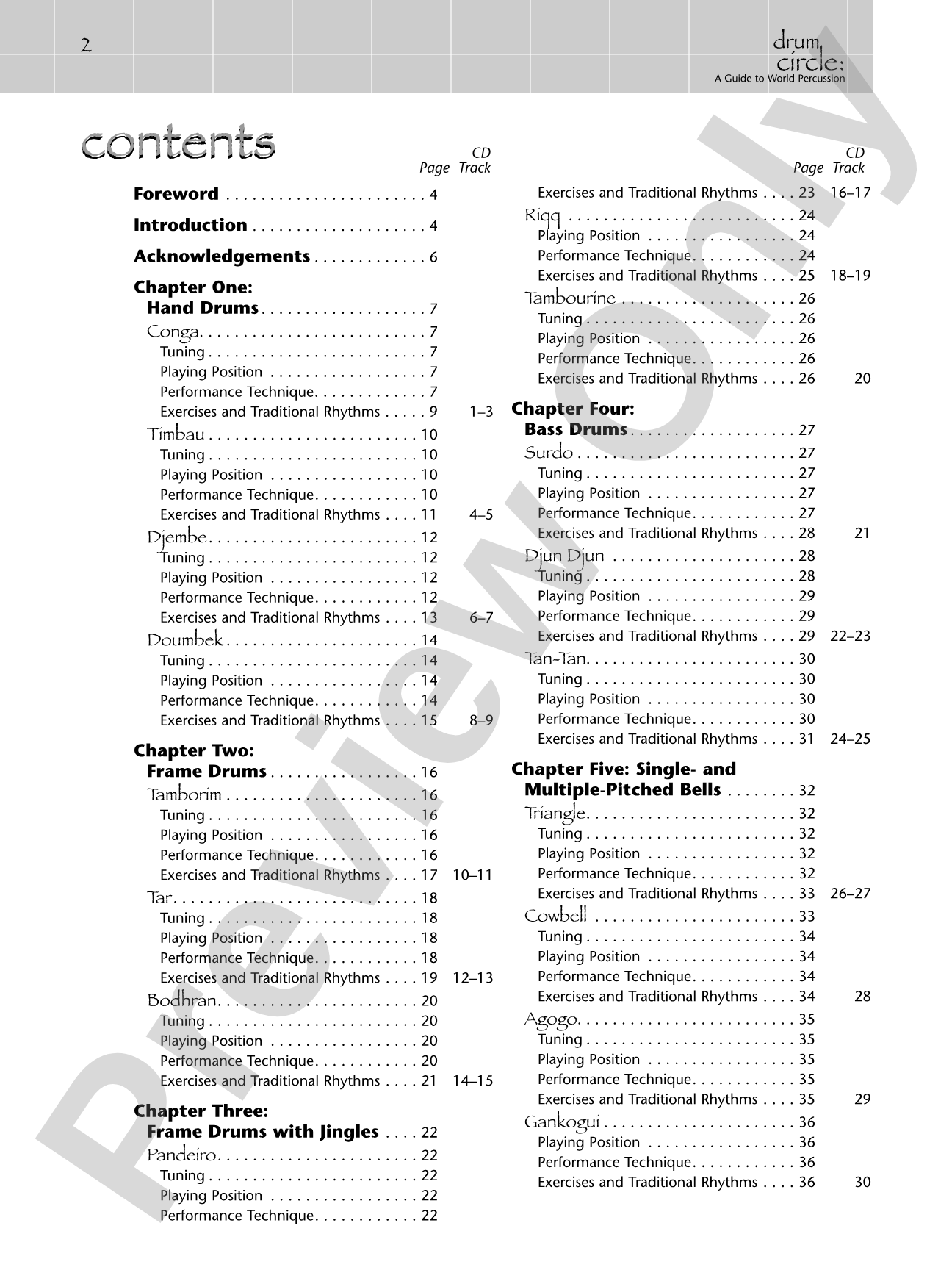
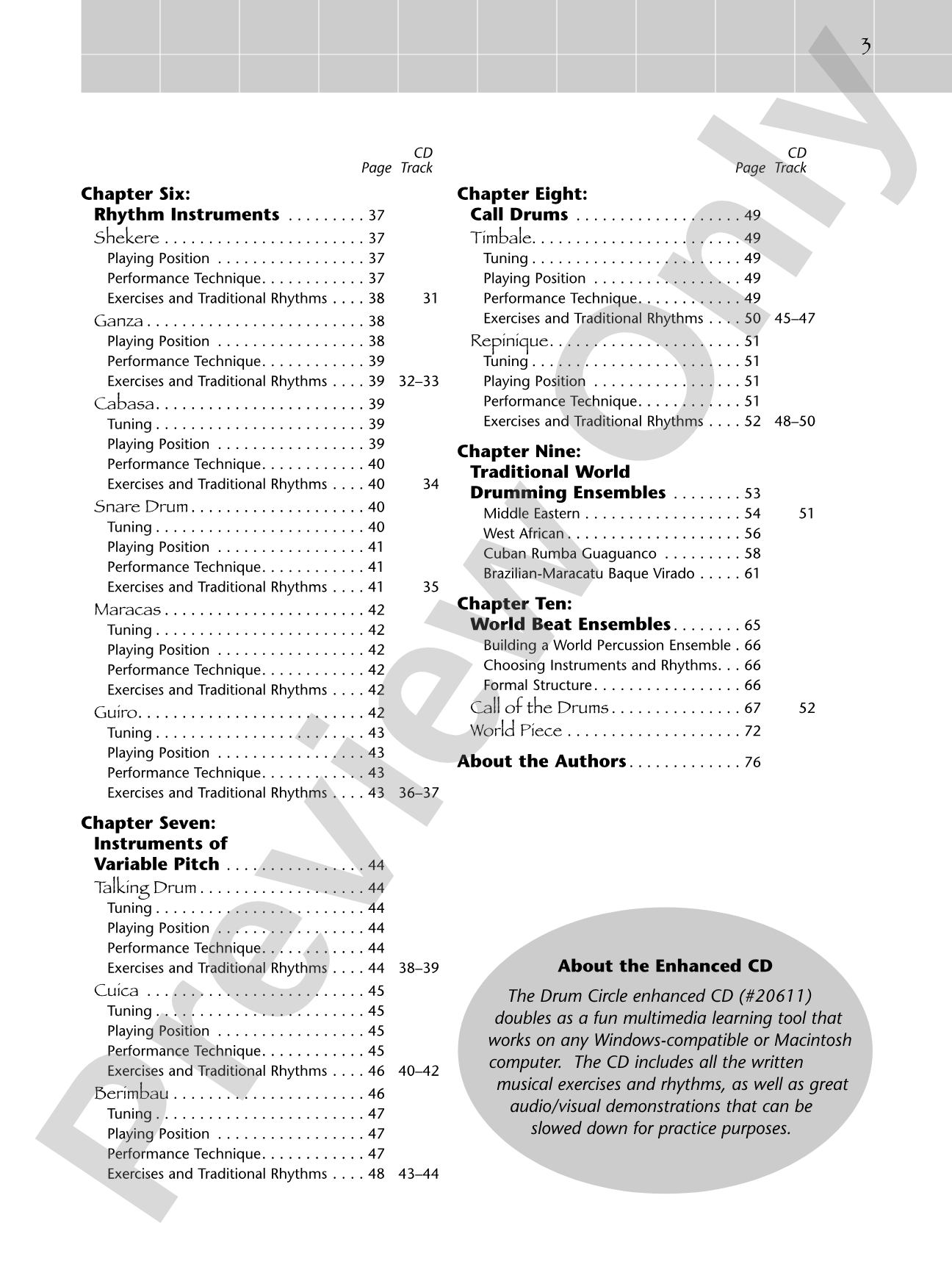
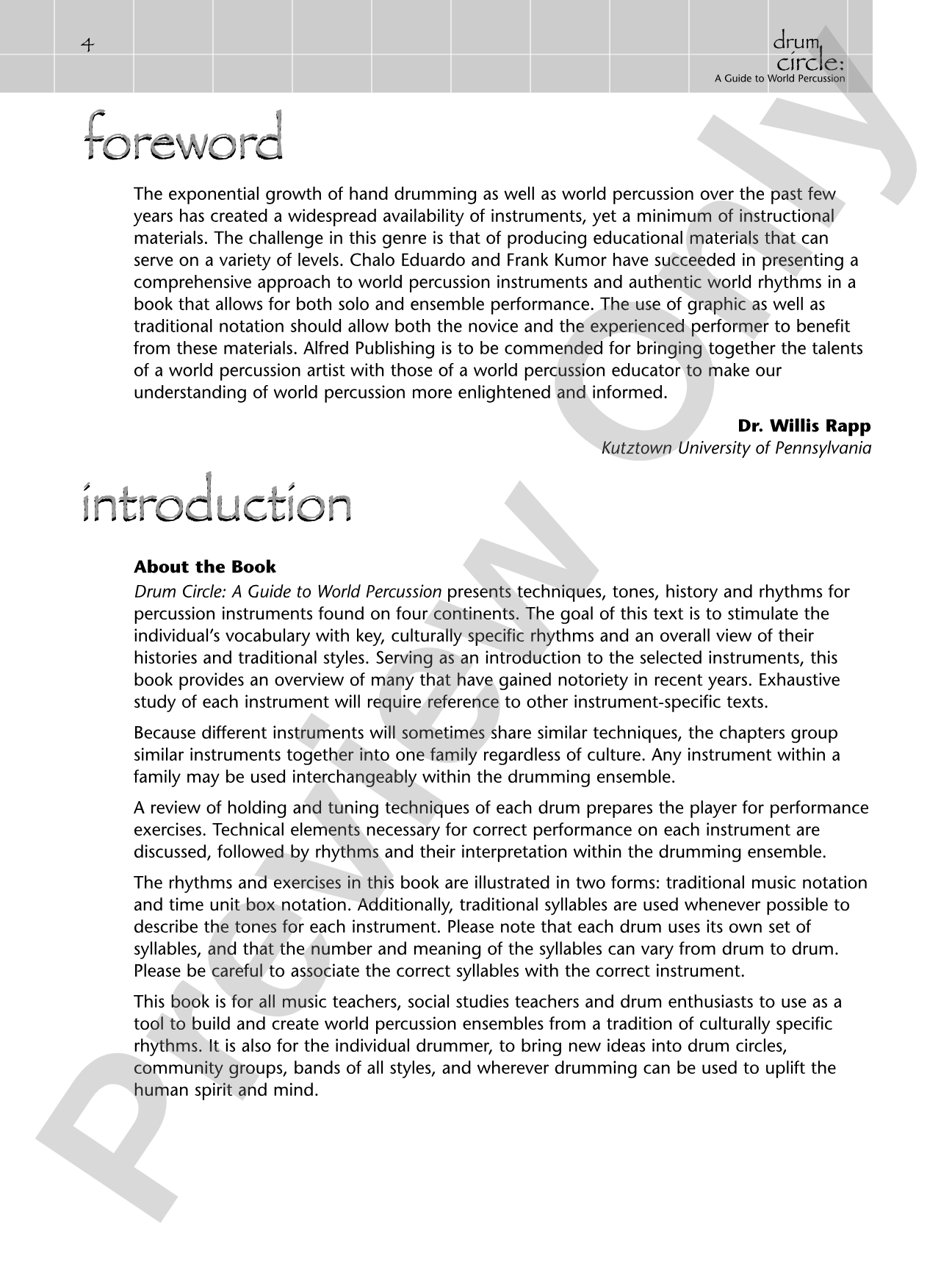
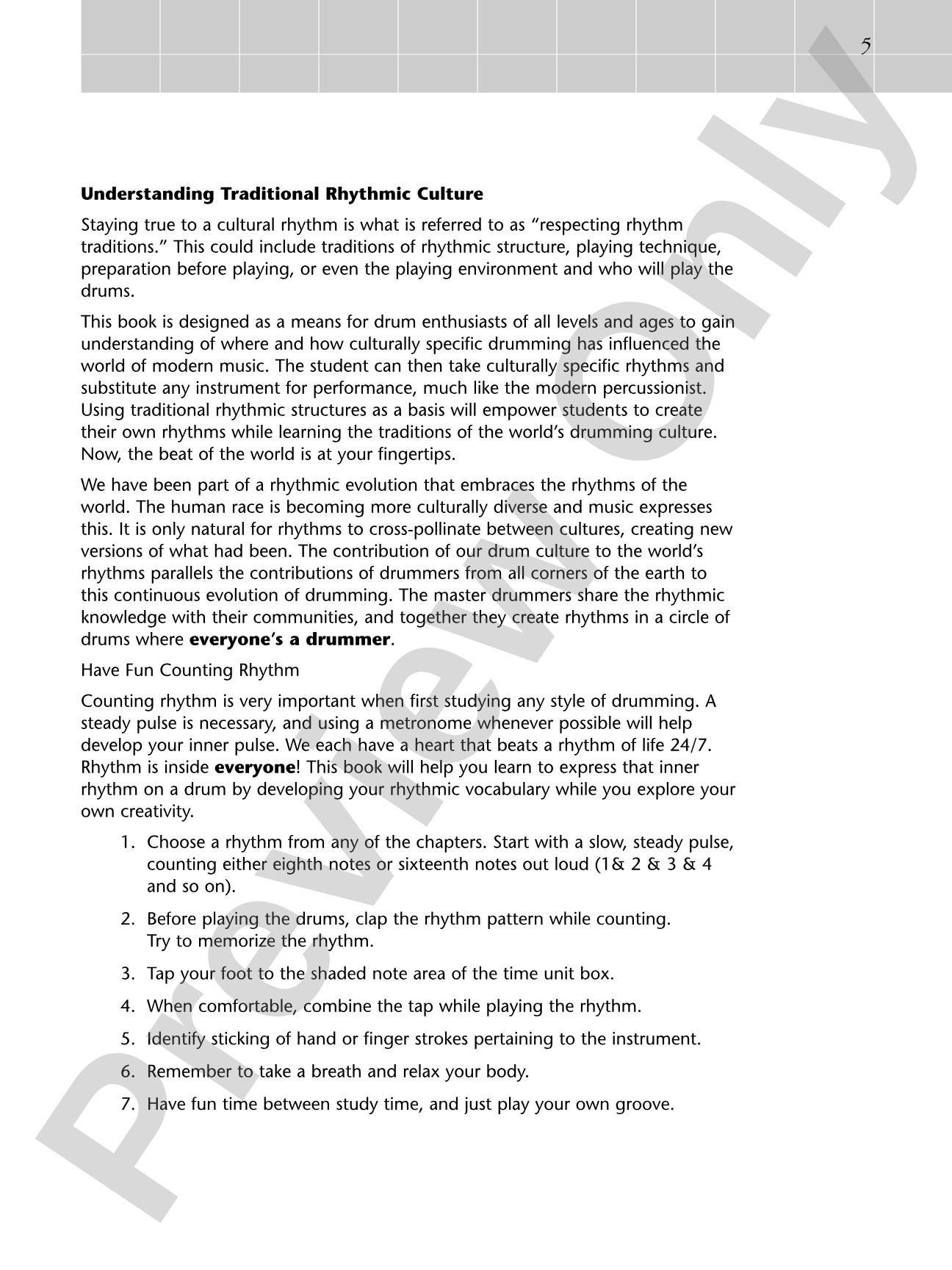
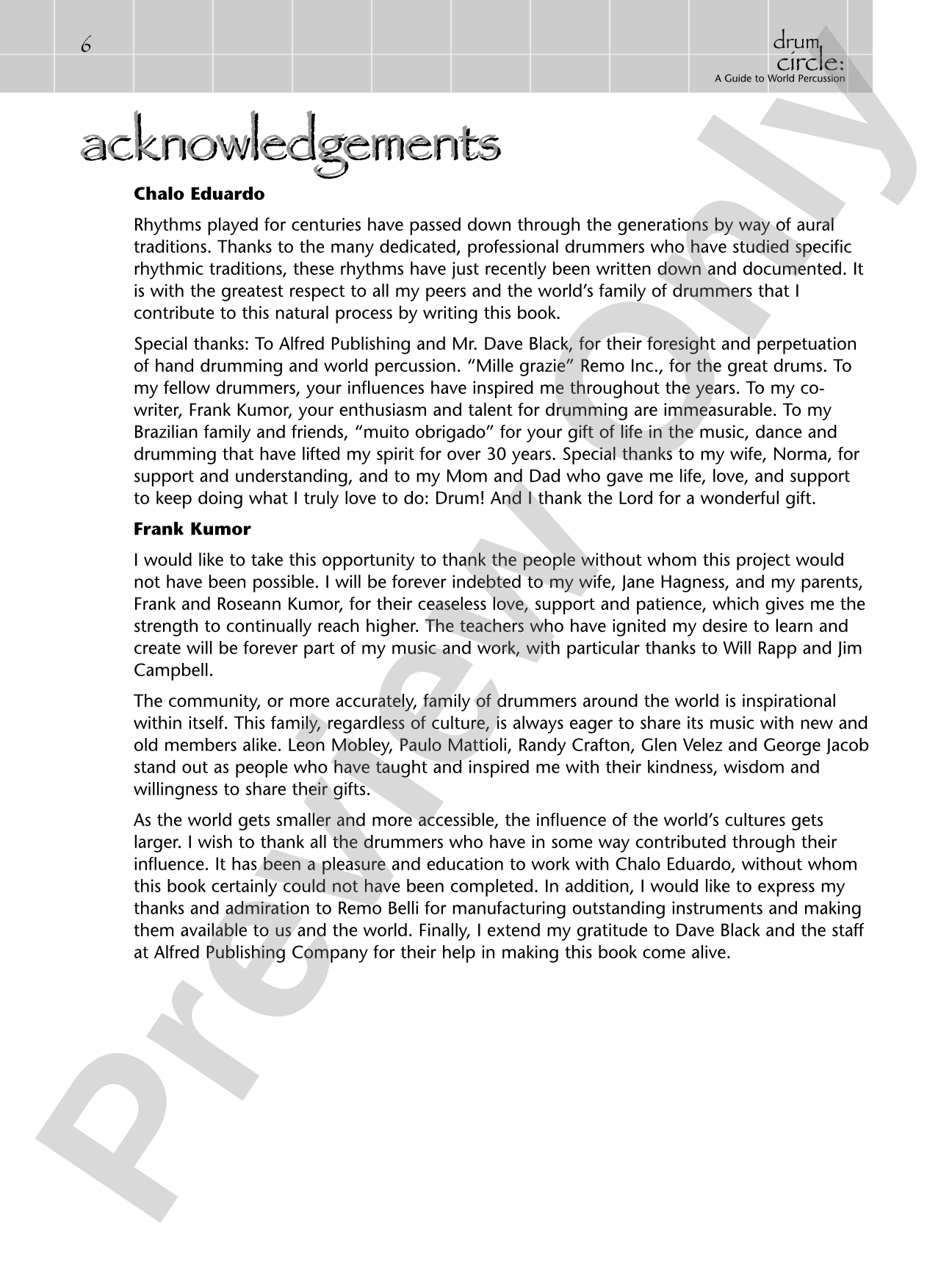
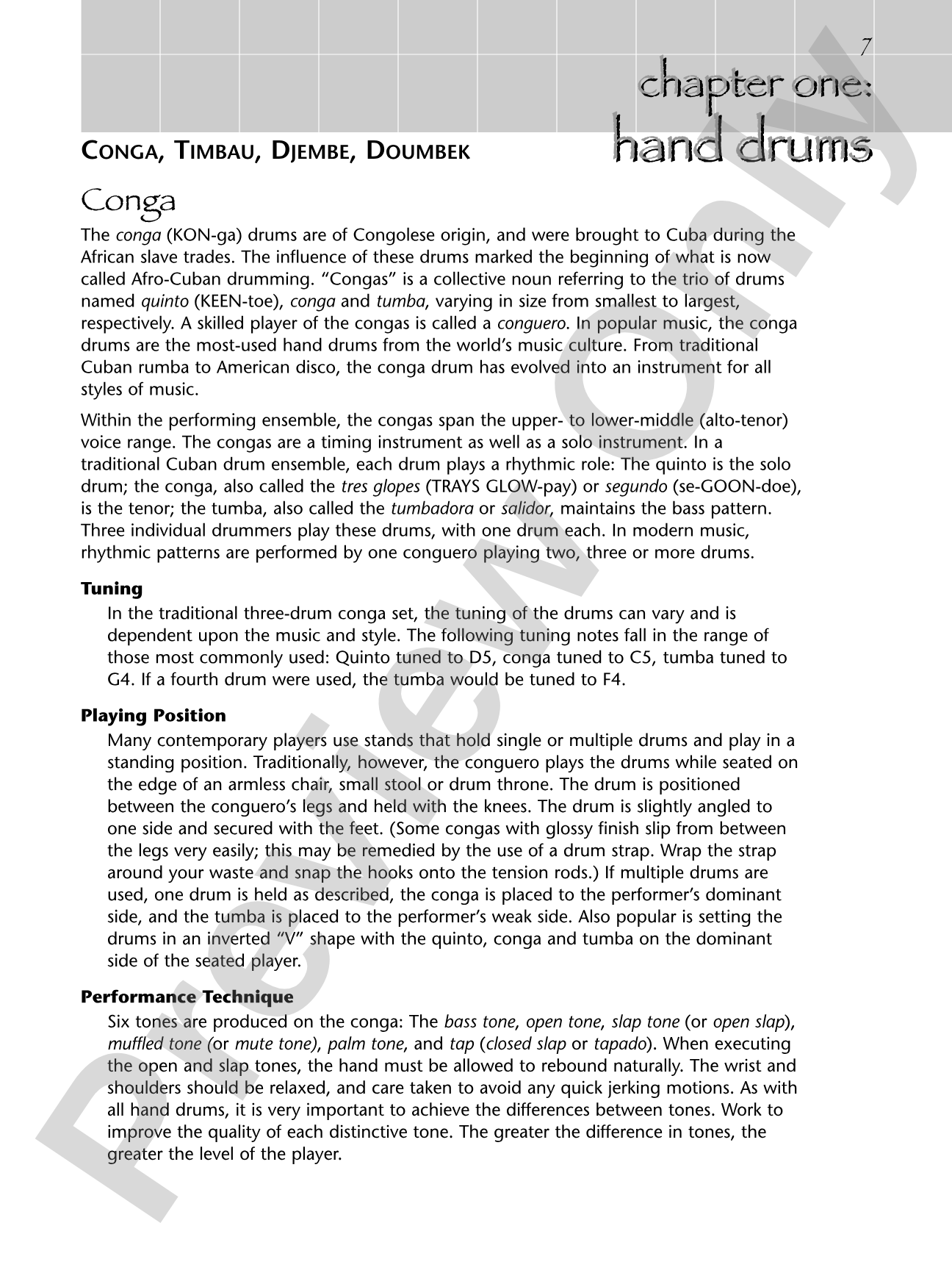
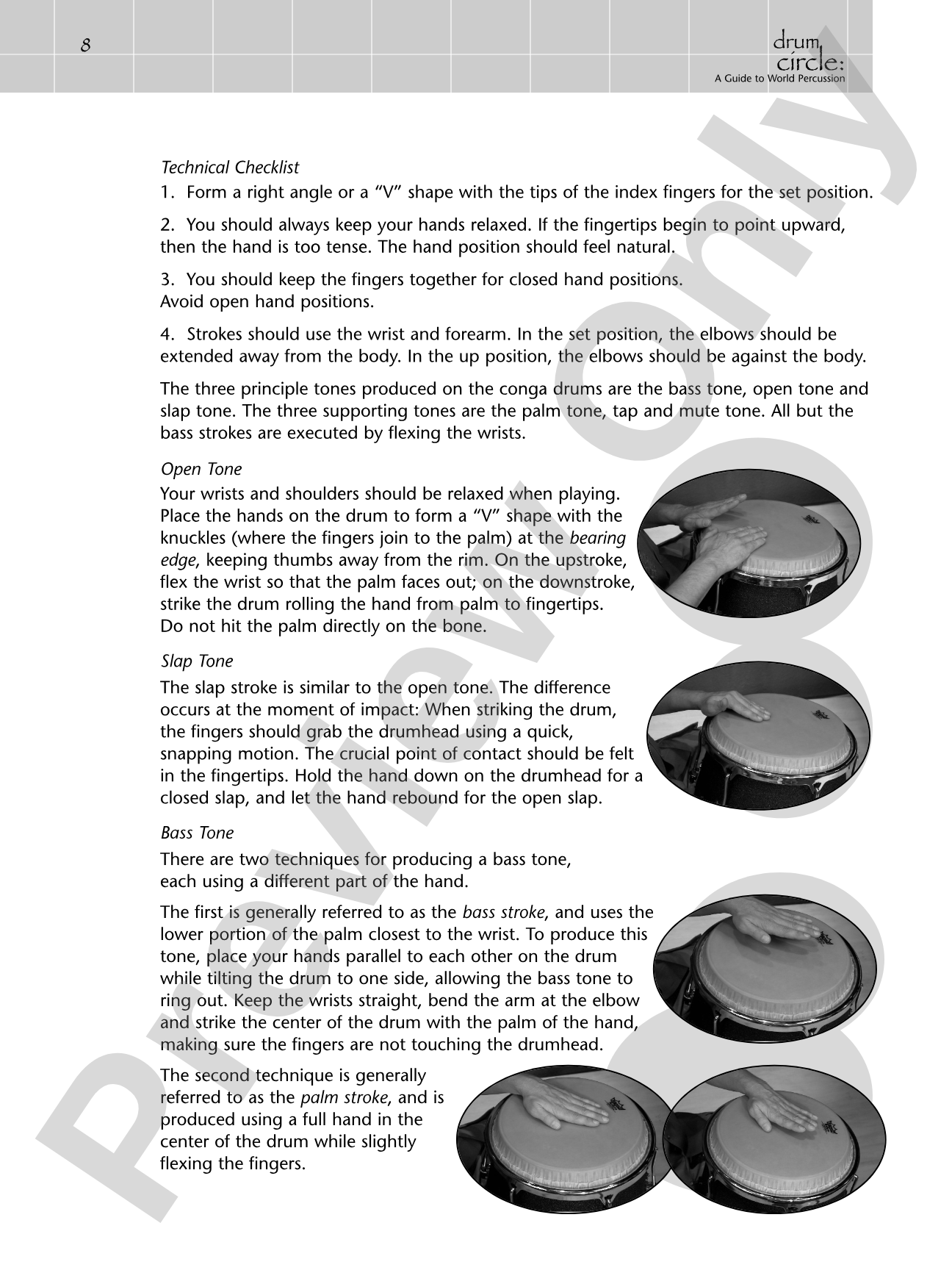
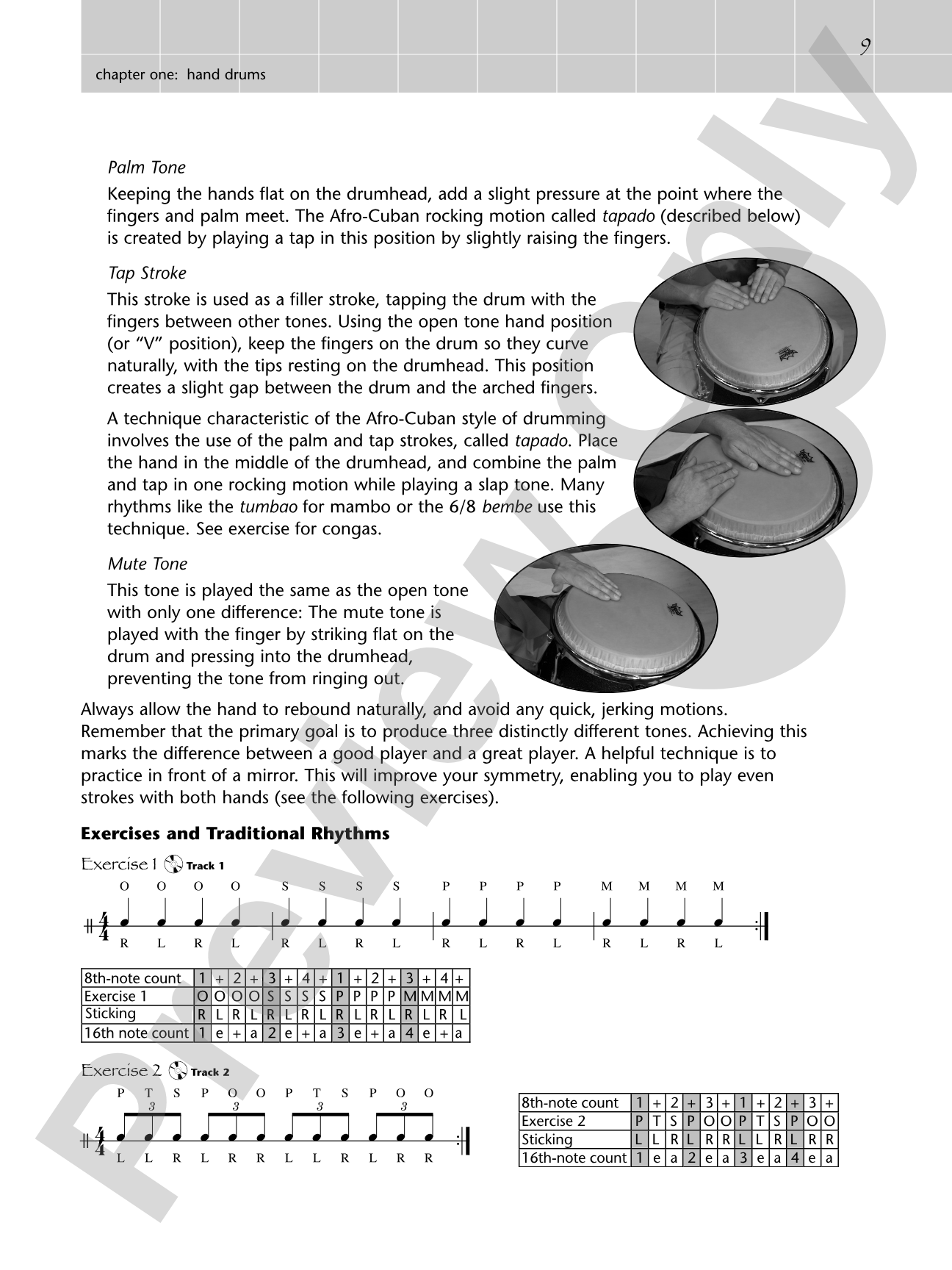
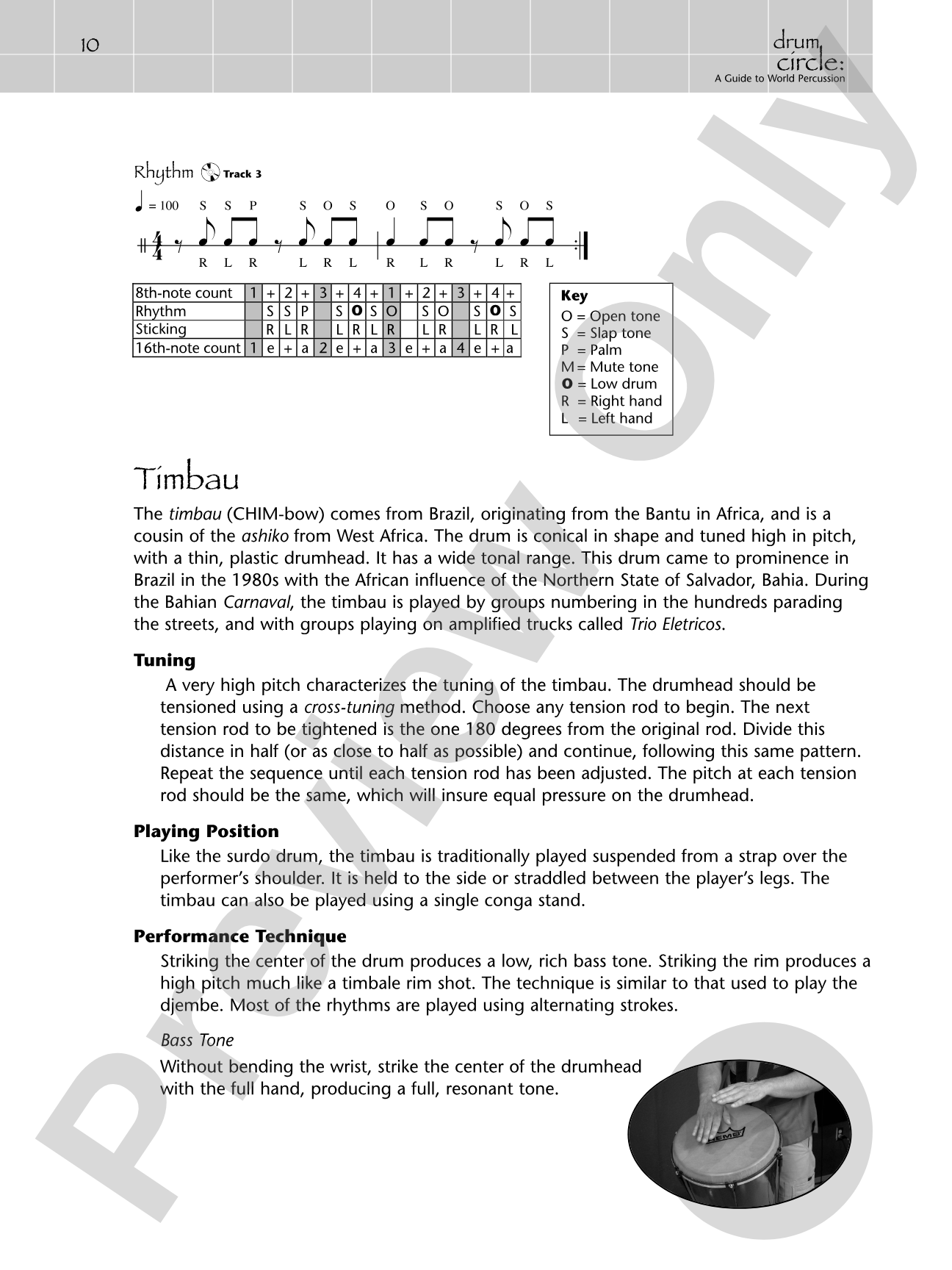
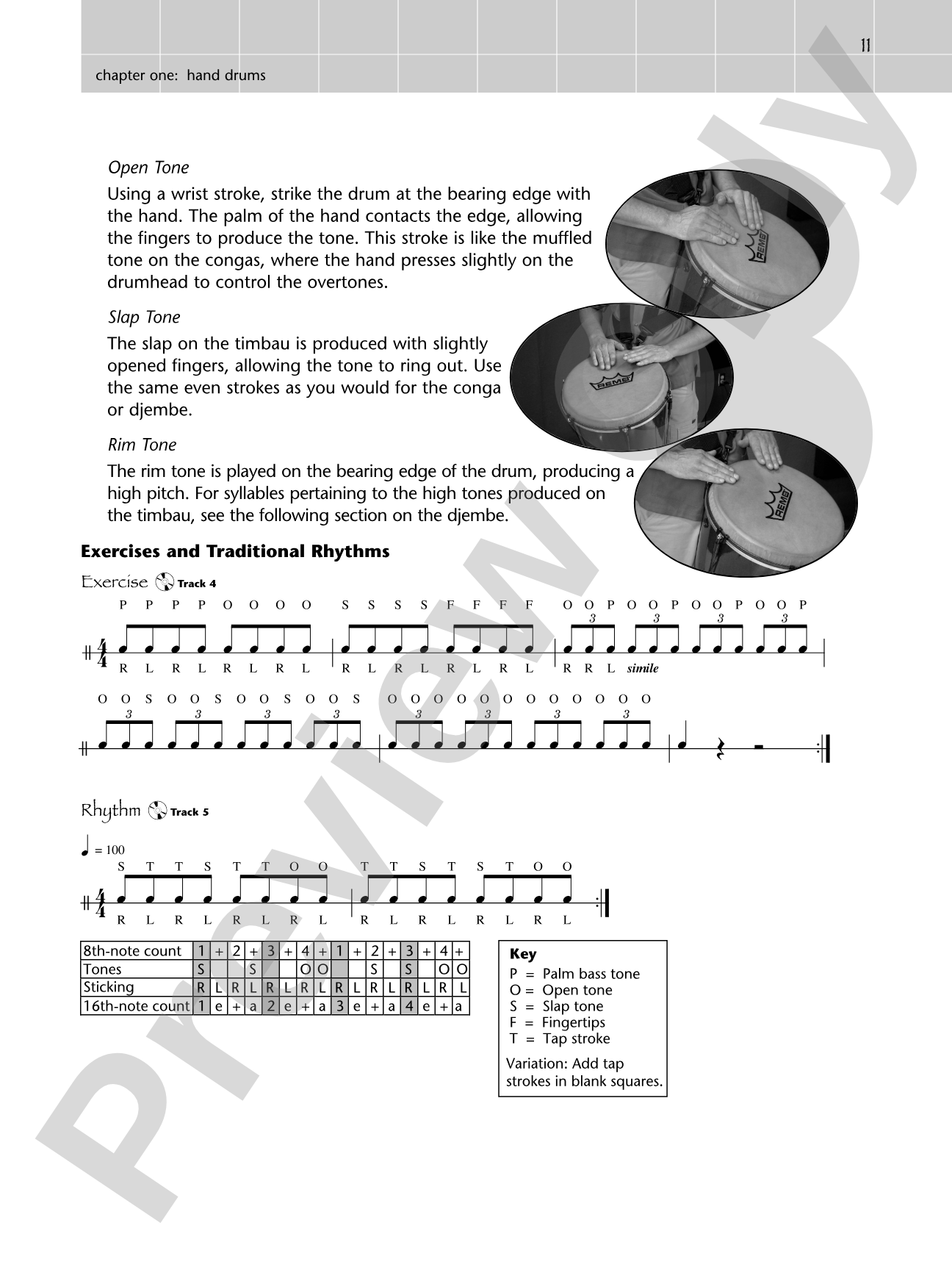
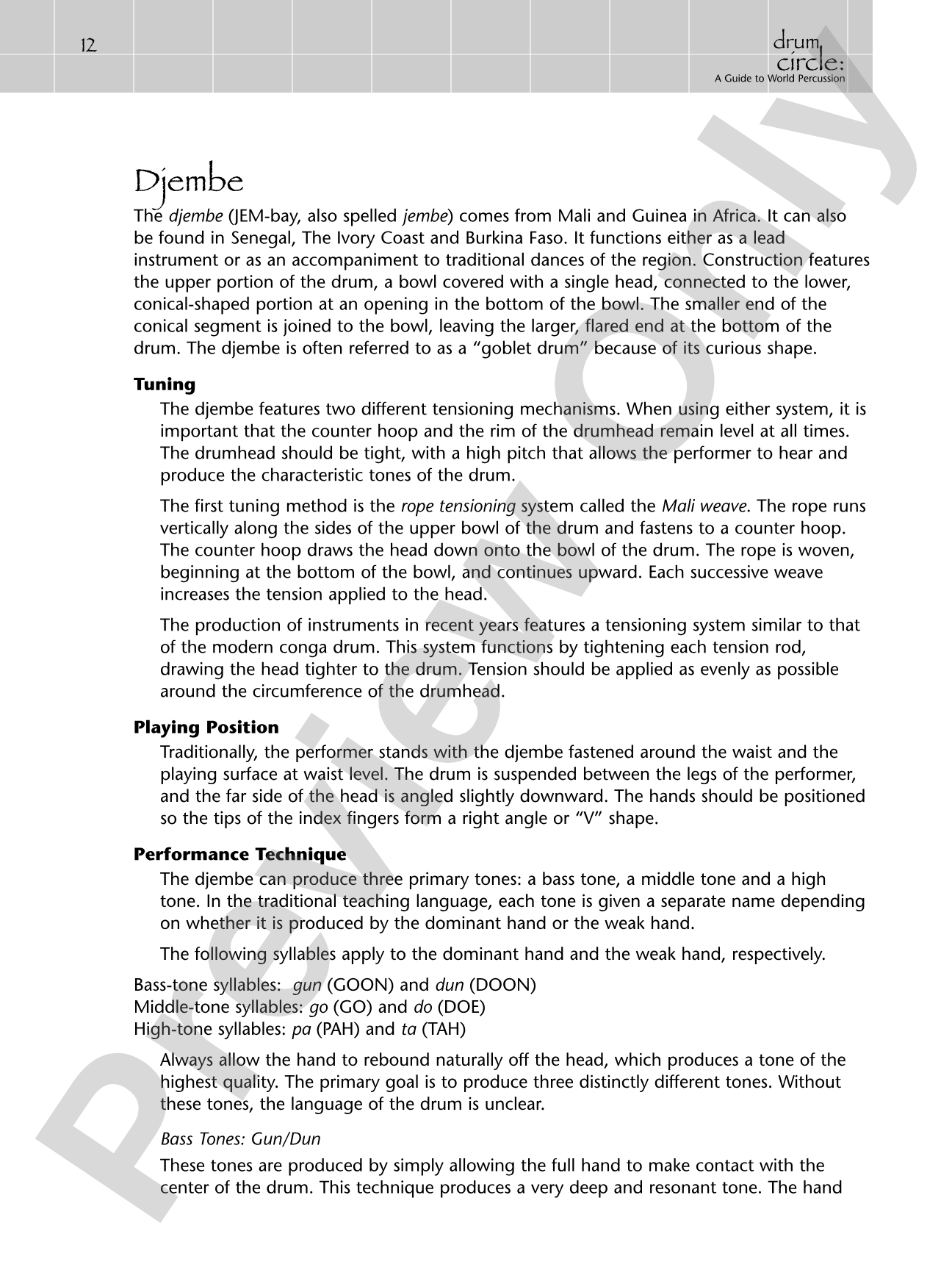
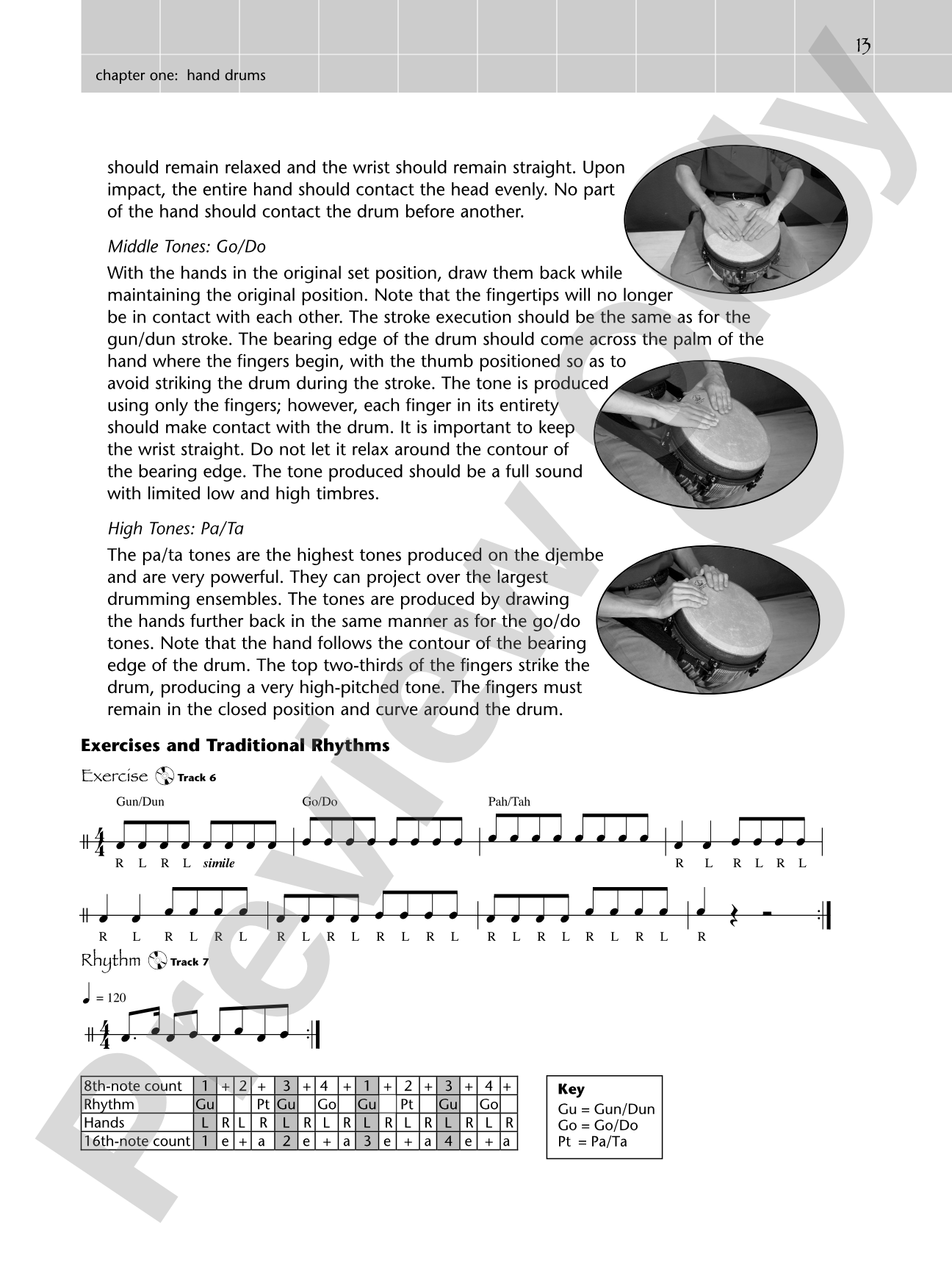
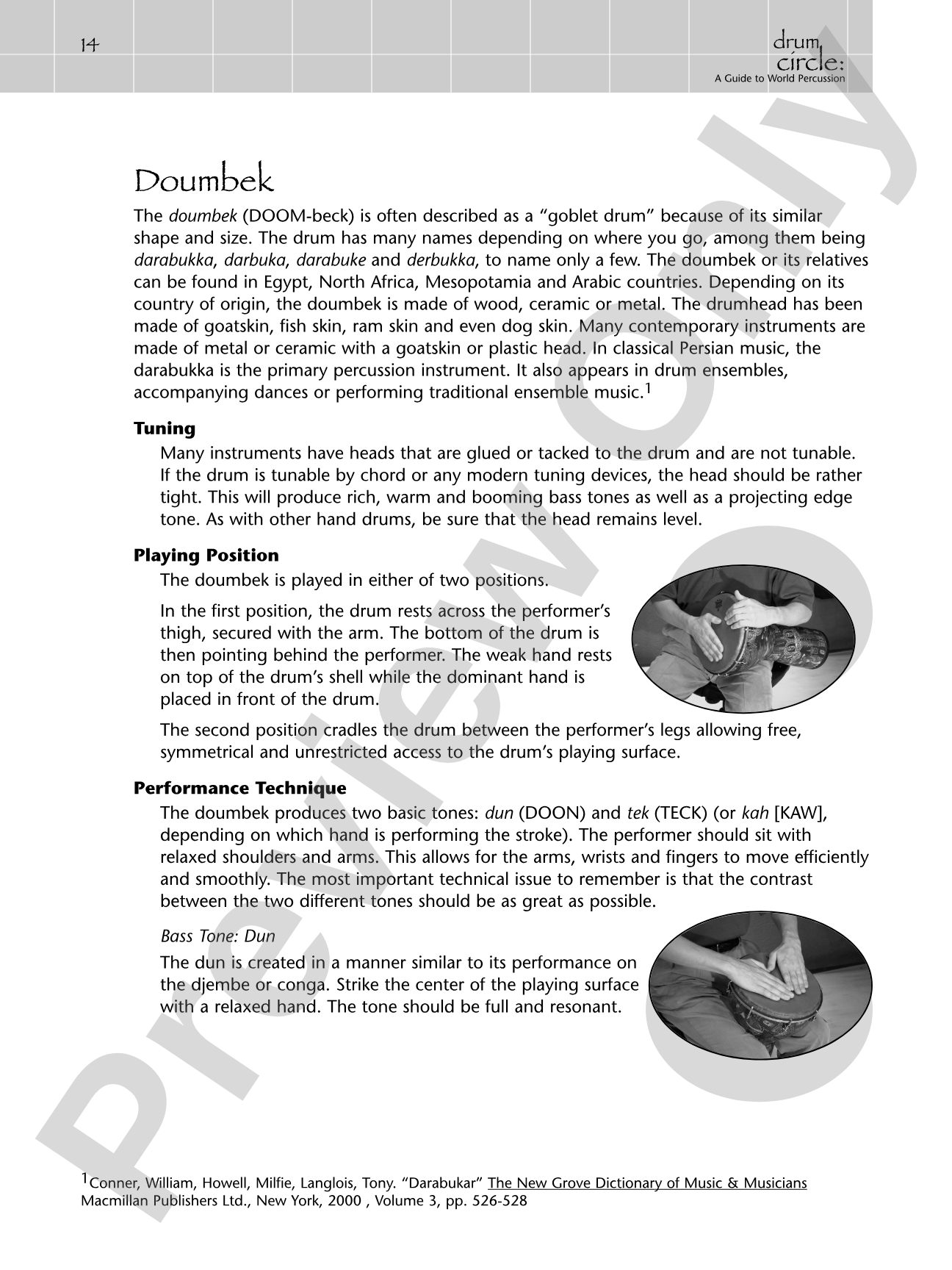
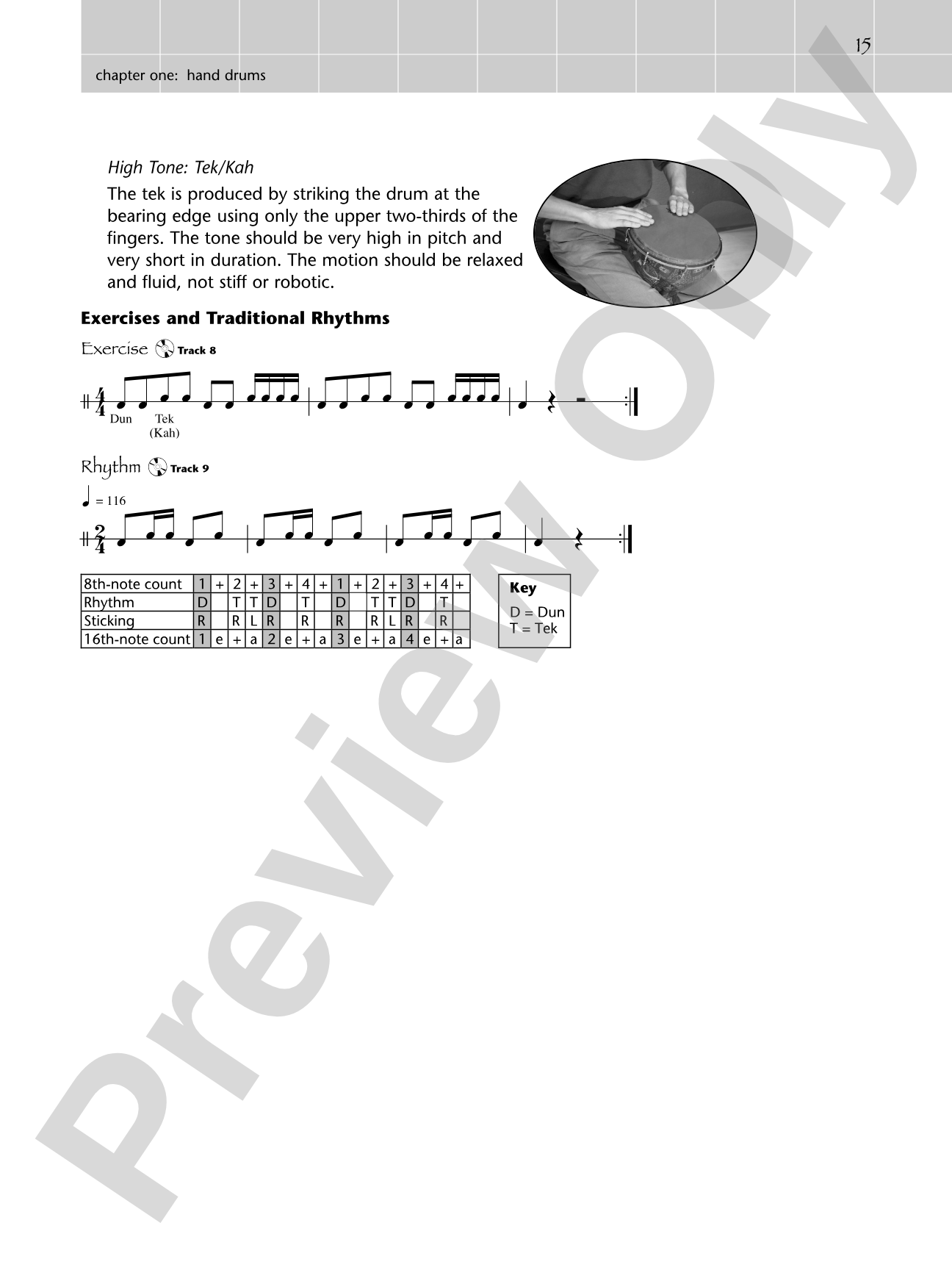
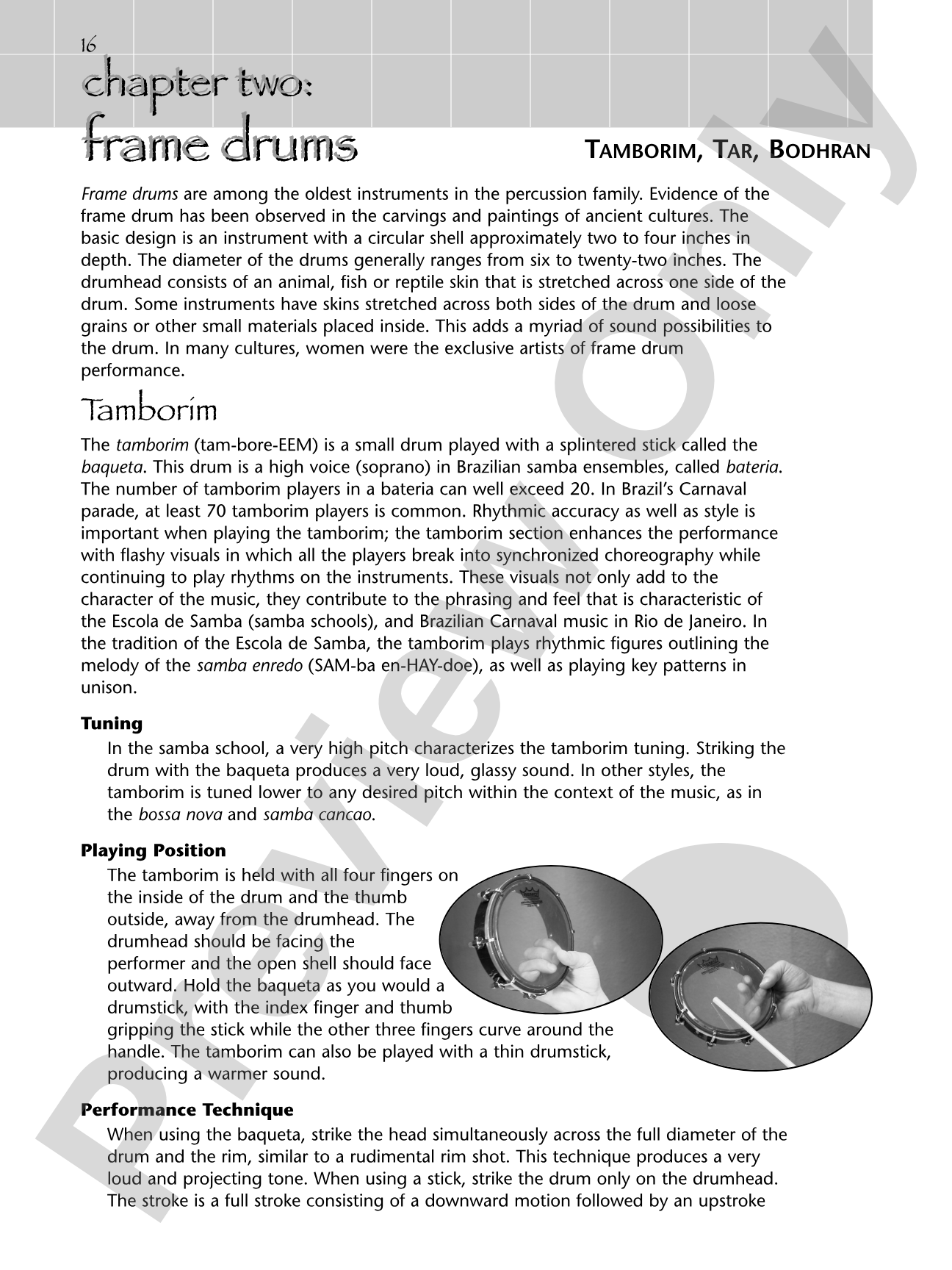
Finally, a book no percussionist should be without! This unique guide to world percussion covers 28 different instruments with descriptions and performance techniques. Exercises and traditional rhythms are illustrated in both traditional music notation and time-box notation. The enhanced CD doubles as a fun multimedia learning tool that works on any Windows-compatible or Macintosh computer. The CD includes all the written musical exercises and rhythms, as well as superb audio/visual demonstrations that can be slowed down for practice purposes. With information on several different cultures and six unique compositions, Drum Circle: A Guide to World Percussion is the definitive guide to getting you started with your own drum circle.


Drum Circle: A Guide to World Percussion isn't in MakeMusic Cloud just yet...but it could be. Let us know you'd like to see it, and you'll help shape what comes next. In the meantime, start a free trial and dive into thousands of interactive titles your students can play along with today.
Request This Title
Tell us you want it.
Start Your Free Trial
Explore everything that's ready to play right now.
Sample Audio
No sample audio found.
Sample Video
No sample videos found.
Additional Details
Publisher:
Alfred Music
Page Count:
76
SKU:
00-PB-0002142
More about this title
About the Composer: Chalo Eduardo

Chalo Eduardo has built a career at the intersection of world music and popular styles, collaborating with titans like Sergio Mendes, Carlos Santana, and Mickey Hart. His work as a bandleader and recording artist spans two albums under his own name: I Miss Rio and Samba Nova, both released on Carnaval Records. Beyond the studio, he has contributed arrangements and percussion work to projects for Kevin Letteu, Mark Murphy, and Mickey Hart Supralingue, while also scoring music for Sega video games and broadcast media.
Eduardo's influence extends to live performance at the highest levels. He choreographed and performed with drummers and dancers at the Grammy Awards in 1999 and 2000, bringing world percussion traditions to one of music's largest stages. His signature line of Brazilian percussion instruments, manufactured by Remo, reflects his commitment to making authentic world percussion accessible to musicians everywhere.
Why we love this
This book refuses to stay theoretical. The dual notation system (traditional staff notation alongside time-box notation) meets students exactly where they are, whether they read Western music or learn by pattern and feel. The multimedia CD transforms what could be a static reference into an interactive tool where you can slow down complex rhythms from real traditions, making it invaluable for conductors building ensemble confidence before attempting world music repertoire.
What to expect
A door opening to rhythmic languages that live outside the Western classical tradition. Twenty-eight instruments wait to be discovered, each with its own voice and cultural story, inviting you to think about rhythm as something felt in the body as much as read on a page.
Who it's for
Percussionists serious about expanding beyond the standard kit, from intermediate students exploring world traditions to teachers planning drum circle activities or world music units. Band directors and ensemble leaders will find it essential for preparing sections before tackling non-Western repertoire.
How to get the most out of it
- Start with the audio demonstrations at full speed to hear how each instrument should sound in its cultural context, then use the slow-down feature to isolate and practice individual rhythmic patterns.
- Explore the time-box notation alongside traditional notation for any rhythm that feels unfamiliar; switching between notational systems often clarifies the pulse in ways a single approach cannot.
- Work through the exercises in the order presented rather than jumping to compositions; each builds technique and muscle memory for the instruments covered in later sections.
- Record yourself playing the traditional rhythms and compare your recording to the CD demonstrations, paying attention to groove and tone quality rather than just technical accuracy.
How to use it
Build a world music unit by assigning different instruments from the book to sections of your ensemble, then use the provided compositions as culminating pieces. Alternatively, introduce it early in the year during percussion sectional rehearsals to develop rhythmic flexibility that will benefit your students' approach to all repertoire.
Skills your students will build
- Reading time-box notation and correlating it to traditional staff notation
- Performing rhythms from African, Latin American, Asian, and other world traditions
- Understanding instrument-specific techniques and tone production across 28 percussion instruments
- Recognizing and replicating groove patterns and cultural context in world percussion
- Building independence and confidence with non-pitched percussion outside the drumset