Driving Home From Christmas (arr. Don Henken) Sheet Music Preview

Driving Home From Christmas (arr. Don Henken): SATB Choral Octavo

As performed by Chris Rea / Arranged by Don Henken

Item: 35-DS00487369

Digital Download
$2.99
Description

Driving Home From Christmas (arr. Don Henken): SATB Choral Octavo isn't in MakeMusic Cloud just yet...but it could be. Let us know you'd like to see it, and you'll help shape what comes next. In the meantime, start a free trial and dive into thousands of interactive titles your students can play along with today.

Sample Audio
No sample audio found.
Sample Video
Additional Details
Publisher: Hal Leonard
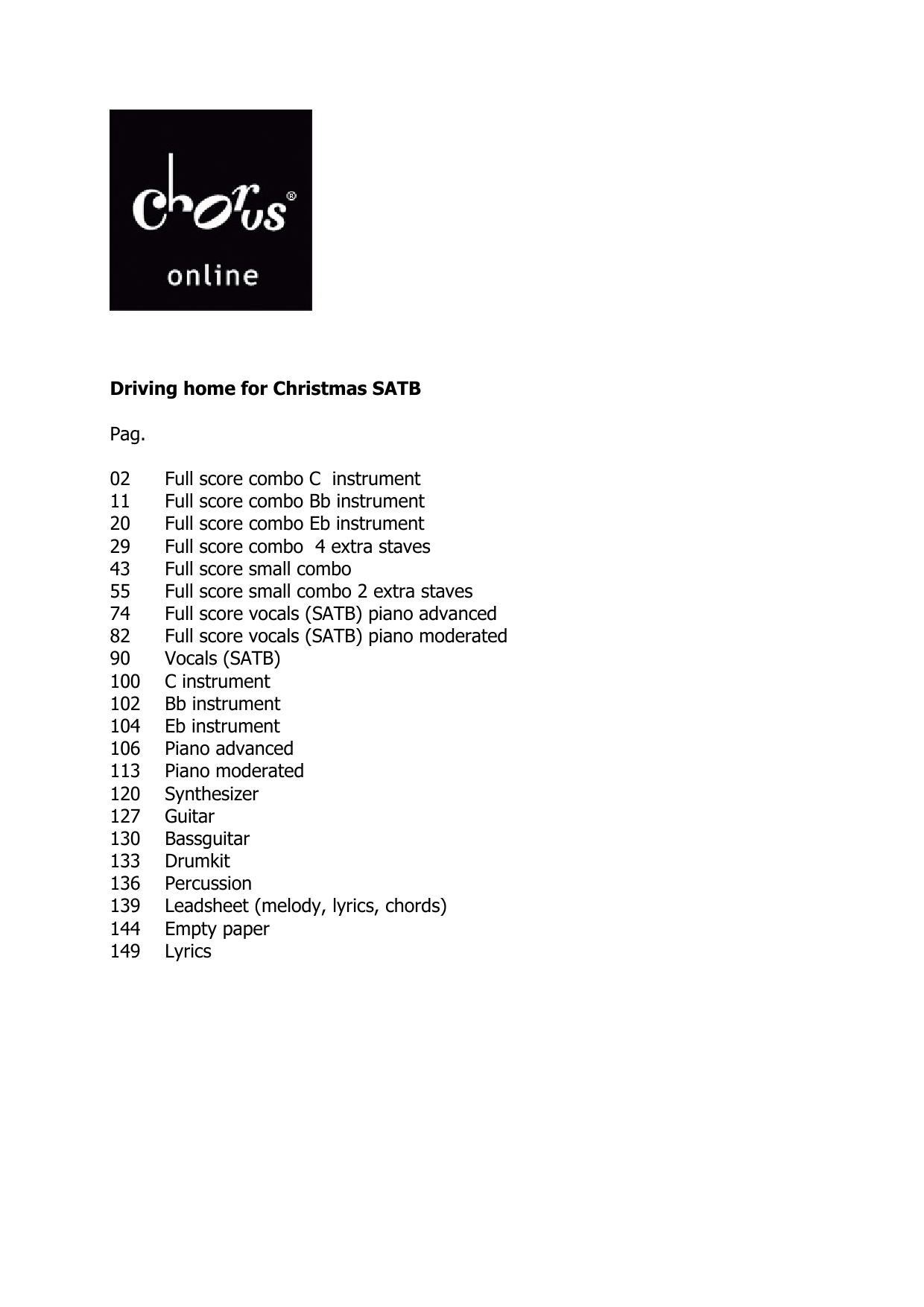
Page Count: 149
SKU: 35-DS00487369

More about this title

About the Artist: Chris Rea

Chris Rea is a British rock and pop singer-songwriter whose catalog spans decades of radio-friendly hits and introspective ballads. His work is marked by accessible melodies, emotional directness, and an instinct for the song that sticks with listeners long after first hearing it. For choral arrangers and directors, Rea's compositions offer strong harmonic foundations and vocal lines that translate naturally to ensemble singing.

Why we love this

Don Henken's arrangement captures the wistful, reflective quality of this modern secular classic while giving SATB choirs a genuinely singable part. The song's narrative arc and emotional weight make it a standout choice for holiday concerts that want to reach beyond traditional carols without abandoning warmth or accessibility.

What to expect

The piece carries the quiet melancholy of a late-night drive, with harmonic movement that feels introspective without becoming heavy. There's an underlying sense of distance and reflection that Henken's arrangement honors through careful voice leading and a restrained, thoughtful approach to texture.

Who it's for

Choirs seeking contemporary secular repertoire with emotional substance, particularly those programming December concerts or winter programs. High school and college ensembles will find this piece rewarding, as will community choirs interested in pop arrangements that don't sacrifice musicality for familiarity.

How to get the most out of it

  • Balance the melody line across sopranos and altos so the main hook lands clearly; this isn't a piece where the lead voice should dominate, but rather one where the ensemble unity defines the sound.
  • Shape the phrasing around the story being told rather than strict measure divisions; singers should breathe naturally where the lyrics pause for reflection.
  • Lean into the minor tonality and introspective mood; this arrangement rewards a softer dynamic approach and careful attention to vowel unity across all sections.

How to use it

Pair this with other contemporary secular pieces for a concert that speaks to modern listeners while maintaining musical depth. It works particularly well as a closing number or as a quieter moment sandwiched between more energetic selections, where its narrative quality and emotional pull can settle with the audience.

Skills your students will build

  • Reading and sustaining minor key tonality in ensemble context
  • Balancing four-part harmony where no single line dominates melodically
  • Phrasing lyrical content for emotional clarity rather than rhythmic precision
  • Blending vocal lines across sections to achieve textural unity

You May Also Like