
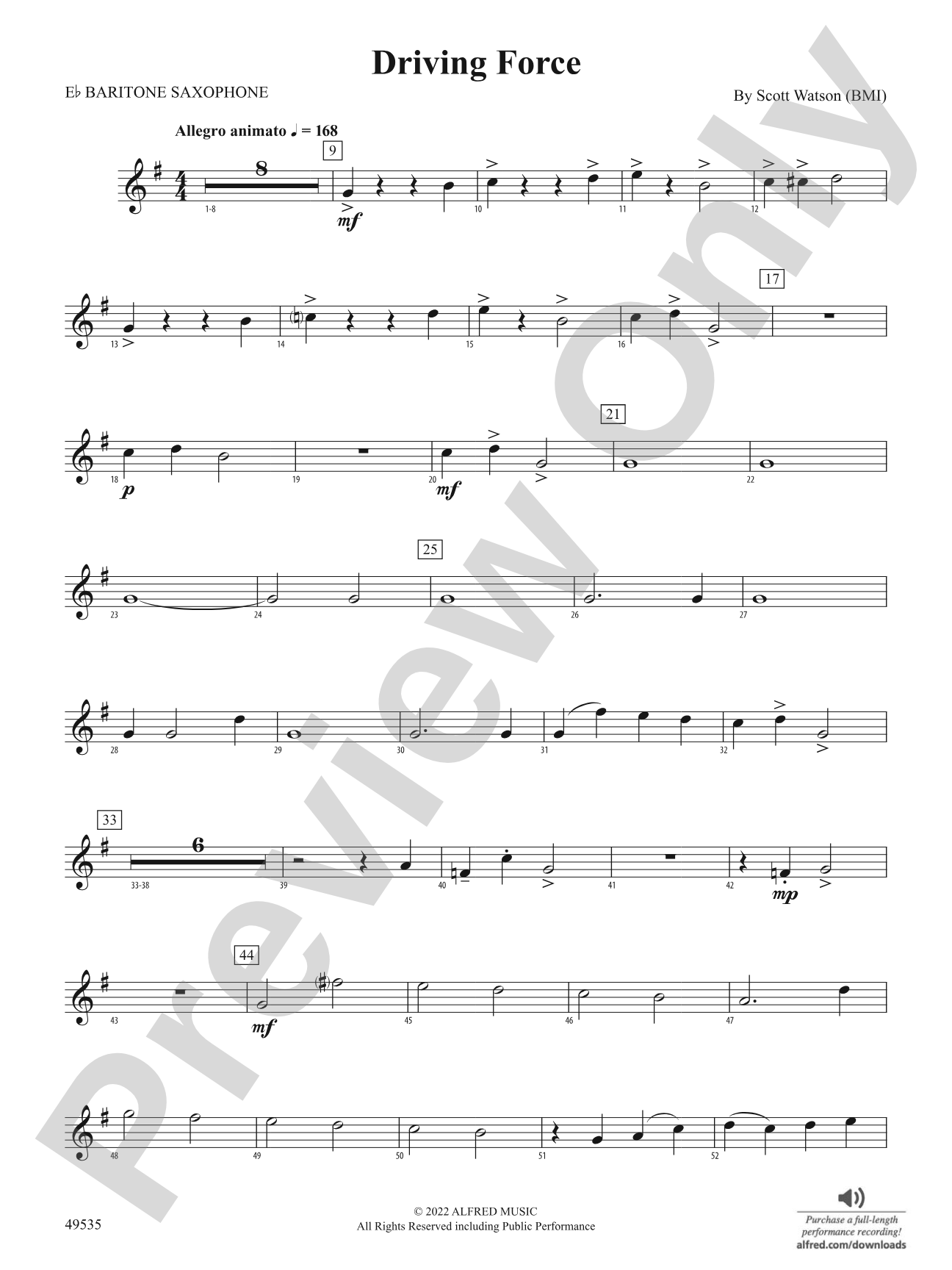

Driving Force: E-flat Baritone Saxophone
By Scott Watson
Grade: 1.5
Item: 00-PC-0018876_BTX
$3.00
Pickup currently not available
Description
Opening with an energetic eighth note melody driven by an insistent woodblock, this uptempo composition unfolds playfully, gracefully, and relentlessly. From first note to last, this exciting piece for young band captures the driving force that gets people out of bed and moving through their work, play, or adventure. Throughout, several related themes are developed and passed between all instruments, building to an exuberant climax and musically satisfying conclusion. Check out Driving Force by Scott Watson! (2:35)
The PerformancePlus+ series is an innovative addition to the ever-expanding MakeMusic Cloud interactive library. These engaging selections are presented with educational resources designed to enrich the rehearsal process and create outstanding performances. Including:


The PerformancePlus+ series is an innovative addition to the ever-expanding MakeMusic Cloud interactive library. These engaging selections are presented with educational resources designed to enrich the rehearsal process and create outstanding performances. Including:
- Assignment, recording, and assessment tools within MakeMusic Cloud
- Piece-specific exercises focused on skills and techniques
- Educational tips and suggestions to support learning
Available in print and digital formats.
Don't just read it, hear it, play along with it, and watch your students grow with it. In MakeMusic Cloud, Driving Force: E-flat Baritone Saxophone comes alive with professional accompaniment, adjustable tempo, and built-in practice tools that turn solo practice into real progress.
Open in the Player
Jump straight in and assign it today.
Start Your Free Trial
Open this title and explore the full library in minutes.
Sample Audio
1
Audio File
--:--
0:00
0:00
Sample Video
Additional Details
Series:
Alfred Concert Band - PerformancePlus+
Publisher:
Alfred Music
SKU:
00-PC-0018876_BTX
More about this title
About the Composer: Scott Watson

Scott Watson has spent four decades shaping young musicians as a teacher, conductor, and composer. After 35 years leading instrumental programs in the Parkland School District (Allentown, PA), where he built both the high school band program and a coordinated elementary strings initiative across multiple schools, he joined Cairn University as Associate Professor of Music. His catalogue of over 120 published works spans concert band, string orchestra, and chamber repertoire at all levels, reflecting his dual fluency in contemporary classical music and the practical demands of the rehearsal room.
Watson's compositions have been performed at major American venues including the Academy of Music in Philadelphia, the Midwest Clinic in Chicago, and the White House. He is an exclusive composer and clinician for Alfred Publications, contributes to their Sound Innovations series, and authored Using Technology to Unlock Musical Creativity (Oxford University Press, 2011). He regularly guest conducts honor bands and conducts clinics for music educators nationwide.
Why we love this
Driving Force delivers immediate musical payoff without sacrificing craft. The insistent woodblock accompaniment and energetic eighth note melody establish forward momentum from the downbeat, keeping young ensembles engaged and motivated. Watson's structural clarity and the seamless passing of themes between sections keep rehearsals focused on musicality rather than decoding complex textures, while the built-in PerformancePlus+ resources accelerate preparation and deepen understanding.
What to expect
Energy radiates from the first note. A propulsive woodblock pulses beneath an animated melody that bounces and builds, never settling into predictability. The piece feels like movement itself, capturing that restless drive that motivates action, whether it's the rush of starting a new day or the excitement of pushing toward a goal.
Who it's for
Grade 1.5 bands ready for repertoire with genuine musical substance and forward momentum. This piece suits ensembles that can sustain focus through an uptempo, through-composed work and respond well to material that rewards rhythmic precision and transparent voicing.
How to get the most out of it
- Isolate the woodblock pattern early and lock it in as the foundation. This pulse drives every other element, so rhythmic precision here prevents confusion across the ensemble.
- Balance the eighth note melody against the woodblock accompaniment by asking the primary melodic voice to phrase forward while the percussion maintains steady, unaccented articulation.
- Mark the theme transfers between instrumental families in the score before rehearsal. Highlight where themes pass from woodwinds to brass, and ensure each section claims ownership of the line with confident, connected phrasing.
- Work the climactic section in isolation, drilling the layered rhythmic figures that build intensity. Once each part locks independently, layer them back together gradually to control the swell to the final cadence.
How to use it
Open a concert or festival performance with this piece to establish immediate audience engagement and set a brisk, confident tone. Its three-and-a-half minute duration and accessible Grade 1.5 difficulty make it ideal for pairing with a contrasting selection of slower character, creating a well-balanced opening program statement.
Skills your students will build
- Sustaining rhythmic precision in eighth note passages with subdivided accompaniment
- Phrasing and thematic development across different instrumental families
- Balancing melody against ostinato figures without sacrificing musical line
- Building intensity through layered textures and managing crescendos toward climactic moments
- Responding to conducting cues in uptempo, energetic material