
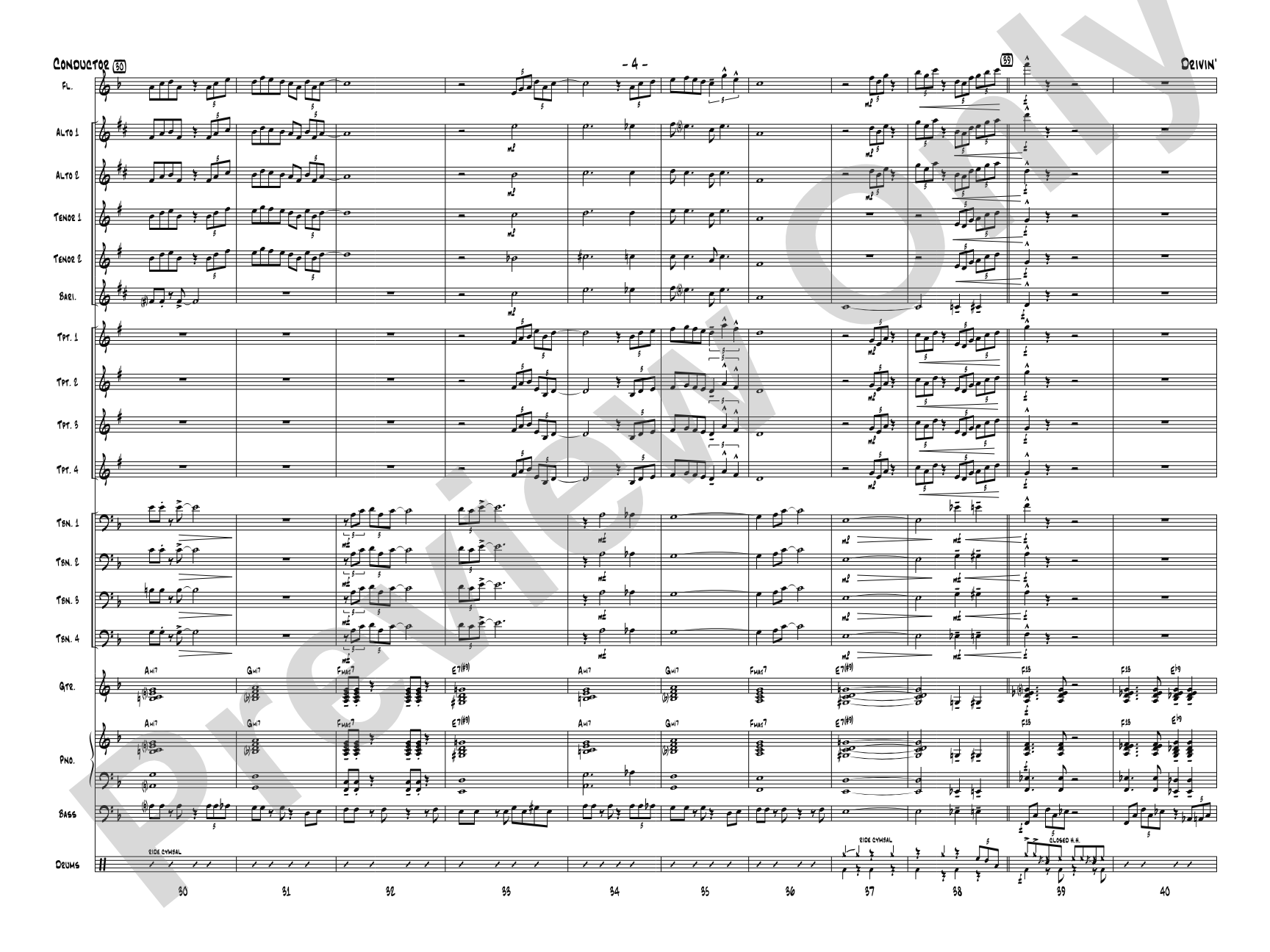
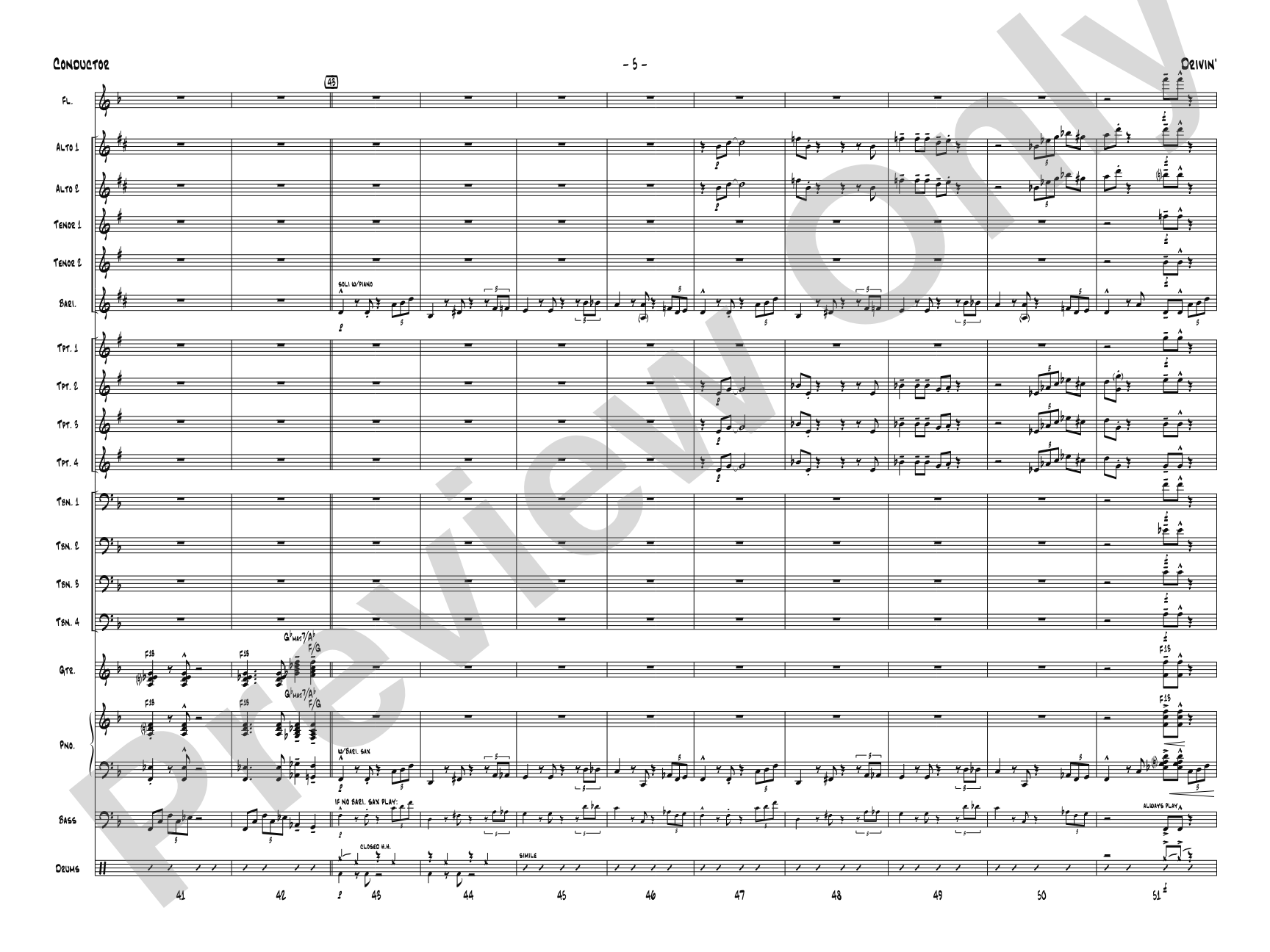
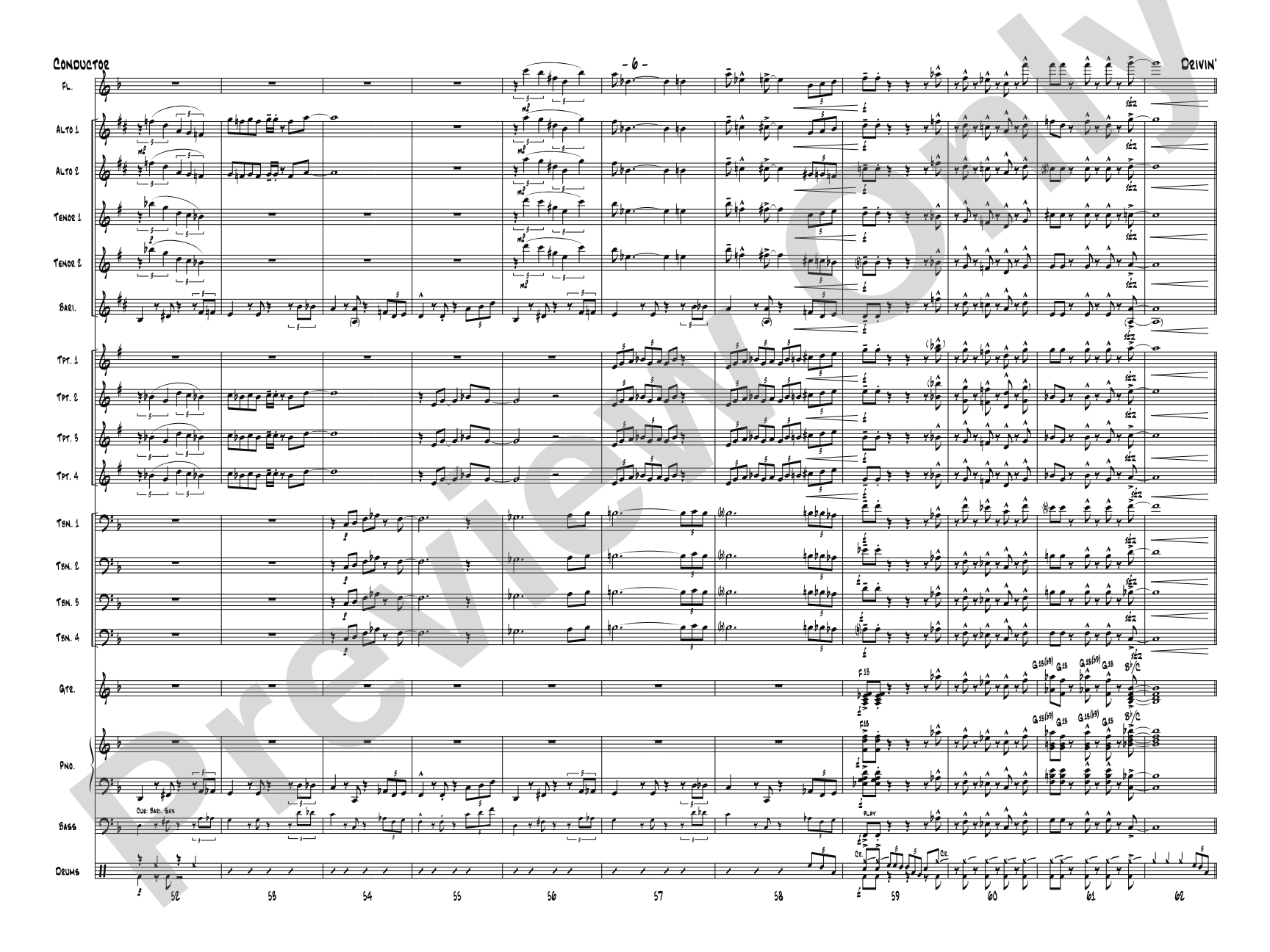
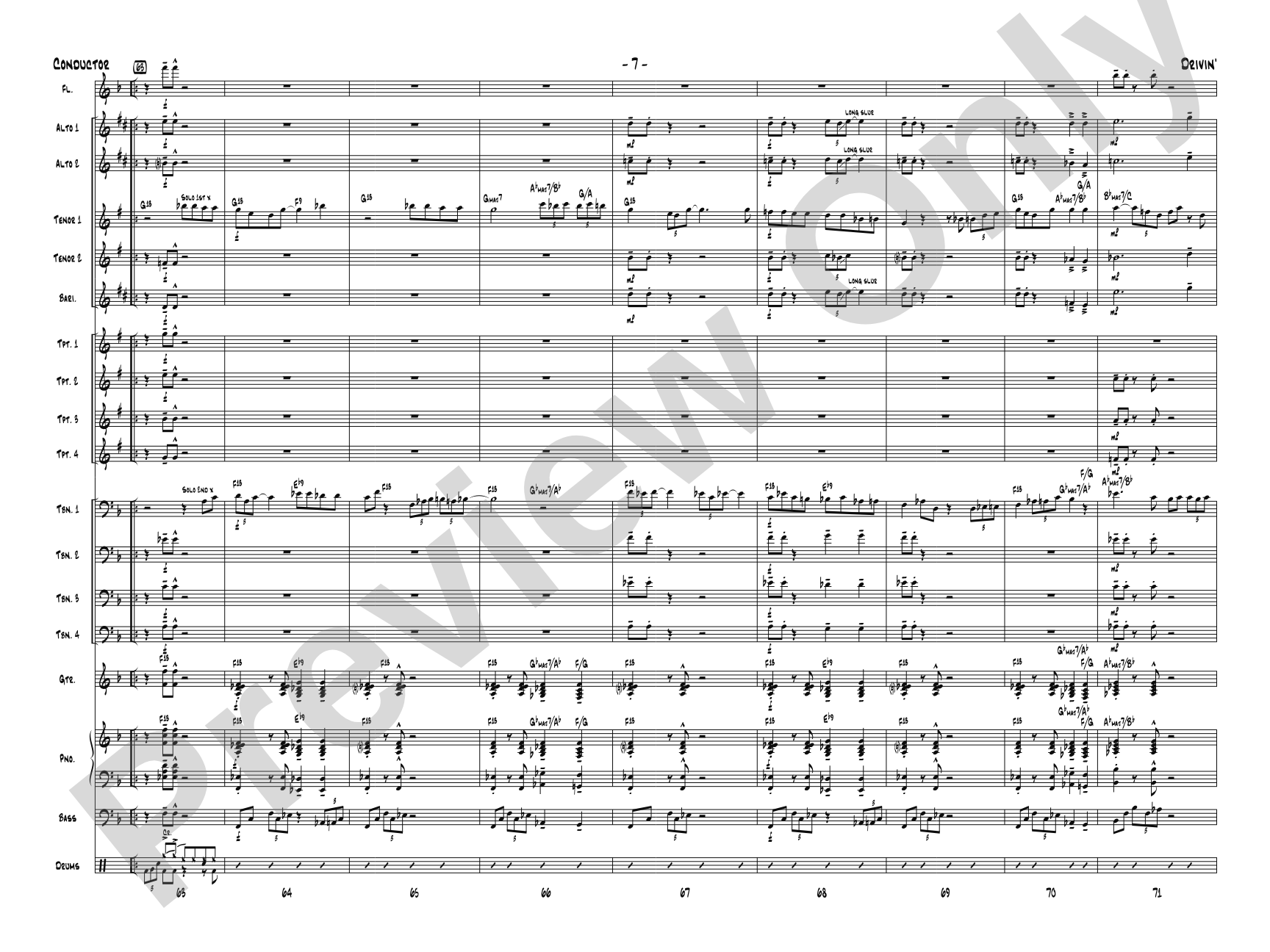
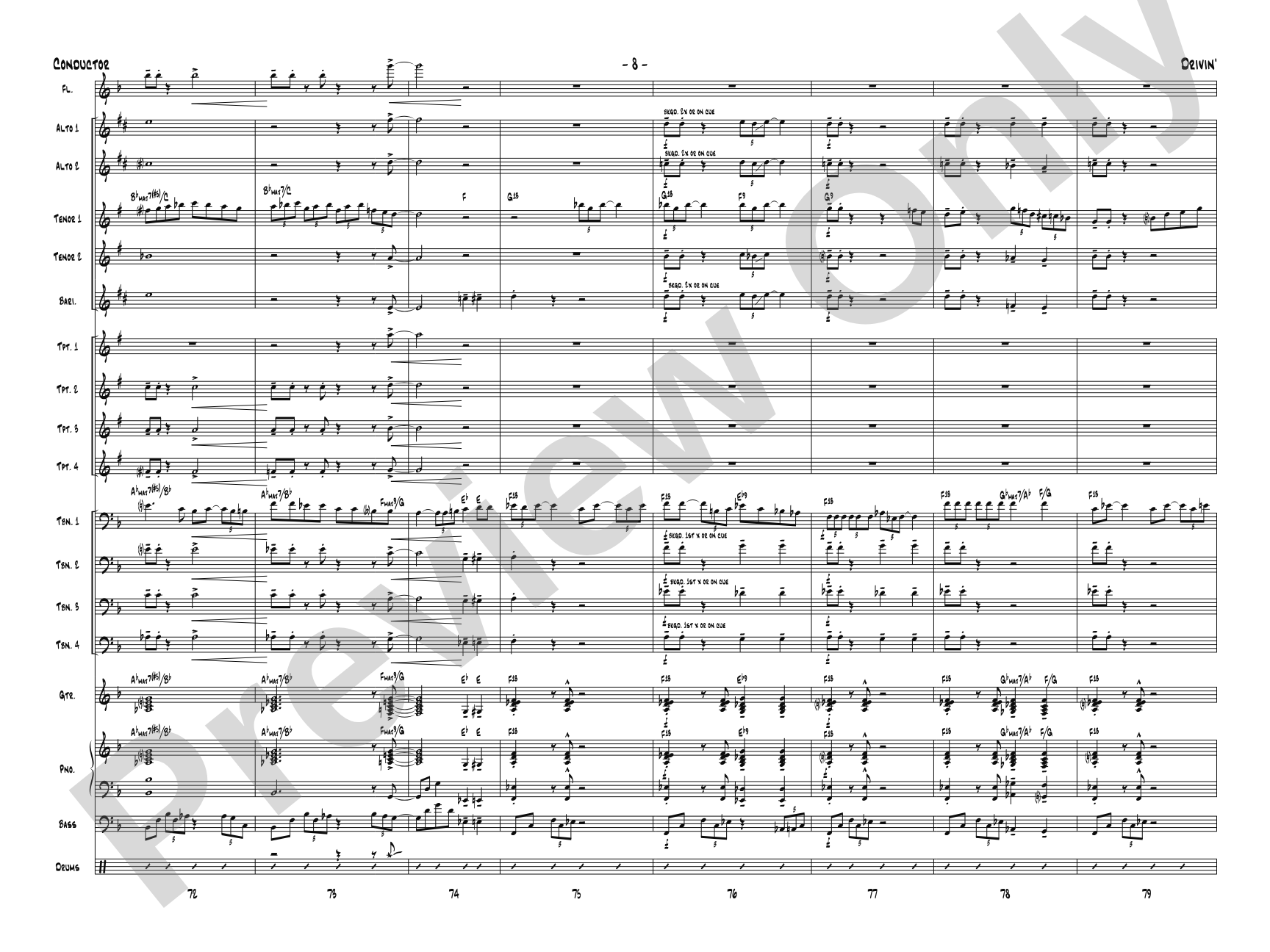
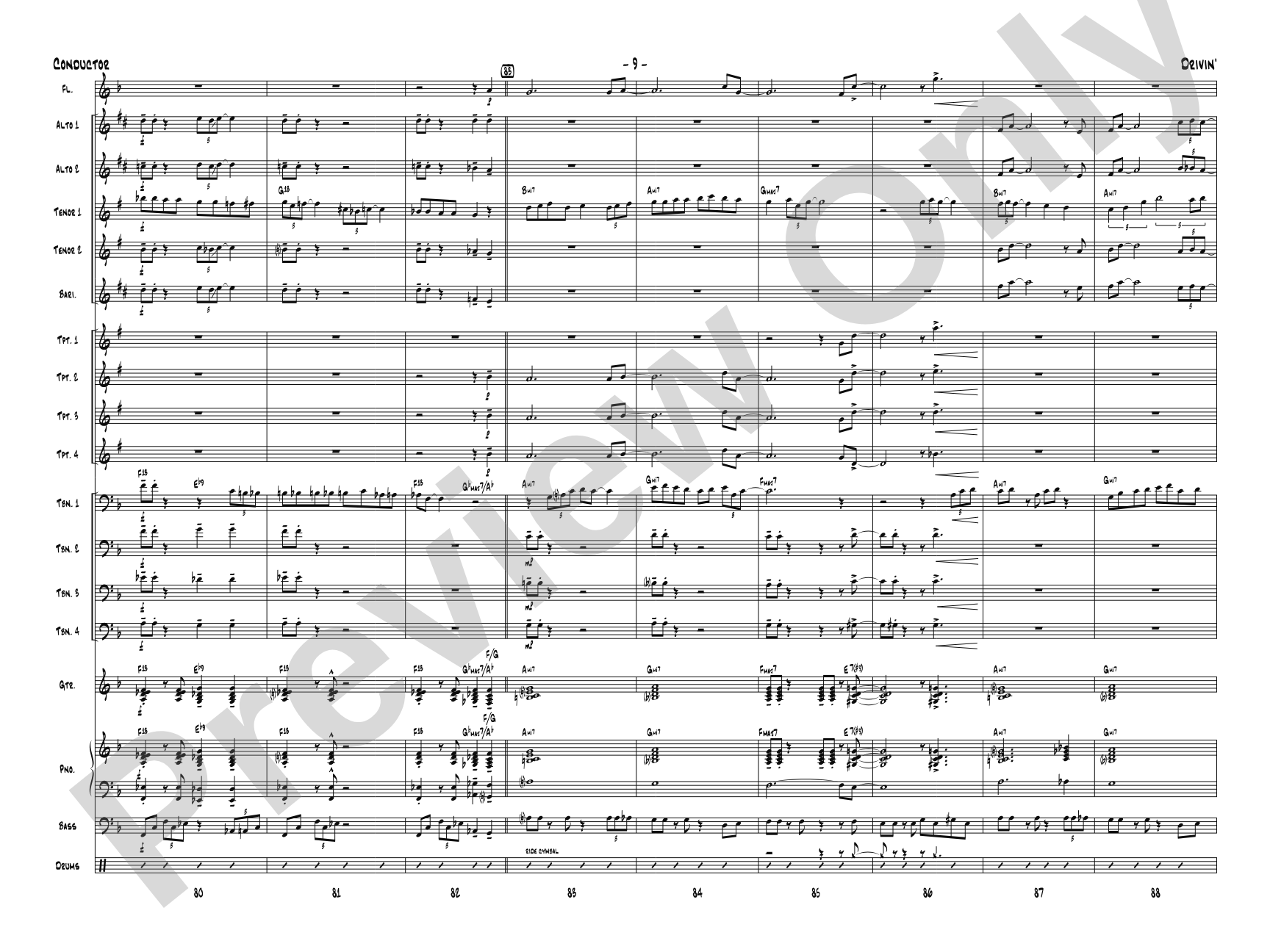
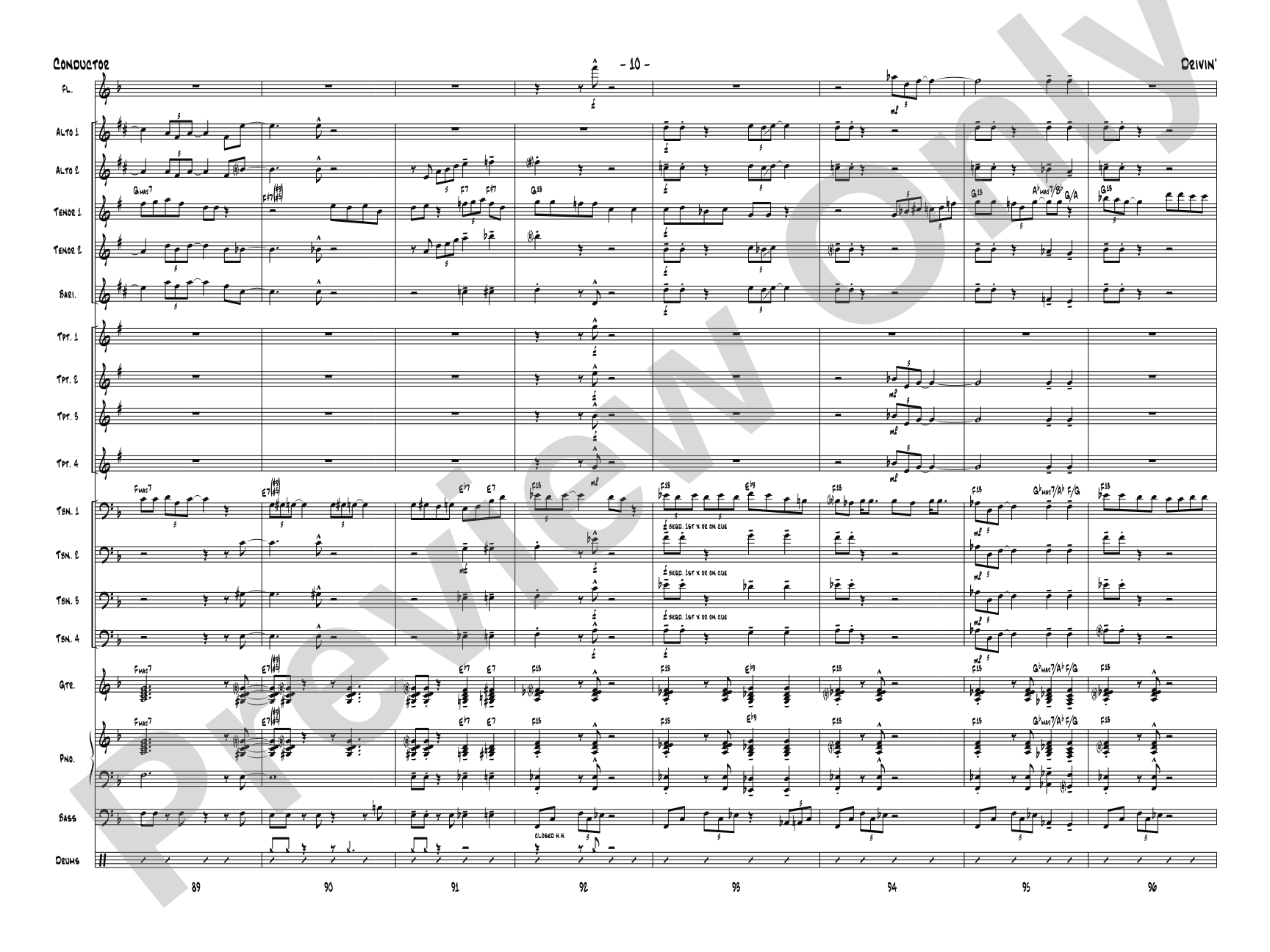
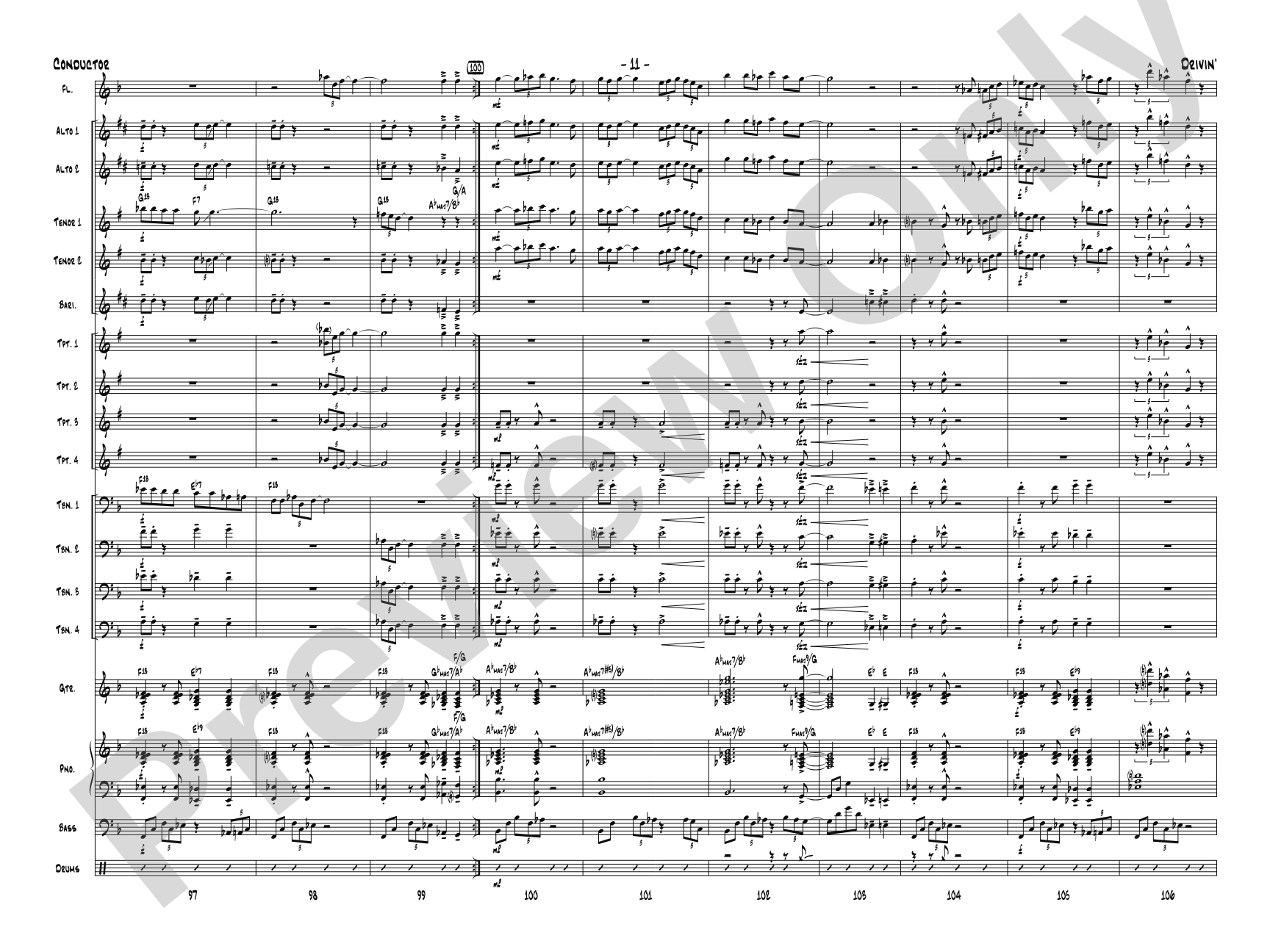
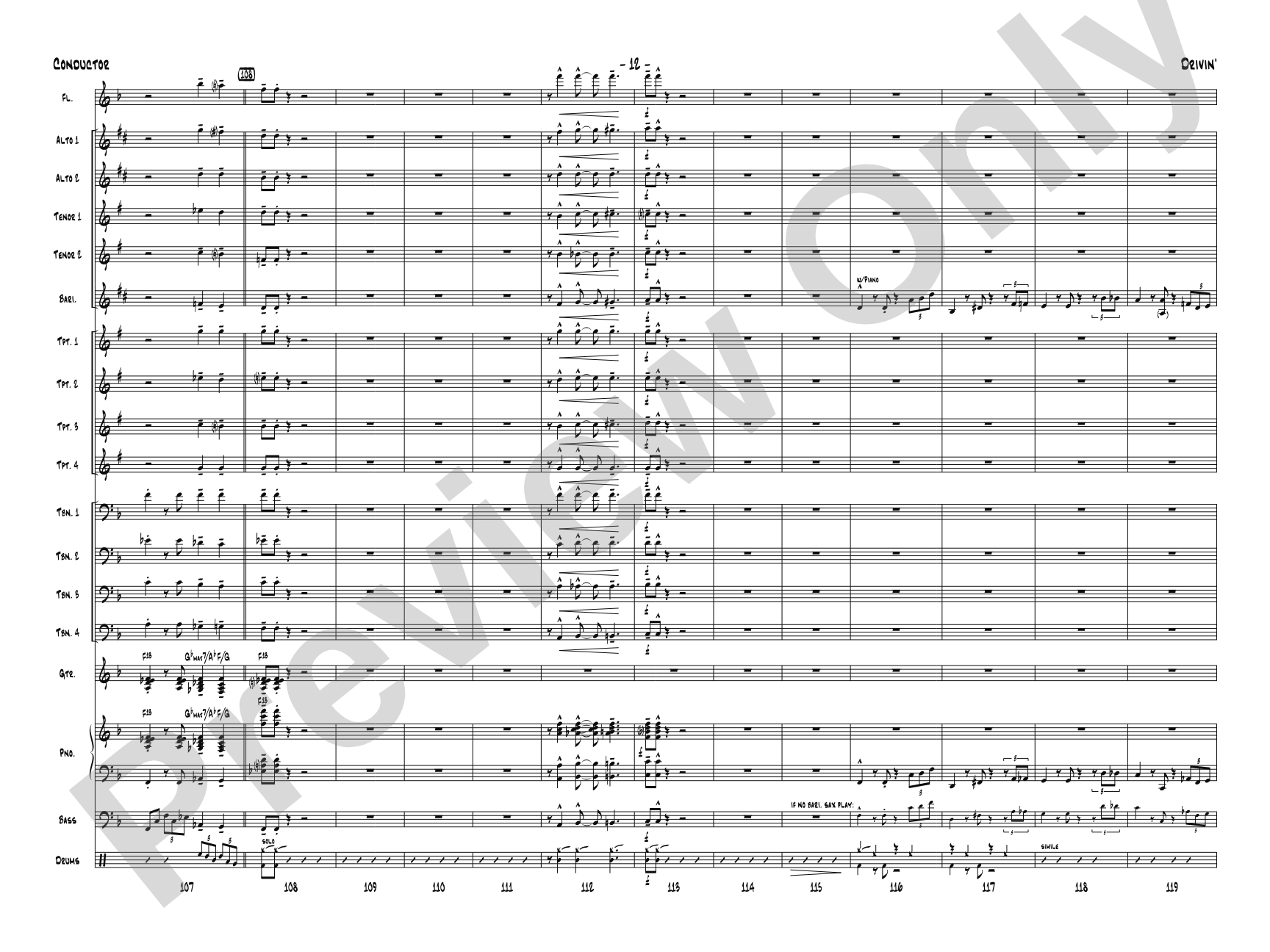
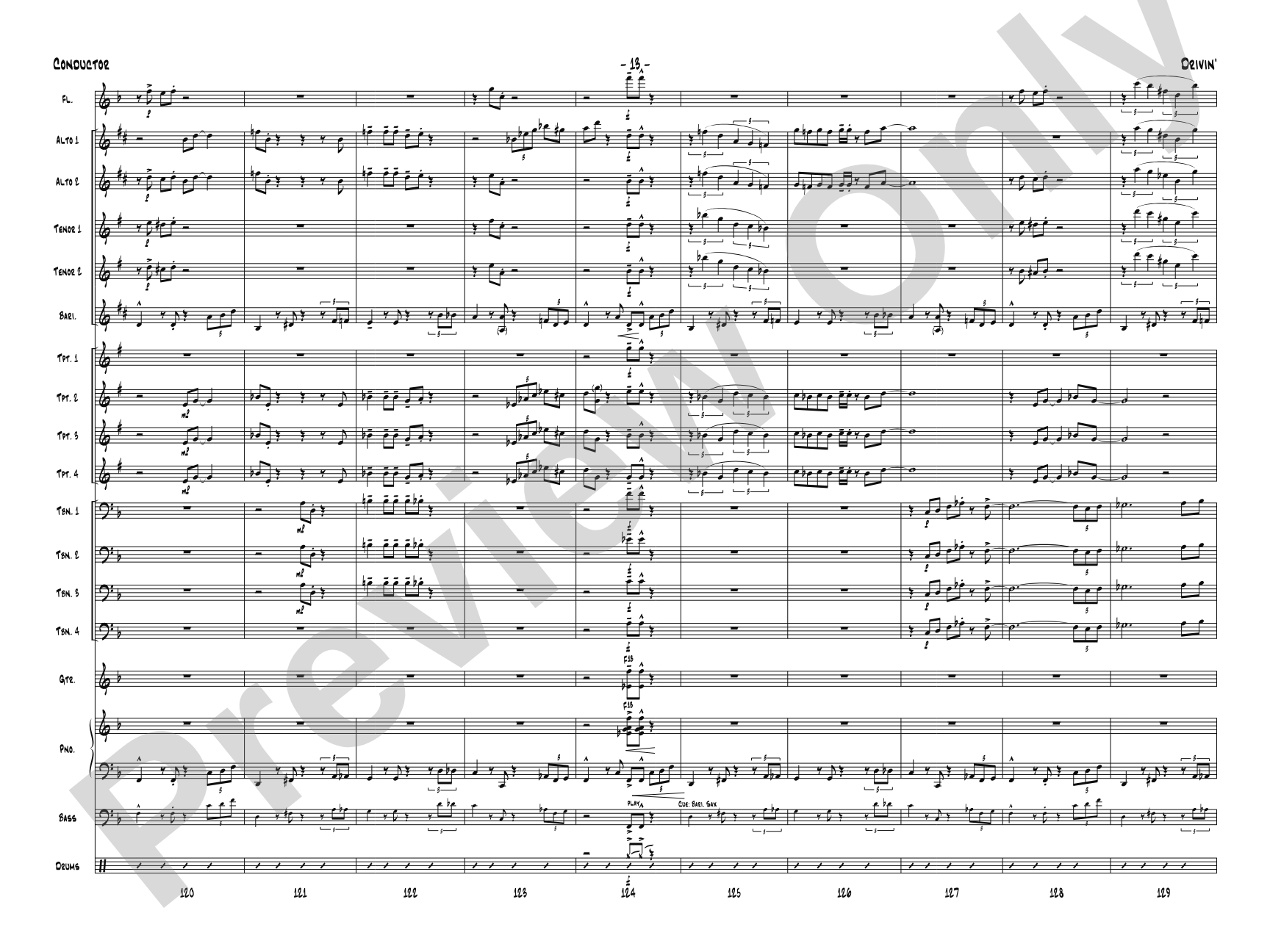
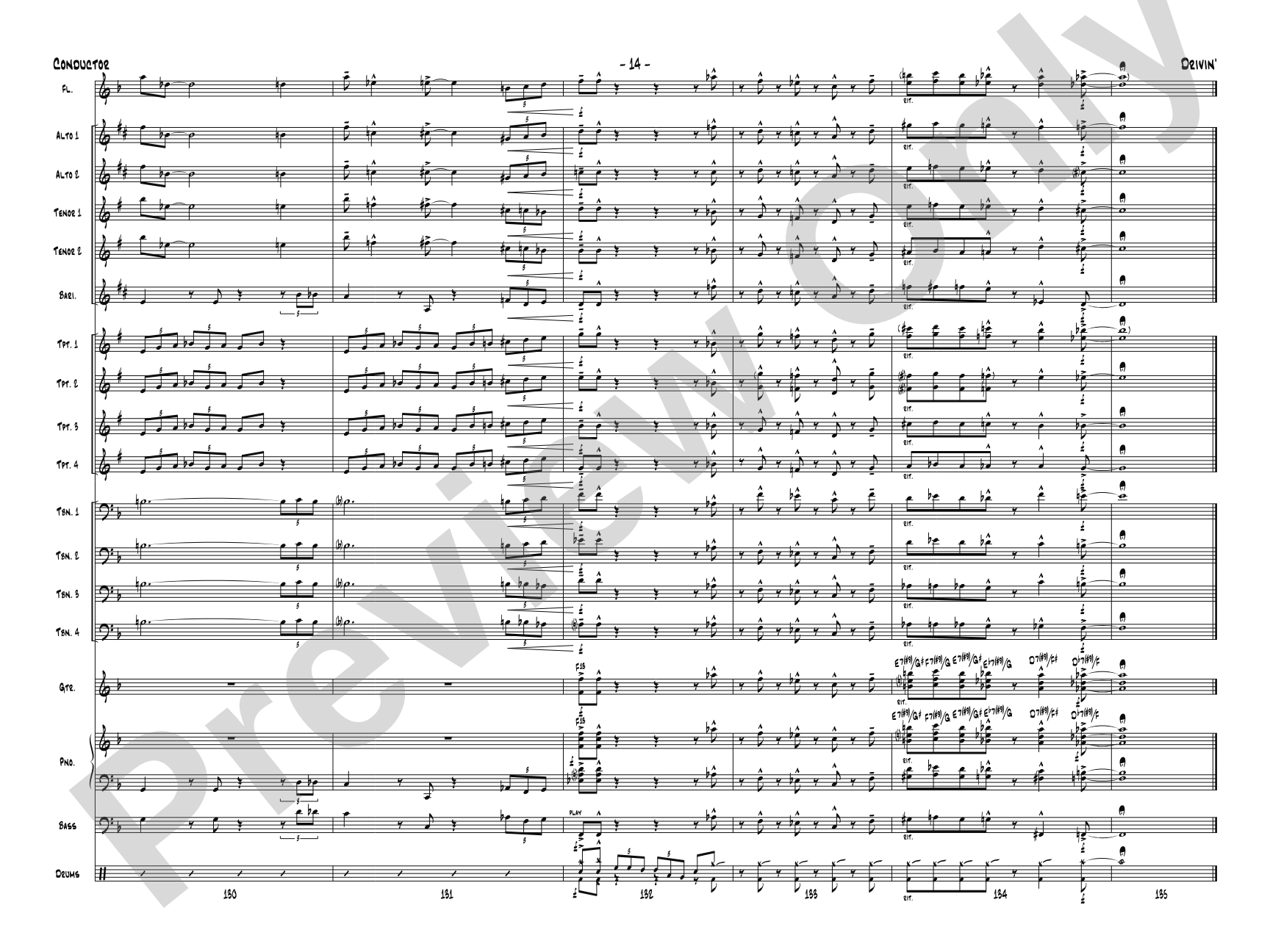

Drivin': Jazz Ensemble Conductor Score & Parts
By Adrien Re
Item: 00-PK-0006874

$48.00
Pickup currently not available
Buy Extra Parts (Digital PDF Download)
| Product | Price | Quantity |
|---|---|---|
| Drivin': Score | $9.00 | |
| Drivin': E-flat Alto Saxophone | $3.00 | |
| Drivin': 2nd E-flat Alto Saxophone | $3.00 | |
| Drivin': B-flat Tenor Saxophone | $3.00 | |
| Drivin': 2nd B-flat Tenor Saxophone | $3.00 | |
| Drivin': E-flat Baritone Saxophone | $3.00 | |
| Drivin': 1st B-flat Trumpet | $3.00 | |
| Drivin': 2nd B-flat Trumpet | $3.00 | |
| Drivin': 3rd B-flat Trumpet | $3.00 | |
| Drivin': 4th B-flat Trumpet | $3.00 | |
| Drivin': 1st Trombone | $3.00 | |
| Drivin': 2nd Trombone | $3.00 | |
| Drivin': 3rd Trombone | $3.00 | |
| Drivin': 4th Trombone | $3.00 | |
| Drivin': Guitar Chords | $3.00 | |
| Drivin': Guitar | $3.00 | |
| Drivin': Piano Accompaniment | $3.00 | |
| Drivin': String Bass | $3.00 | |
| Drivin': Drums | $3.00 | |
| Drivin': Flute | $3.00 | |
| Drivin': Tuba | $3.00 | |
| Drivin': 1st F Horn | $3.00 | |
| Drivin': Baritone T.C. | $3.00 | |
| Drivin': 2nd Baritone T.C. | $3.00 | |
| Drivin': 3rd Baritone T.C. | $3.00 |
Parts Added to Cart!
Description
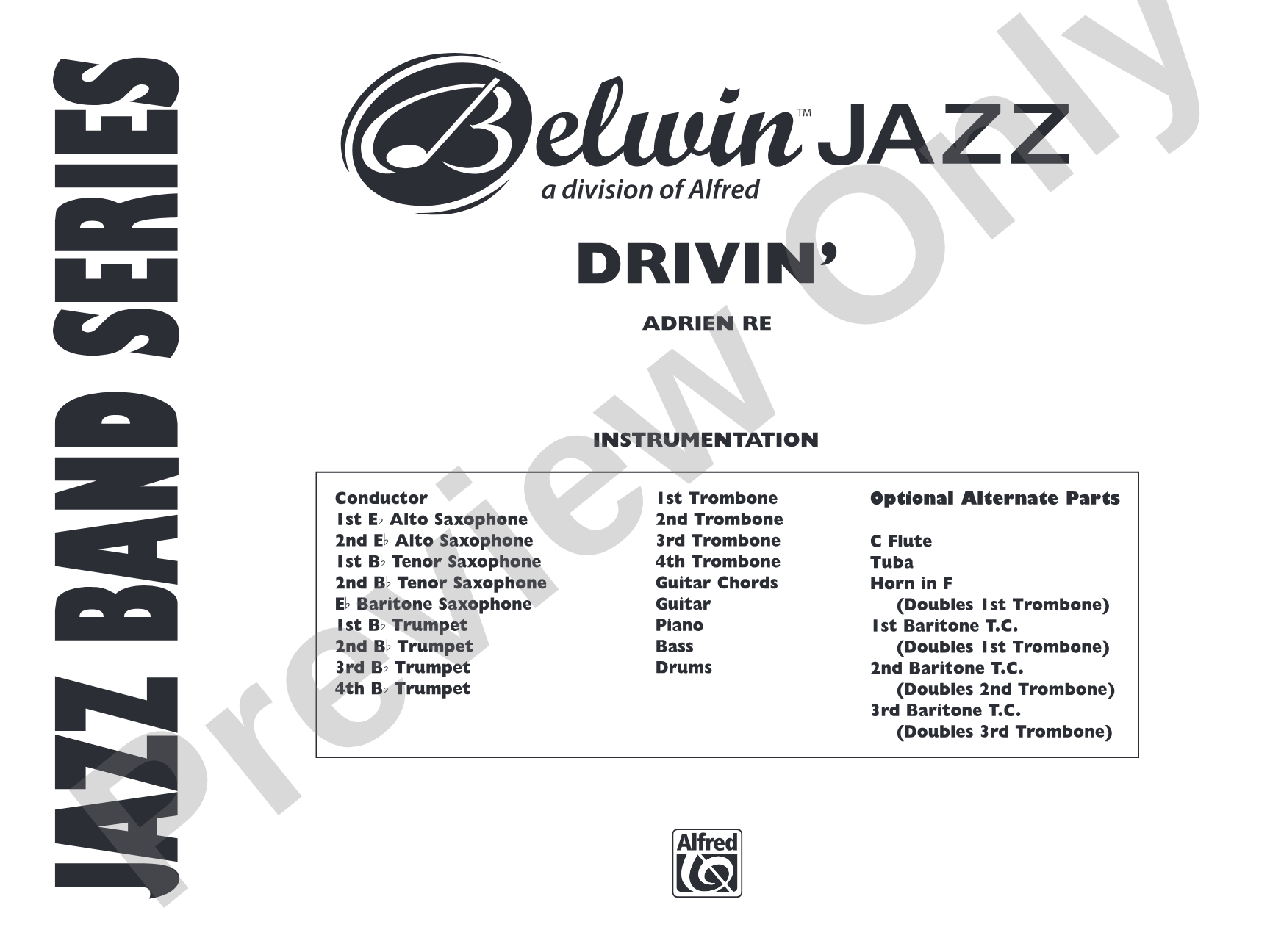
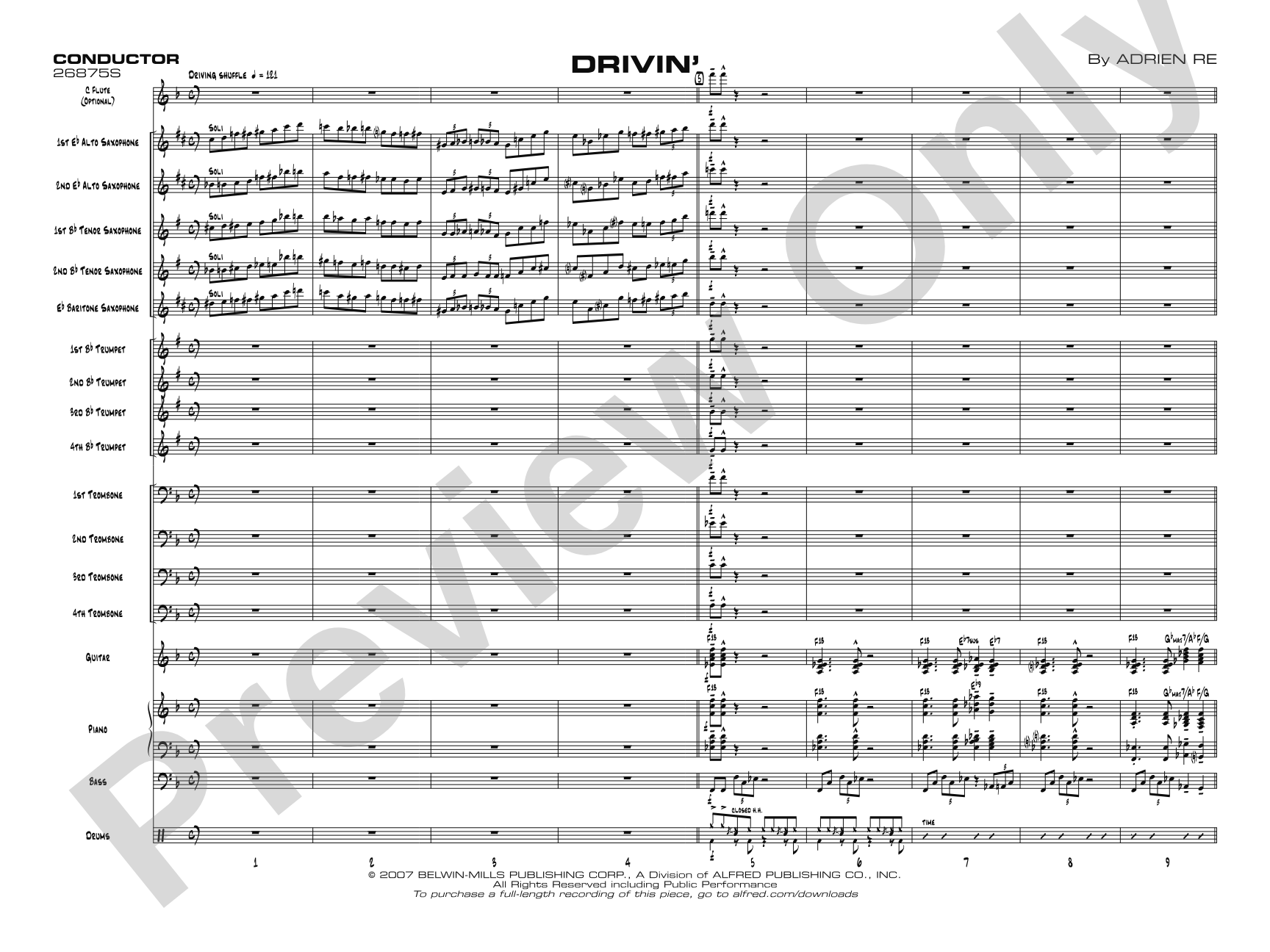
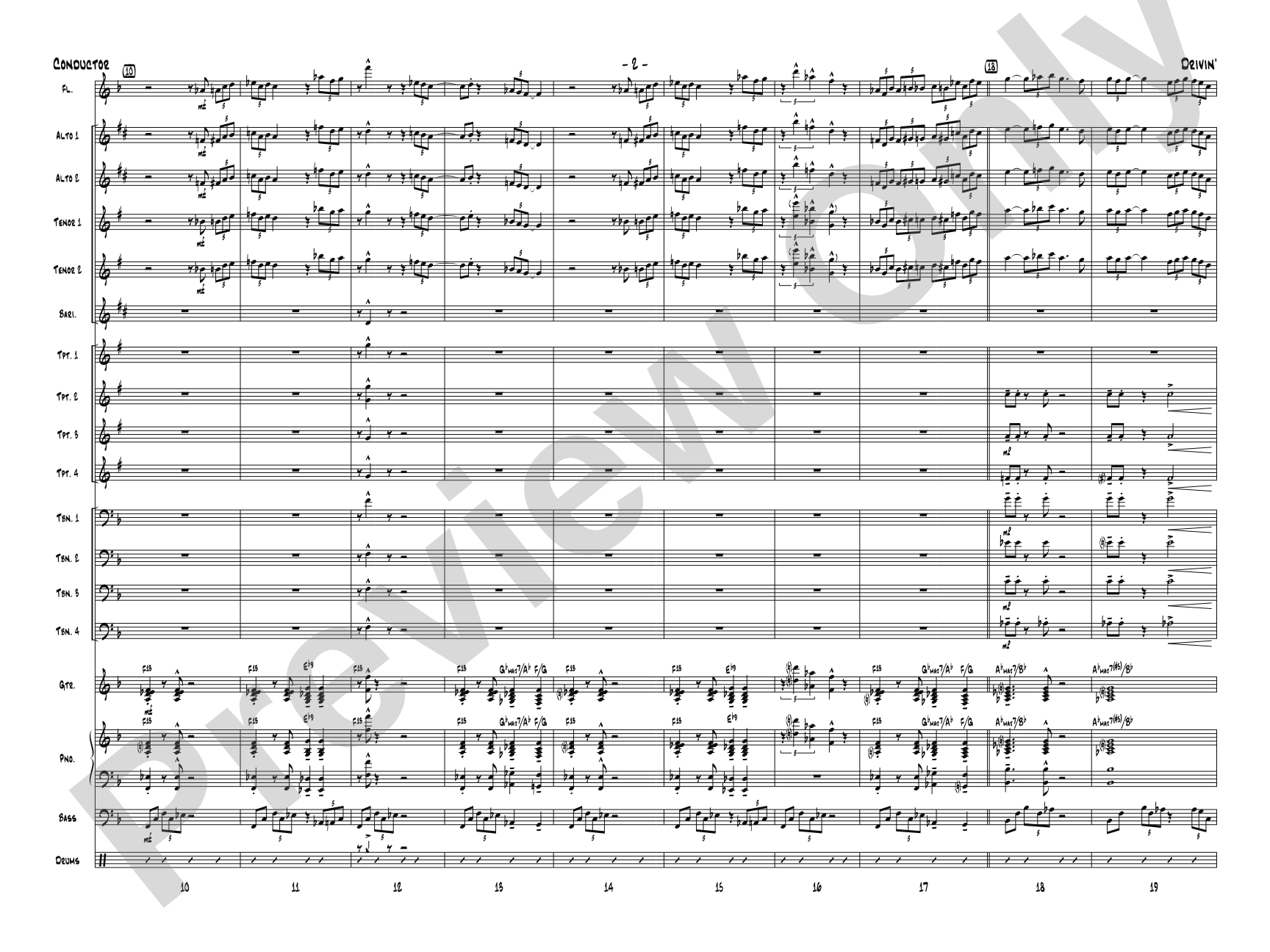
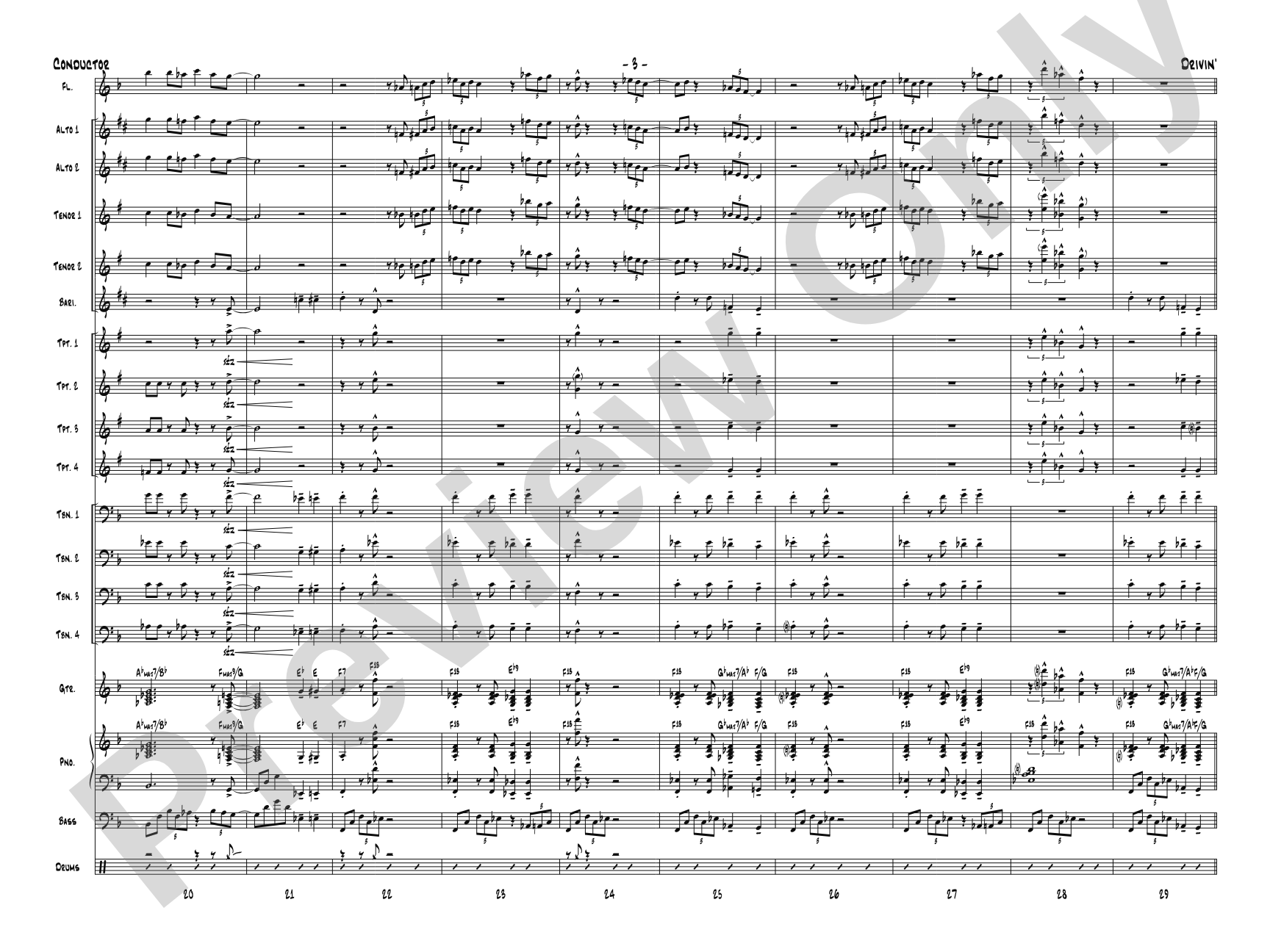
This driving shuffle has a serious groove. Composer/arranger Adrien Re has created a shuffle that will linger in your mind. Solo opportunities are written-out for tenor and trombone with ensemble backgrounds plus a brief drum solo. Lead trumpet range is to written A (optional D). It's hip! This title is available in MakeMusic Cloud.


Don't just read it, hear it, play along with it, and watch your students grow with it. In MakeMusic Cloud, Drivin': Jazz Ensemble Conductor Score & Parts comes alive with professional accompaniment, adjustable tempo, and built-in practice tools that turn solo practice into real progress.
Open in the Player
Jump straight in and assign it today.
Start Your Free Trial
Open this title and explore the full library in minutes.
Sample Audio
1
Audio File
--:--
0:00
0:00
Sample Video
No sample videos found.
Additional Details
Series:
Jazz Band Series
Publisher:
Alfred Music
Page Count:
108
SKU:
00-PK-0006874
More about this title
About the Composer: Adrien Re
Adrien Re composes and arranges jazz across the Mid-Atlantic region, holding a Doctor of Arts degree from Ball State University. He teaches music at Shenandoah University and Lord Fairfax Community College while performing extensively as a member of Souled Out Band, a group that maintains a touring schedule of over 150 dates annually along the East Coast.
Re's background as both educator and working musician informs his writing. His arrangements balance accessibility with authentic jazz vocabulary, making them suitable for student ensembles while maintaining the musicality that comes from someone deeply embedded in the contemporary jazz performance world.
Why we love this
Re's groove sits in your students' ears and bodies immediately. The written-out solos for tenor and trombone give young improvisers concrete models to learn from, while the ensemble backgrounds stay active enough to keep the whole band engaged. This is the kind of shuffle that makes rehearsal fun and lands with real impact in performance.
What to expect
Hip and propulsive. The shuffle has enough forward motion to energize a room, but the voicing and harmonic choices keep it grounded and intentional rather than generic. There's warmth underneath the drive.
Who it's for
Jazz ensemble directors looking for material that grabs students immediately and rewards careful ensemble work. The written solos make it accessible to groups developing improvisation skills, while the groove and voicing sophistication keep experienced players engaged.
How to get the most out of it
- Lock the comping and rhythm section into the same subdivision of the shuffle feel before addressing melody. A unified groove underneath will carry everything else.
- Have tenor and trombone soloists work with a practice recording to internalize the underlying harmony and phrasing before attempting to modify or personalize the written lines.
- Bring out the drum solo moment as a genuine feature, not a throwaway section. It deserves space, clarity, and the ensemble's full attention in rehearsal.
- Check the lead trumpet's written range expectations early. If high A is uncomfortable for your section, the optional D notation gives you flexibility without losing the voicing integrity.
How to use it
Use this as a standalone feature on a jazz concert to showcase your ensemble's groove and give soloists a moment to shine, or pair it with a set of contrasting jazz standards to demonstrate range. The accessibility makes it a strong choice for spring concerts or informal performance settings.
Skills your students will build
- Executing shuffle feels with consistent subdivision and swing
- Accompanying soloists with dynamic, responsive ensemble parts
- Interpreting written jazz solos as launching points for personal phrasing
- Reading and executing tight ensemble backgrounds in jazz context
- Balancing technical precision with a relaxed, groove-based sensibility