Drinking Song Sheet Music Preview

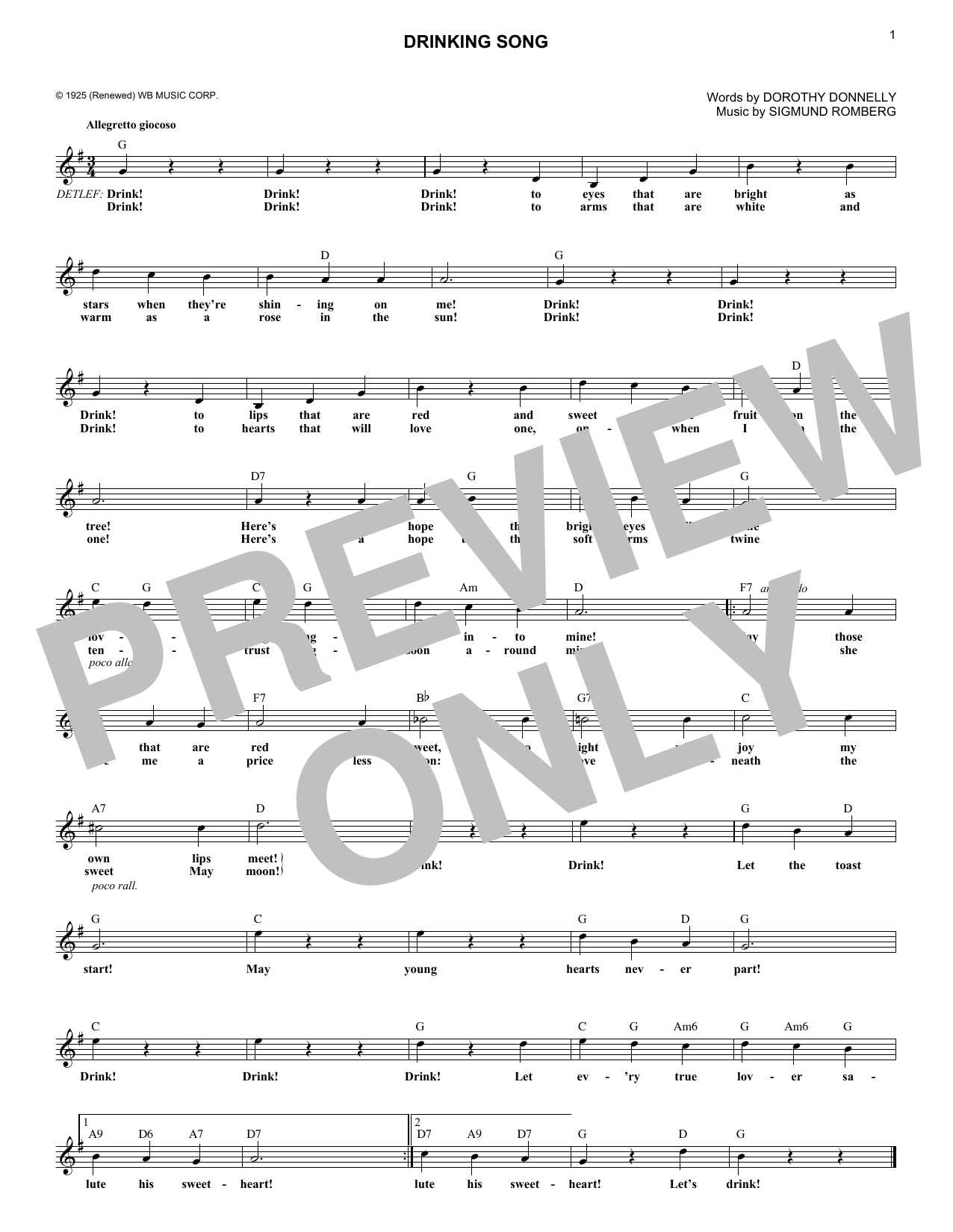
Drinking Song: Lead Sheet / Fake Book

Item: 35-DS00410988

Digital Download
$3.99

One moment…

One moment…

Description

Drinking Song: Lead Sheet / Fake Book isn't in MakeMusic Cloud just yet...but it could be. Let us know you'd like to see it, and you'll help shape what comes next. In the meantime, start a free trial and dive into thousands of interactive titles your students can play along with today.

Sample Audio
No sample audio found.
Sample Video
Additional Details
Publisher: Hal Leonard
Page Count: 1
SKU: 35-DS00410988

More about this title

Why we love this

Lead sheets strip away arrangement decisions and hand the interpretive power directly to your musicians. A drinking song in this format invites vocalists and pianists to find their own swagger, whether that means swinging the eighth notes, comping in stride piano, or building energy through dynamic control rather than orchestration.

What to expect

Convivial and direct. The melody sits comfortably in the voice, with harmonic changes that feel natural under the fingers. You sense the roomful of people, the casual defiance, the warmth beneath the humor.

Who it's for

Pianists and singers working in jazz, cabaret, or musical theater contexts who want immediate access to a standard without the constraints of a full arrangement. This format suits solo performance, voice and piano recitals, and informal performance settings where flexibility matters more than orchestral color.

How to get the most out of it

  • Encourage the vocalist to lean into the conversational quality of the melody. Drinking songs thrive on personality and directness, so avoid over-legit phrasing in favor of natural speech rhythms.
  • Build the piano accompaniment gradually across verses. Start sparse with minimal comping in early sections, then thicken the texture as the song progresses to match the vocalist's growing intensity.
  • Lock the rhythmic feel between voice and piano early in rehearsal. Drinking songs often benefit from a slight swagger or lilt; establish whether you're playing it straight or with rhythmic flexibility before diving into details.

How to use it

Pair this with other American standards in a jazz or pops concert to give your vocalist a moment of intimacy between larger ensemble pieces. It also works as a solo vehicle for demonstrating how a skilled pianist can shape a song through comping alone, making it an excellent teaching tool for harmonic listening and accompaniment craft.

Skills your students will build

  • Reading and interpreting lead sheet notation
  • Harmonic improvisation in comping
  • Vocal phrasing and natural speech rhythm in sung melody
  • Coordination between vocalist and pianist in unrehearsed or semi-rehearsed contexts
  • Understanding song form and sectional structure

You May Also Like