
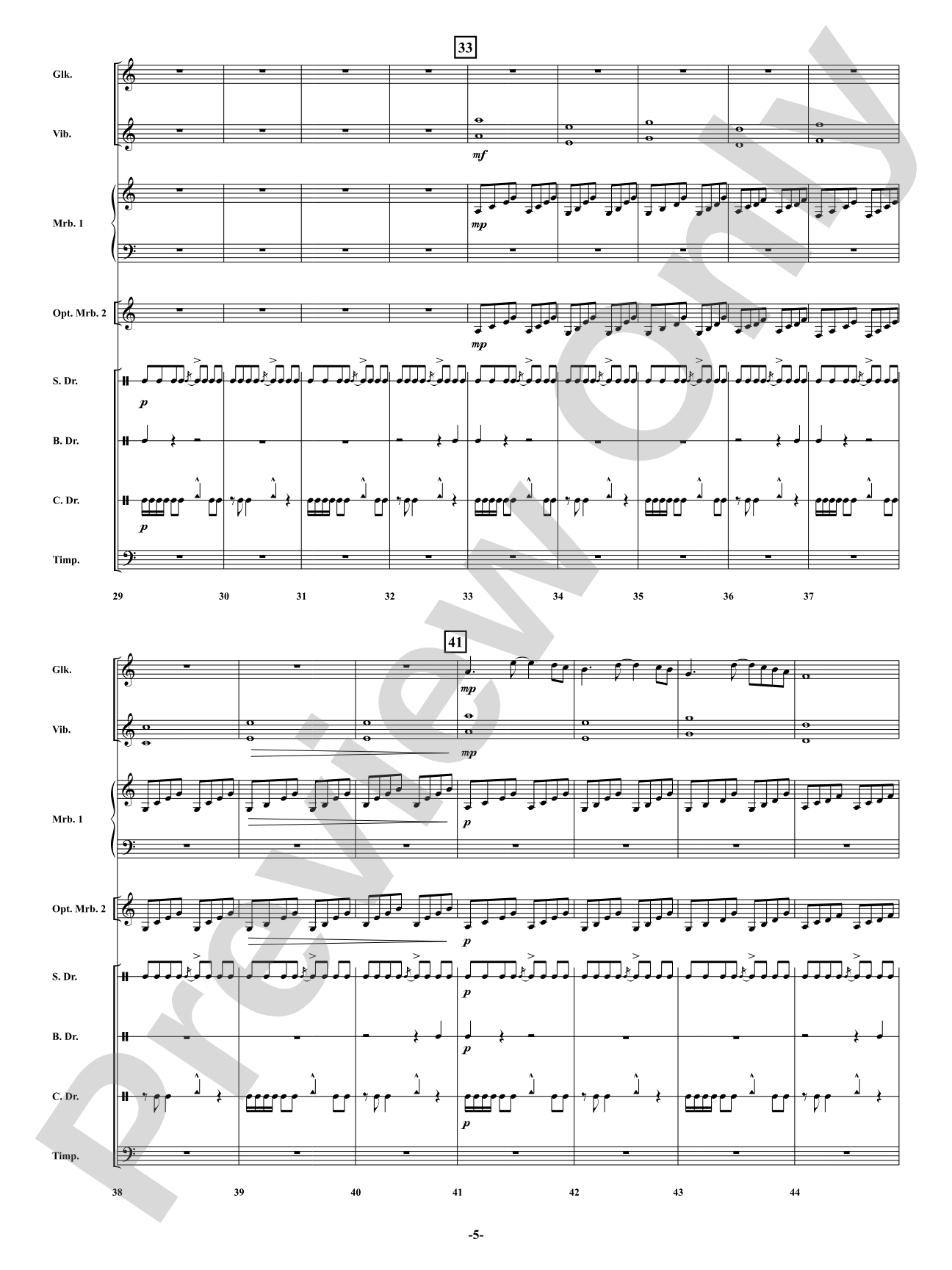
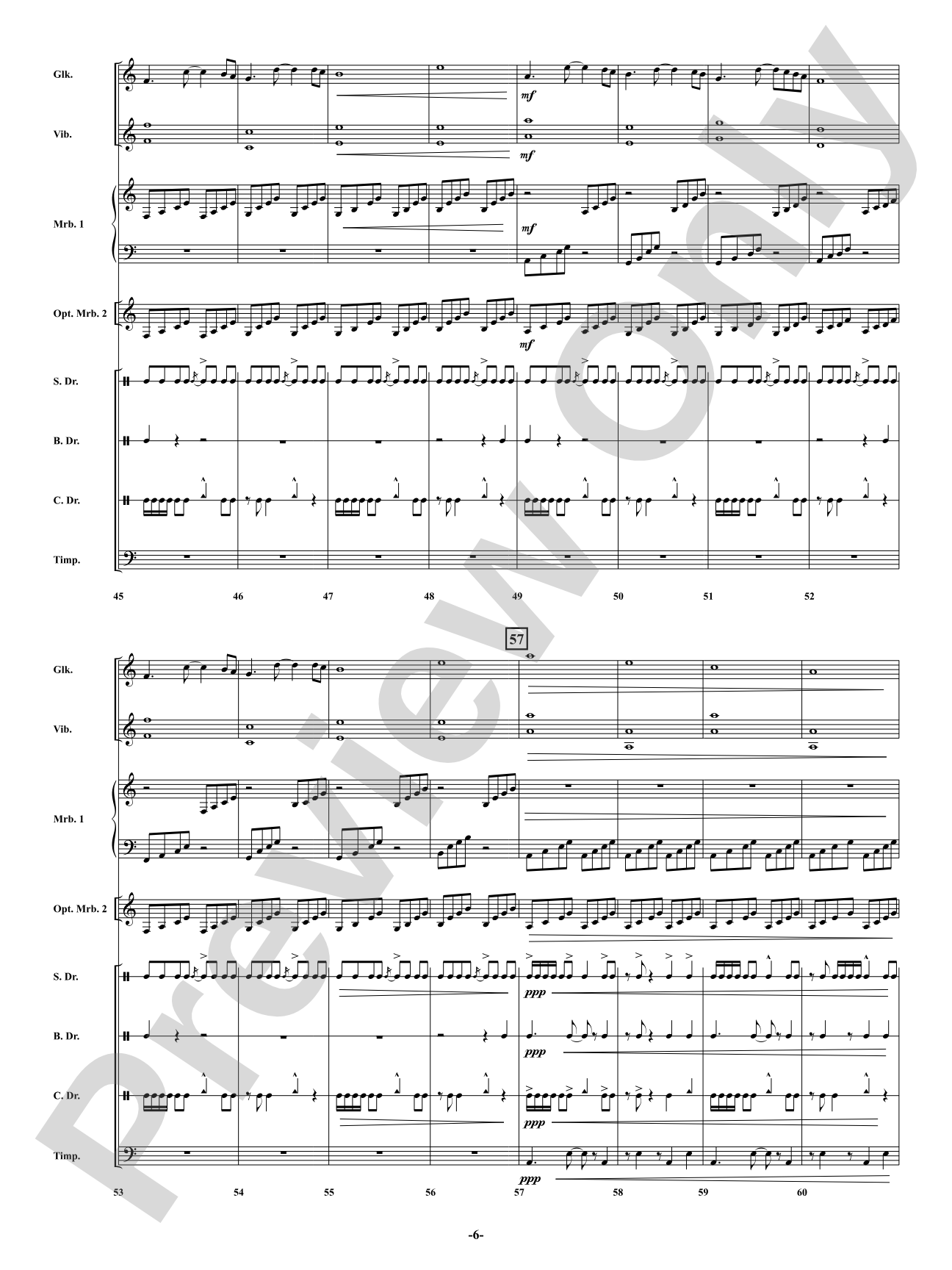
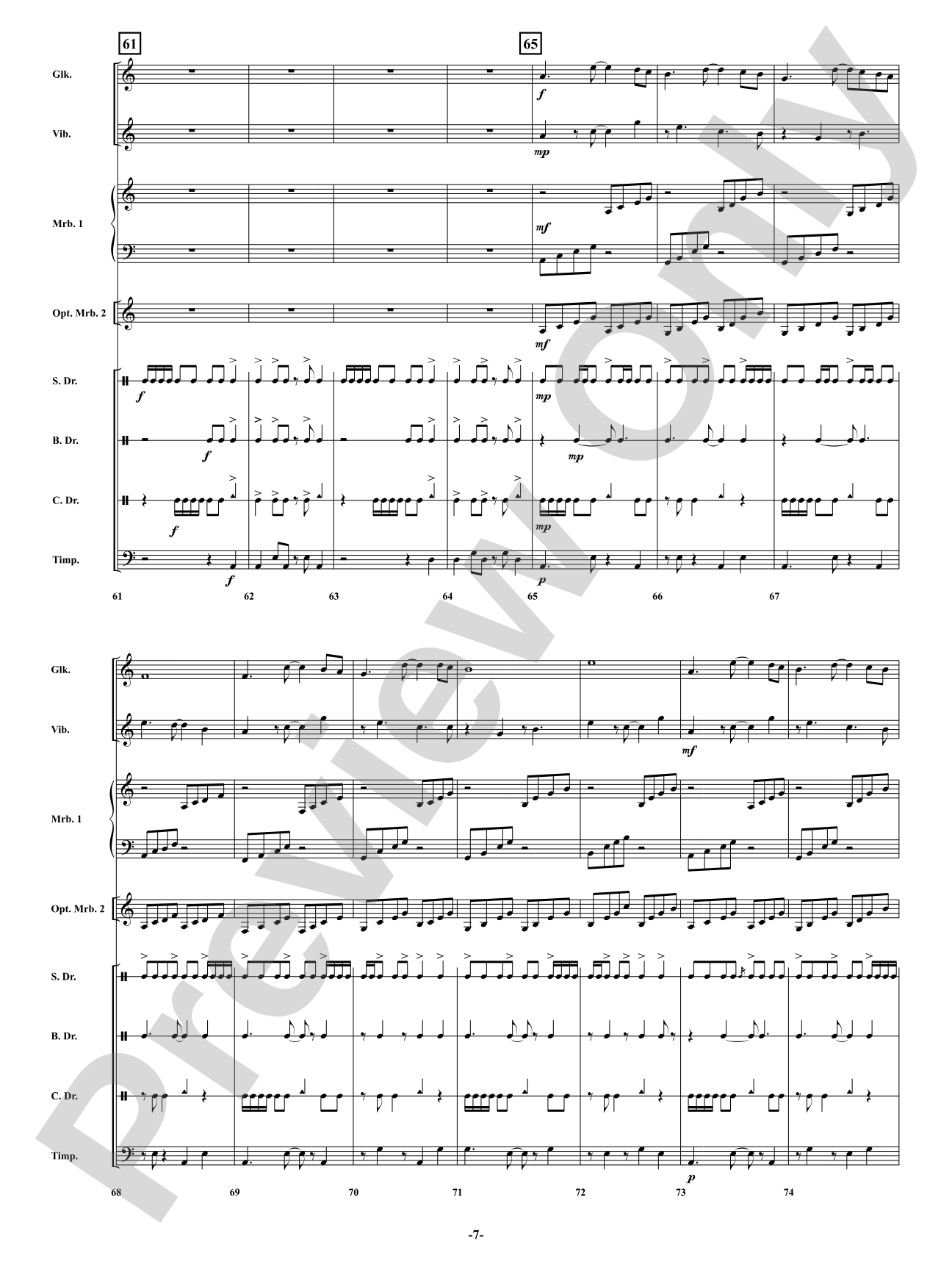
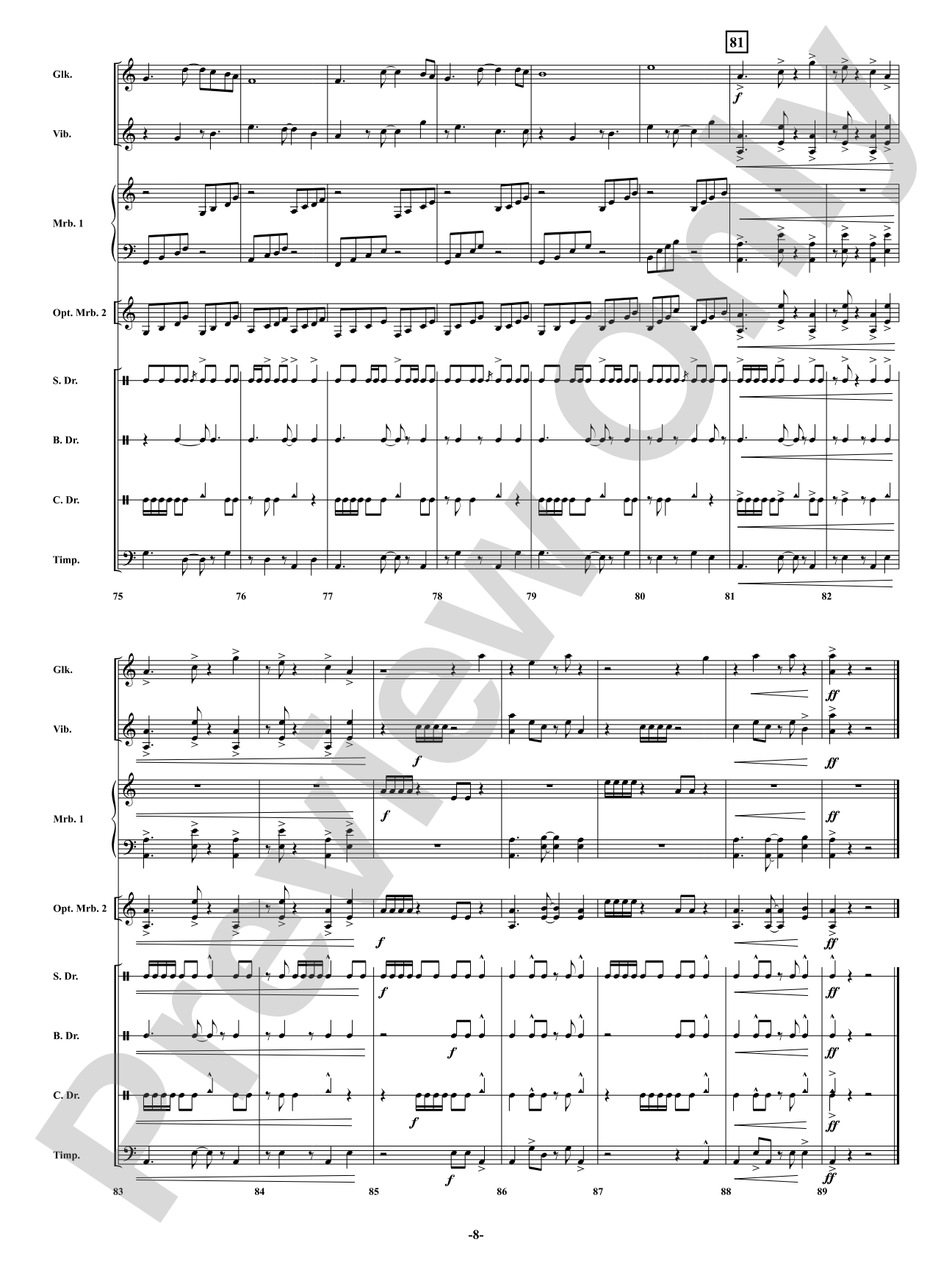

Drifting in Time: Score
By e Austin Thompson
Grade: 3
Item: 98-PR-RWS1551
$6.00
Pickup currently not available
Description
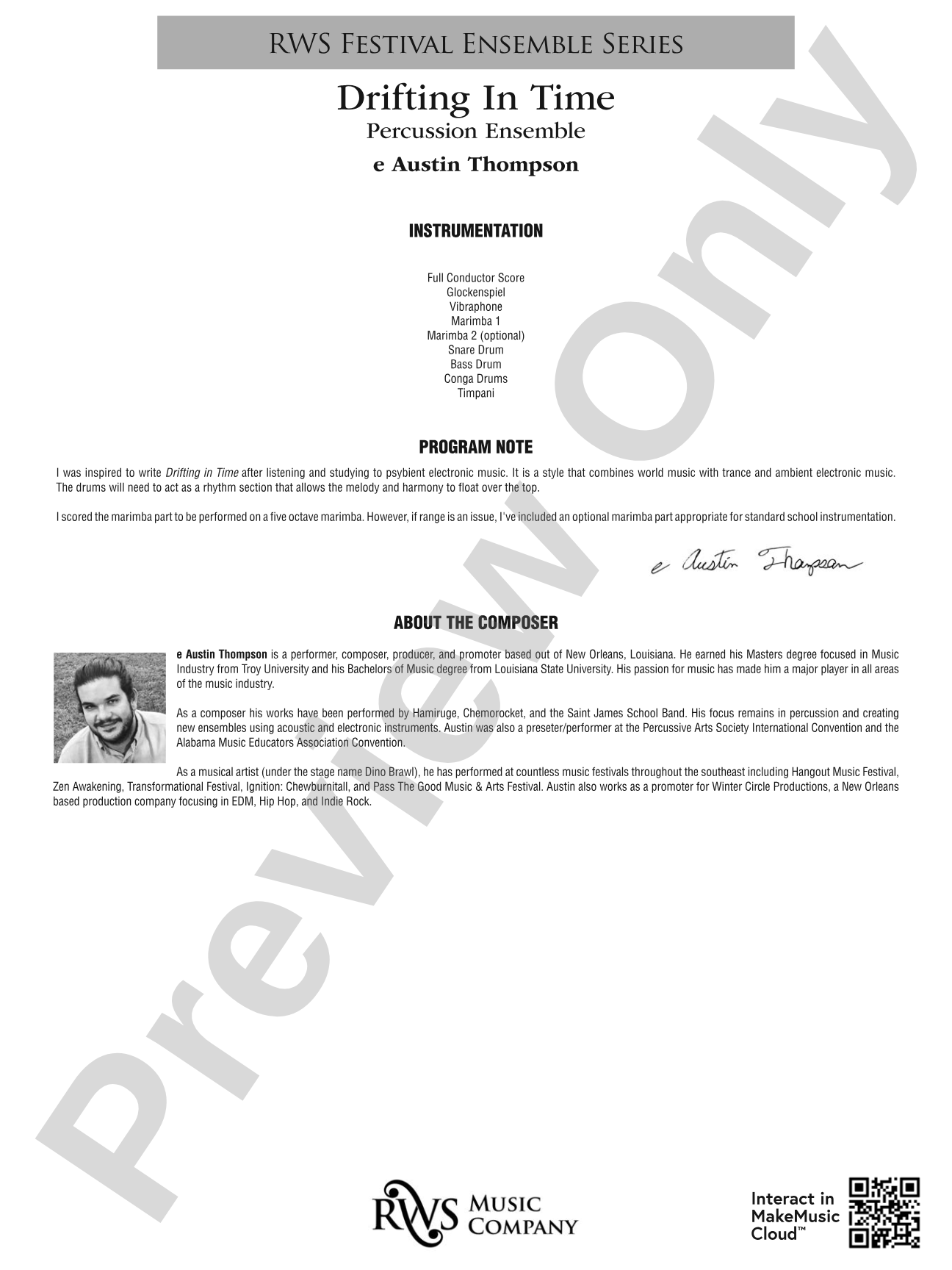
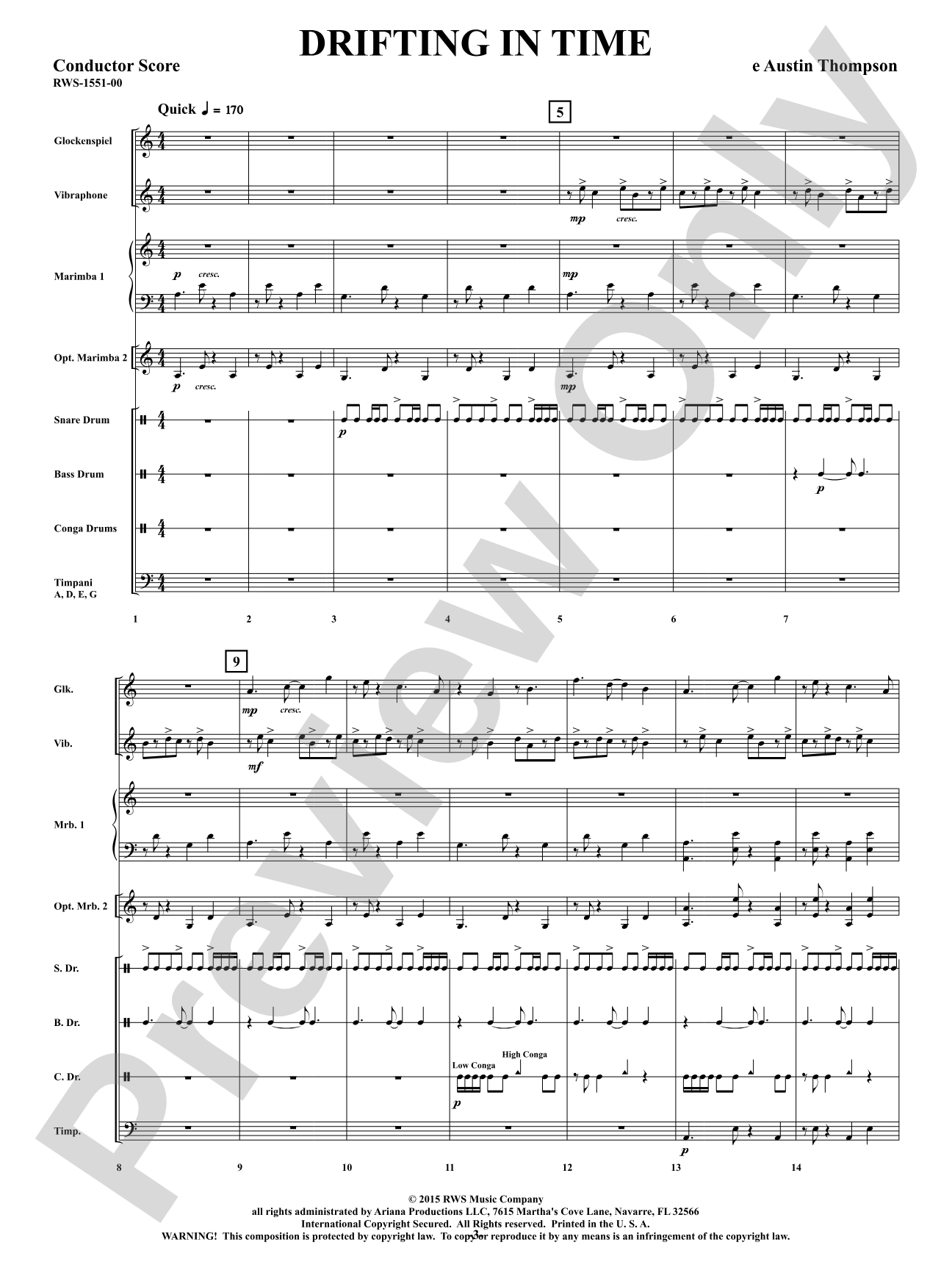
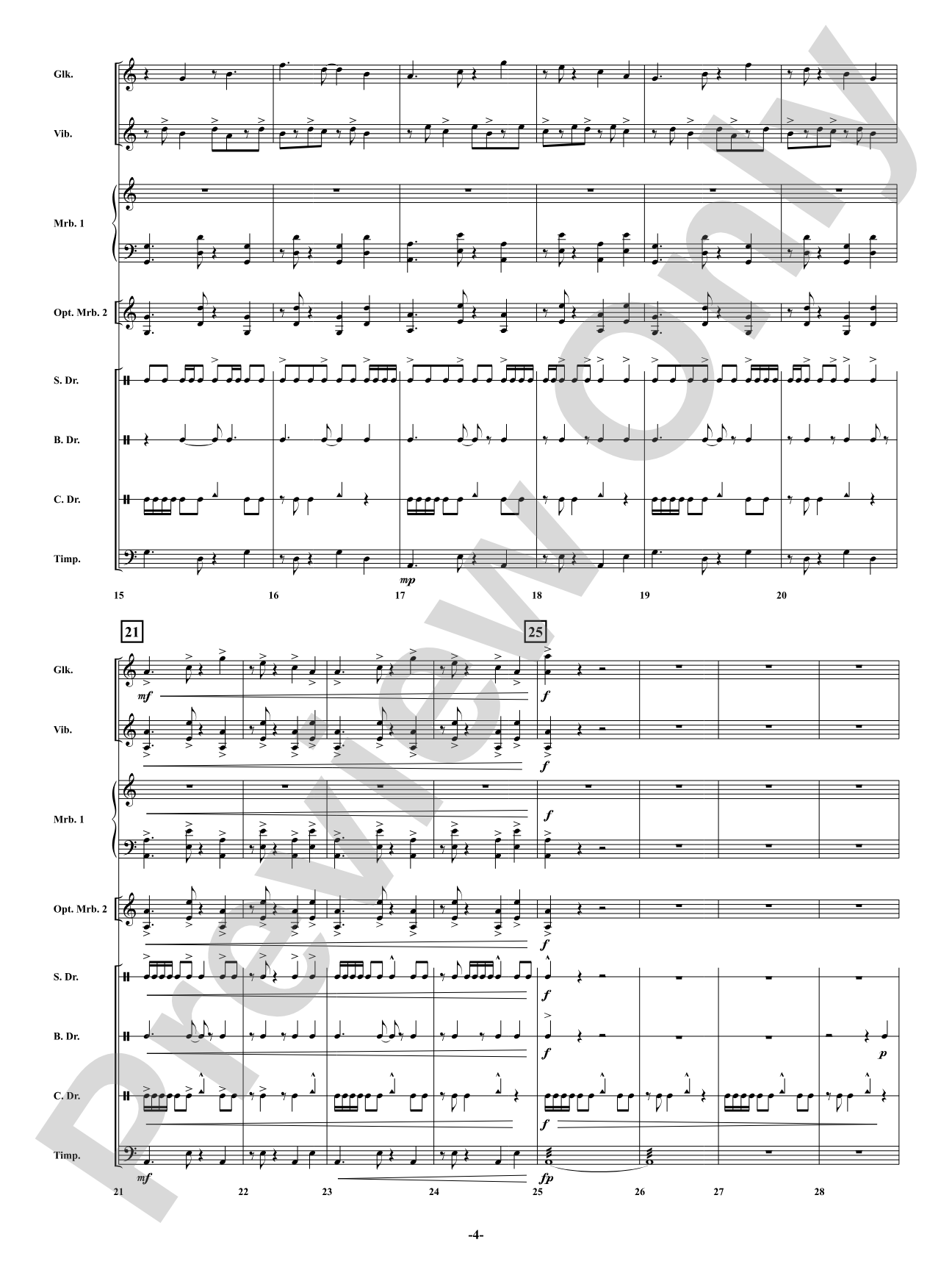
"Drifting In Time" is a work for percussion ensemble inspired by electronic and world music. The drums act as a rhythm section as the keys perform flowing melodies that soar over the top. With optional parts included, "Drifting In Time" is playable by ensembles of all sizes and ability levels. Appropriate for solo & ensemble festival, this contemporary composition by e Austin Thompson will be enjoyed by musicians and audiences alike.
Original Item#: RWS-1551-00


Original Item#: RWS-1551-00
Drifting in Time: Score isn't in MakeMusic Cloud just yet...but it could be. Let us know you'd like to see it, and you'll help shape what comes next. In the meantime, start a free trial and dive into thousands of interactive titles your students can play along with today.
Request This Title
Tell us you want it.
Start Your Free Trial
Explore everything that's ready to play right now.
Sample Audio
1
Audio File
--:--
0:00
0:00
Sample Video
No sample videos found.
Additional Details
Series:
RWS - Festival Ensemble
Publisher:
RWS Music Company
SKU:
98-PR-RWS1551
More about this title
Why we love this
Thompson writes for percussion in a way that honors both the rhythmic foundation and the melodic potential of the ensemble. The flexible instrumentation means you can program this with confidence, knowing your particular group size and skill mix will work. It's a contemporary piece that sounds fresh without asking for extended techniques or unusual instruments.
What to expect
Contemplative and flowing, with the steady pulse of drums anchoring dreamy keyboard passages that seem to drift above the rhythm. The blend of electronic and world music influences creates a modern soundscape that rewards sustained listening, drawing audiences into an immersive sonic experience rather than jolting them with sudden changes.
Who it's for
Percussion ensembles at the intermediate level, particularly those building confidence with balanced instrumentation across pitched and unpitched instruments. The Grade 3 difficulty and flexible parts make it accessible whether you're running a school ensemble, a community group, or preparing students for solo and ensemble festivals.
How to get the most out of it
- Balance the flowing melodic lines from the keyboard instruments so they sing clearly over the drum section. This isn't about drowning out the rhythm; it's about layering two distinct colors.
- Lock in the rhythmic foundation early. Once the drums establish their pocket, the melodies will sit naturally on top. Rehearse rhythm section work separately before bringing in pitched percussion.
- The optional parts are genuine alternatives, not padding. Use them to match your ensemble's actual personnel without apologizing for missing instrumentation.
- Explore the dynamic range between sections. The piece gains shape when you contrast the quieter melodic passages with the fuller ensemble moments.
How to use it
Program this in a concert where you want to showcase the melodic side of percussion without programming for a large traditional orchestra. It works equally well as a centerpiece for a dedicated percussion ensemble concert or as a bridge piece between heavier ensemble numbers, offering audiences a moment of reflection.
Skills your students will build
- Balancing rhythm section work with melodic ensemble playing
- Reading and performing contemporary notation at Grade 3 level
- Adjusting instrumentation and part assignments flexibly
- Sustaining ensemble cohesion across pitched and unpitched instruments
- Shaping melodic lines that float over a steady rhythmic foundation