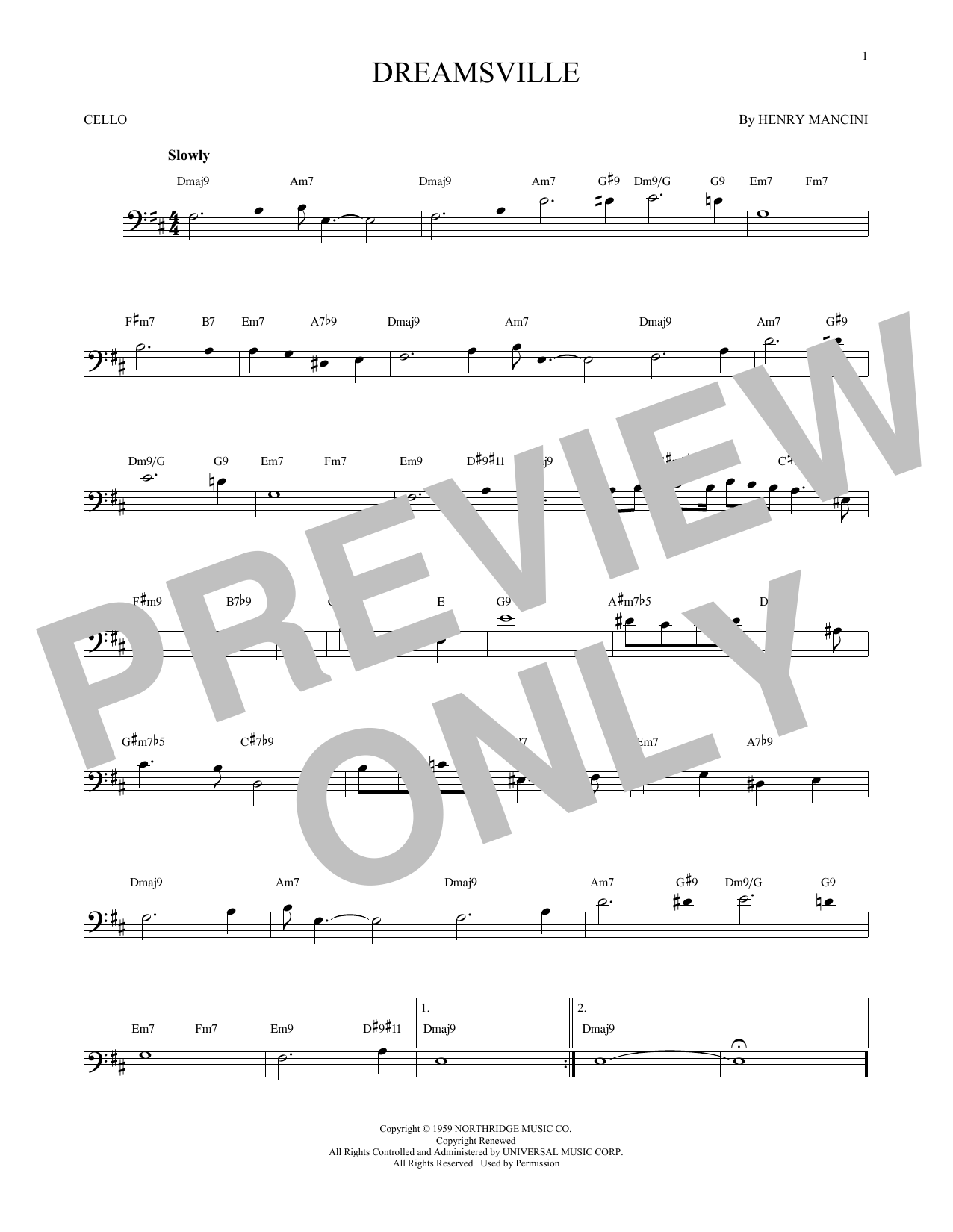
Henry Mancini (1924–1994) stands as one of the most prolific and versatile composers in American music history. His gift for melody and orchestration shaped the sound of film and television for decades, earning him four Academy Awards and 20 Grammy nominations. Mancini's jazz-inflected harmonic language and sophisticated arranging style make his work invaluable for students learning how popular music, jazz idioms, and classical craft intersect.
Why we love this
Mancini's compositions sit at the intersection of accessibility and genuine harmonic sophistication. Cellists gain exposure to the lyrical, swinging character that defines mid-century popular jazz without confronting the rhythmic complexity or harmonic density of bebop. The solo line invites singers and string players to discover why this material endures.
What to expect
Dreamsville wraps you in a warm, late-night club atmosphere. The melody moves with unhurried elegance, punctuated by moments of gentle introspection that feel intimate even in an ensemble setting.
Who it's for
Jazz ensembles, chamber groups, and solo cellists building a repertoire that bridges classical technique and popular song. This arrangement works well for intermediate to advanced students comfortable with swing feel and rubato.
How to get the most out of it
Let the melody breathe during the slower passages; resist the urge to fill space with vibrato or ornament what Mancini already perfected.
Balance legato phrasing with subtle rhythmic swing, allowing the line to settle behind the beat just enough to feel relaxed without losing clarity.
Study recordings by established jazz cellists to hear how the harmonic context supports the solo voice; knowing what chords are moving beneath your line transforms phrasing choices.
How to use it
Pair this with other standard arrangements as part of a jazz standards set, or feature it as a solo break during a chamber concert that mixes classical and popular repertoire. The single-page format makes it ideal for sight-reading practice or as a feature piece in a rehearsal rotation.
Skills your students will build
Swing feel and rhythmic placement relative to the beat
Lyrical phrasing in a jazz context
Interpreting harmonic implications through single-line melody
Vibrato control and tone shaping in sustained passages
You May Also Like
Scan to Complete Your Purchase
Use your phone's camera to scan the code below
You'll log in on your phone and the order will be added to your account