

Dreams We Share - Piano Duo (2 Pianos, 4 Hands): Piano Duets & Four Hands
By Randall Hartsell
Level: Intermediate
Item: 00-PB-0000834
$6.99
Pickup currently not available
Related Items
Dreams We Share: Piano Duo (2 Pianos, 4 Hands) Sheet (2 copies included) |
$6.99
|
View |
Description
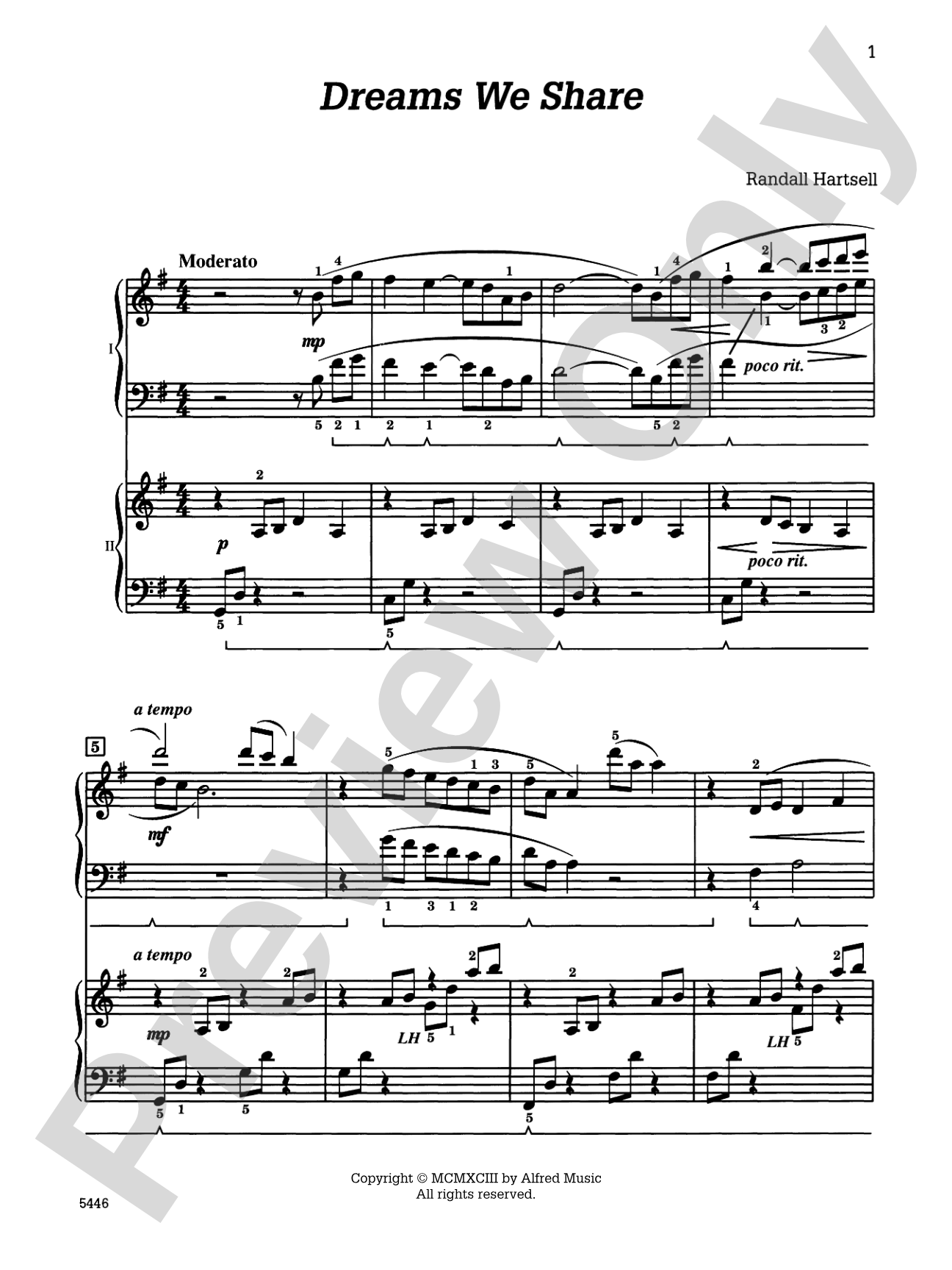
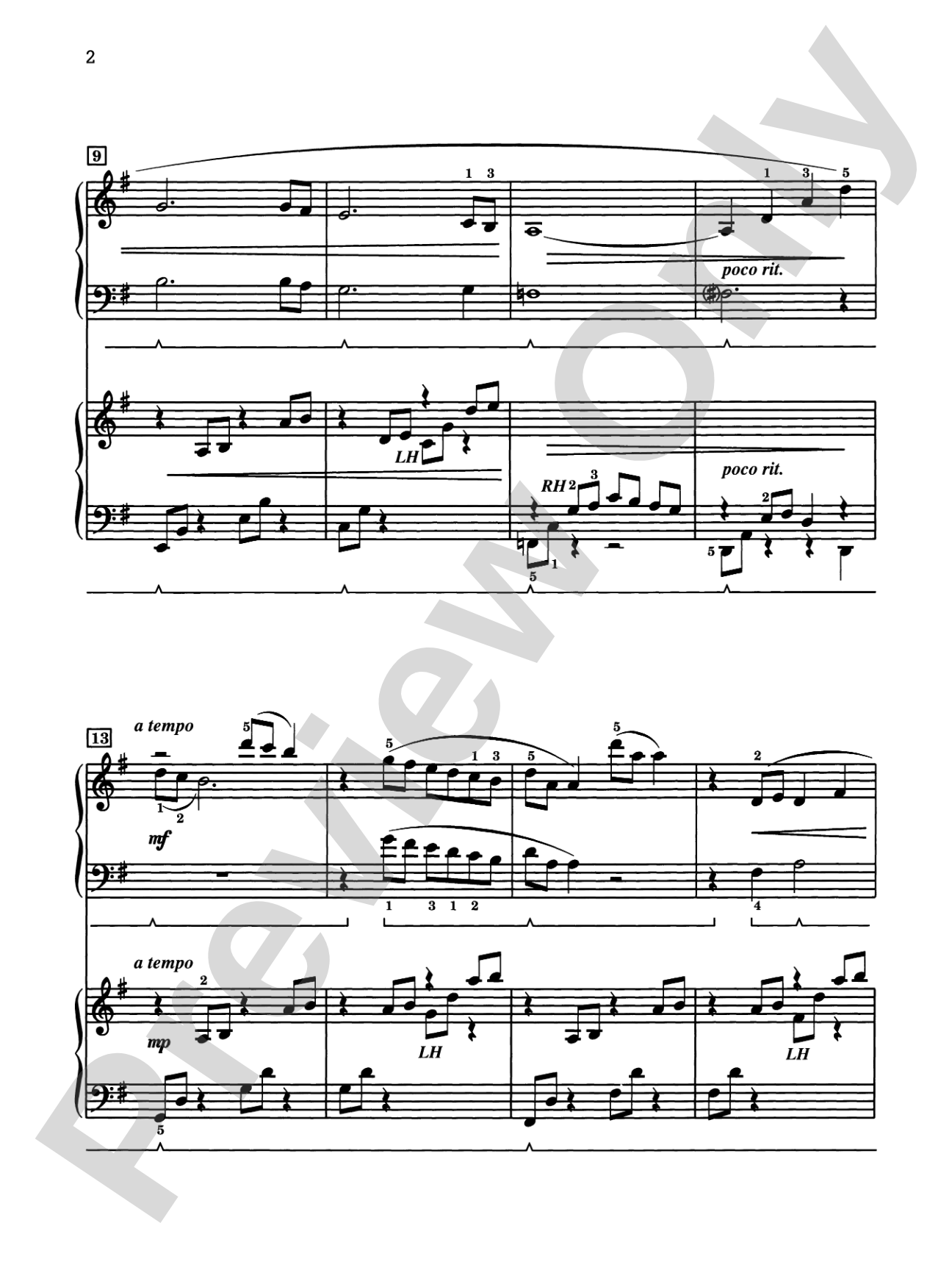
The pastoral scene on the cover of this piece for intermediate piano ensemble, two pianos, four hands, is reflected in the lyrical music by composer Randall Hartsell. The melody in G major is played in parallel octaves by the Part I player while Part II plays a flowing arpeggiated accompaniment. Two copies are included. A Federation Festivals 2024-2028 selection.


Dreams We Share - Piano Duo (2 Pianos, 4 Hands): Piano Duets & Four Hands isn't in MakeMusic Cloud just yet...but it could be. Let us know you'd like to see it, and you'll help shape what comes next. In the meantime, start a free trial and dive into thousands of interactive titles your students can play along with today.
Request This Title
Tell us you want it.
Start Your Free Trial
Explore everything that's ready to play right now.
Sample Audio
No sample audio found.
Sample Video
No sample videos found.
Additional Details
Series:
The Alfred Ensemble Series
Publisher:
Alfred Music
Page Count:
16
SKU:
00-PB-0000834
More about this title
About the Composer: Randall Hartsell

Randall Hartsell grew up in North Carolina without immediate access to a piano, walking to his aunt and uncle's house each day after school to practice for an hour. After his parents eventually purchased an instrument for home, he began composing in high school, drawing inspiration from the literature he read in English class and writing pieces for the high school choir's radio broadcasts. His formal study of composition didn't begin until his senior year of college at East Carolina University.
Following graduation, Hartsell returned to teaching in a small town and resumed composing with renewed focus. A pivotal meeting with publisher Lynn Freeman Olson in the early 1980s led him to submit his work for publication; his first Alfred release, the three-book series Something Special (1990), became widely adopted. Over four decades, more than 60 of his collections and solo works have been published. Based in Charlotte, North Carolina, Hartsell continues to work as a teacher, composer, accompanist, clinician, adjudicator, and church organist and conductor.
Why we love this
Hartsell's writing for piano duet balances musical substance with accessibility, never sacrificing lyricism for the sake of intermediate-level scoring. The parallel octave melody in Part I gives students a chance to shine with a singing line while Part II's flowing arpeggios provide both harmonic support and rhythmic independence, making this an excellent vehicle for building ensemble listening. A Federation Festivals selection carries both recognition and built-in program value.
What to expect
A gentle pastoral landscape unfolds through lyrical melody and flowing accompaniment in G major. The piece evokes quiet reflection and natural beauty, inviting both players into a shared musical conversation where melody and harmony support each other with grace.
Who it's for
Intermediate piano duet students and ensembles seeking a musically mature piece that doesn't demand advanced technique. This works well for students learning to balance individual voices within an ensemble setting while maintaining their own part's integrity and musical direction.
How to get the most out of it
- Balance the melody in Part I so it speaks clearly without overshadowing Part II's accompaniment; this isn't a solo with accompaniment but an integrated duet.
- Shape the flowing arpeggios in Part II with gentle direction through the harmonic progressions; avoid mechanical repetition even when the figure is consistent.
- Use the pastoral character suggested by the cover art to guide tempo and phrasing; let the G major tonality and lyrical writing breathe naturally rather than rushing through passages.
- Coordinate the Part I and Part II players' phrase endings carefully, as the lyrical quality depends on shared musical intent rather than technical precision alone.
How to use it
Program this as a recital opener or interlude to establish a lyrical, calm mood before moving to contrasting works. Its Federation Festivals designation makes it an ideal competition selection for intermediate duet pairs seeking accessible yet substantial repertoire.
Skills your students will build
- Maintaining independent rhythmic and harmonic roles while listening to an ensemble partner
- Playing parallel octaves with even tone and consistent weight across both hands
- Shaping arpeggiated accompaniment patterns with musical intention rather than technical routine
- Understanding G major tonality and its characteristic harmonic progressions
- Balancing dynamic range between melody and accompaniment parts