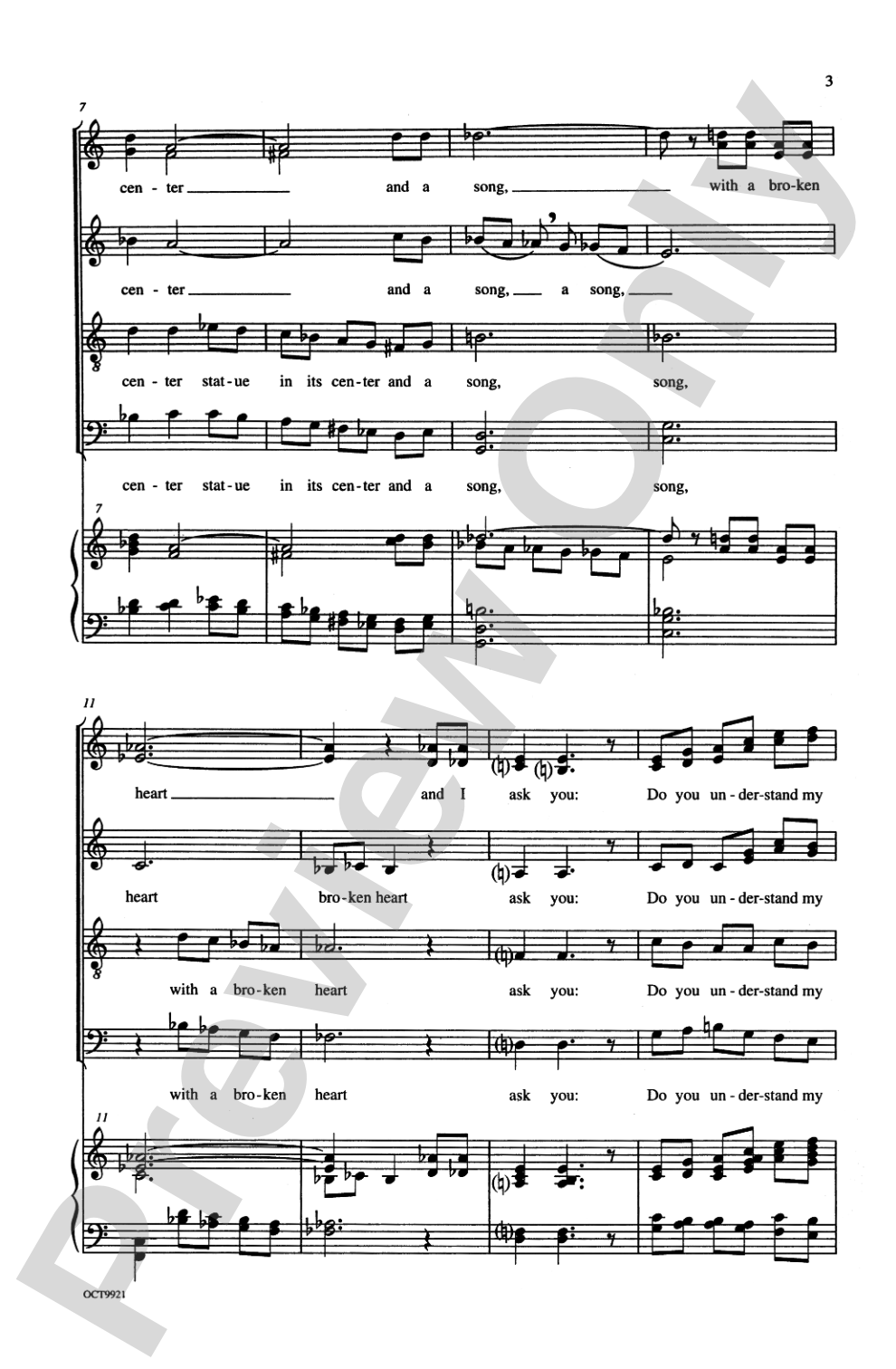
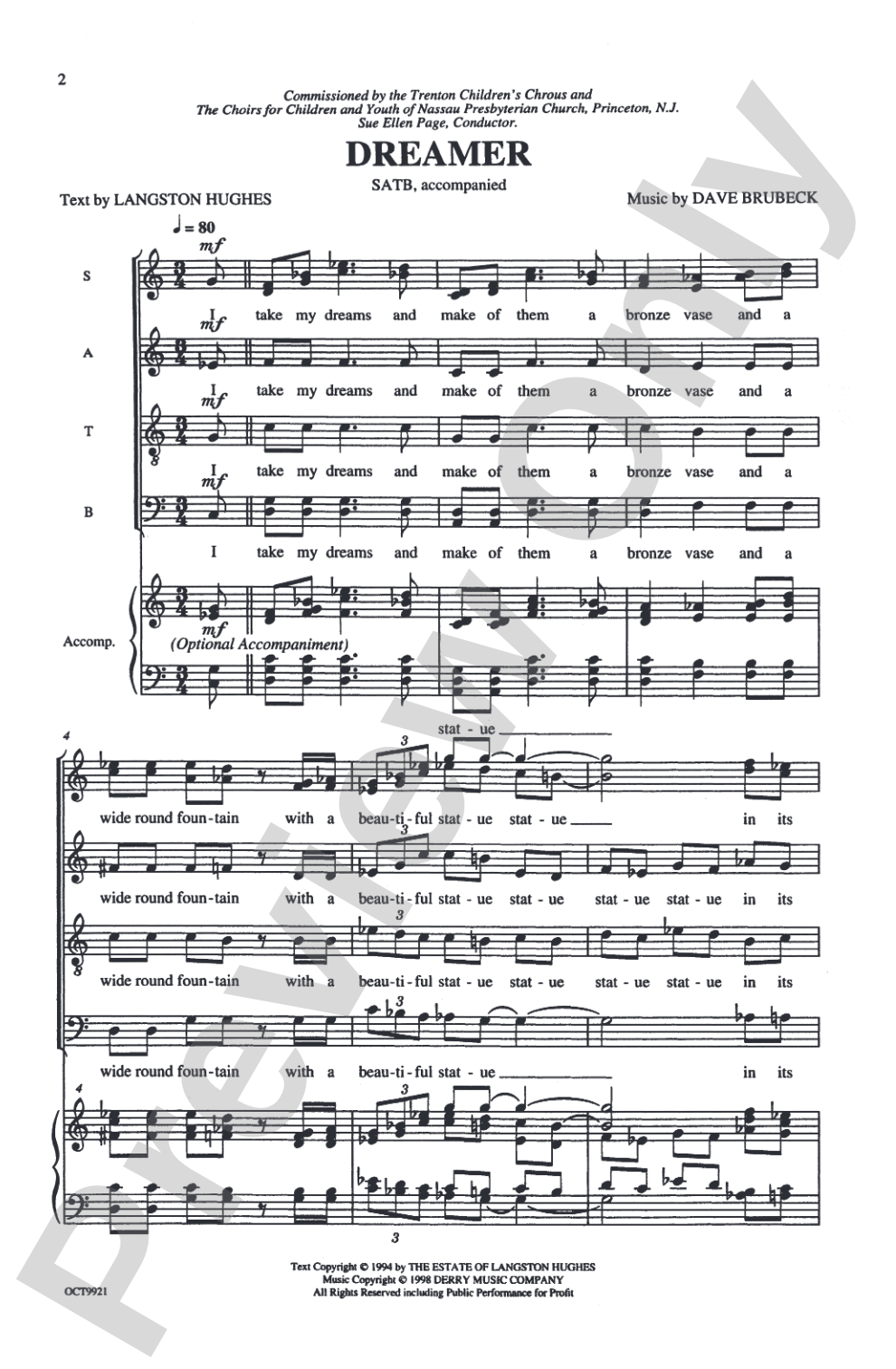
Dreamer Sheet Music Preview

Dreamer: SATB Choral Octavo

Text by Langston Hughes, music by Dave Brubeck

Item: 00-PO-0005163

Digital Download
$2.25

Minimum order quantity: 20 copies

Description
This wonderful piece by Dave Brubeck is part of a series of titles taken from his larger work, "I Dream a World." Brubeck, in his world-famous musical style, has brought to life the powerful poetic text by Langston Hughes. In the world today, where we dream of a world of peace and harmony, the pieces are a joy to every soul that hears them. Although this work is a bit challenging, Brubeck does a wonderful job of making contemporary music accessible to choirs.

Dreamer: SATB Choral Octavo isn't in MakeMusic Cloud just yet...but it could be. Let us know you'd like to see it, and you'll help shape what comes next. In the meantime, start a free trial and dive into thousands of interactive titles your students can play along with today.

Sample Audio
No sample audio found.
Sample Video
Additional Details
Series: Lawson-Gould: The Dave Brubeck Series
Publisher: Alfred Music
Page Count: 8
SKU: 00-PO-0005163

More about this title

About the Composer: Dave Brubeck

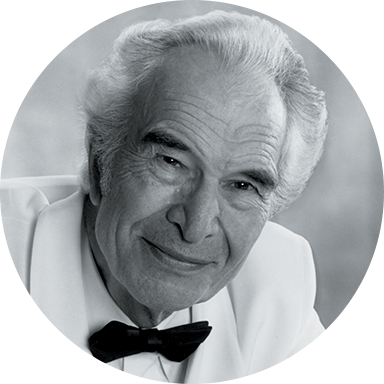
Dave Brubeck

Dave Brubeck stands as one of the most influential figures in twentieth-century music, equally at home in jazz improvisation and formal composition. Beyond his legendary recordings including the groundbreaking album "Time Out" and the iconic "Take Five," Brubeck composed extensively across genres: choral works, orchestral pieces, chamber music, ballets, and large-scale works for chorus and orchestra. His choral catalog includes the widely performed mass "To Hope!" and oratorios such as "The Voice of the Holy Spirit" and "Beloved Son," recorded by the London Symphony Orchestra and London Voices.

Brubeck studied with Darius Milhaud at Mills College after World War II, an influence that shaped his distinctive approach to blending jazz language with classical forms. His impact extended beyond the concert hall; he was a pioneering figure in breaking racial barriers in mid-twentieth-century America. Among numerous honors, he received the Presidential Medal of the Arts, a Grammy Lifetime Achievement Award for jazz, and in 2003 was elected to the American Classical Music Hall of Fame.

Why we love this

Brubeck's gift for accessibility shines here: contemporary harmonies and jazz-inflected rhythms sit alongside text that carries genuine weight. Programming this octavo gives singers the experience of singing real twentieth-century choral music without sacrificing musical coherence or emotional resonance. The Hughes text connects to themes that matter to young musicians, making the technical challenges feel purposeful rather than arbitrary.

What to expect

Contemplative yet propulsive, grounded in Hughes's visionary language and lifted by Brubeck's luminous harmonic palette. The piece has an unhurried quality despite its rhythmic complexity, as if the choir is processing a profound idea together rather than rushing toward a conclusion.

Who it's for

Choirs with some experience reading contemporary idioms and managing jazz-influenced rhythmic language. The text's message of hope and peace resonates across age groups, but the musical demands suggest singers who have moved beyond introductory repertoire.

How to get the most out of it

  • Let the jazz elements breathe. Resist the urge to over-polish the rhythmic figures; some swing and slight flexibility in the pocket will honor Brubeck's improvisational aesthetic.
  • Balance the soprano line carefully in passages where it carries the primary melody. The harmonies underneath are rich enough to mask an under-projected top voice.
  • Give yourself extra rehearsal time on any polyrhythmic or syncopated passages. Mark beat subdivisions clearly in the score during initial rehearsals, then gradually lift the markings as security builds.

How to use it

Pair this with other contemporary or jazz-informed choral works to build a thematic concert section on peace, social justice, or twentieth-century composition. It also works effectively as a closing piece for a program that explores varied harmonic languages, providing both musical substance and an inspirational sendoff.

Skills your students will build

  • Reading syncopated rhythms and jazz swing figures
  • Singing contemporary harmonic language and extended chord structures
  • Balancing independent lines in passages with rhythmic independence across voice parts
  • Connecting poetic meaning to musical choices in modernist composition

You May Also Like