
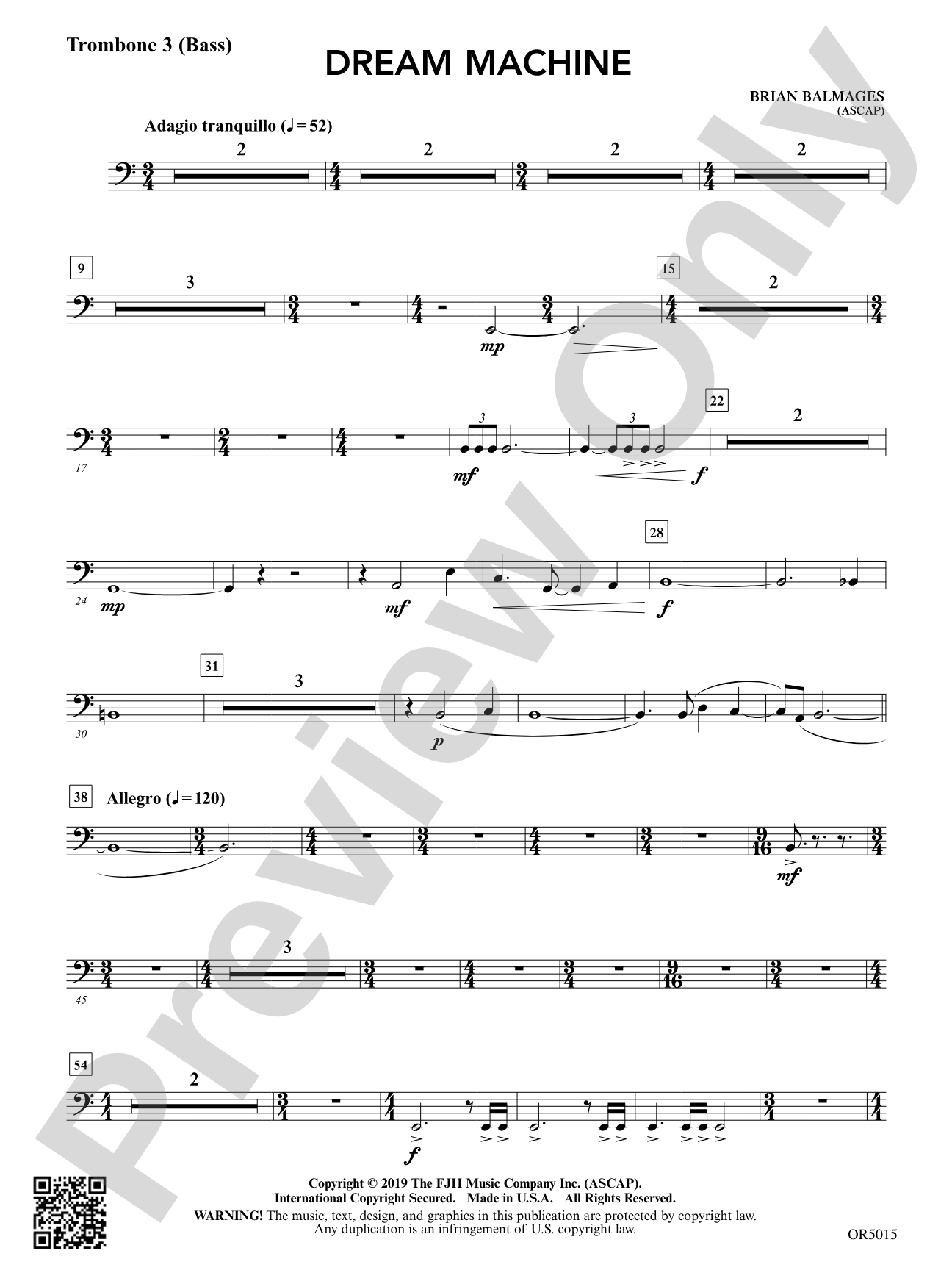

Dream Machine: Trombone 3 (Bass)
By Brian Balmages
Grade: 5
Item: 98-PC-DOR5015_TN3
$7.00
Pickup currently not available
Description
This haunting, powerful and aggressive work draws inspiration from a type of strobe light device that can potentially put an observer into a state of “threshold consciousness” (the idea of being half-asleep). The music portrays many sensations including the eerie feeling of being in a transitional sleep state, the fully intense experience of being surrounded by swirling shapes and colors, and then ventures into the world of lucid dreamers who often report experiences of flying in their dreams. The result is a piece that is mystical, unsettling, driving, powerful and heroic. A fantastic journey into the world of threshold consciousness!


Dream Machine: Trombone 3 (Bass) isn't in MakeMusic Cloud just yet...but it could be. Let us know you'd like to see it, and you'll help shape what comes next. In the meantime, start a free trial and dive into thousands of interactive titles your students can play along with today.
Request This Title
Tell us you want it.
Start Your Free Trial
Explore everything that's ready to play right now.
Sample Audio
1
Audio File
--:--
0:00
0:00
Sample Video
Additional Details
Series:
FJH Symphonic Orchestra
Publisher:
The FJH Music Company, Inc.
SKU:
98-PC-DOR5015_TN3
More about this title
About the Composer: Brian Balmages

Brian Balmages has built an international reputation as a composer and conductor working across orchestral, band, and chamber genres. His works have been performed by ensembles ranging from professional symphony orchestras to school groups in prestigious venues including Carnegie Hall, the Kennedy Center, and the Sydney Opera House. He received the A. Austin Harding Award from the American School Band Directors Association and won the 2020 NBA William D. Revelli Composition Contest. His music was performed during the 2013 Presidential Inaugural Prayer Service attended by President Obama and Vice President Biden.
Balmages holds degrees from James Madison University and the University of Miami, both of which have honored him with distinguished awards and commissions. He regularly guest conducts all-state and regional ensembles, university orchestras, and professional groups worldwide, with notable appearances at the Midwest Clinic, Western International Band Clinic, and conferences across the United States and internationally. He currently serves as Director of MakeMusic Publications and Digital Education for Alfred and MakeMusic.
Why we love this
Balmages creates visceral orchestral experiences that capture abstract psychological states with remarkable sonic clarity. The narrative arc of Dream Machine gives your musicians a compelling dramatic anchor to work toward, and the Grade 5 orchestration balances technical demands with genuine expressivity, making it rewarding for both developing and accomplished ensembles.
What to expect
Dream Machine sweeps you from unsettling quiet moments into a whirlwind of color and motion, then lifts you into weightless flight. The orchestration bathes the listener in shimmering textures that feel simultaneously otherworldly and intensely physical, creating a sense of being caught between waking and dreaming.
Who it's for
Conductors programming Grade 5 orchestras seeking concert and festival repertoire with genuine artistic substance and dramatic scope. This work suits ensembles mature enough to engage with complex emotional narratives and committed to exploring contemporary orchestral sound.
How to get the most out of it
- Establish a clear timbral distinction between the "eerie" opening section and the intense swirling passage that follows; use dynamic control and deliberate articulation shifts to guide your orchestra through these contrasting emotional territories.
- The lucid-dream flying section requires sustained ensemble focus on intonation and blend; highlight this transformation through subtle adjustments in vibrato intensity and balance rather than dramatic tempo shifts.
- Map the aggressive sections with your rhythm section first, then layer in the harmonic content; this creates a solid foundation that lets your ensemble commit fully to the piece's intensity without losing precision.
How to use it
This piece works exceptionally well as a concert centerpiece or festival selection where it can command a full program block and allow the narrative arc to breathe. Pair it with works that either complement its mystical quality or provide a stark contrast, creating a memorable arc for your audience.
Skills your students will build
- Sustaining focused ensemble sound across extreme dynamic and textural shifts
- Balancing transparency with density in contemporary orchestrations
- Responding to nuanced conducting gestures that shape psychological rather than merely rhythmic content
- Interpreting programmatic narrative through instrumental color and articulation choices