
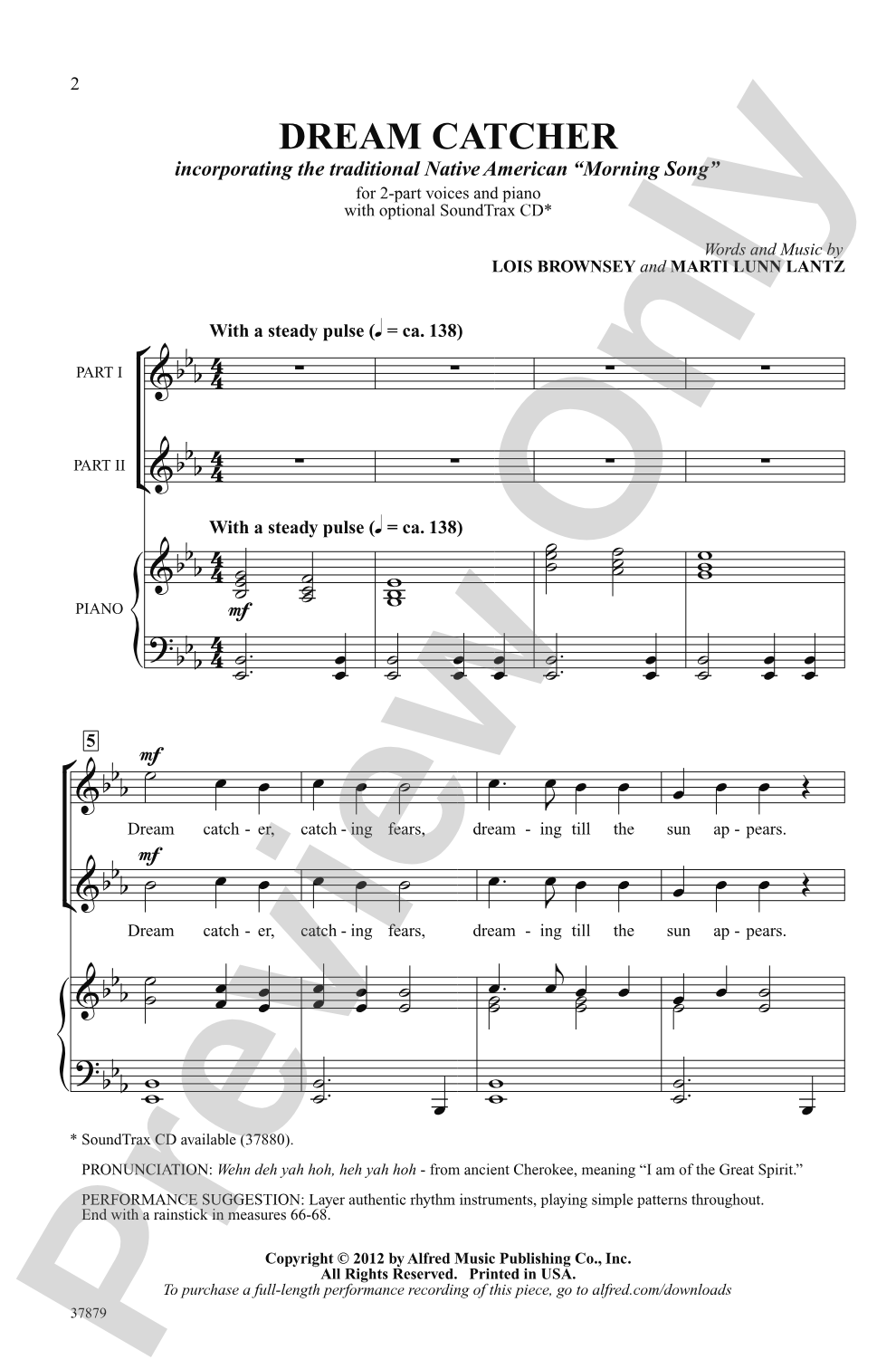
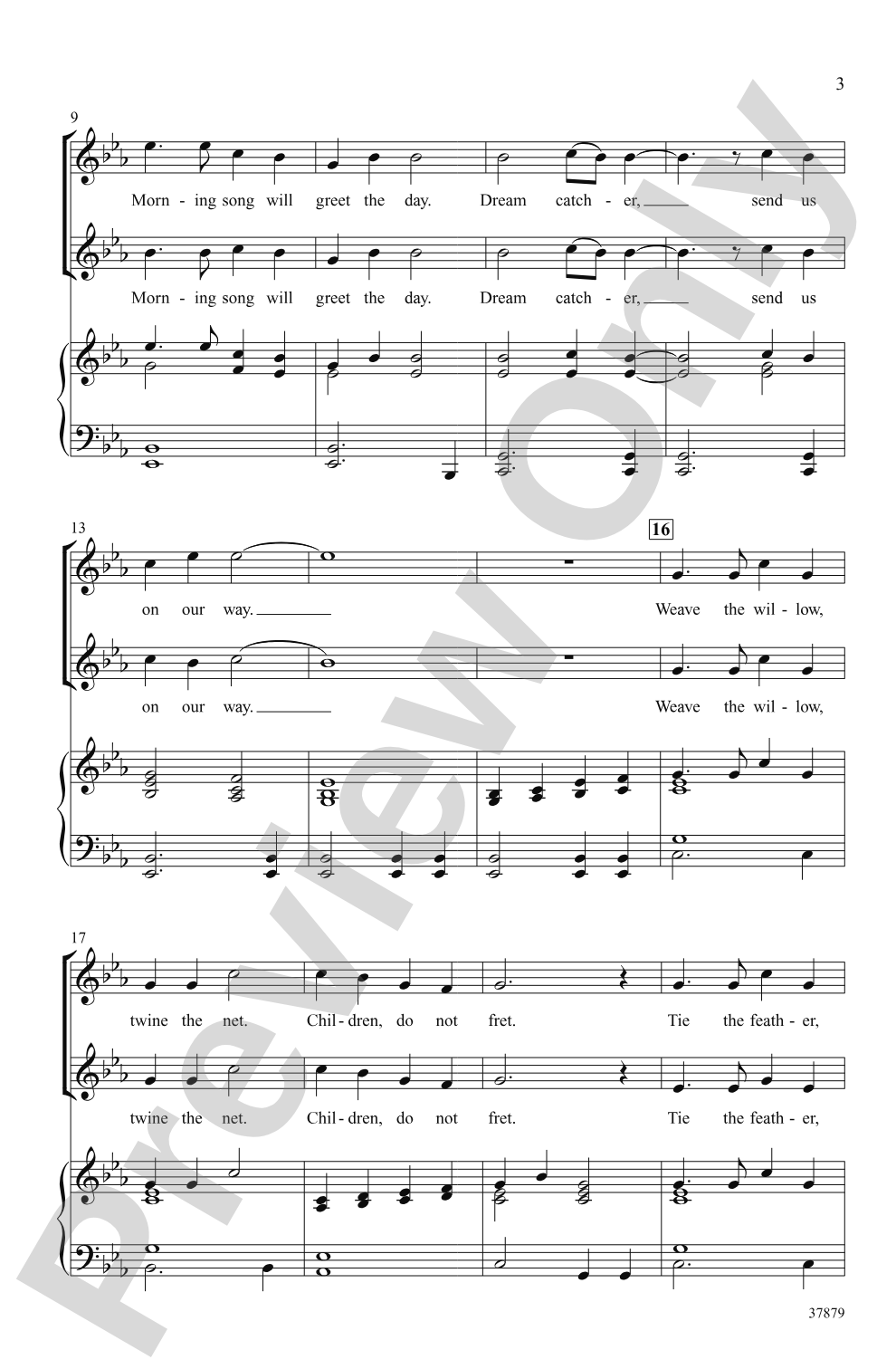

Dream Catcher: 2-Part Choral Octavo
Words and music by Lois Brownsey and Marti Lunn Lantz
Item: 00-PO-0001243
$1.80
Minimum order quantity: 20 copies
Pickup currently not available
Description
Honor a Native American custom by singing this traditional chant partnered with an informative text about crafting a dream catcher. According to legend, this handmade charm ensures pleasant dreams for children who sleep nearby. An excellent opportunity for collaborative teaching.


Dream Catcher: 2-Part Choral Octavo isn't in MakeMusic Cloud just yet...but it could be. Let us know you'd like to see it, and you'll help shape what comes next. In the meantime, start a free trial and dive into thousands of interactive titles your students can play along with today.
Request This Title
Tell us you want it.
Start Your Free Trial
Explore everything that's ready to play right now.
Sample Audio
1
Audio File
--:--
0:00
0:00
Sample Video
No sample videos found.
Additional Details
Series:
Alfred Choral Designs
Publisher:
Alfred Music
Page Count:
8
SKU:
00-PO-0001243
More about this title
About the Composer: Lois Brownsey

Lois Brownsey and Marti Lunn Lantz have built a decades-long collaborative partnership centered on multicultural repertoire and seasonal works for young singers. Based in Pennsylvania, Brownsey studied at Temple University and the Guitar Workshop, bringing experience from musical theatre and live performance across pop, rock, and blues genres into her compositional voice. She and Lantz have created numerous pieces for Alfred, including "Winter's Frost," "Japanese Snow Song," and "The Colors of Winter," alongside collections like Celebrations around the World and The Wonders of the Earth.
Brownsey's background extends beyond choral writing. She has composed commercial jingles for national clients and co-written seasonal works with Sally K. Albrecht. Today, she remains active in her Pennsylvania arts community while operating Red Rock Recording Studios with her husband, a recording engineer who has captured many Alfred projects.
Why we love this
This piece opens a genuine cross-curricular conversation by pairing singing with cultural education. Rather than treating Native American tradition as decorative content, the integrated text creates a teaching moment where music and learning reinforce each other. The 2-part writing keeps focus on authentic expression while remaining accessible to developing singers.
What to expect
The music has a quiet, contemplative quality that mirrors the gentle purpose of a dream catcher itself. Singers encounter a blend of traditional chant melodies with contemporary harmonic support, creating space for reflection rather than spectacle.
Who it's for
This octavo works for middle and high school choirs seeking to expand their cultural repertoire with substance and respect. It also serves teachers who want to integrate music with social studies or cultural awareness curricula. The 2-part voicing makes it accessible to developing ensembles while the collaborative teaching angle appeals to educators seeking interdisciplinary approaches.
How to get the most out of it
- Balance the melodic line across both parts so the traditional chant remains clear and unhurried, allowing the cultural significance to resonate.
- Use the recorded accompaniment to lock the harmonic foundation, freeing your singers to shape the melody with intention.
- Build awareness of the dream catcher's cultural meaning before rehearsing; this context deepens how students inhabit the music.
- Keep the tempo stable and meditative rather than pushing forward, which honors the contemplative nature of the tradition.
How to use it
Include this piece in a concert focused on world music or cultural traditions, pairing it with other repertoire that explores global perspectives. It also serves as a meaningful anchor for an assembly or classroom performance tied to a humanities unit on Native American cultures. The eight-page format makes it manageable as part of a diverse program without consuming excessive rehearsal time.
Skills your students will build
- Singing with culturally informed interpretation and respect
- Blending voices in 2-part harmony while maintaining a clear melodic line
- Sustaining tone and phrasing in slower, meditative tempos
- Connecting musical content to historical and cultural context