
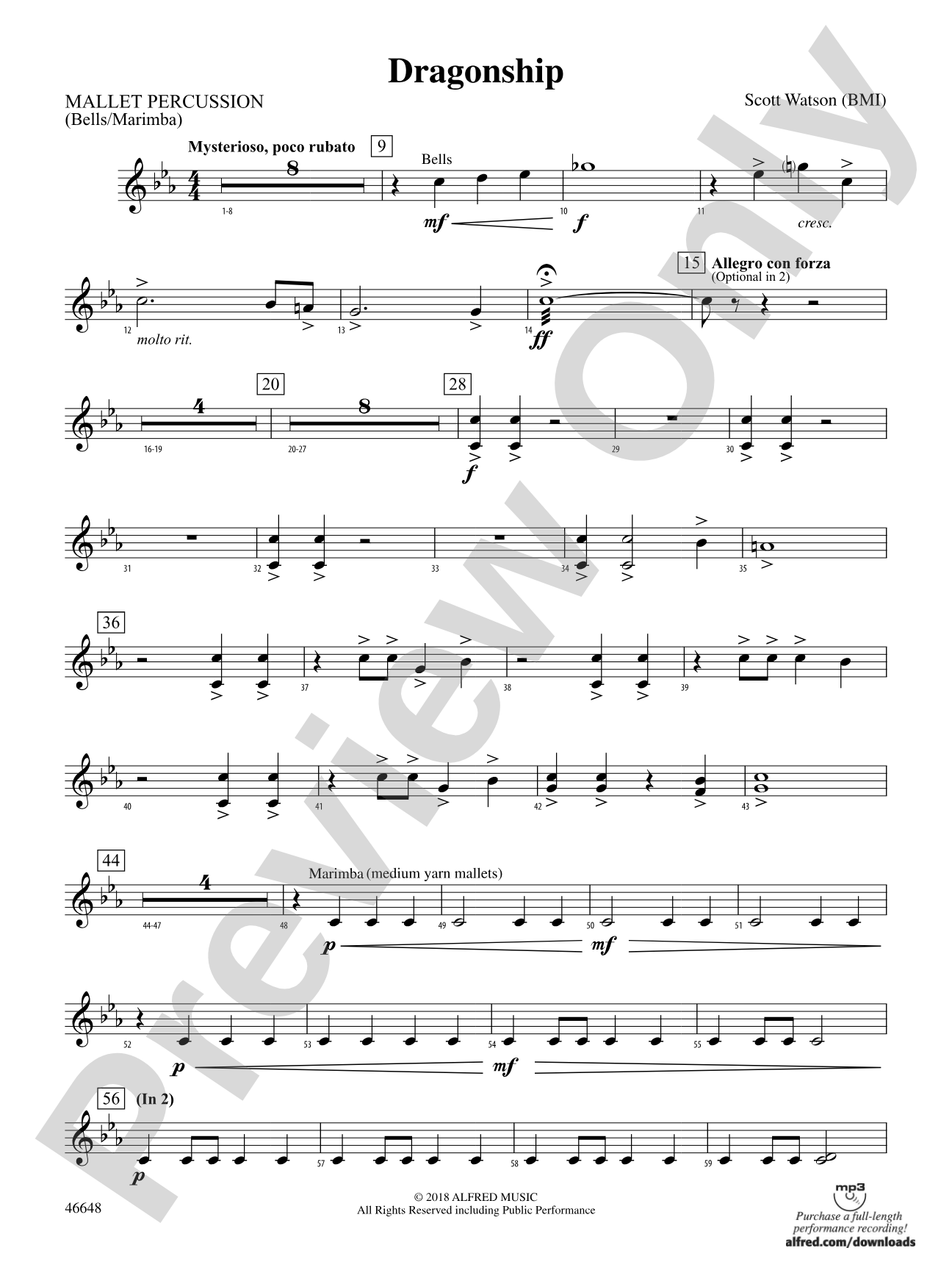

Dragonship: Mallets
By Scott Watson
Grade: 1.5 (Easy)
Item: 00-PC-0018078_M1
$3.00
Pickup currently not available
Description
A macabre figurehead on the prow of a medieval Norse warship slowly emerges from the mist on the cold, dark sea. The rough voice of the ship master and the beat of the drum call the boat's oarsmen to strenuous, rhythmic movement as they bear down on their prey.


Don't just read it, hear it, play along with it, and watch your students grow with it. In MakeMusic Cloud, Dragonship: Mallets comes alive with professional accompaniment, adjustable tempo, and built-in practice tools that turn solo practice into real progress.
Open in the Player
Jump straight in and assign it today.
Start Your Free Trial
Open this title and explore the full library in minutes.
Sample Audio
1
Audio File
--:--
0:00
0:00
Sample Video
Additional Details
Series:
Challenger Band Series
Publisher:
Alfred Music
Page Count:
256
SKU:
00-PC-0018078_M1
More about this title
About the Composer: Scott Watson

Scott Watson brings three decades of classroom teaching experience to his work as a composer and clinician. Before joining Cairn University as Associate Professor of Music, he spent 35 years in the Parkland School District directing high school bands and building the elementary band and strings program across the district. This deep roots in music education inform every piece he writes.
Watson has published over 120 works for concert band, string orchestra, and chamber ensembles at all levels, and his compositions have been performed at the Academy of Music in Philadelphia, the Midwest Clinic in Chicago, and the White House. He serves as exclusive composer and clinician for Alfred Publications, presents workshops for music educators nationwide, and authored the influential text Using Technology to Unlock Musical Creativity (Oxford University Press, 2011). His music draws equally from contemporary concert art and the band world, creating a distinctive compositional voice that resonates with performers and audiences alike.
Why we love this
Watson crafts an unforgettable scene with remarkably accessible writing. Grade 1.5 doesn't mean limited orchestration or timid musical ideas; here it means a composer who knows exactly how to build atmosphere, drama, and visceral excitement within the technical reach of developing musicians. Bands love playing this piece because it delivers genuine narrative power without requiring advanced technique.
What to expect
You're standing on a cold, dark shoreline as a medieval warship materializes through mist and fog. The ship master's voice calls out commands; drums pound a relentless, driving rhythm. Oarsmen pull their oars in unison, and the sense of menace grows with each stroke. By the climax, the vessel bears down with terrifying momentum on unsuspecting prey. It's visceral, atmospheric, and undeniably dramatic.
Who it's for
This piece serves young bands ready for programmatic storytelling and concert presentation. Grade 1.5 ensembles with solid fundamental skills and secure rhythm sections will thrive with Watson's clear orchestration and motivic approach. Directors seeking a concert opener that captivates an audience while remaining within their band's technical reach will find an excellent fit.
How to get the most out of it
- Shape the opening fog-like textures with careful dynamic control in the woodwinds and low brass. The mystery emerges gradually, so resist the urge to play loudly early on.
- Lock the percussion section tightly with the low brass foundation. The drum beat drives the oarsmen's rhythm; precision here creates the relentless forward motion the piece demands.
- Balance the ship master's solo voice (likely a low instrument or brass player) so it cuts through the ensemble texture without overwhelming the rhythmic backdrop. This character needs clarity and authority.
- Build intensity through the climax by adding dynamic layers rather than jumping straight to forte. Let each section's entrance contribute to a mounting sense of approaching danger.
How to use it
Open a fall concert with this piece to establish tone and grab the audience's attention immediately. Its contest and concert designation makes it equally suited to festival programs or competitive events. The narrative strength and accessible Grade 1.5 level allow it to anchor a program where you want to showcase your band's musicality and stage presence without technical strain.
Skills your students will build
- Sustained dynamic control and tonal blending in low register textures
- Executing rhythmic precision in marcato and staccato articulations
- Building and releasing tension through strategic climax management
- Interpreting programmatic cues and creating character through musical expression
- Balancing multiple musical layers to highlight thematic material