
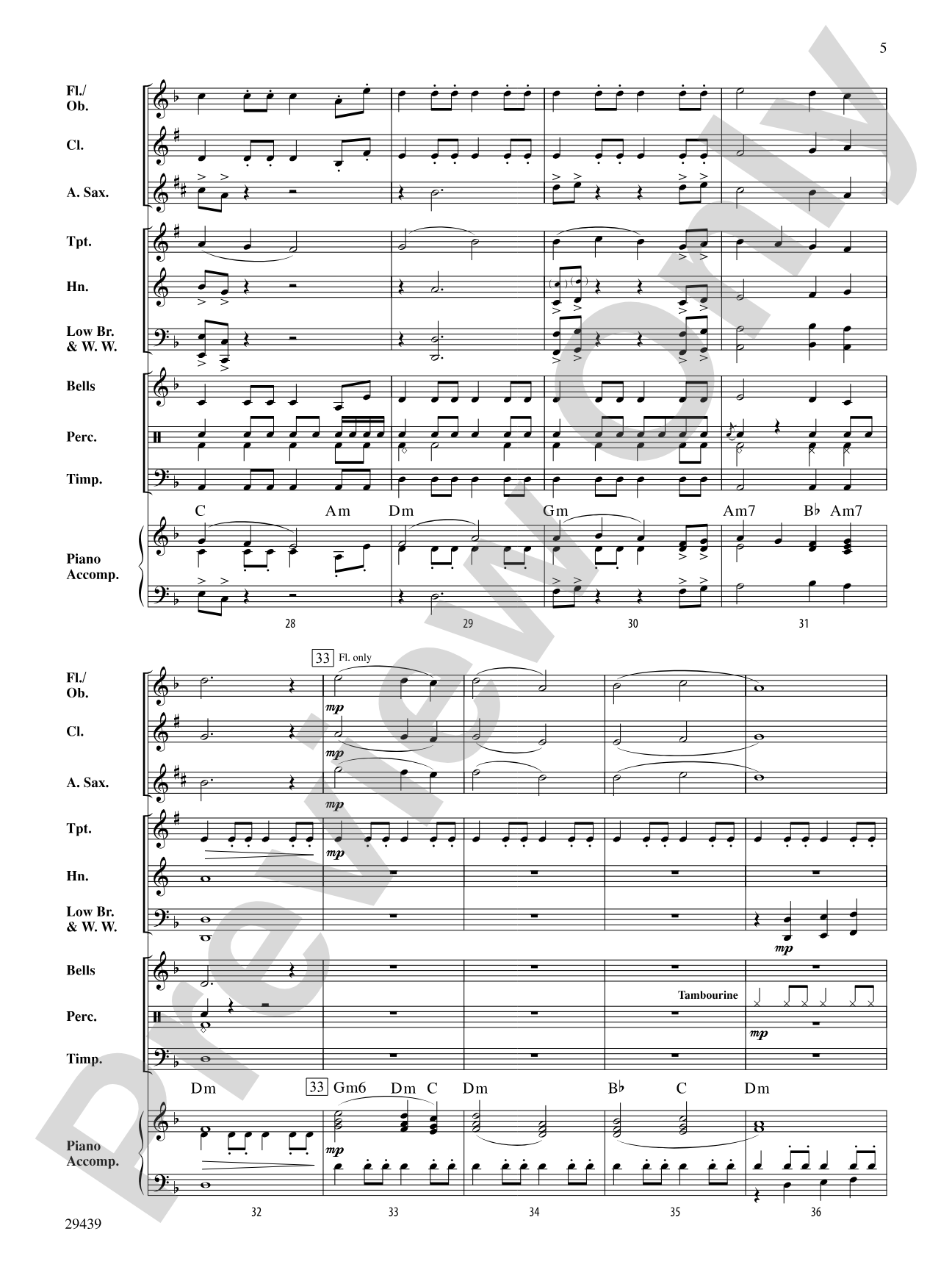
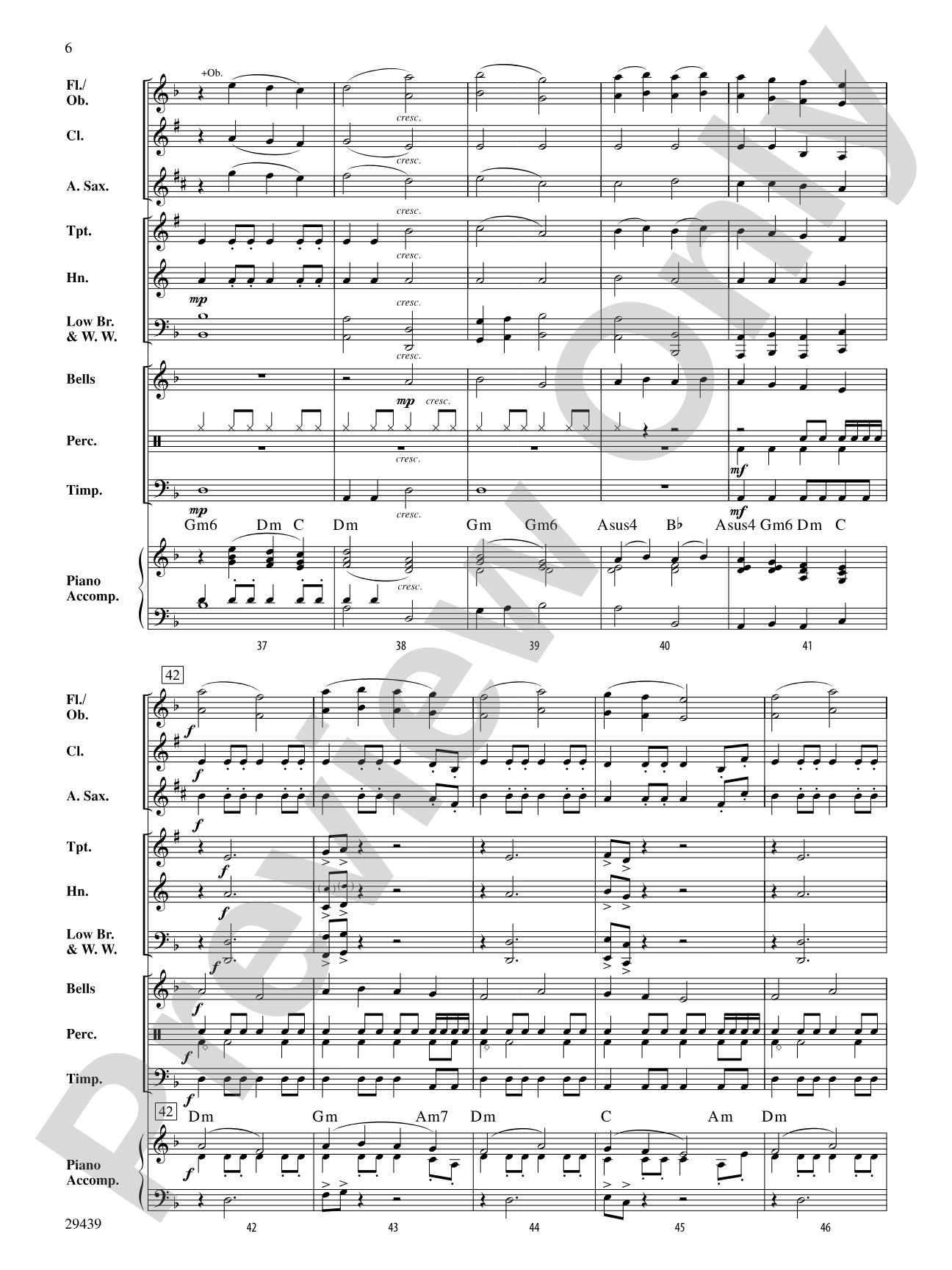
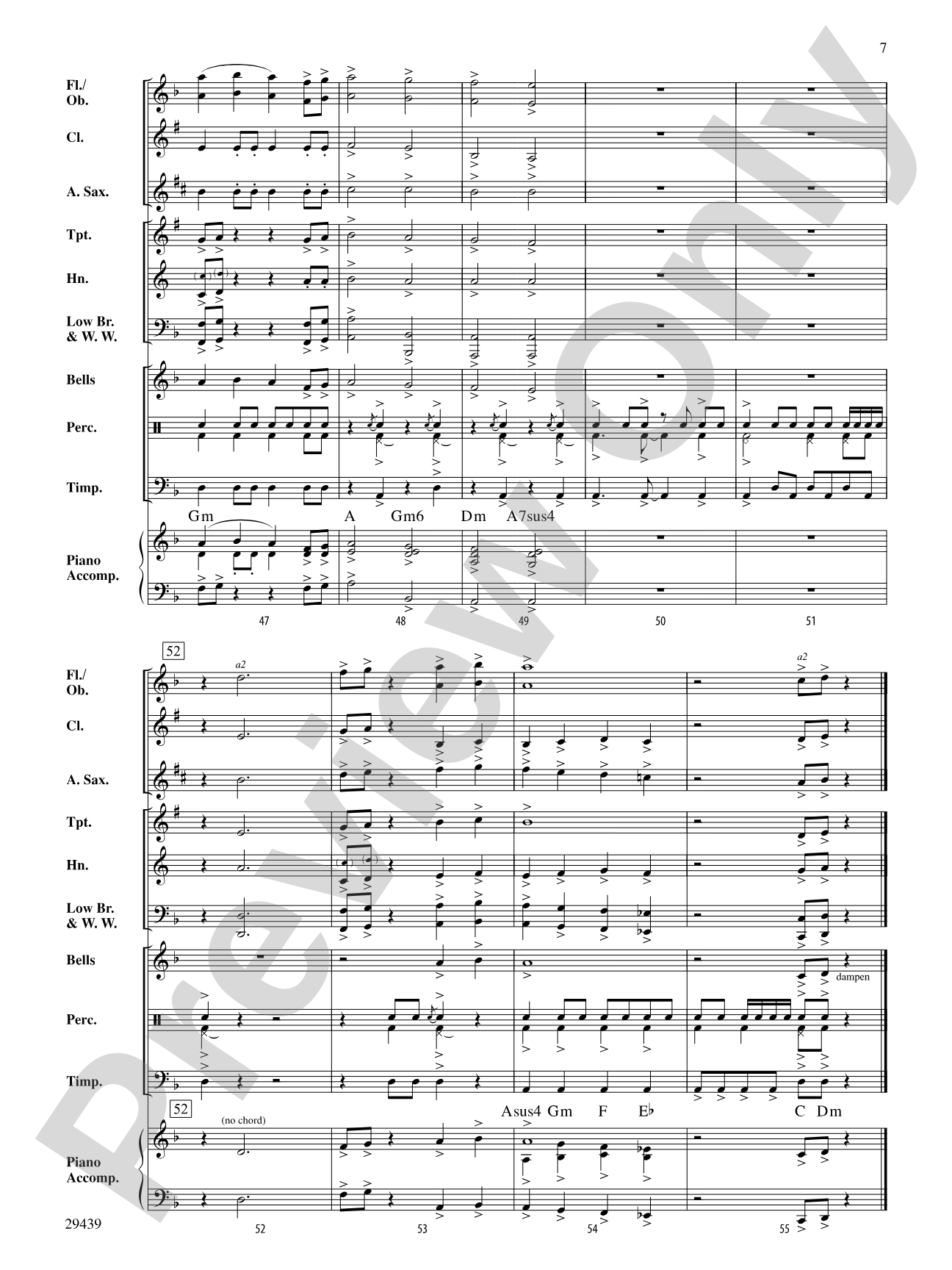


Dragons of the Ancient Court: Score
By Mark Williams
Grade: 1 (Very Easy)
Item: 00-PR-0001377
$6.00
Pickup currently not available
Description
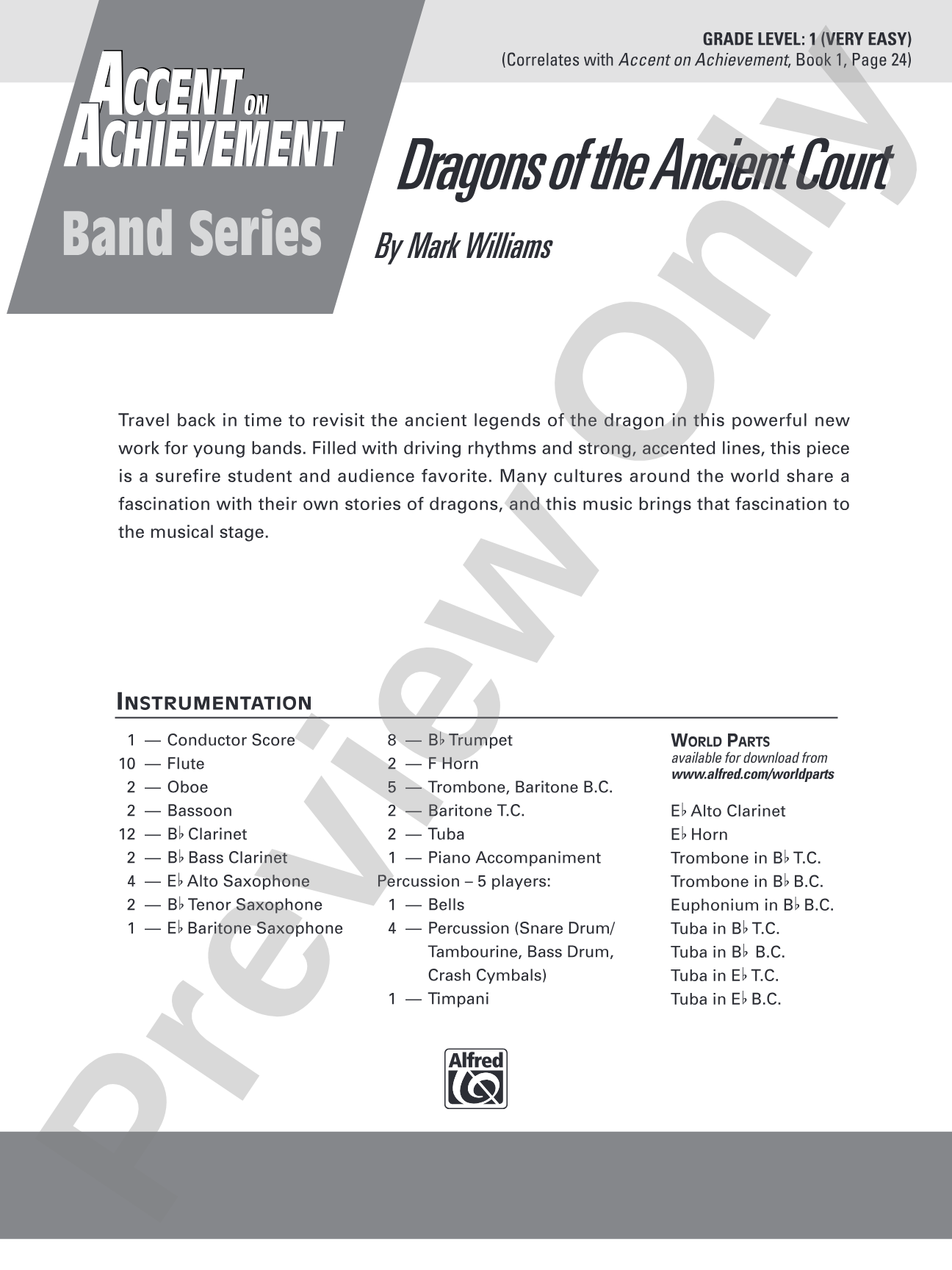
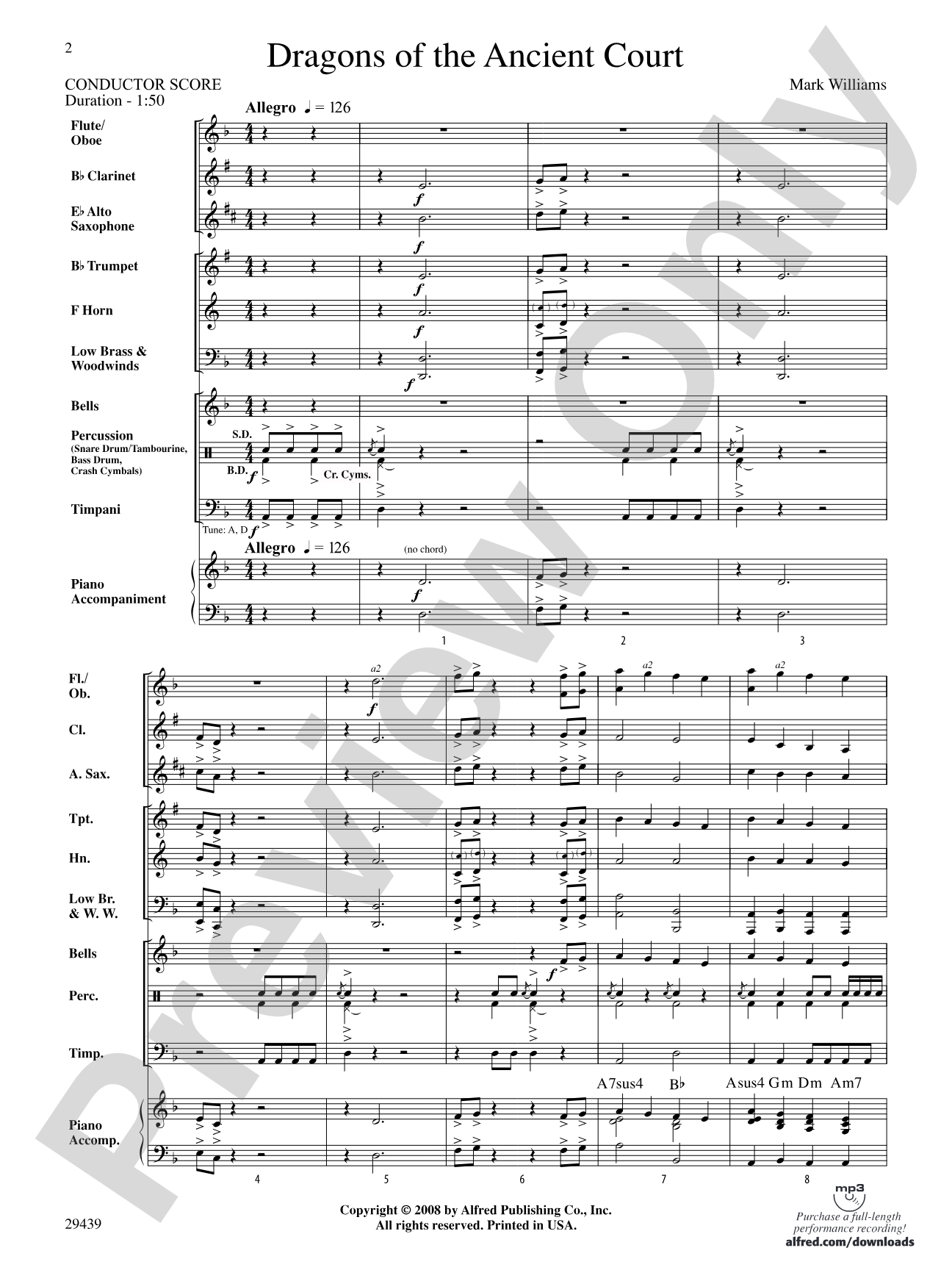
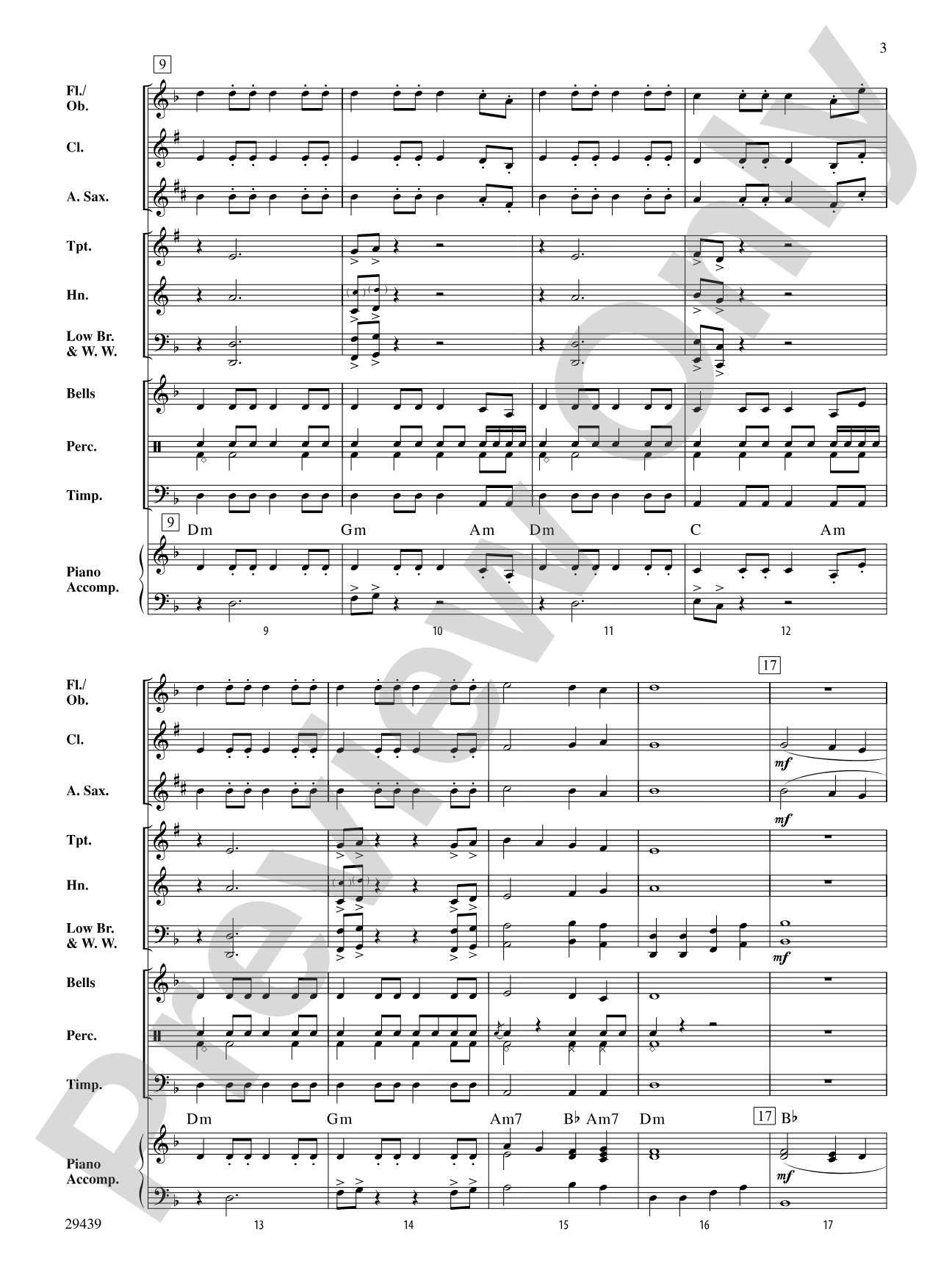
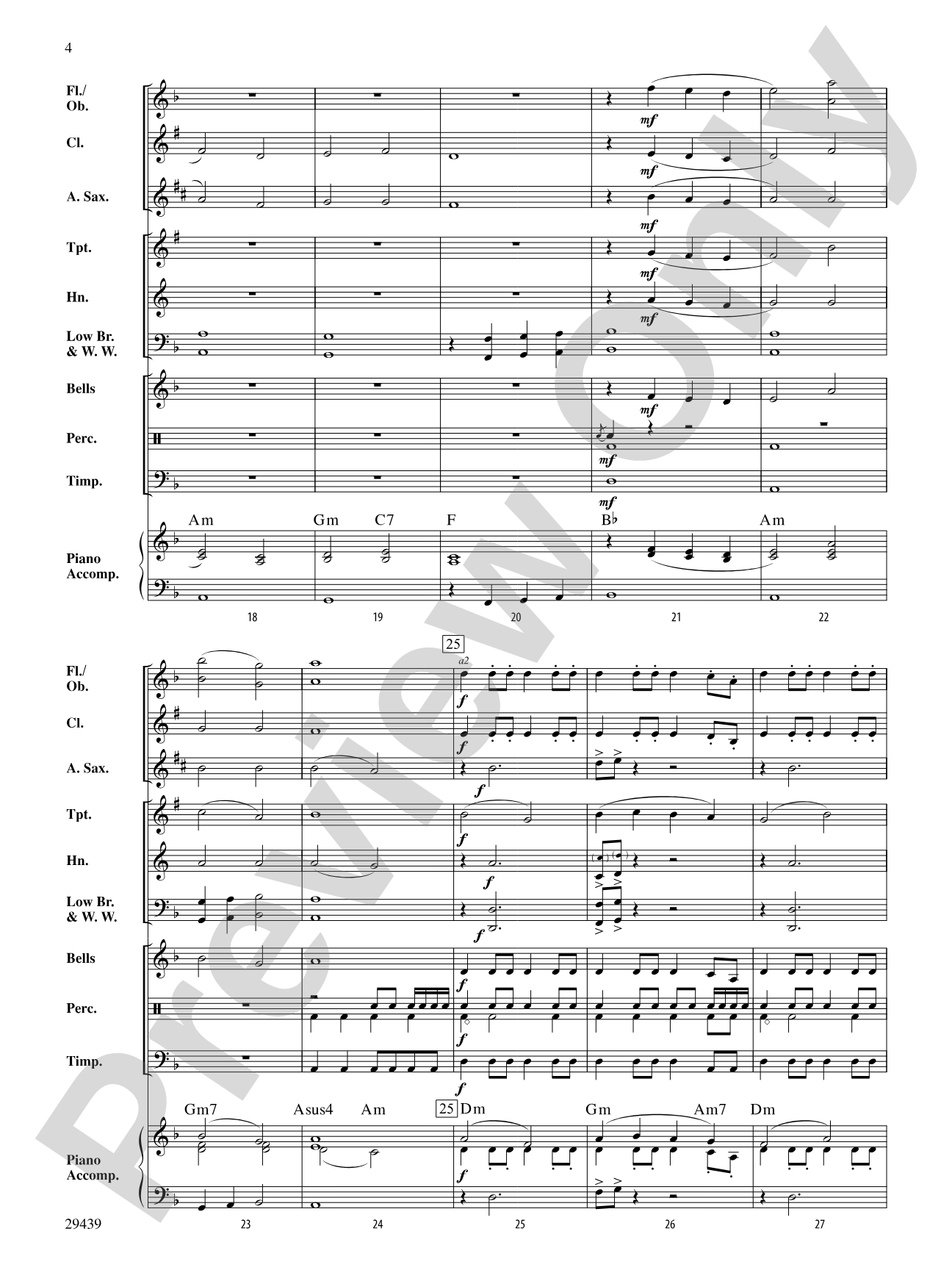
Travel back in time to revisit the ancient legends of the dragon in this powerful new work for young bands. Filled with driving rhythms and strong, accented lines, this piece is a surefire student and audience favorite. Many cultures around the world share a fascination with their own stories of dragons, and this music brings that fascination to the musical stage. (1:50)
>Correlated with Accent on Achievement, Book 1, page 24.


>Correlated with Accent on Achievement, Book 1, page 24.
Don't just read it, hear it, play along with it, and watch your students grow with it. In MakeMusic Cloud, Dragons of the Ancient Court: Score comes alive with professional accompaniment, adjustable tempo, and built-in practice tools that turn solo practice into real progress.
Open in the Player
Jump straight in and assign it today.
Start Your Free Trial
Open this title and explore the full library in minutes.
Sample Audio
1
Audio File
--:--
0:00
0:00
Sample Video
No sample videos found.
Additional Details
Series:
Accent on Achievement
Publisher:
Alfred Music
Page Count:
124
SKU:
00-PR-0001377
More about this title
About the Composer: Mark Williams

Mark Williams shaped band education through both composition and pedagogy. As co-author of the Accent on Achievement Band Method, he created resources used in classrooms across the continent while simultaneously building a catalog of over 200 works for band, orchestra, and choir. His influence extended through clinical work in 34 states, 5 Canadian provinces, and Australia, where he shared his philosophy about accessible, engaging music for student musicians.
A native of Chicago who spent his formative years in Spokane, Washington, Williams held degrees from Eastern Washington University and brought deep instrumental knowledge to his writing. He performed bassoon professionally with the 560th Air Force Band and later served as Conductor and Artistic Director for the Spokane British Brass Band. His contributions earned recognition from the Western International Band Clinic's Gralia Competition and multiple ASCAP Special Awards, cementing his legacy as a composer who understood what young musicians needed to play.
Why we love this
Williams understood exactly what Grade 1 bands can execute musically without sacrificing impact. The driving rhythms and accented lines create immediate ensemble cohesion, while the programmatic thread of ancient dragons gives your students a vivid story to interpret rather than just notes on a page. At under two minutes, it fits any concert without eating rehearsal time you need elsewhere.
What to expect
Dragons of the Ancient Court charges forward with energy and purpose. The accented lines create a sense of power and drama without overwhelming young players, while the programmatic storytelling lets musicians feel like they're conjuring ancient mythology rather than simply reading rhythms. It's exciting and accessible in equal measure.
Who it's for
This work belongs in every Grade 1 band's early repertoire. It works equally well for students in their first year or second year of band, since it sits at the level where they can succeed while building confidence in a full ensemble setting. Directors seeking concert openers or festival pieces that don't require extensive sectional work will find reliable material here.
How to get the most out of it
- Clarify the accents early in rehearsal by having the band identify where they fall across parts and sections; this creates unified articulation and prevents the piece from sounding limp.
- Use the driving rhythms as your pulse anchor; if students lock into the forward motion rather than playing mechanically, the piece sells itself.
- Balance the melodic lines between sections so the dragon story emerges clearly; Grade 1 bands sometimes bury the tune, so explicit cuing helps.
- Keep the tempo steady and energetic without rushing; younger students tend to accelerate when excited, so a consistent beat keeps them honest.
How to use it
Open a concert with this piece to grab attention and set an energetic tone for the evening. Its manageable length and clear programmatic title also make it an excellent festival or contest selection where you want an engaging opener that showcases ensemble musicianship without demanding advanced technique. Because it correlates with Accent on Achievement Book 1, page 24, you can integrate it directly into your curriculum as students reach that point in their method studies.
Skills your students will build
- Uniform articulation of accented notes across sections
- Maintaining steady tempo in driving rhythmic figures
- Listening for and balancing melodic material in a full ensemble
- Connecting programmatic imagery to musical interpretation
- Reading concert band score layout and transposed parts