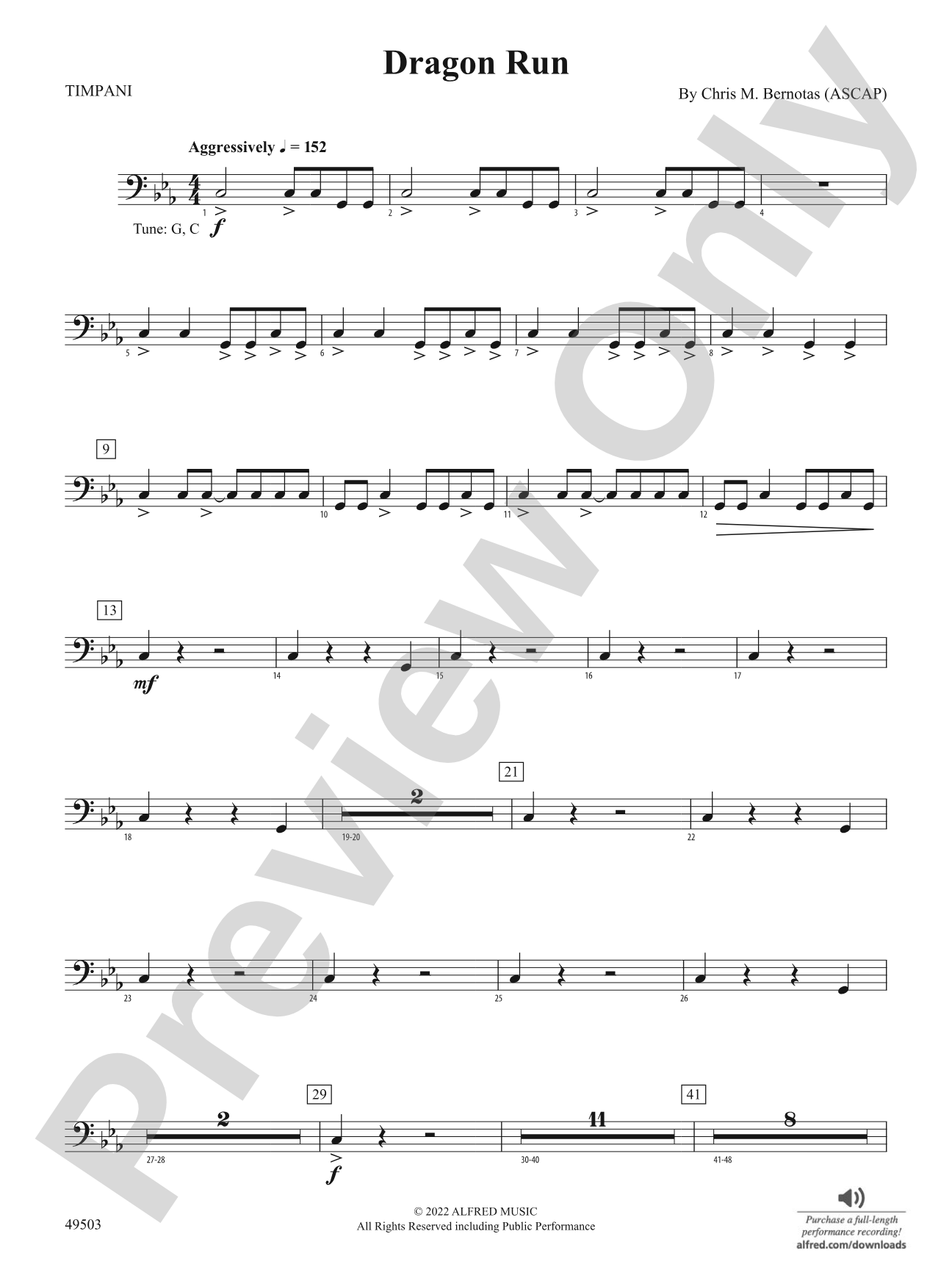
Dragon Run: Timpani Sheet Music Preview

Dragon Run: Timpani

By Chris M. Bernotas

Grade: 1.5

Item: 00-PC-0018796_TMP

Digital Download
$3.00
Description
The Dragon Run is a 40 mile winding stream that flows throughout Virginia and empties into the Piankatank River. It is also known as the Dragon Swamp and even just The Dragon. This immense ecosystem is known for its rich wildlife and preserved beauty. Dragon Run by Chris M. Bernotas features strong rhythms, intentional dissonance, contrasting dynamics, and wonderful musical opportunities for all. It echoes the excitement of exploring the views and experiencing the sometimes intense wildlife visitors encountered when journeying along the river and surrounding swamps. (2:26) Correlated to Sound Innovations, Book 1, Level 6.

Don't just read it, hear it, play along with it, and watch your students grow with it. In MakeMusic Cloud, Dragon Run: Timpani comes alive with professional accompaniment, adjustable tempo, and built-in practice tools that turn solo practice into real progress.

Sample Audio
0:00
0:00
Sample Video
Additional Details
Series: Sound Innovations for Concert Band
Publisher: Alfred Music
SKU: 00-PC-0018796_TMP

More about this title

About the Composer: Chris M. Bernotas

Chris M. Bernotas

Chris M. Bernotas directs instrumental publications at Alfred Music, where he shapes curriculum and repertoire for band and orchestra programs internationally. Over 25 years of classroom experience informs his compositional voice, giving him deep insight into what young ensembles need to engage, grow, and succeed.

Beyond the page, Bernotas works as a guest conductor and clinician, leading honor bands and workshops where he shares ideas on conducting and pedagogy. He has co-authored multiple educational series, including Sound Innovations Ensemble Development, Sound Artistry, and Sound Performance. His compositions balance accessibility with musical substance, making them trusted choices in concert halls and festival circuits worldwide.

Why we love this

Dragon Run captures the raw energy of nature without overwhelming early-intermediate ensembles. The strong rhythmic foundation and intentional use of dissonance give students real musical challenges while the contrasting dynamics keep the piece engaging to rehearse and perform. At Grade 1.5, it delivers genuine concert material that sounds mature without requiring advanced technical facility.

What to expect

Dragon Run plunges you into motion from the first downbeat. Driving rhythms and sharp dynamic shifts create the sense of moving through a living landscape where beauty and intensity collide; the dissonance sharpens your awareness, keeping you alert and engaged throughout the journey.

Who it's for

Early-intermediate concert bands ready to tackle programmatic writing with real musical substance. This works for ensembles at the Grade 1.5 level who have solid fundamentals and are prepared to handle intentional harmonic tension and dynamic contrast.

How to get the most out of it

  • Balance the intentional dissonance by locking the harmonic foundation in the low reeds and brass; clarity here prevents the piece from sounding accidental or loose.
  • Shape the contrasting dynamics as character shifts rather than mechanical volume changes. Each dynamic extreme should reflect a different mood along the river journey.
  • Establish the strong rhythms early in rehearsal and drill them in isolation before layering parts; this creates the confident foundation the piece demands.
  • Let the percussion drive the rhythmic energy, especially where it punctuates the ensemble's dynamic shifts. Tight communication between percussion and conductor keeps the intensity focused.

How to use it

Program this as a concert opener or centerpiece where you want to establish energy and focus audience attention on the band's musicianship. Its descriptive character works well on thematic concerts celebrating nature or regional topics, and its contest appeal makes it a solid festival selection.

Skills your students will build

  • Balancing harmonic dissonance in ensemble context
  • Dynamic contrast and shape in programmatic music
  • Rhythmic precision in driving, syncopated passages
  • Sectional independence while maintaining ensemble cohesion

You May Also Like