
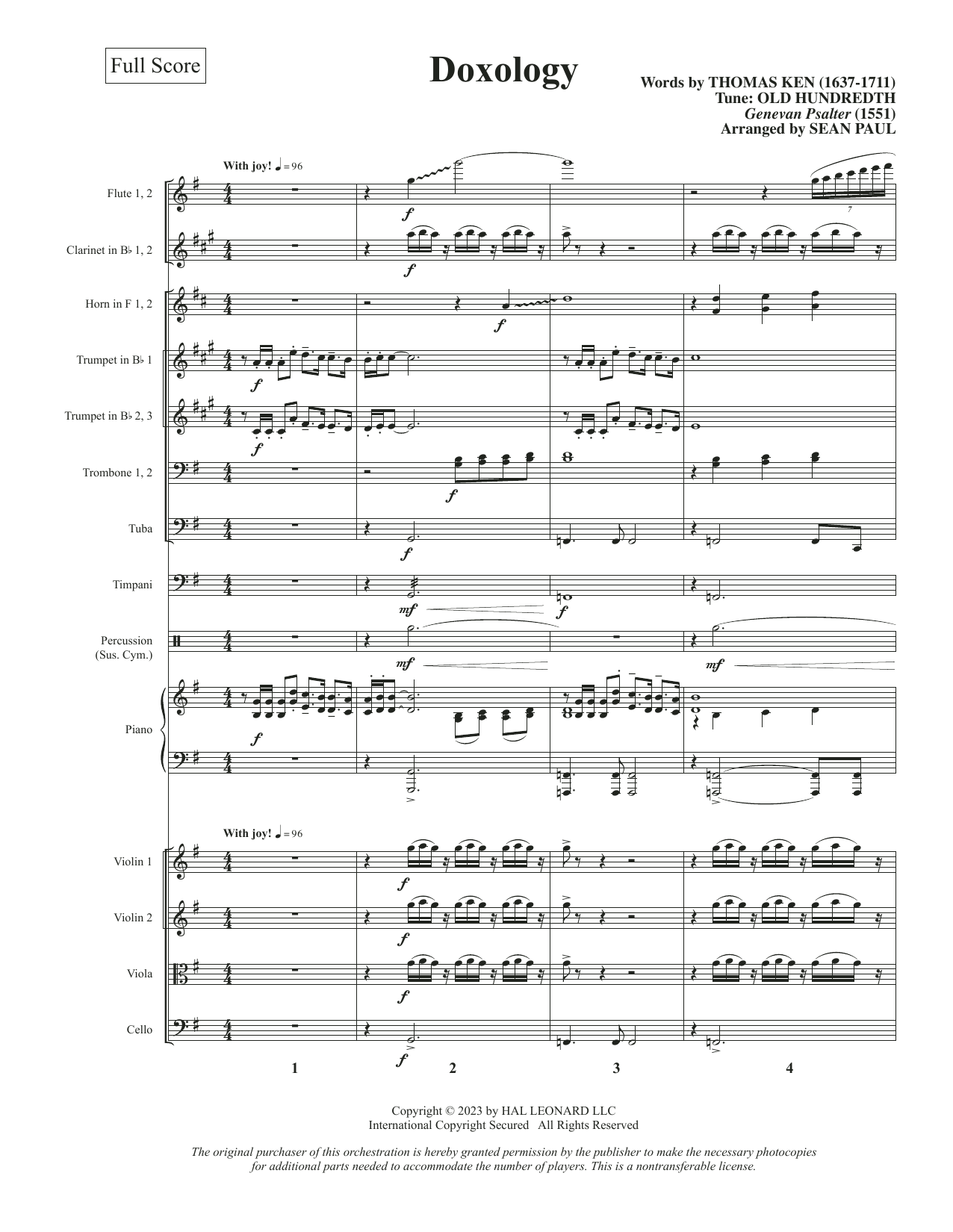

Doxology (arr. Sean Paul): Choral Instrumental Pak
By Genevan Psalter / Arranged by Sean Paul
Item: 35-PK01244421
$74.95
Pickup currently not available
Buy Extra Parts (Digital PDF Download)
Parts Added to Cart!
Description
With a joyful flourish, this majestic rendering of the iconic OLD 100th will be an unforgettable moment in your worship gathering. The colorful orchestration is the perfect addition to this brief and powerful offering. Score and Parts (fl 1-2, cl 1-2, hn 1-2, tpt 1-3, tbn 1-2, tba, tmp, perc, vn 1-2, va, vc) available as a digital download.


Doxology (arr. Sean Paul): Choral Instrumental Pak isn't in MakeMusic Cloud just yet...but it could be. Let us know you'd like to see it, and you'll help shape what comes next. In the meantime, start a free trial and dive into thousands of interactive titles your students can play along with today.
Request This Title
Tell us you want it.
Start Your Free Trial
Explore everything that's ready to play right now.
Sample Audio
No sample audio found.
Sample Video
No sample videos found.
Additional Details
Publisher:
Hal Leonard
SKU:
35-PK01244421
More about this title
About the Composer: Genevan Psalter
The Genevan Psalter emerged in 16th-century Geneva as a landmark achievement in Protestant worship music. Under the leadership of John Calvin and the musical direction of figures like Louis Bourgeois, the psalter created a comprehensive repertoire of metrical psalm settings designed for congregational singing. These melodies became the foundation of Reformed musical practice across Europe and eventually shaped American hymnody.
OLD 100th, one of the most enduring melodies from this tradition, has survived centuries of use because of its memorable contour and dignity. The tune's simplicity made it accessible to singers of all abilities, while its grandeur suited both intimate devotions and full congregational worship. Today it remains a touchstone for arrangers seeking to honor liturgical tradition while creating fresh instrumental contexts.
Why we love this
Sean Paul's orchestration transforms this beloved hymn into a moment of genuine splendor without losing its essential character. The colorful instrumental writing gives each section something specific to do, which means your musicians stay engaged and your congregation hears the tune shine from multiple angles at once. For worship settings where you want something dignified yet celebratory, this arrangement delivers exactly that balance.
What to expect
Majestic and radiant, with the kind of warmth that comes from familiar melody combined with fresh orchestral color. The arrangement lifts a hymn you know deeply into something celebratory, honoring both the tune's history and its living place in contemporary worship.
Who it's for
Worship leaders and music directors who want to program the Doxology with instrumental color and sophistication. This arrangement works equally well for choirs paired with full orchestras and for ensembles that include the woodwind and brass sections commonly found in strong community or church music programs.
How to get the most out of it
- Balance the inner voices carefully during the initial statement. The violas and lower clarinet lines anchor the harmonic content, so they need clarity without drowning out the melody line.
- Let the brass find their tuning before rehearsing the full section. The spacing and voicing in this orchestration rewards precise intonation across trumpets and horns.
- Shape the opening flourish with rhythmic precision. The percussion and timpani set the character immediately, so their entrance needs to feel intentional rather than decorative.
- Bring out the violin writing on sustained passages. These lines often carry inner melodic movement that adds textural richness when clearly heard.
How to use it
Reserve this for moments when the full ensemble can gather: Easter celebrations, ordinations, commissioning services, or congregational annual meetings where you want to open or close with genuine musical proclamation. The compact length makes it ideal for framing a spoken moment or liturgical transition rather than functioning as a standalone anthem.
Skills your students will build
- Reading divided string parts with multiple voice leading
- Balancing melody and inner harmonic voices in a full orchestral texture
- Understanding orchestral color and how different instrumental combinations create texture
- Responding to conductor phrasing in a contextualized sacred music setting
- Executing precise entrances when playing as part of a large instrumental ensemble