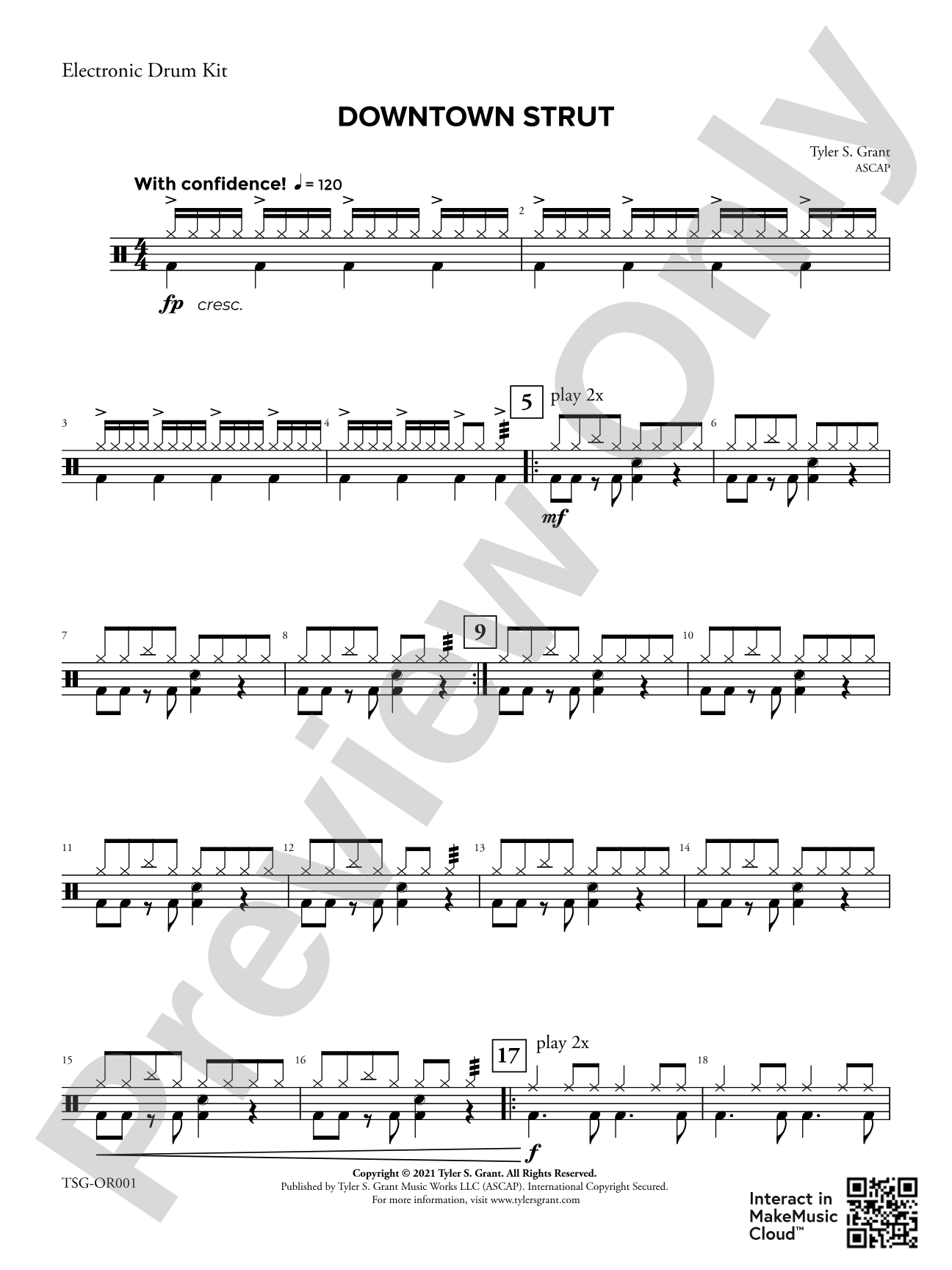
Electrifying and exciting! This work is the perfect way to introduce your students to electro-acoustic music at a young level. Using only seven notes and modest rhythms, Downtown Strut by Tyler S. Grant will be a favorite for both students and audiences. (1:15)
Discover MakeMusic Cloud: thousands of interactive titles your students can play along with today.
Tyler S. Grant brings nearly two decades of active composing and arranging to ensembles at every level. His works appear regularly on honor ensemble programs across the country and have earned recognition including a 2014 Dallas Wind Symphony fanfare competition award. He has conducted clinics with over 100 school programs across more than 15 states and contributed instructional materials to Alfred Music's Sound Innovations series.
Beyond the concert hall, Grant maintains an active commissioning practice, producing new scores annually for bands and orchestras. His works have been performed at venues ranging from Carnegie Hall to the Macy's Thanksgiving Day Parade. A University of Alabama graduate in instrumental music education, he studied conducting with Randall Coleman and credits composer Brian Balmages as instrumental to his development as a writer for young ensembles.
Why we love this
Grant has mastered the art of writing for young orchestras without sacrificing energy or musicality. Downtown Strut proves that introducing electro-acoustic color at Grade 1 doesn't require complex notation or endless rehearsal time; the seven-note palette and straightforward rhythms let students focus entirely on ensemble sound and rhythmic cohesion while still delivering the sophisticated excitement that hooks an audience.
What to expect
Modern and streetwise, Downtown Strut channels contemporary energy into orchestral sound. The piece moves with swagger and snap, letting young string players discover that contemporary music can be as exciting and immediate as anything in the standard canon.
Who it's for
String orchestra students at the earliest grades who are ready to move beyond traditional repertoire and explore contemporary sonorities. Directors seeking a engaging, brief piece that introduces students to electro-acoustic color while keeping technical demands accessible.
How to get the most out of it
Establish a confident tempo from the downbeat. The driving energy of this piece relies on rhythmic precision from the entire section, so lock in a steady pulse during your first run-throughs and maintain it throughout performance.
Balance the pizzicato and bowed sections deliberately. The contrast between articulated attacks and sustained tones creates the piece's character, so shape dynamics to let both textures speak clearly.
Let the electronic character breathe. Resist over-conducting; the modern energy comes from clean rhythmic attacks and crisp releases, not expressive phrasing.
Encourage confident intonation on the limited pitch set. With just seven notes, any tuning drift becomes obvious, so spend time on the specific pitches used rather than drilling scales.
How to use it
Perfect for a concert opener or closer when you want to signal that your orchestra embraces new voices alongside classics. At just 1 minute 15 seconds, it pairs well with a larger work, offering variety in style and energy without requiring extended rehearsal time.
Skills your students will build
Reading and executing rhythmic figures with precision and clarity
Distinguishing between pizzicato and bowed articulations within the same phrase
Maintaining ensemble rhythmic cohesion in contemporary idioms
Executing clean attacks and releases as a collective unit
Building confidence with a limited pitch set through intonation focus
You May Also Like
Scan to Complete Your Purchase
Use your phone's camera to scan the code below
You'll log in on your phone and the order will be added to your account