Down Yonder Sheet Music Preview

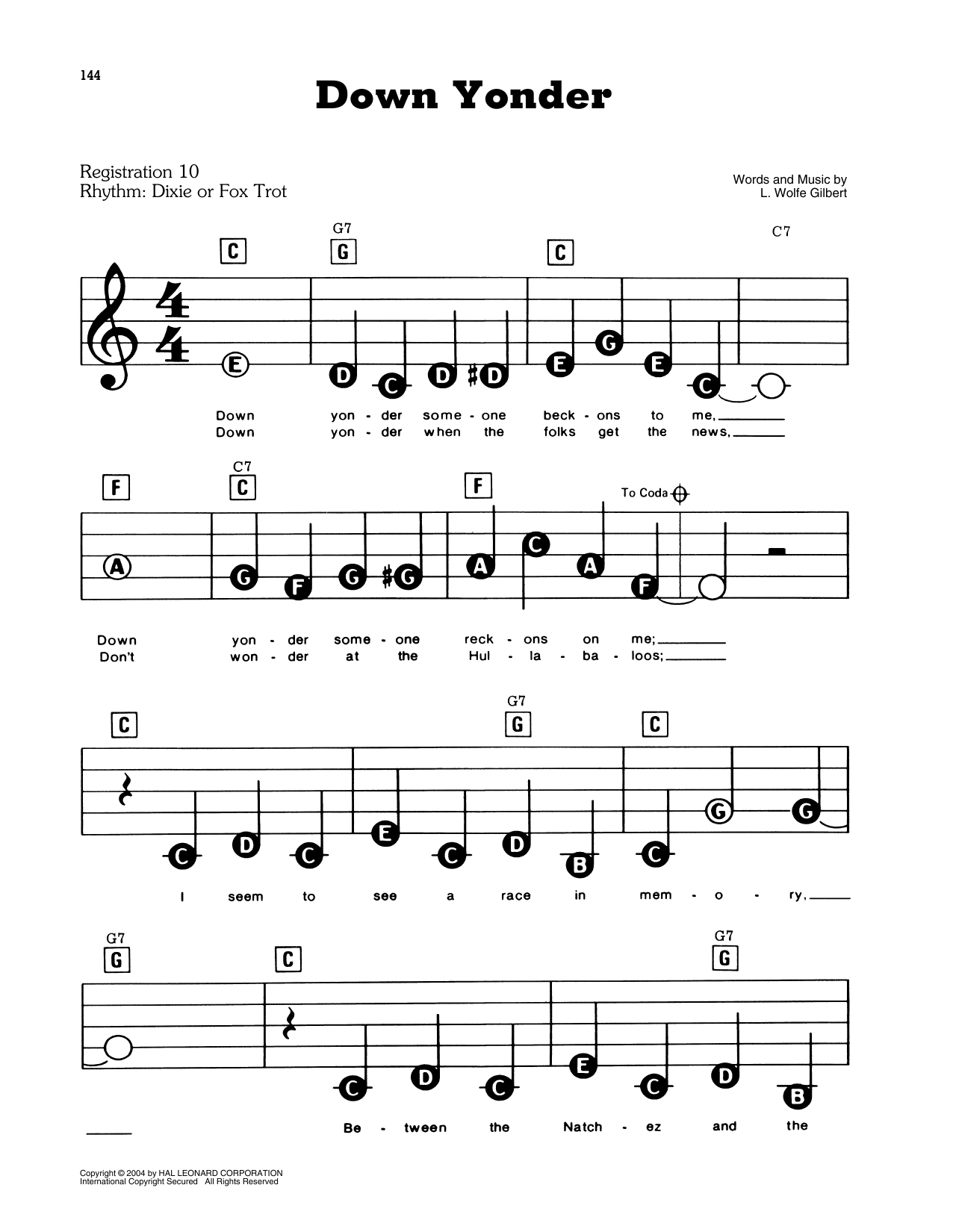
Down Yonder: E-Z Play Today

Item: 35-DS00455612

Digital Download
$4.99
Description

Down Yonder: E-Z Play Today isn't in MakeMusic Cloud just yet...but it could be. Let us know you'd like to see it, and you'll help shape what comes next. In the meantime, start a free trial and dive into thousands of interactive titles your students can play along with today.

Sample Audio
No sample audio found.
Sample Video
Additional Details
Publisher: Hal Leonard
Page Count: 2
SKU: 35-DS00455612

More about this title

Why we love this

Down Yonder bridges early jazz vocabulary with folk melody in a way that rewards both technical precision and stylistic interpretation. The E-Z Play arrangement strips away unnecessary complexity while preserving the swing and charm that make this tune endure across generations of pianists.

What to expect

Down Yonder carries the warmth of a Southern folk memory through a New Orleans jazz lens. The melody feels like it's been hummed across generations, yet the harmonies sparkle with blues notes and chromatic movement that suggest sophistication without demanding virtuosity.

Who it's for

This arrangement serves pianists who are developing jazz vocabulary without being overwhelmed by dense harmonic substitutions. It also works beautifully for students exploring how folk material can anchor jazz arrangements, or pianists seeking a genuine standard that's accessible without feeling oversimplified.

How to get the most out of it

  • Treat the jazz figures as conversational, not mechanical. Let rubato live in the accompaniment patterns so the melody feels like it's leading the harmonic movement rather than following it.
  • Listen for the character shift between folk simplicity and jazz sophistication. Mark those transitions clearly so you know when to settle into swing feel versus when to play it straighter.
  • Layer dynamics across the two pages. The opening can sit more quietly, allowing the piece to build energy as jazz elements accumulate.

How to use it

Pair this with other folk-based jazz standards to create a concert set exploring how American vernacular music became jazz. It also serves as an excellent teaching tool within a jazz history unit or as a solo piece for recitals where you want to showcase swing sensibility at an intermediate level.

Skills your students will build

  • Jazz comping fundamentals (voicing accompaniment patterns)
  • Swing rhythm and syncopation in both melody and harmony
  • Connecting folk melody to jazz harmony conventions
  • Dynamic shaping across a two-page form
  • Stylistic code-switching between straight and jazz-inflected phrasing

You May Also Like