

Down in My Soul!: 2-Part/SSA Choral Octavo
Words and music by Victor C. Johnson
Item: 00-PO-0007541

$2.30
Minimum order quantity: 10 copies
Please note: Under U.S. copyright law, you must purchase the exact number of copies needed for your ensemble. Printing, duplicating or sharing additional copies is strictly prohibited.
Pickup currently not available
Description
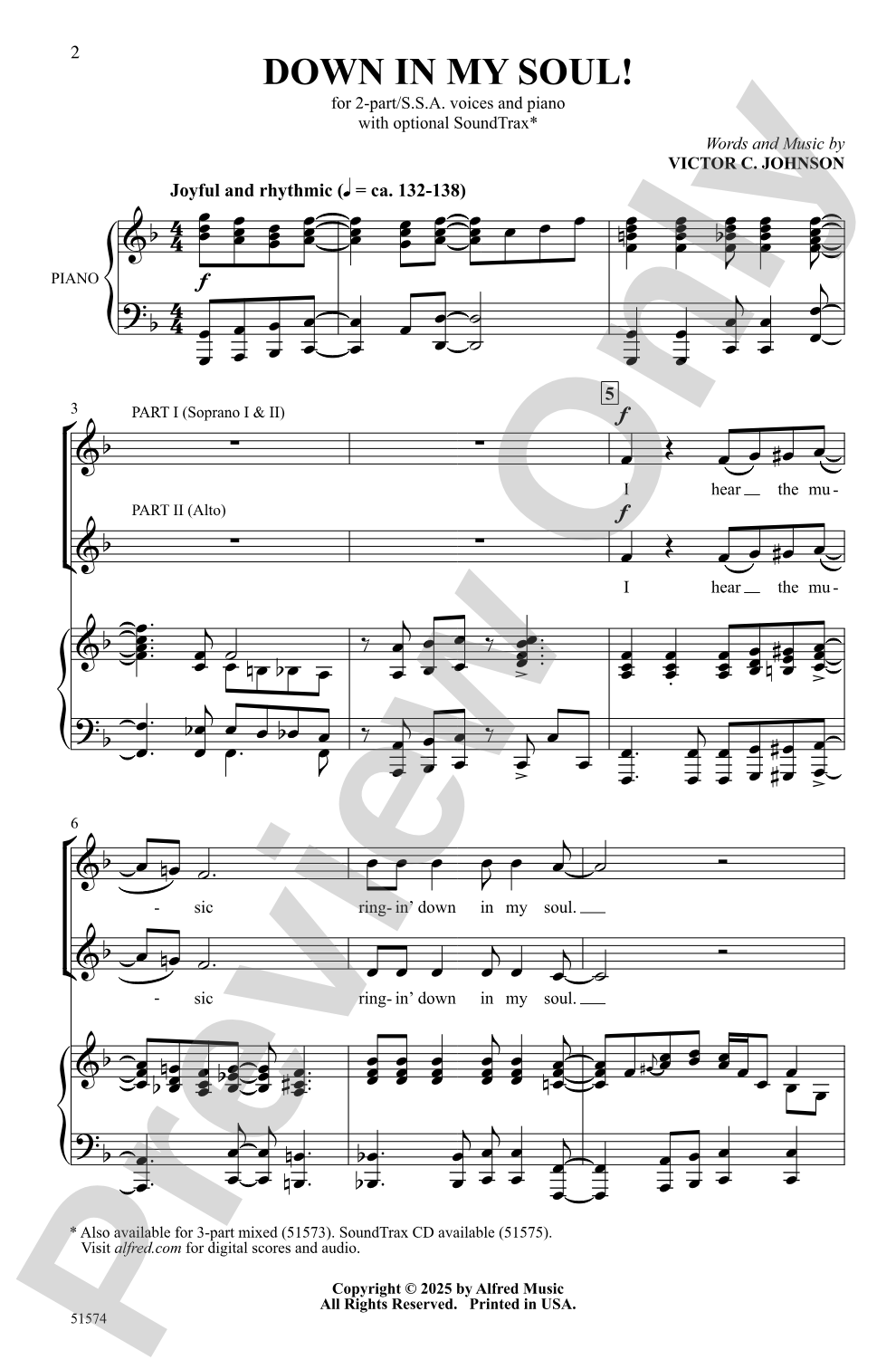
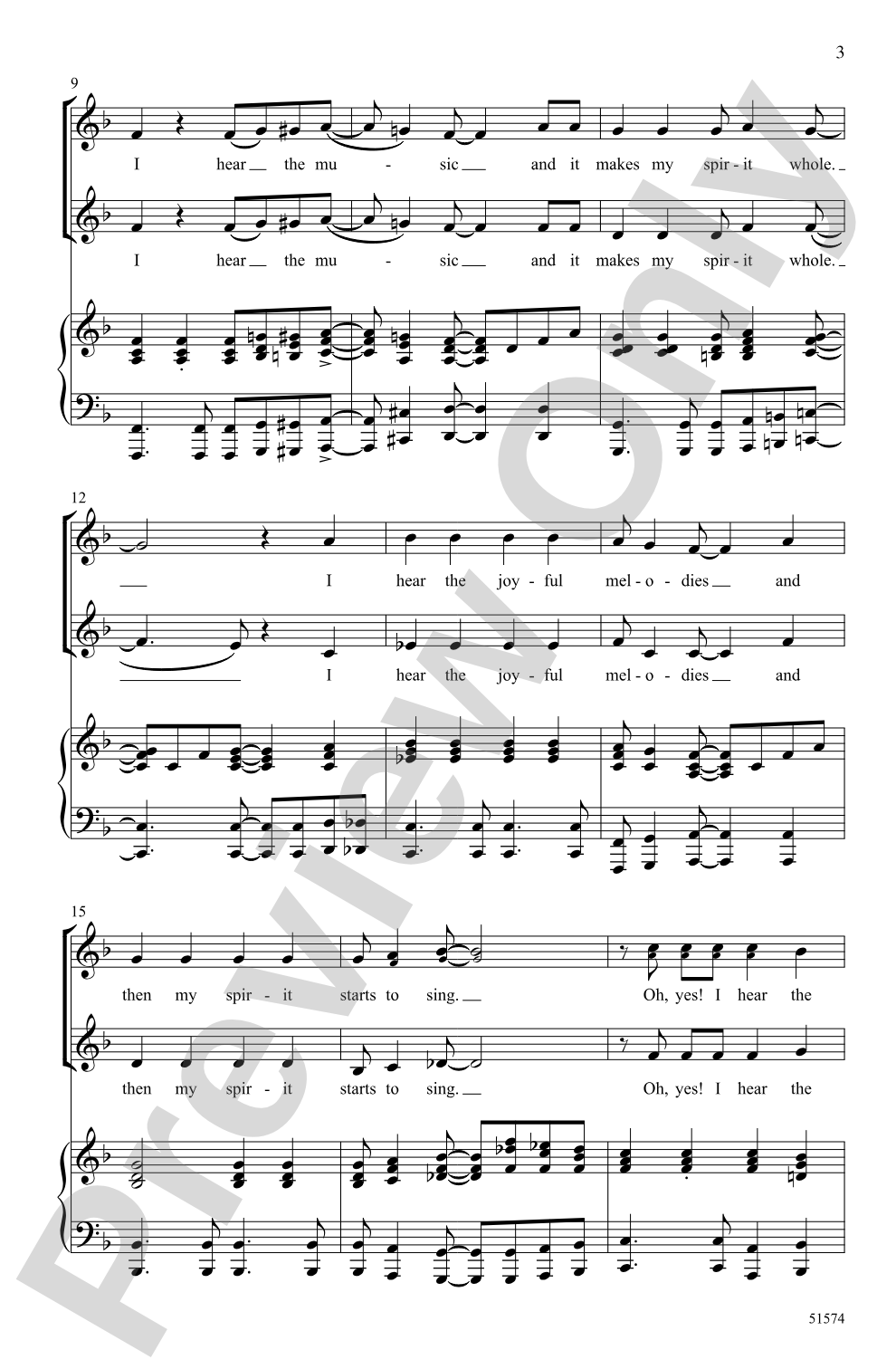
The joyful lyrics of Victor's exciting gospel original extol the wonders of music all around. Satisfying sonorities and vocal ranges that lie right in the sweet spot for developing singers make this an excellent selection for school groups. A sturdy piano part alternates between reinforcing voice parts and stylistic riffs. Cued middle notes in the 2-Part/SSA voicing offer optional triadic harmony.


Don't just read it, hear it, play along with it, and watch your students grow with it. In MakeMusic Cloud, Down in My Soul!: 2-Part/SSA Choral Octavo comes alive with professional accompaniment, adjustable tempo, and built-in practice tools that turn solo practice into real progress.
Open in the Player
Jump straight in and assign it today.
Start Your Free Trial
Open this title and explore the full library in minutes.
Sample Audio
1
Audio File
--:--
0:00
0:00
Sample Video
Additional Details
Series:
Alfred Choral Designs
Publisher:
Alfred Music
Page Count:
12
SKU:
00-PO-0007541
More about this title
About the Composer: Victor C. Johnson

Victor C. Johnson, based in Dallas, Texas, currently serves as School Choral Editor for Sing!, the educational publishing arm of Choristers Guild. With more than 500 choral works, vocal solos, and keyboard pieces in active publication, Johnson brings deep classroom experience to his compositional practice.
From 2000 through 2018, Johnson directed choral ensembles at Fort Worth Academy of Fine Arts, where he led the Academy Singers and Academy Men's Choir while serving as Artistic Director for both the Singing Girls of Texas and Children's Choir of Texas. In 2022, he was appointed conductor of the Dallas Symphony Children's Chorus Mixed Ensemble, which serves high school musicians as the resident youth choir for the Dallas Symphony Orchestra. His professional involvement spans ACDA, American Guild of Organists, Texas Music Educators Association, NAfME, Texas Choral Directors Association, ASCAP, and Phi Mu Alpha Sinfonia.
Why we love this
Johnson captures the exuberance of gospel expression while keeping the vocal writing squarely in the range where young singers thrive. The piano part does genuine work here, sometimes doubling the choir and sometimes stepping aside to establish style and momentum with its own rhythmic character. Cued harmony notes let you flex the voicing as your ensemble develops, making this piece work equally well for early-stage treble choirs and more experienced SSA groups.
What to expect
Celebratory and infectious, this gospel original radiates the joy of making music itself. The writing sits comfortably in the voice without asking for technical extremes, allowing singers to focus on delivering the uplifting text and catching the infectious rhythmic spirit of the genre. Sunlit rather than somber, the piece carries genuine warmth without sentimentality.
Who it's for
This piece suits developing treble choirs in middle and high school settings where singers are building comfort with stylistic expression and expanded vocal range. The 2-Part arrangement with SSA cuing creates flexible programming options for ensembles of varying vocal maturity, making it accessible for festival or concert use without requiring divided rehearsal time.
How to get the most out of it
- Shape the text with the energy of spoken language rather than forcing it into rigid phrasing. Gospel style thrives on rhythmic flexibility and call-and-response momentum.
- Balance the choir's part against the piano's riff passages. When the piano steps into its stylistic groove, the voices should sit back and listen; the texture shifts are what drive the arrangement.
- Encourage singers to feel the harmonic movement through the cued triadic notes. Even when singing just one note, awareness of the full harmony underneath strengthens intonation and blend.
- Rehearse the piano part early and separately from the choir. A confident accompanist sets the gospel pocket and gives singers the rhythmic confidence to commit to the style.
How to use it
Program this as a energizing centerpiece for a concert that balances choral styles, or pair it with other contemporary choral works to showcase your ensemble's versatility in non-classical genres. Its length and straightforward charm make it an excellent choice for festival competition, and the joyful message works well as a season opener or closing piece that leaves audiences smiling.
Skills your students will build
- Gospel style conventions (rhythmic flexibility, call-and-response phrasing, swing-inflected rhythm)
- Reading optional harmony cues within a simplified voicing structure
- Listening to and interpreting piano texture as a stylistic anchor rather than pure accompaniment
- Sustaining intonation in extended vowels while maintaining rhythmic precision
- Balancing ensemble sound across two or three vocal parts with flexible doubling