Down By The Salley Gardens Sheet Music Preview

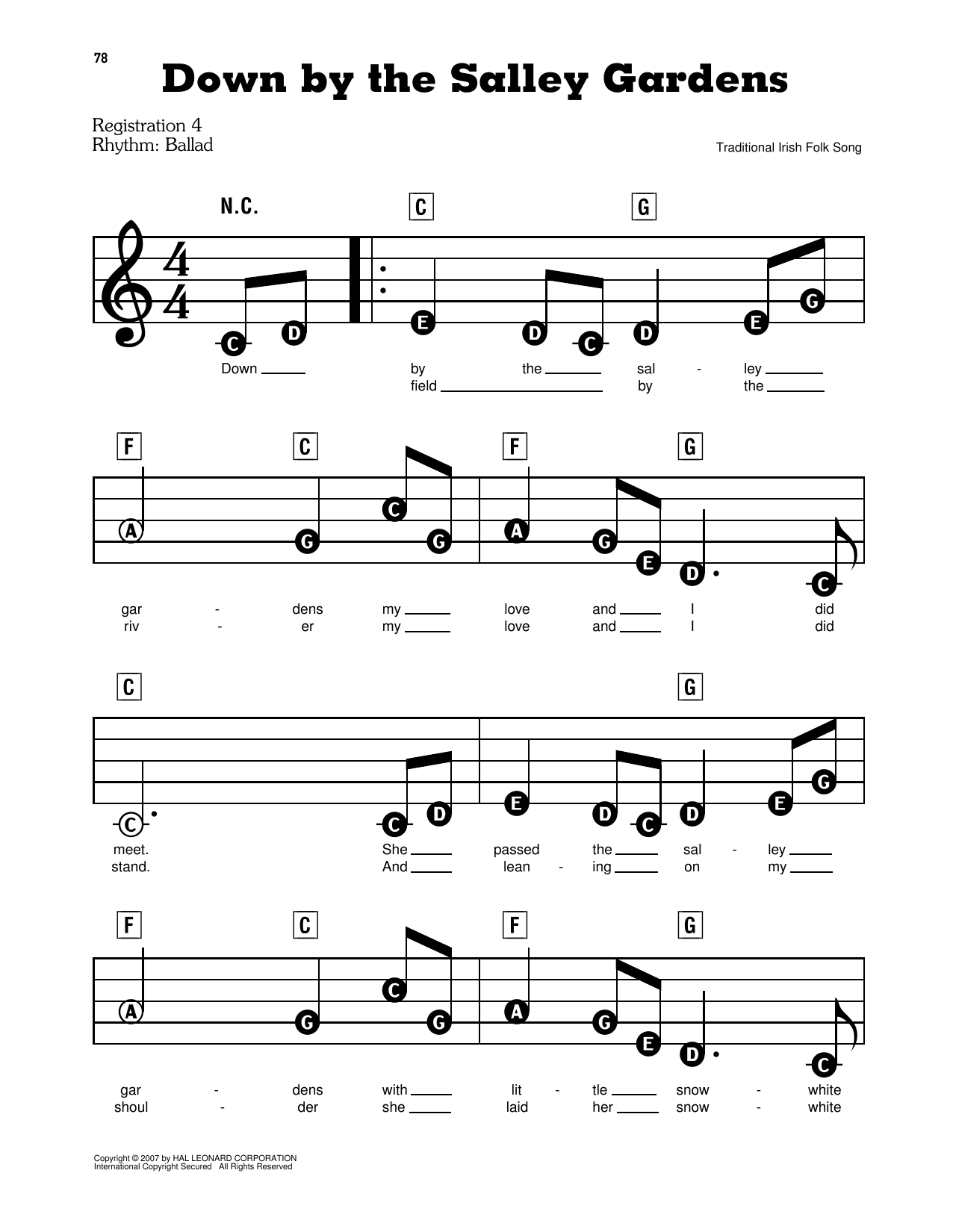
Down By The Salley Gardens: E-Z Play Today

Item: 35-DS00520723

Digital Download
$4.99
Description

Down By The Salley Gardens: E-Z Play Today isn't in MakeMusic Cloud just yet...but it could be. Let us know you'd like to see it, and you'll help shape what comes next. In the meantime, start a free trial and dive into thousands of interactive titles your students can play along with today.

Sample Audio
No sample audio found.
Sample Video
Additional Details
Publisher: Hal Leonard
Page Count: 2
SKU: 35-DS00520723

More about this title

About the Creator

"Down By The Salley Gardens" originates from William Butler Yeats, the Irish poet who adapted the melody from an older traditional tune and paired it with his own lyrics in 1889. The song has since become one of the most recognizable pieces of Irish folk music, recorded by countless artists across genres and performed at traditional sessions worldwide. Yeats' gift was recognizing the emotional depth already present in the melody and amplifying it through poetry that speaks to love, loss, and the passage of time.

Why we love this

This E-Z Play arrangement captures the gentle, reflective character of the melody without requiring advanced technique, making it accessible for students who want to experience genuine folk material early in their studies. The two-page format respects the tune's simplicity while the arrangement likely provides enough harmonic support to sound complete and satisfying. Few pieces work as effectively for both solo performance and as a foundation for ensemble arrangement.

What to expect

The piece carries a wistful, nostalgic quality from the first phrase, evoking gardens and memories of Ireland's landscape. There is tenderness in the melody's arc and a quiet longing that doesn't require virtuosity to convey, only genuine musical presence.

Who it's for

Beginning and early intermediate pianists benefit most from this arrangement, particularly those exploring folk repertoire or looking for pieces with cultural and literary significance. Teachers seeking material that introduces students to Irish music and Yeats' poetic tradition will find this both musically and educationally valuable.

How to get the most out of it

  • Shape the melody with subtle dynamic shaping rather than rigid phrasing; the tune breathes naturally when you follow the lyrical contour Yeats intended
  • Allow the opening measures to settle before moving forward; this melody rewards patience and a singing tone from the very first note
  • If the accompaniment includes sustained chords, resist the urge to break them up; let them sit underneath the melody to create harmonic depth

How to use it

Pair this with other folk settings or traditional music to create a cultural exploration concert or classroom listening unit. The brevity and accessibility make it suitable for recitals where you want to include substantial repertoire without demanding extended performance time from developing students.

Skills your students will build

  • Singing the melody with lyrical phrasing at the keyboard
  • Balancing right-hand melody against left-hand accompaniment
  • Maintaining legato across phrase boundaries
  • Reading and interpreting folk melody in a contemporary arrangement

You May Also Like