
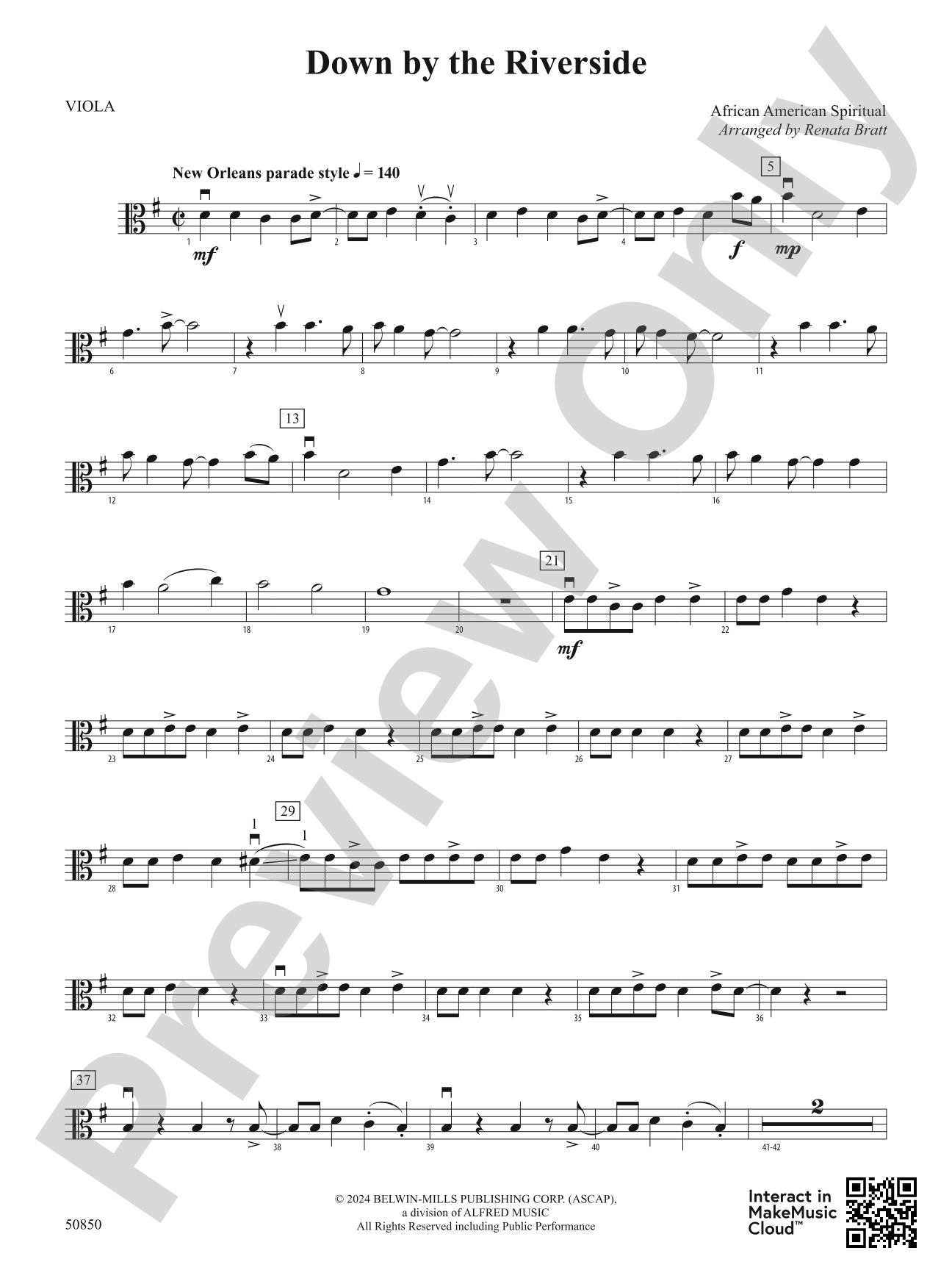

Down by the Riverside: Viola
Traditional African-American Spiritual / arr. Renata Bratt
Grade: 3
Item: 00-PC-0019330_VA1
$3.00
Pickup currently not available
Description
Down by the Riverside, arranged by Renata Bratt, is a New Orleans-style African American Spiritual and a toe-tapping closer. Every instrument in the string orchestra has its moment to shine. Overlapping melodic riffs throughout add to the fun! Syncopated rhythms in the accompaniment and melodic parts reinforce your students' reading skills. After the initial presentation of the tune, more and more groups of instruments join to play melodic riffs, many times over the top of each other, just like what you would hear a New Orleans jazz band play in a second-line parade. This arrangement was first written for the students of the Wintergrass Youth Orchestra, a big bluegrass (and more) festival held in Bellevue, Washington every February. (3:10)
The PerformancePlus+ series is an innovative addition to the ever-expanding MakeMusic Cloud interactive library. These engaging selections are presented with educational resources designed to enrich the rehearsal process and create outstanding performances. Including:


The PerformancePlus+ series is an innovative addition to the ever-expanding MakeMusic Cloud interactive library. These engaging selections are presented with educational resources designed to enrich the rehearsal process and create outstanding performances. Including:
- Assignment, recording, and assessment tools within MakeMusic Cloud
- Piece-specific exercises focused on skills and techniques
- Educational tips and suggestions to support learning
Available in print and digital formats.
Don't just read it, hear it, play along with it, and watch your students grow with it. In MakeMusic Cloud, Down by the Riverside: Viola comes alive with professional accompaniment, adjustable tempo, and built-in practice tools that turn solo practice into real progress.
Open in the Player
Jump straight in and assign it today.
Start Your Free Trial
Open this title and explore the full library in minutes.
Sample Audio
1
Audio File
--:--
0:00
0:00
Sample Video
Additional Details
Series:
Belwin String Orchestra - PerformancePlus+
Publisher:
Alfred Music
SKU:
00-PC-0019330_VA1
More about this title
About the Arranger: Renata Bratt

Renata Bratt is a cellist, clinician, and string educator whose work spans classical training, jazz improvisation, and folk traditions. She has taught at festivals including the Mark O'Connor String Conference, Alasdair Fraser's Sierra Fiddle Camp, and national Suzuki institutes, and served as past president of both the Suzuki Music Association of California and the International Association for Jazz Education String Caucus. Based in California, she maintains a teaching studio and directs youth string programs while performing across multiple genres.
Bratt holds a Ph.D. in Music from UC San Diego and has collaborated with artists ranging from traditional musicians like Liz Carroll and John Doyle to rock and pop performers including Jimmy Page, Robert Plant, and Lyle Lovett. Her published works include orchestral arrangements for Alfred Publishing and instructional texts for Mel Bay Publications, reflecting her deep commitment to making diverse musical styles accessible to young string players.
Why we love this
Bratt's arrangement captures the energy and texture of a New Orleans second-line parade by layering overlapping melodic riffs across your entire string section, giving every student a moment in the spotlight while building their rhythmic independence. The syncopated accompaniment patterns and interlocking melodies create the kind of infectious, collaborative joy that makes students want to come back to rehearsal.
What to expect
A celebration that builds from a familiar spiritual melody into a joyful, complex tapestry of interwoven instrumental voices. The overlapping riffs create forward momentum and playfulness while remaining rooted in the song's spiritual heritage, capturing the spirit of a vibrant parade where every participant contributes to the collective energy.
Who it's for
Grade 3 string orchestras ready to tackle syncopated rhythms and layered textures without sacrificing the spiritual's emotional core. This arrangement works for groups with solid fundamentals in rhythm reading and ensemble balance who are beginning to explore styles beyond classical European traditions.
How to get the most out of it
- Balance the density carefully as more instruments enter with riffs. The overlapping melodies should enhance, not obscure, the main melodic line. Use the conductor score to mark which instrumental groups carry primary material in each section.
- Emphasize the syncopated rhythms in your early rehearsals with isolated rhythm work. Have sections clap and count the accompaniment patterns independently before combining them with the melodic riffs.
- Shape the dynamics to reflect the second-line parade style. Lighter articulation and a bouncy bow approach in the rhythm sections will allow the spiritual's traditional character to come through beneath the New Orleans flavor.
- Lock in the tempo early and maintain it as the texture builds. The piece's momentum depends on rhythmic security as layers accumulate, so establish a solid pulse before tackling the full ensemble sections.
How to use it
This piece shines as a concert closer, its toe-tapping energy leaving audiences with a sense of joy and community. It also pairs well with other spirituals or folk-based arrangements on a program exploring American musical traditions, and its collaborative nature makes it an excellent choice for demonstrating ensemble interdependence and sectional listening.
Skills your students will build
- Reading and executing syncopated rhythms in both melodic and accompaniment parts
- Balancing independent rhythmic lines within a layered ensemble texture
- Maintaining a steady pulse while navigating overlapping melodic riffs
- Performing with appropriate articulation and style for New Orleans jazz-influenced arrangements
- Listening across the section to blend multiple simultaneous melodic ideas