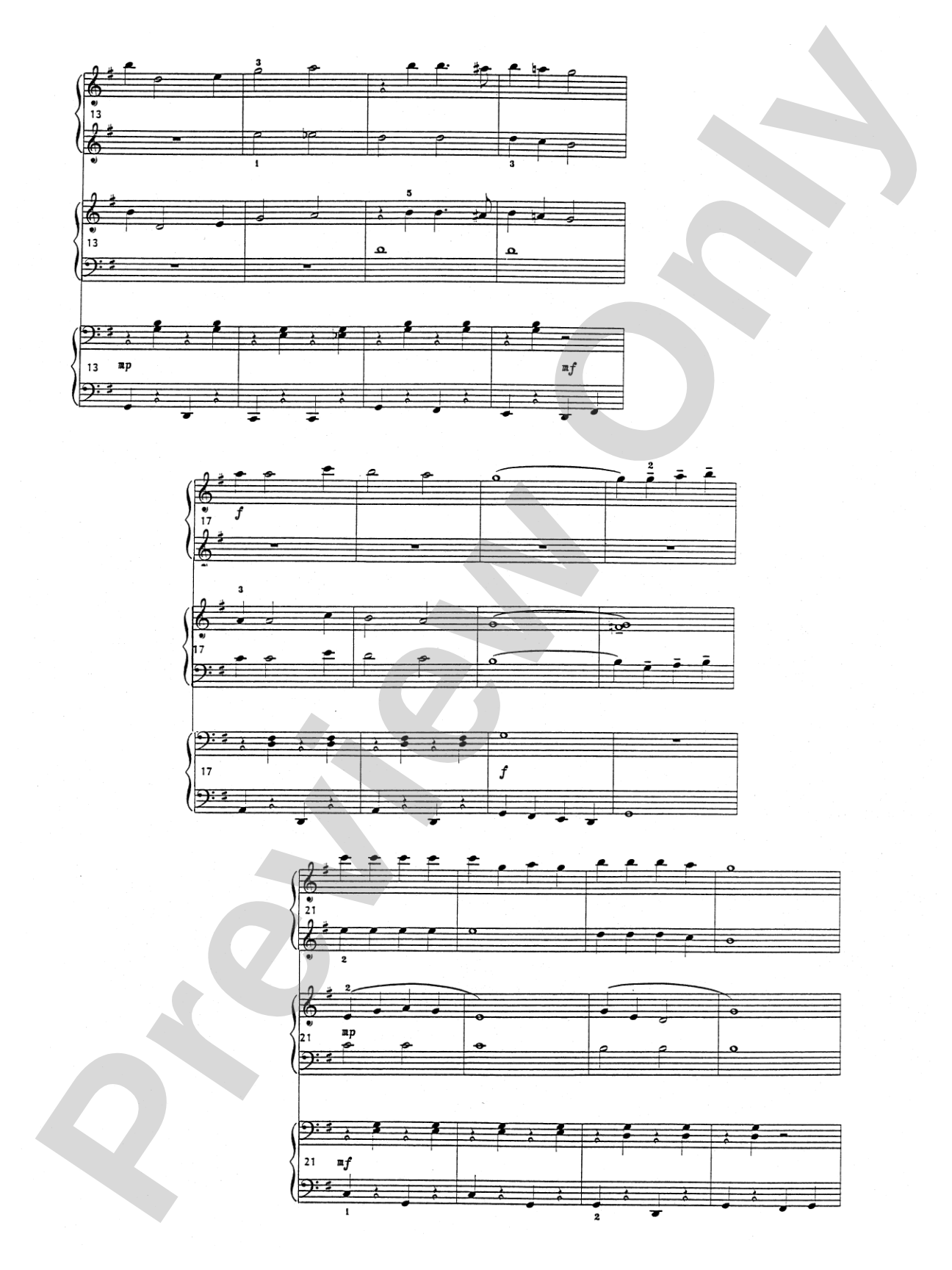
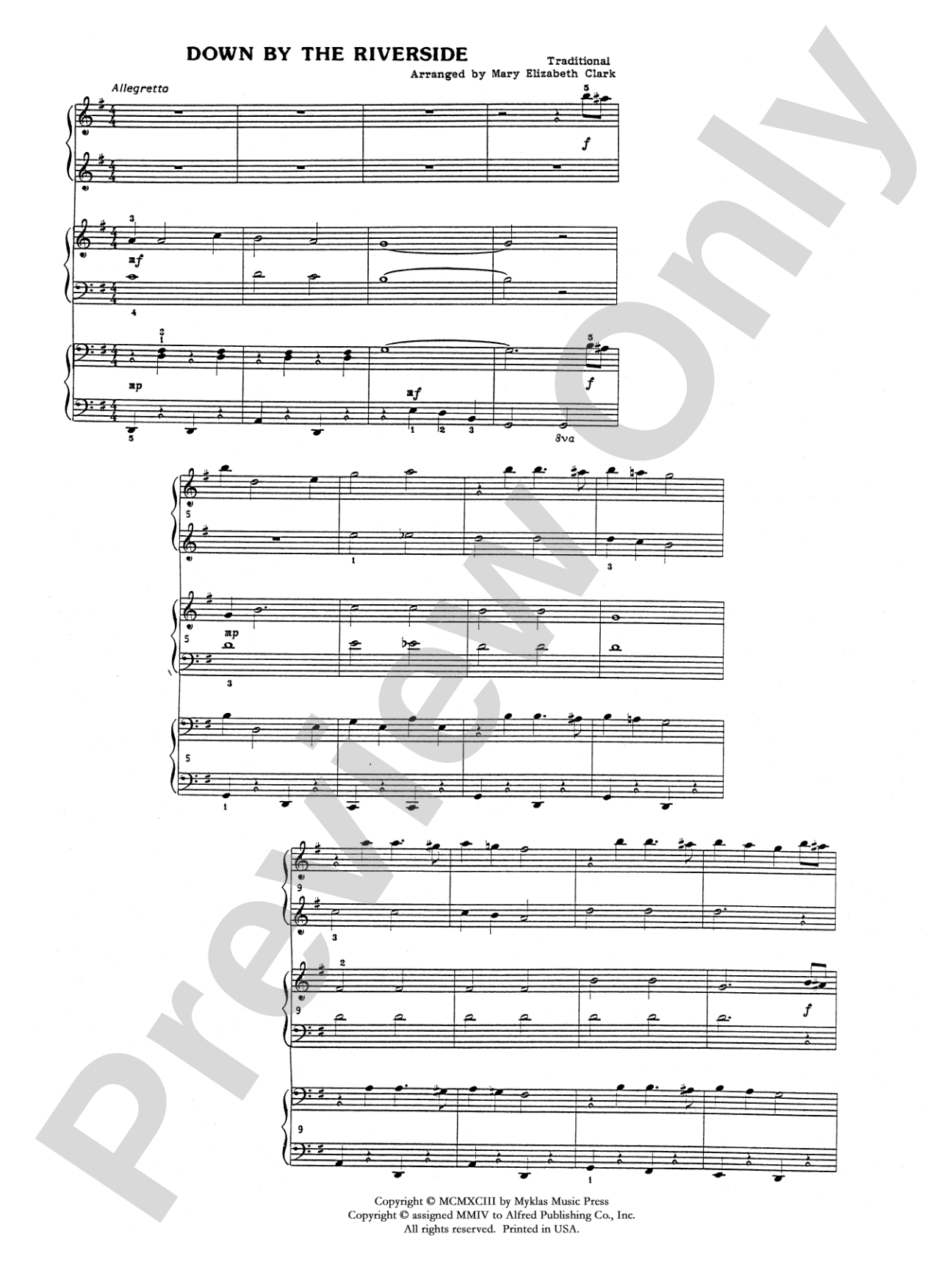
Down by the Riverside - Piano Trio (1 Piano, 6 Hands) Sheet Music Preview

Down by the Riverside - Piano Trio (1 Piano, 6 Hands): Piano Trio (1 Piano, 6 Hands)

Arranged by Mary Elizabeth Clark

Level: Intermediate

Item: 00-PS-0017511

Digital Download
$5.99
Description
The traditional spiritual is arranged for one piano, six hands intermediate piano trio by Mary Elizabeth Clark. This lively version is in the key of G major. Separate score sheets are included for each performer along with a conductor's score on the inside cover. A Federation Festivals 2024-2028 selection.

Down by the Riverside - Piano Trio (1 Piano, 6 Hands): Piano Trio (1 Piano, 6 Hands) isn't in MakeMusic Cloud just yet...but it could be. Let us know you'd like to see it, and you'll help shape what comes next. In the meantime, start a free trial and dive into thousands of interactive titles your students can play along with today.

Sample Audio
No sample audio found.
Sample Video
Additional Details
Series: The Myklas Trio Series
Publisher: Alfred Music
Page Count: 10
SKU: 00-PS-0017511

More about this title

About the Arranger: Mary Elizabeth Clark

Mary Elizabeth Clark is an arranger known for her work in The Myklas Trio Series, where she reimagines traditional repertoire for collaborative piano settings. Her arrangements prioritize accessibility without sacrificing musicality, making classic material engaging for intermediate musicians who thrive in ensemble contexts.

Why we love this

Clark's six-hand arrangement transforms a beloved spiritual into a natural vehicle for three pianists working at the same level, eliminating the awkward hierarchy that often plagues trio writing. The G major key and intermediate voicing let all three players contribute melodically and harmonically, which means everyone stays genuinely invested throughout.

What to expect

Bright and spirited in G major, this arrangement captures the infectious energy of the spiritual while remaining intimate enough for a chamber setting. Three voices weaving together create a texture that feels fuller than a solo piano but remains conversational and buoyant.

Who it's for

Intermediate piano students ready for meaningful ensemble experience without the coordination challenges of traditional trio writing for separate instruments. This works especially well for young musicians preparing festival entries or seeking confidence-building group repertoire.

How to get the most out of it

  • Establish a clear hierarchy before rehearsal begins: decide who leads the primary melody in each section and communicate that visually during performance so ensemble members know exactly where to lock in.
  • Work the rhythmic unisons separately at first, then gradually increase tempo only after all three players feel the pulse together without relying on counting.
  • Balance the three parts as you would balance an instrumental trio, not as a solo with accompaniment; each pianist should hear their own line as essential to the texture.
  • Record a rehearsal and listen back to spot spots where independence wavers, particularly in passages where parts move in similar rhythms.

How to use it

Slot this into a piano festival program or concert where you want to showcase collaborative musicianship without requiring students to learn a completely new instrument combination. It also serves as excellent preparation for pianists considering chamber music at the college level.

Skills your students will build

  • Ensemble listening and rhythmic independence with same-instrument peers
  • Part negotiation and voice leading across three interlocking piano lines
  • Sight-reading coordination from separate score sheets
  • Balancing melody and accompaniment roles within a homogeneous instrumentation
  • Stylistic interpretation of spiritual music through arrangement

You May Also Like