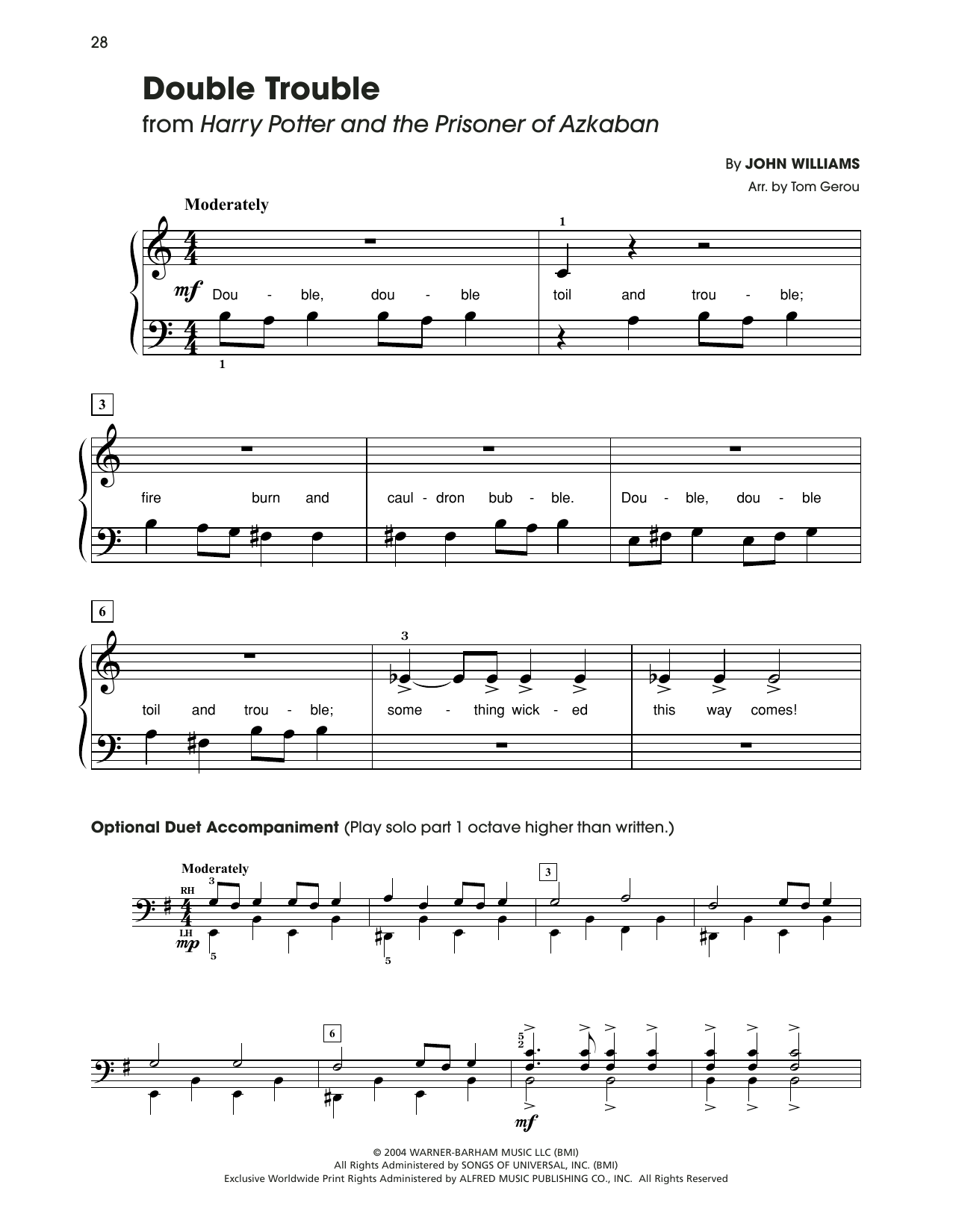
Double Trouble (from Harry Potter) (arr. Tom Gerou) Sheet Music Preview

Double Trouble (from Harry Potter) (arr. Tom Gerou): 5-Finger Piano

By John Williams / Arranged by Tom Gerou

Item: 35-DS01414828

Digital Download
$4.99
One moment…
Description

Discover MakeMusic Cloud: thousands of interactive titles your students can play along with today.

Sample Audio
No sample audio found.
Sample Video
Additional Details
Publisher: Hal Leonard
Page Count: 4
SKU: 35-DS01414828

More about this title

About the Composer: John Williams

John Williams stands as one of the most performed composers in the world, with a catalog that spans seven decades of film, television, and concert music. His gift for melody and orchestral color has shaped the soundtracks of generations, from Star Wars and Indiana Jones to Harry Potter and beyond. In education settings, his work serves as a gateway to understanding how music carries narrative, builds emotion, and creates unforgettable moments in storytelling.

Williams' compositions have become essential teaching tools precisely because they engage students immediately. Young musicians recognize these melodies from the films themselves, creating instant motivation to master the material. His writing is both accessible and musically sophisticated, rewarding careful practice with moments of genuine artistry.

Why we love this

This arrangement captures the mischievous energy of the Weasley twins without requiring hand position shifts or complex fingerings. Early pianists get to play music they actually know and love, which transforms practice from obligation into something genuinely fun. The four-page length fits perfectly into a lesson as a performance piece or as an incentive milestone.

What to expect

A spark of mischief wrapped in a memorable tune. The music bounces along with the kind of playful scheming that defines Fred and George, full of energy and wit without ever feeling heavy or demanding.

Who it's for

Elementary and early intermediate pianists reading in treble clef who are ready to perform recognizable music with shape and character. Students in this range benefit from material that connects to their lives outside the practice room, making this an excellent motivator for young learners.

How to get the most out of it

  • Establish a steady eighth-note pulse from the first measure; the light comedic feel depends on rhythmic precision rather than rubato.
  • Shape the melody with subtle dynamic rises on repeated phrases to mirror the playful character without overdoing expression.
  • Keep the accompanying notes crisp and clean so the main line stands out clearly for listeners.

How to use it

Slot this into a film music or popular music concert where younger students get equal stage time with classical repertoire. It works especially well in spring recitals where lighter fare balances more serious pieces, and younger audiences connect with students performing music they recognize from the screen.

Skills your students will build

  • 5-finger position reading and stability
  • Consistent rhythmic accuracy with steady tempo
  • Phrase shaping and dynamic contrast
  • Playing a clear melodic line against accompaniment
  • Sustaining musical character across repeated sections

You May Also Like