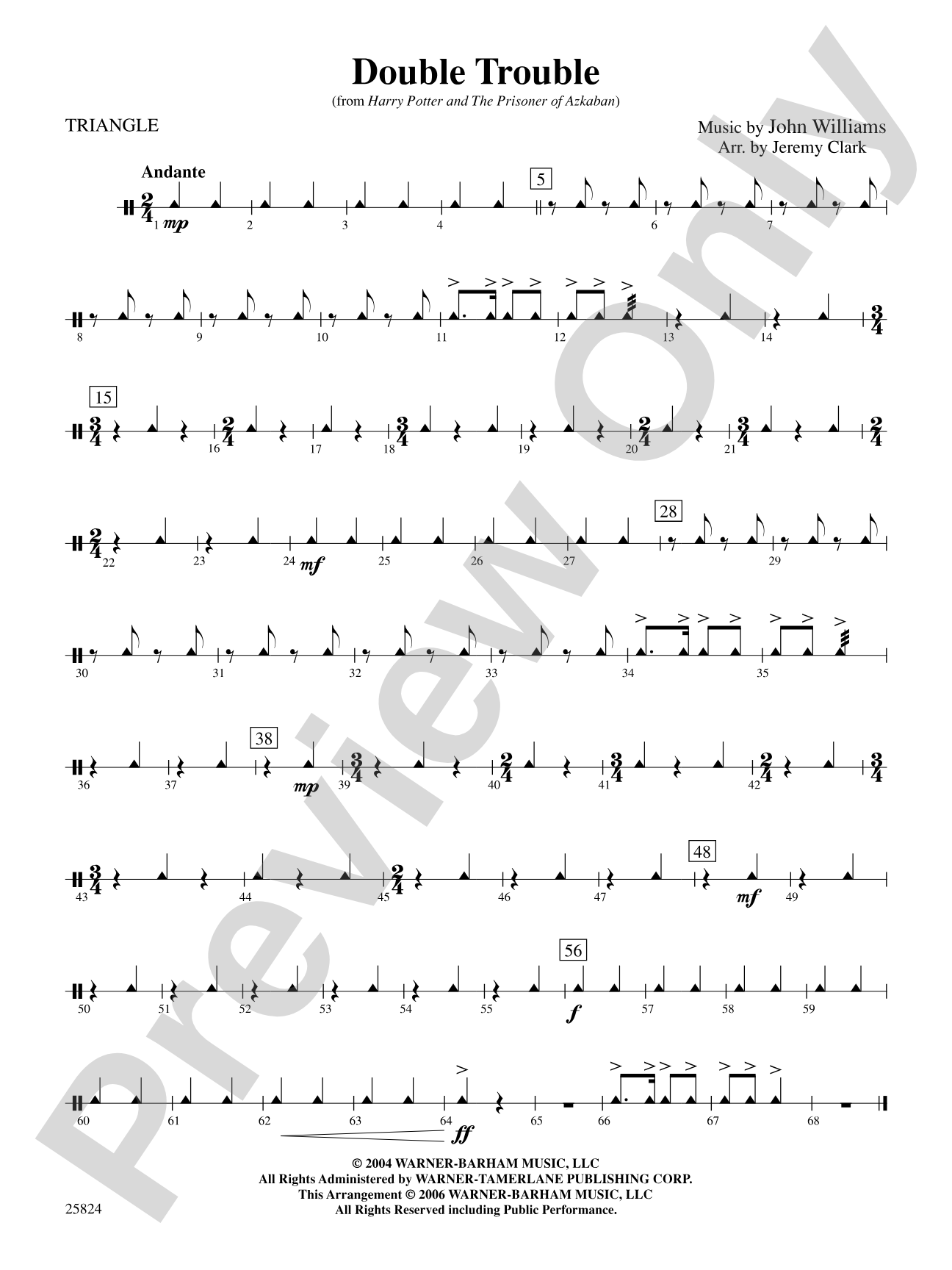
Double Trouble (from Harry Potter and the Prisoner of Azkaban): Triangle Sheet Music Preview

Double Trouble (from Harry Potter and the Prisoner of Azkaban): Triangle

By John Williams / arr. Jeremy Clark

Grade: 3.5 (Medium-Difficult)

Item: 00-PC-0001046_TR

Digital Download
$3.00
Description
Set includes conductor score and parts for glockenspiel, vibraphone, xylophone, marimba, triangle, tambourine and two bass drum/tom-toms.

Don't just read it, hear it, play along with it, and watch your students grow with it. In MakeMusic Cloud, Double Trouble (from Harry Potter and the Prisoner of Azkaban): Triangle comes alive with professional accompaniment, adjustable tempo, and built-in practice tools that turn solo practice into real progress.

Sample Audio
No sample audio found.
Sample Video
Additional Details
Series: Alfred's Pop Percussion Ensemble Series
Publisher: Alfred Music
Page Count: 18
SKU: 00-PC-0001046_TR

More about this title

About the Composer: John Williams

John Williams stands among the most prolific and celebrated film composers of all time. His career spans more than six decades, during which he has shaped the sound of cinema through iconic scores for Star Wars, Indiana Jones, Jaws, Schindler's List, and the Harry Potter series, among dozens of others. His mastery of orchestration, gift for memorable melody, and deep understanding of how music serves narrative have made him a figure of immense influence in both film and concert music.

Why we love this

Jeremy Clark's percussion arrangement captures the mischievous energy and driving rhythmic propulsion of Williams's "Double Trouble" while giving percussion students a chance to play music they recognize and love. The Grade 3.5 level keeps the writing accessible without sacrificing the sophistication of the source material, and the variety of mallet instruments ensures multiple students get to contribute something meaningful.

What to expect

Quirky and forward-charging, with the restless energy of mischief unfolding. The piece bounces and prods its way forward through syncopated rhythms and bright mallet colors, building momentum until it lands with satisfying weight. It's the sound of scheming and adventure packed into six and a half minutes of pure percussion fun.

Who it's for

Percussion ensemble directors looking for repertoire that engages intermediate students with film music they know and love. This arrangement works well for ensembles with 8 or more players and gives every percussionist a meaningful part, from the front-line melody carriers to the rhythmic foundation.

How to get the most out of it

  • Balance the glockenspiel and vibraphone lines against the deeper melodic material in the marimba and xylophone. These higher voices should sing clearly but never overpower the harmonic foundation.
  • Lock the bass drum and tom-tom parts together as a single rhythmic unit. Even slight separation between these voices will weaken the drive that makes this arrangement work.
  • Treat the triangle and tambourine as color instruments rather than timekeepers. Place them intentionally in the mix rather than playing them at a default dynamic.
  • Work on clean articulation across all mallet instruments. The syncopated passages are most effective when each strike is precise and controlled.

How to use it

Program this during Halloween concerts or October assemblies, or pair it with other Williams film music if you're building a cinema-themed concert. It also works as a showpiece for percussion ensemble alone, giving your percussion students a solo spotlight that audiences immediately connect to. Consider it a fun palate cleanser between heavier or more serious repertoire.

Skills your students will build

  • Reading and balancing multiple independent melodic lines across different mallet instruments
  • Syncopated rhythmic coordination between ensemble sections
  • Dynamic control and articulation consistency across pitched and unpitched percussion
  • Sensitivity to color and texture when performing non-essential parts (triangle, tambourine)
  • Part independence while maintaining ensemble cohesion

You May Also Like