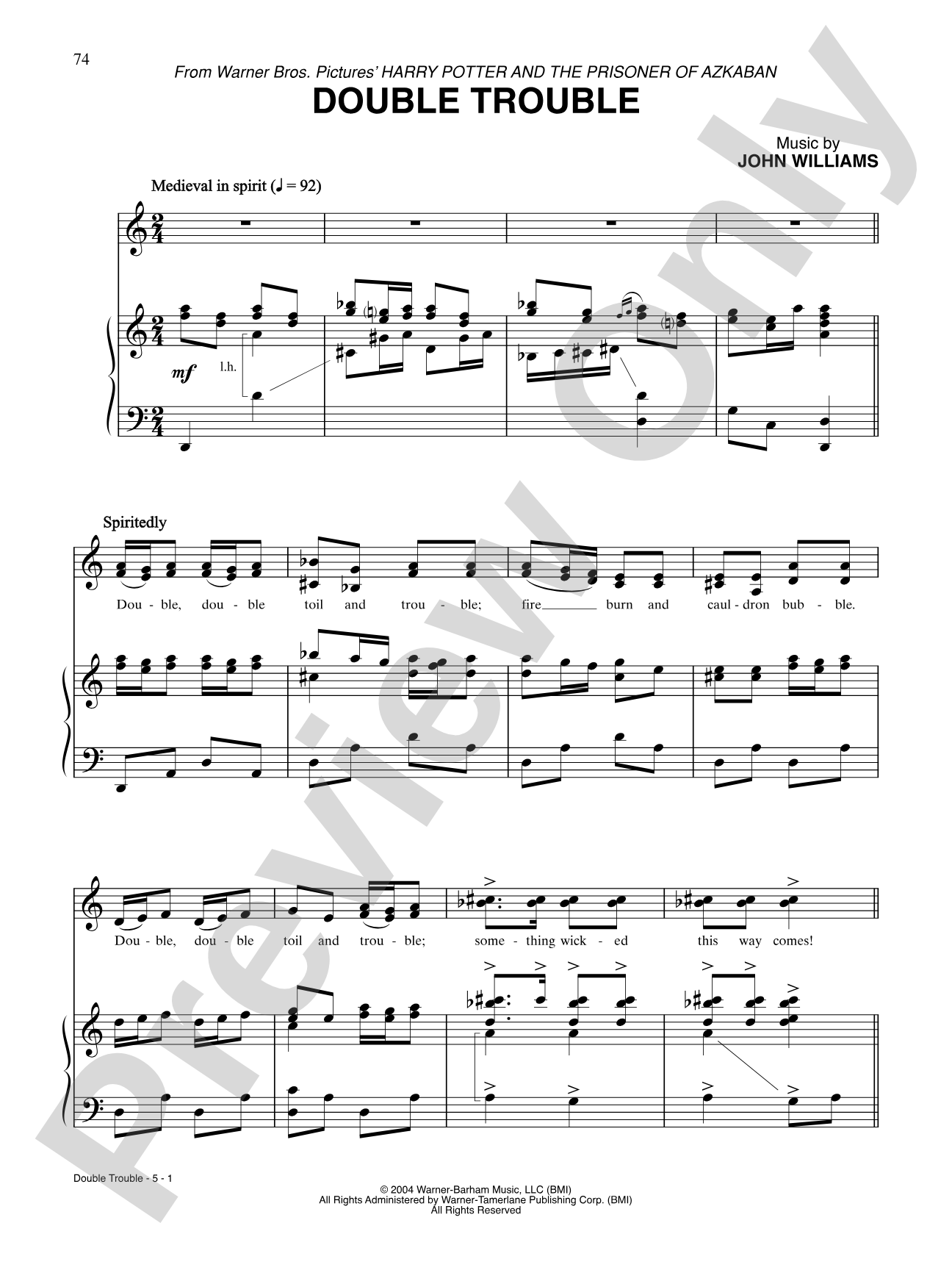
Double Trouble (from "Harry Potter and The Prisoner of Azkaban): Piano/Vocal/Chords
Item: 00-XS-0000076
Digital Download
$3.99
Pickup currently not available
Description
43 titles: Across the Stars (Star Wars®: Episode II Attack of the Clones) * Al Otro Lado del Rio (The Motorcycle Diaries) * Battle of the Heroes (Star Wars®: Episode III Revenge of the Sith) * Believer (Be Cool) * Gollum's Song (The Lord of the Rings: The Two Towers) * Hero (Spider-Man) * The Notebook (Main Theme) * Mystic River Theme (Mystic River) * Star Wars (Main Theme) * Themes from Batman Forever * Window to the Past (Harry Potter and the Prisoner of Azkaban) ,and many more.
Discover MakeMusic Cloud: thousands of interactive titles your students can play along with today.
John Williams stands as one of the most prolific and celebrated film composers of our time, with a career spanning over six decades. His mastery of orchestral writing and gift for melody have made him synonymous with some of cinema's most iconic scores, from Star Wars to Schindler's List, earning him five Academy Awards and countless Grammy nominations.
Why we love this
This collection gives pianists and singers direct access to Williams' most recognizable themes in accessible arrangements. The mix of blockbuster franchises (Star Wars, Harry Potter, Spider-Man) alongside prestige drama scores creates a folio that works equally well for recitals, pops concerts, or simply reconnecting students with music that moved them on screen.
What to expect
These themes carry the emotional weight of their film contexts into the intimate setting of piano and voice. Whether you're exploring the dark mystery of Azkaban or the sweeping grandeur of a galaxy far away, each piece retains the cinematic storytelling that made it memorable.
Who it's for
Pianists looking to build a recital program of universally loved film music will find both familiar warhorses and less obvious choices here. Singers preparing audition material or concert programming will appreciate arrangements that preserve Williams' harmonic language while keeping accompaniments playable.
How to get the most out of it
Balance the vocal line against the piano accompaniment rather than doubling it; Williams writes countermelodies and harmonic color in the left hand that deserve clarity.
Study a recording of each theme before you begin. Understanding the orchestral context will inform your phrasing, rubato, and overall shape in the reduction.
Lean into the rhythmic precision of themes like 'Battle of the Heroes' and 'Star Wars (Main Theme)'; these work best when the pulse feels inevitable rather than rushed.
Let the harmonic movement guide your dynamics in slower passages like 'Window to the Past'; Williams uses chromaticism to create tension that a single straight dynamic line will obscure.
How to use it
A single theme from this collection can anchor a pops or film music concert; the breadth of the folio makes it easy to pair complementary titles or build an entire program around Williams. These arrangements also work well as encore material or as bridges between classical and contemporary repertoire in mixed-genre recitals.
Skills your students will build
Reading and performing complex harmonic progressions from film scores
Coordinating vocal phrasing with a sophisticated piano accompaniment
Interpreting rubato and expression in melodic material derived from orchestral contexts
Managing the balance between lyrical singing and colorful keyboard figuration
You May Also Like
Scan to Complete Your Purchase
Use your phone's camera to scan the code below
You'll log in on your phone and the order will be added to your account