Double Trouble: Easy Piano Digital Sheet Music

Double Trouble: Easy Piano Digital Sheet Music

John Williams

Item: 00-PS-0003772

Digital Download
$3.99
Description

Double Trouble: Easy Piano Digital Sheet Music isn't in MakeMusic Cloud just yet...but it could be. Let us know you'd like to see it, and you'll help shape what comes next. In the meantime, start a free trial and dive into thousands of interactive titles your students can play along with today.

Sample Audio
No sample audio found.
Sample Video
Additional Details
SKU: 00-PS-0003772

More about this title

Why we love this

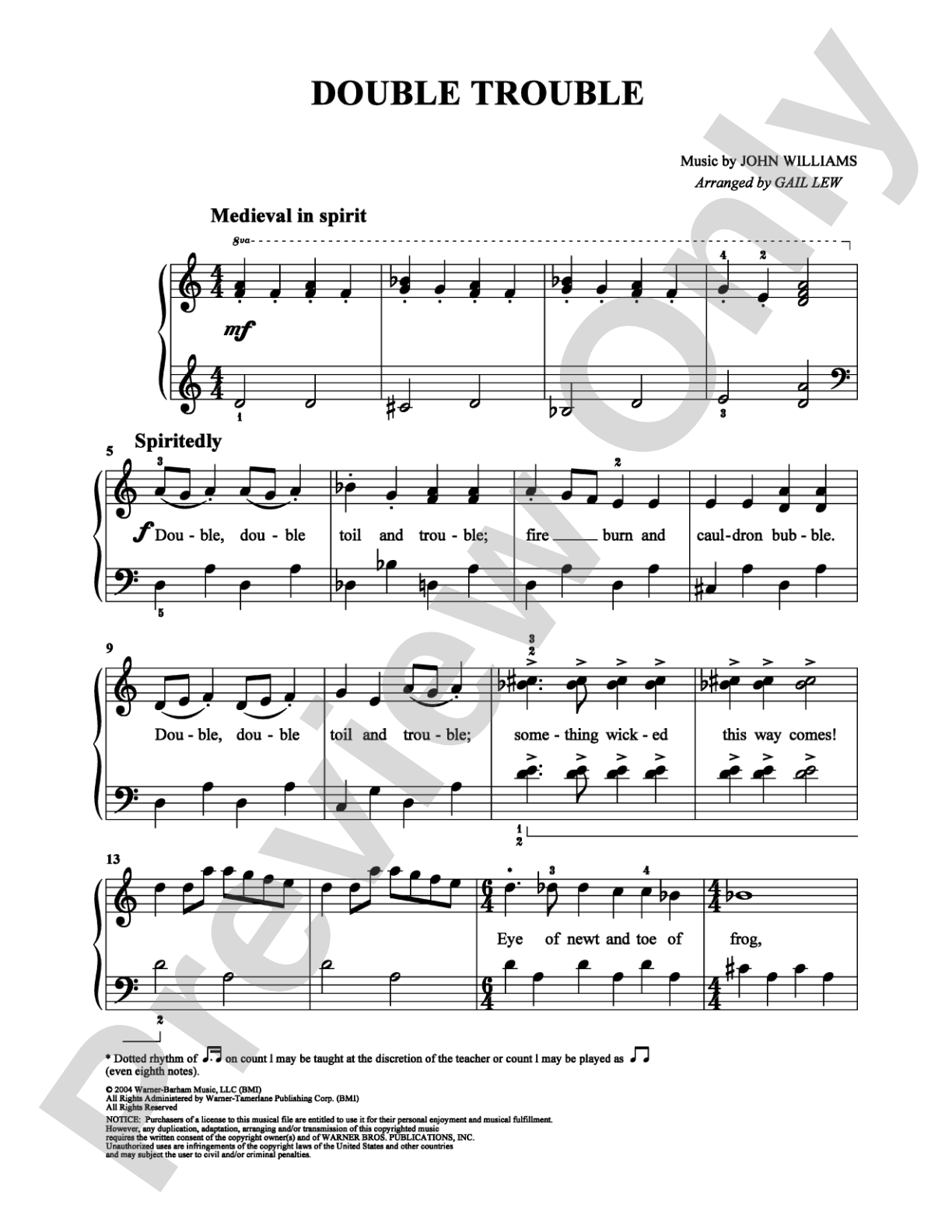
The title alone signals fun, and the piece delivers on that promise with accessible writing that doesn't talk down to young pianists. It's the kind of straightforward, energetic piece that students actually want to practice because it sounds good from the first run-through.

What to expect

Playful and light on its feet, with an energy that feels almost mischievous. The double aspect of the title likely plays out in the writing itself, creating moments of musical dialogue or conversation between the hands.

Who it's for

Students in their first year or two of piano study will find this piece accessible and rewarding. The title suggests playful character work, making it engaging for young learners building foundational technique.

How to get the most out of it

  • Keep the tempo steady and confident; these kinds of pieces live or die by groove and rhythmic clarity.
  • Listen for any moments where the hands trade material or play in unison, and make sure those transitions are clean and decisive.
  • Resist the urge to slow down if there are technical passages; light and bouncy always beats careful and cautious here.

How to use it

Schedule this for an informal recital or studio class where the focus is on building confidence and showing off growing technical skills. It's also ideal for a casual performance at a community event where accessibility and entertainment value matter more than difficulty.

Skills your students will build

  • Hand independence with contrasting rhythmic patterns
  • Reading and executing steady tempo
  • Articulation control (likely staccato and legato interplay)
  • Coordination between melody and accompaniment figures

You May Also Like