
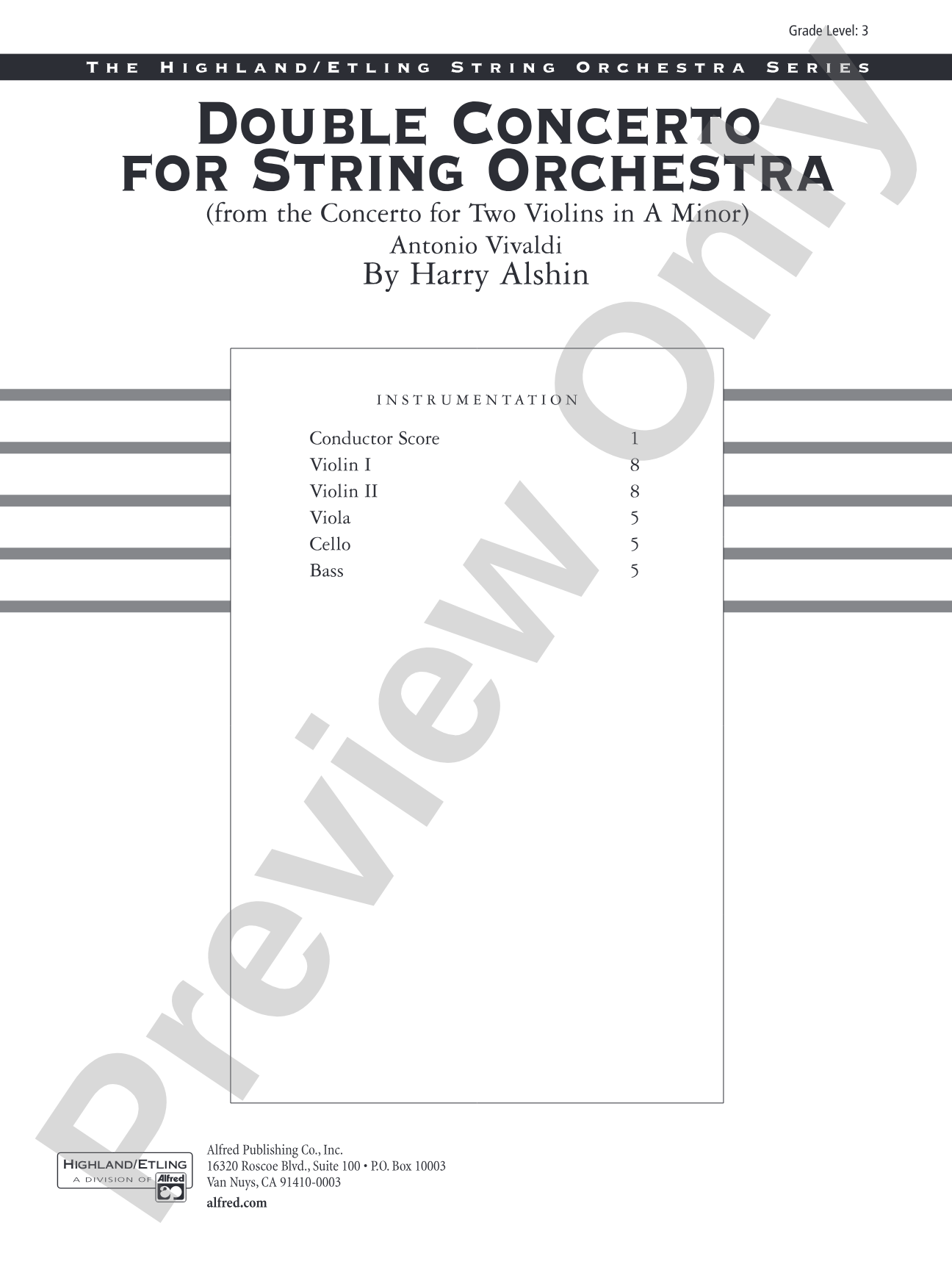
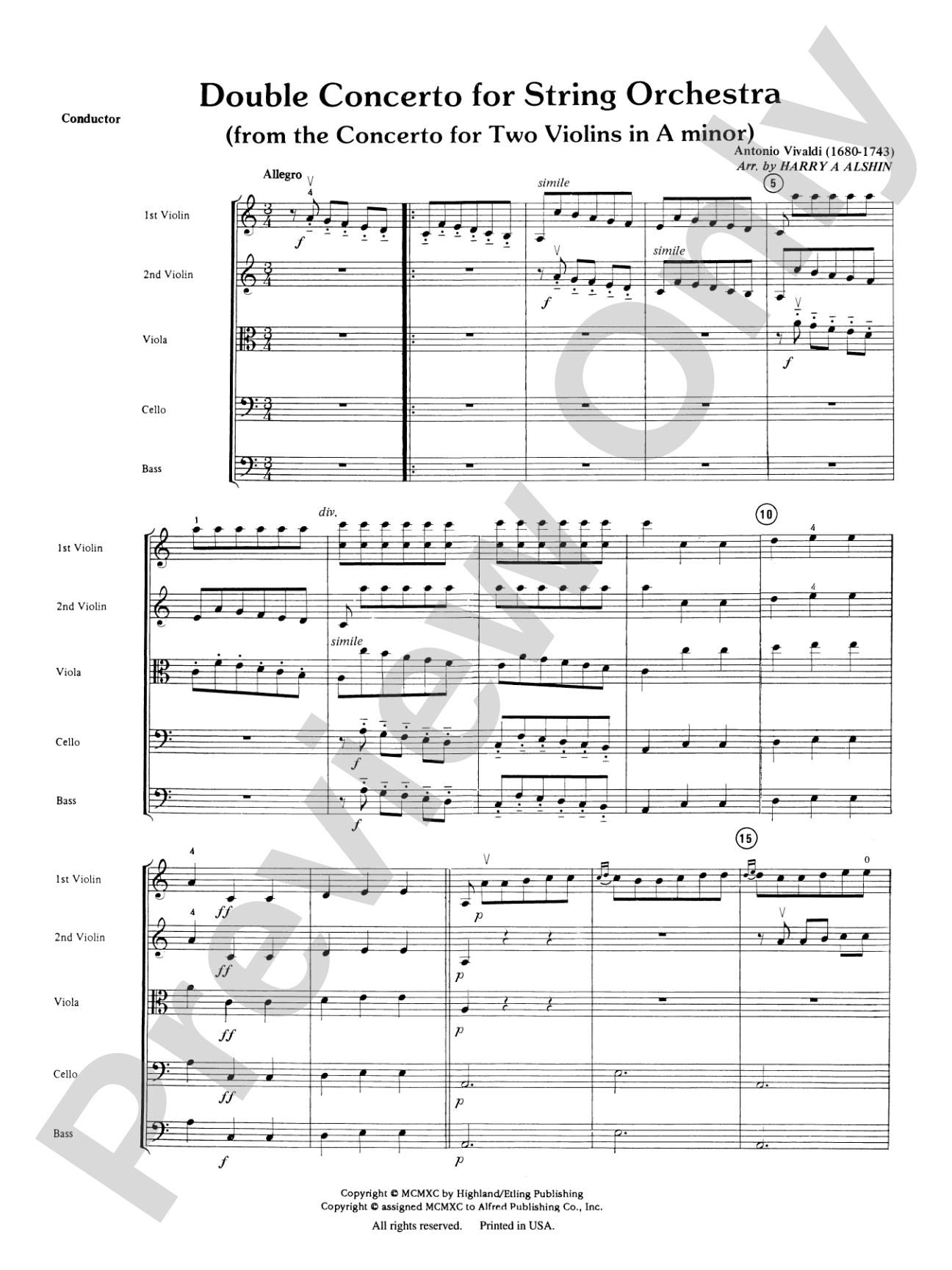
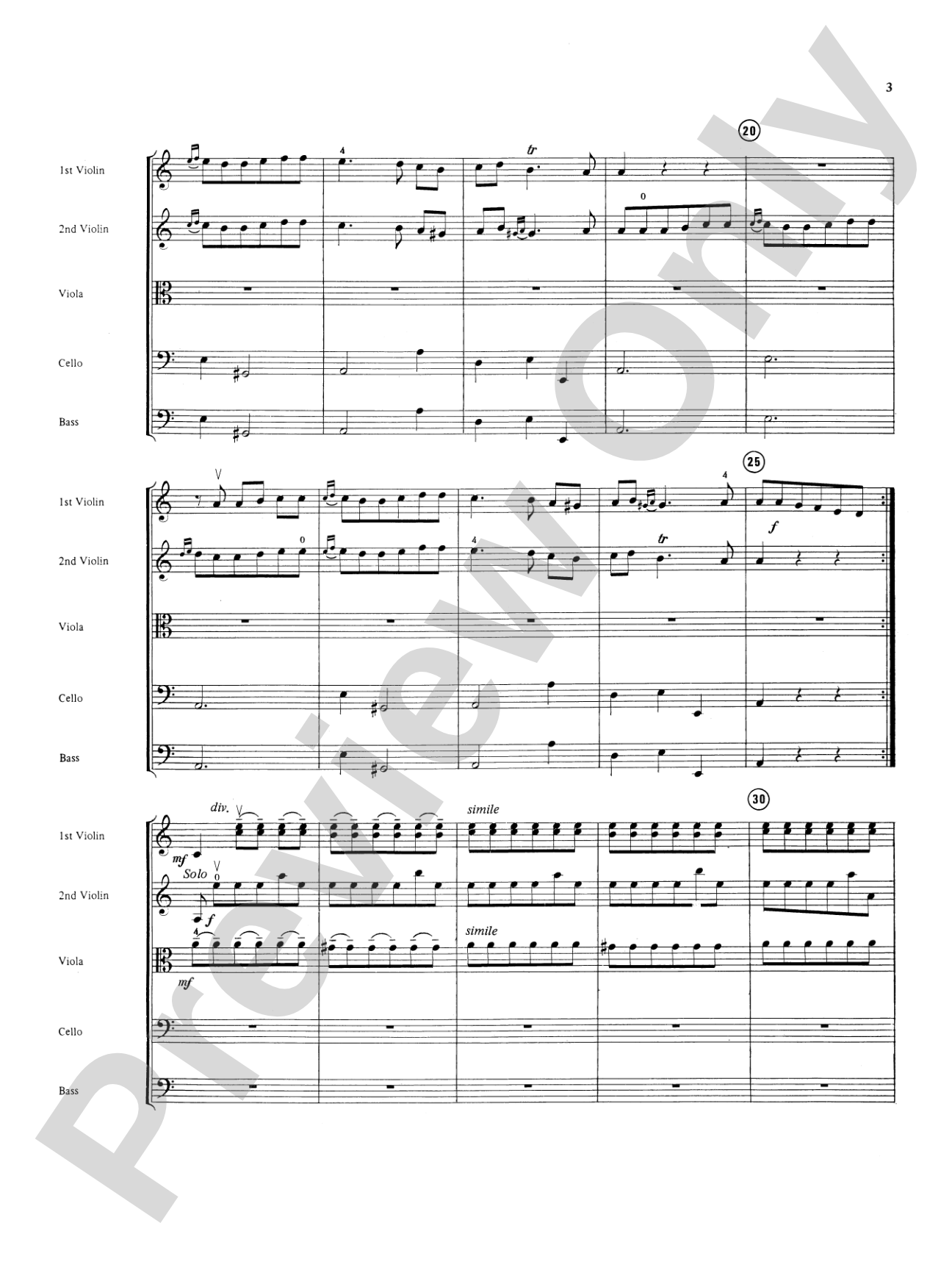
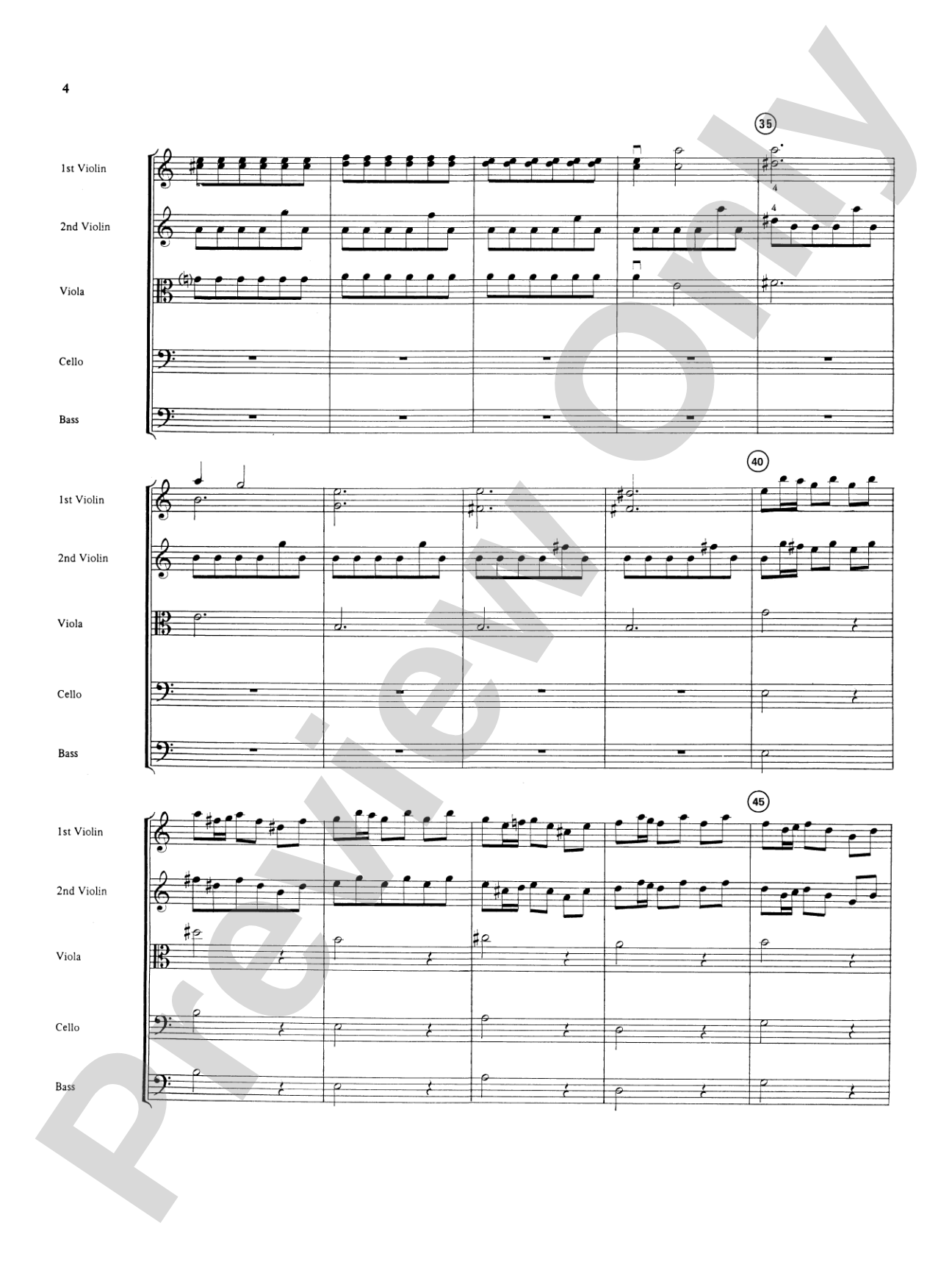
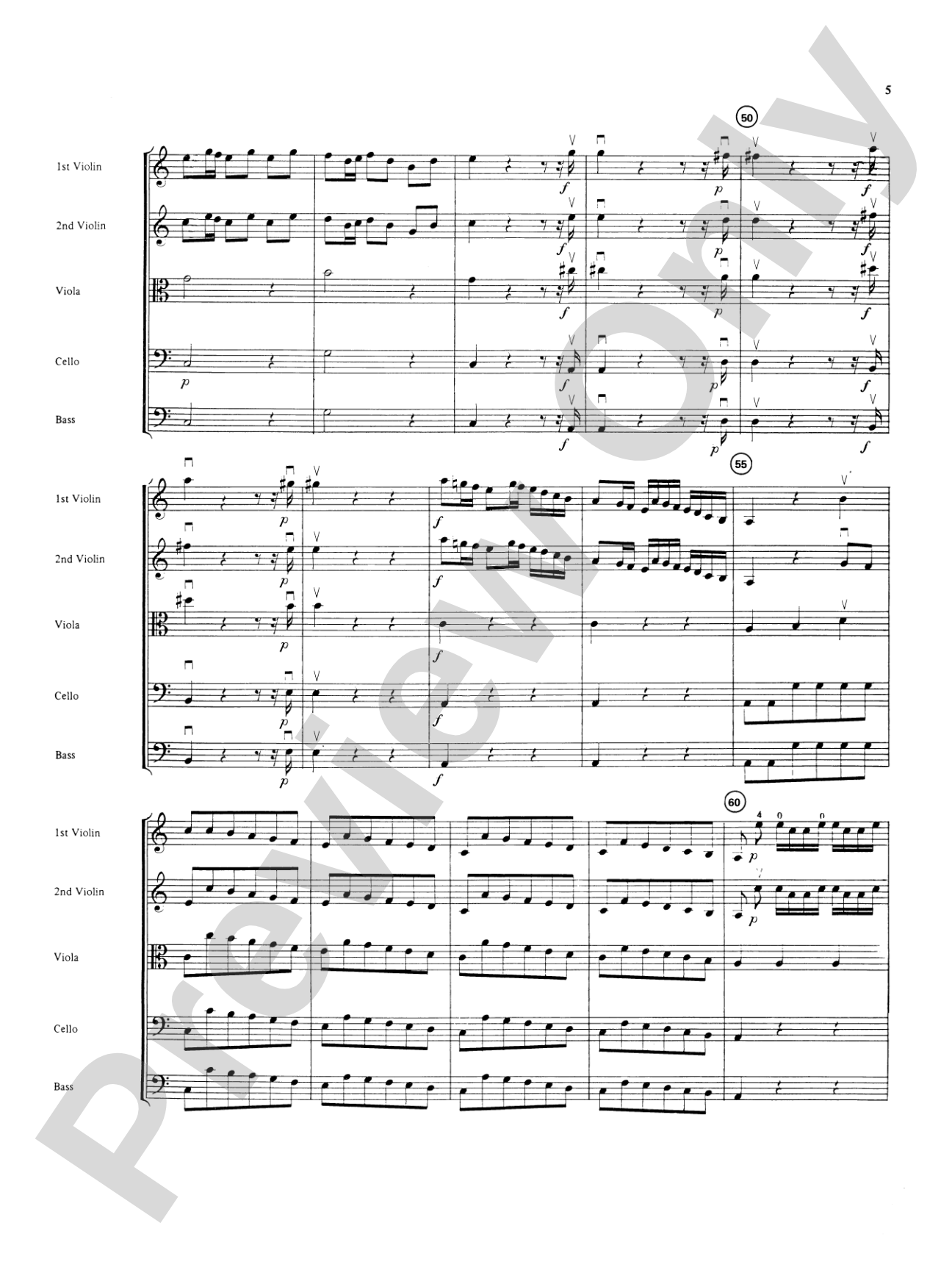
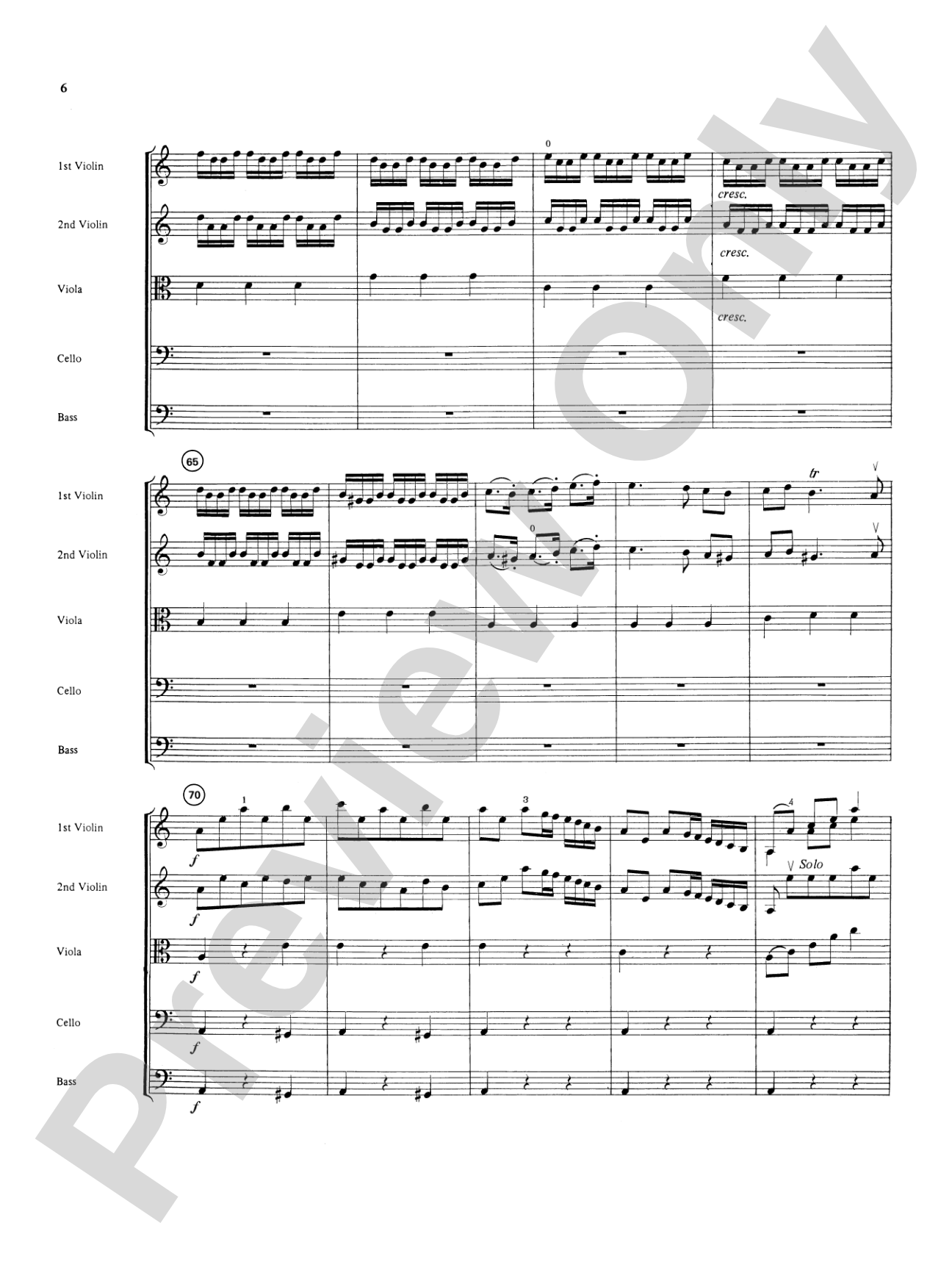
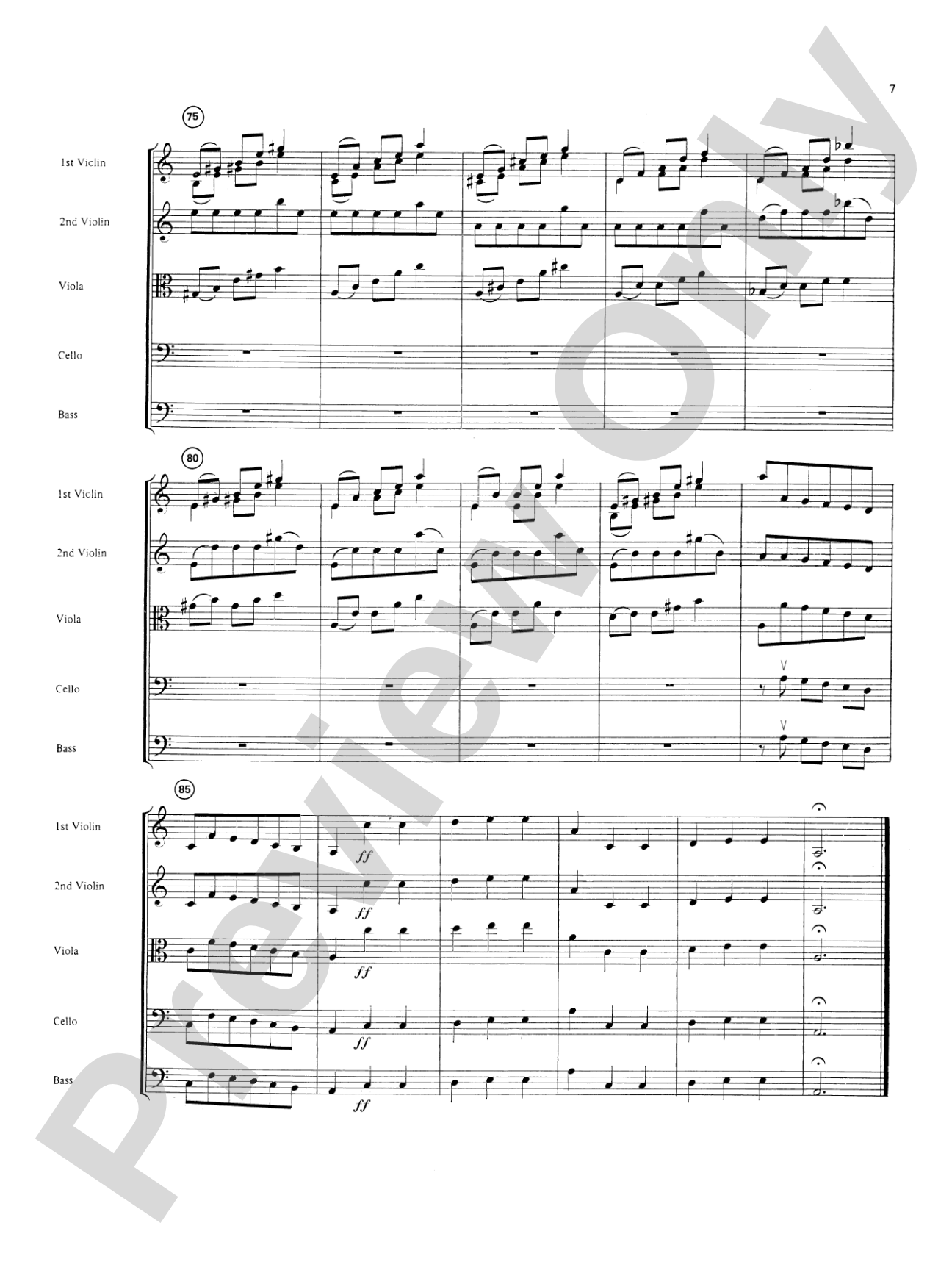


Double Concerto for String Orchestra from Concerto for Two Violins in A Minor: Score
(from the Concerto for Two Violins in A Minor)
By Antonio Vivaldi / arr. Harry Alshin
Grade: 3
Item: 00-PR-0000145
$9.00
Pickup currently not available
Description


Don't just read it, hear it, play along with it, and watch your students grow with it. In MakeMusic Cloud, Double Concerto for String Orchestra from Concerto for Two Violins in A Minor: Score comes alive with professional accompaniment, adjustable tempo, and built-in practice tools that turn solo practice into real progress.
Open in the Player
Jump straight in and assign it today.
Start Your Free Trial
Open this title and explore the full library in minutes.
Sample Audio
No sample audio found.
Sample Video
No sample videos found.
Additional Details
Series:
Highland/Etling String Orchestra
Publisher:
Alfred Music
Page Count:
104
SKU:
00-PR-0000145
More about this title
About the Composer: Antonio Vivaldi
Antonio Vivaldi (1678-1741) was a Venetian priest and virtuoso violinist whose output shaped the concerto grosso and solo concerto into the forms that dominated the eighteenth century. His inventive use of ritornello structure, vivid orchestration, and memorable melodic writing made him one of the most performed composers of his era and one of the most recorded today. Vivaldi's mastery of the violin informed every note he wrote for strings; his concertos remain touchstones for understanding Baroque instrumental technique and style.
Vivaldi composed roughly 500 concertos across multiple genres and instrumentation. His two-violin concertos occupy a special place in the string repertoire, balancing technical display with lyrical depth. These works influenced countless later composers and remain essential repertoire for understanding how the concerto evolved from church music into the concert hall.
Why we love this
Harry Alshin's arrangement scales one of Vivaldi's most compelling two-violin concertos into a work your string orchestra can actually perform at Grade 3, without sacrificing the integrity of the original material. The alternation between full ensemble and solo violin passages gives every player a moment to shine, and the harmonic richness typical of Vivaldi sounds substantial on a full string section. This is the kind of masterwork arrangement that builds both ensemble sound and musical literacy.
What to expect
Elegant restraint meets moments of genuine drama. The opening ritornello has the stately clarity of Venetian civic music, while the solo violin passages weave intricate, singing lines that feel both ornamental and deeply expressive. The minor key lends a reflective, sometimes yearning quality that persists even when the ensemble swells.
Who it's for
String orchestras at the Grade 3 level ready to tackle a recognized masterwork with real structural sophistication. The arrangement works for ensembles with competent but not virtuosic players; it assumes solid ensemble skills and basic reading fluency across all four parts.
How to get the most out of it
- Shape the opening ritornello with clear articulation in the viola and cello parts; these lines anchor the harmonic foundation and need rhythmic precision to support the violin soloists above.
- Balance the two solo violins carefully in exposed passages; mark dynamic shadings in both parts so neither disappears when they play in thirds or sixths.
- Keep the continuo-style inner voices moving with a gentle lift; Baroque phrasing often benefits from slight articulation in the harmonic support rather than a sustained, modern tone.
- Mark all repeat structures clearly with your ensemble and rehearse the transitions between ritornello and solo sections until they feel inevitable, not abrupt.
How to use it
Pair this with other Baroque concertos or lightweight Classical symphonies to build a program around the ritornello principle and the evolution of the concerto. It also sits comfortably alongside Renaissance vocal music or a modern work that engages with Baroque forms, giving audiences a through-line across centuries.
Skills your students will build
- Reading and executing ritornello structure
- Balance between soloists and ensemble in concerto texture
- Baroque articulation and phrasing conventions
- Playing exposed solo passages within an ensemble context
- Reading multiple violin parts simultaneously