
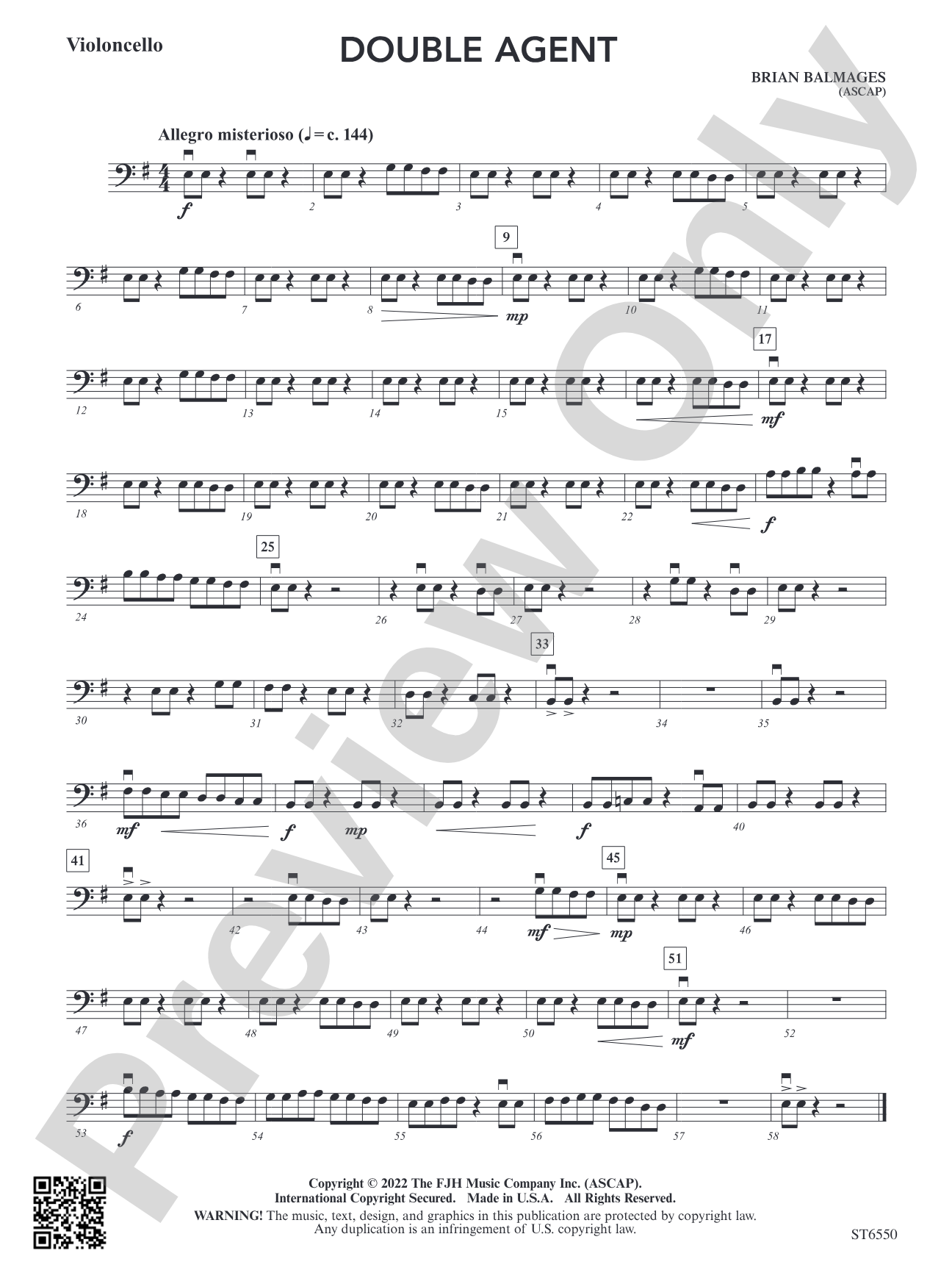

Double Agent: Violoncello
By Brian Balmages
Grade: 1.5
Item: 98-PC-DST6550_VC1
$7.00
Pickup currently not available
Description
An imagined soundtrack to a high-stakes game of espionage... The music drifts between episodes of intense dissonance and brief moments of calm, allowing you to catch your breath before the chase continues once again. Relying heavily on rhythmic pulse and reinforcing rhythmic independence, this engaging work also offers plenty of opportunities to showcase dynamic contrast and really bring the excitement to a new level!


Don't just read it, hear it, play along with it, and watch your students grow with it. In MakeMusic Cloud, Double Agent: Violoncello comes alive with professional accompaniment, adjustable tempo, and built-in practice tools that turn solo practice into real progress.
Open in the Player
Jump straight in and assign it today.
Start Your Free Trial
Open this title and explore the full library in minutes.
Sample Audio
1
Audio File
--:--
0:00
0:00
Sample Video
Additional Details
Series:
FJH Beginning Strings
Publisher:
The FJH Music Company, Inc.
SKU:
98-PC-DST6550_VC1
More about this title
About the Composer: Brian Balmages

Brian Balmages has established himself as a prolific voice in orchestral, band, and chamber music, with his works performed by ensembles ranging from professional symphony orchestras to school groups across venues including Carnegie Hall, the Kennedy Center, and the Sydney Opera House. His honors include the A. Austin Harding Award from the American School Band Directors Association, the 2020 NBA William D. Revelli Composition Contest, and election to the American Bandmasters Association. He holds the inaugural James Madison University Distinguished Alumni Award and was commissioned by the University of Miami to compose for the inauguration of the institution's 6th president.
Beyond his work as a composer, Balmages maintains an active conducting schedule with all-state and regional ensembles, university groups, and professional orchestras worldwide. He has guest conducted at the Midwest Clinic, Western International Band Clinic, and numerous state conferences. Currently serving as Director of MakeMusic Publications and Digital Education for Alfred and MakeMusic, his music continues to engage young musicians and experienced professionals alike.
Why we love this
This score captures the theatrical appeal young orchestras crave without sacrificing musical substance. The interplay between dissonance and calm creates natural dramatic arcs that keep players engaged, while the rhythmic demands build coordination and independence across the section without overwhelming Grade 1.5 ensembles. It's the kind of piece that energizes a concert program and reminds students why they love playing together.
What to expect
Cinematic and propulsive, with moments of genuine unease offset by brief islands of calm. The music pulses with urgency and forward motion, then pauses just long enough for you to wonder what comes next before the action resumes. It feels modern without being cold, and dramatic without losing sight of the ensemble's developing capabilities.
Who it's for
String orchestras at the Grade 1.5 level looking for a contest or festival piece with genuine dramatic appeal and age-appropriate technical demands. The score rewards ensembles that have begun developing rhythmic coordination and basic dynamic control, making it ideal for middle school or early high school programs seeking to stretch beyond standard repertoire.
How to get the most out of it
- Build tension through precise rhythmic unison in the intense passages; slight hesitation or dragging will diffuse the espionage narrative Balmages establishes.
- Shape the calm moments deliberately, treating them as genuine relief rather than a drop in energy. This contrast makes the return to chaos far more impactful.
- Lock the dynamic range early in rehearsal. Young players often retreat inward during dissonant sections; encourage them to commit fully to marked dynamics so the journey from tense to tranquil reads clearly.
- Emphasize rhythmic independence between sections in the pulse-driven passages. Mark individual part entrances in score study so no one defaults to doubling nearby lines.
How to use it
Position this as a centerpiece in a festival or competition program where a novelty piece serves as the energetic anchor. It pairs well alongside a lyrical piece and a standard classical work, creating variety in tone and texture. The approachable difficulty level means even younger groups can deliver a confident, exciting performance that stands out in adjudication.
Skills your students will build
- Rhythmic independence between string sections
- Sustaining rhythmic pulse under changing harmonic tension
- Dynamic contrast and shaping across rapid emotional shifts
- Reading and executing dissonant harmonic language
- Ensemble cohesion during complex rhythmic passages