
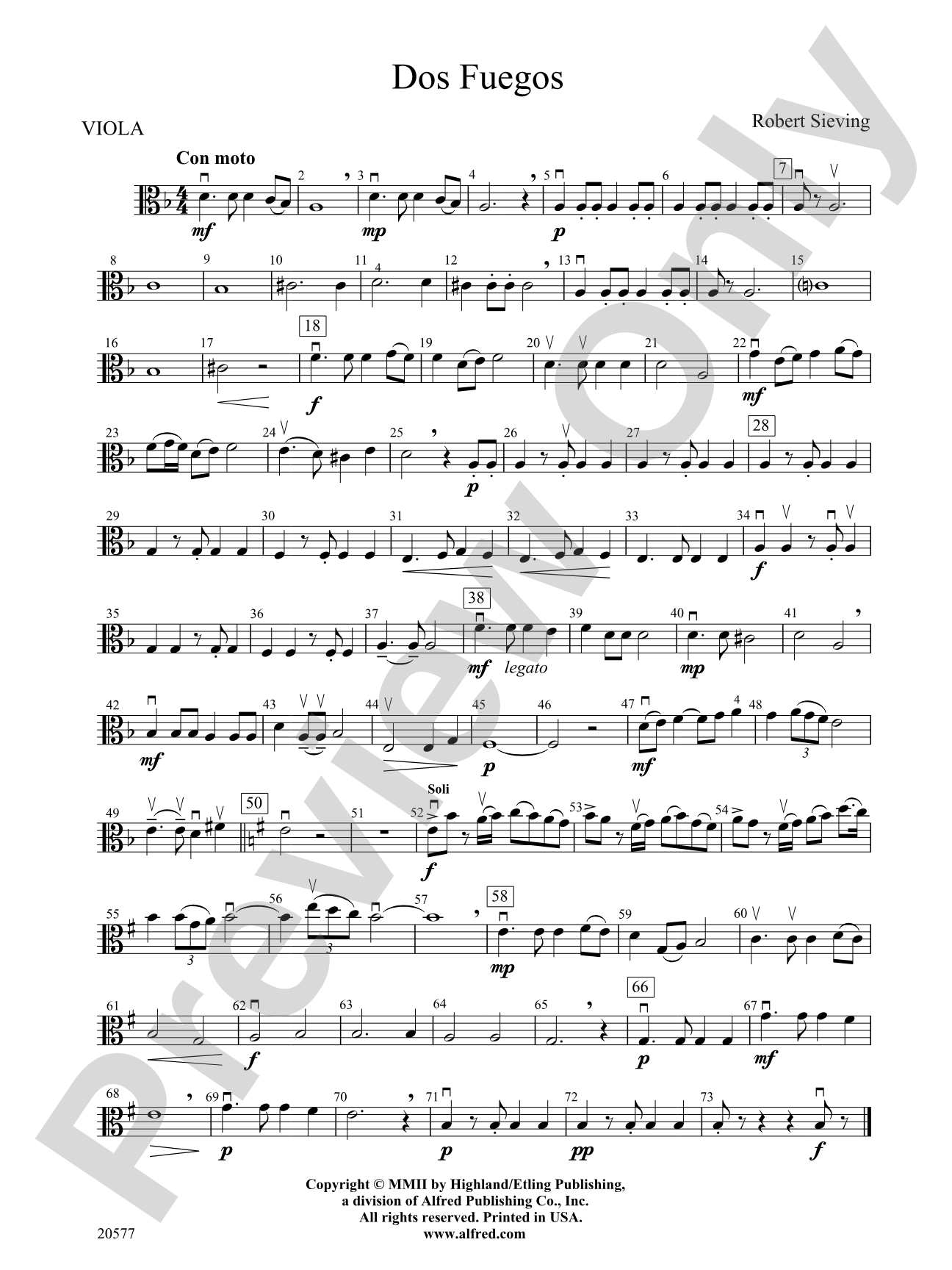

Dos Fuegos: Viola
By Robert Sieving
Grade: 2
Item: 00-PC-0000413_VA1
$5.99
Pickup currently not available
Description
Dos Fuegos will light a fire under your orchestra! Written in a minor key and rhythmically compelling, this distinctly Spanish-sounding work will entrance your students. Great for your fall concert. This title is available in MakeMusic Cloud.


Don't just read it, hear it, play along with it, and watch your students grow with it. In MakeMusic Cloud, Dos Fuegos: Viola comes alive with professional accompaniment, adjustable tempo, and built-in practice tools that turn solo practice into real progress.
Open in the Player
Jump straight in and assign it today.
Start Your Free Trial
Open this title and explore the full library in minutes.
Sample Audio
1
Audio File
--:--
0:00
0:00
Sample Video
Additional Details
Series:
Highland/Etling String Orchestra
Publisher:
Alfred Music
Page Count:
62
SKU:
00-PC-0000413_VA1
More about this title
About the Composer: Robert Sieving

Robert Sieving has established himself as a prolific composer and arranger across multiple genres and ensembles. Since the 1970s, he has created well over 100 published works for string orchestras and choirs, earning recognition from major publishers and a reputation for writing idiomatically for each ensemble he serves. His output spans sacred and secular literature for choirs of all sizes alongside original string compositions that balance accessibility with musical substance.
As a member of both the American Composers Forum and the American Choral Directors Association, Sieving has remained active in the professional music community while based in the Minneapolis area. His body of work demonstrates consistent skill in writing for young and intermediate musicians without sacrificing musical integrity.
Why we love this
Sieving captures authentic Spanish flavor without sounding like a pastiche, grounding the work in genuine rhythmic vitality and harmonic color that Grade 2 orchestras can execute effectively. The minor key and driving rhythmic energy create a piece that compels students to engage with the material rather than simply play through notes. Fall programming often needs work with character and style that isn't folk-song arrangements, and this delivers exactly that.
What to expect
The minor tonality and rhythmic propulsion create an energy that feels urgent and alive without abandoning lyricism. Spanish musical colors emerge naturally through the melodic shapes and harmonic movement, making the piece feel both contemporary in its rhythmic appeal and rooted in a specific musical tradition. Students will recognize the stylistic character immediately and feel the forward motion that makes rehearsal rewarding.
Who it's for
String orchestras preparing fall concert programming that balances accessibility with genuine musical substance. This works equally well for orchestras seeking festival or contest repertoire at Grade 2 level, where stylistic variety strengthens both student engagement and audience experience.
How to get the most out of it
- Establish the rhythmic pulse as a collective heartbeat before adding melodic refinement. This piece lives in its rhythmic precision, so lock the ensemble together on the underlying grooves before polishing articulation or balance.
- Shape phrases within the Spanish idiom by letting the minor key create natural contours. Avoid conducting this with bright, major-key energy; the darker harmonic landscape requires a different emotional trajectory from your students.
- Feature your strongest players on the primary melodies while building confidence in the section work that carries the accompaniment. The writing distributes interest across the ensemble, which rewards careful part balance.
How to use it
Open a fall concert with Dos Fuegos to establish energy and sophistication, setting a tone that says your program will venture beyond standard repertoire. Pair it with contrasting material such as a ballad or classical arrangement to showcase your orchestra's range, or use it as the anchor work in a thematic concert exploring Latin and Spanish musical influences.
Skills your students will build
- Playing with consistent rhythmic precision in repeated rhythmic figures
- Recognizing and performing Spanish/Latin stylistic characteristics (melodic contours, harmonic color, rhythmic emphasis)
- Maintaining minor key tonality with clarity and intention rather than dimness
- Balancing melodic interest across multiple string parts without sacrificing ensemble cohesion