
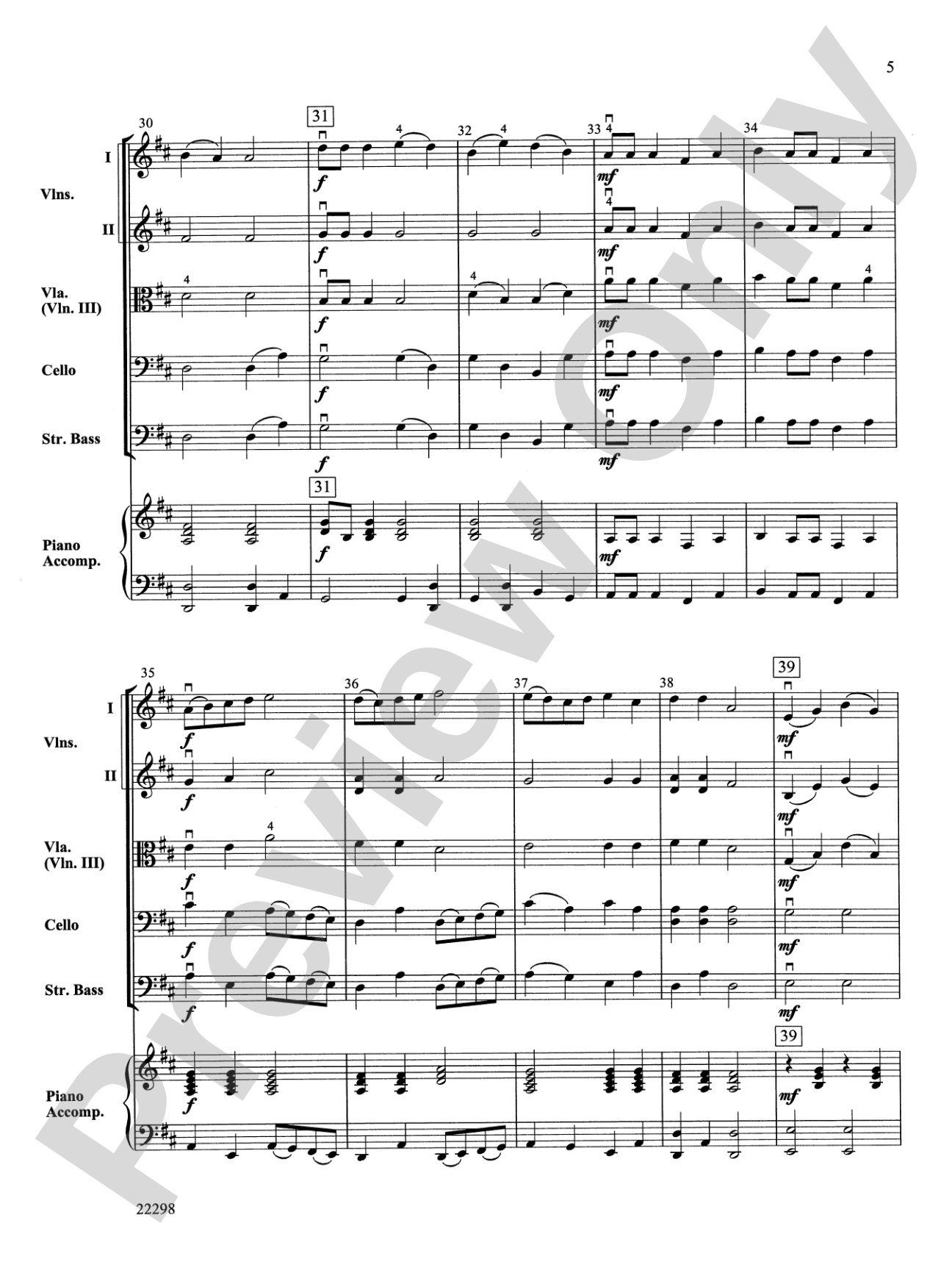
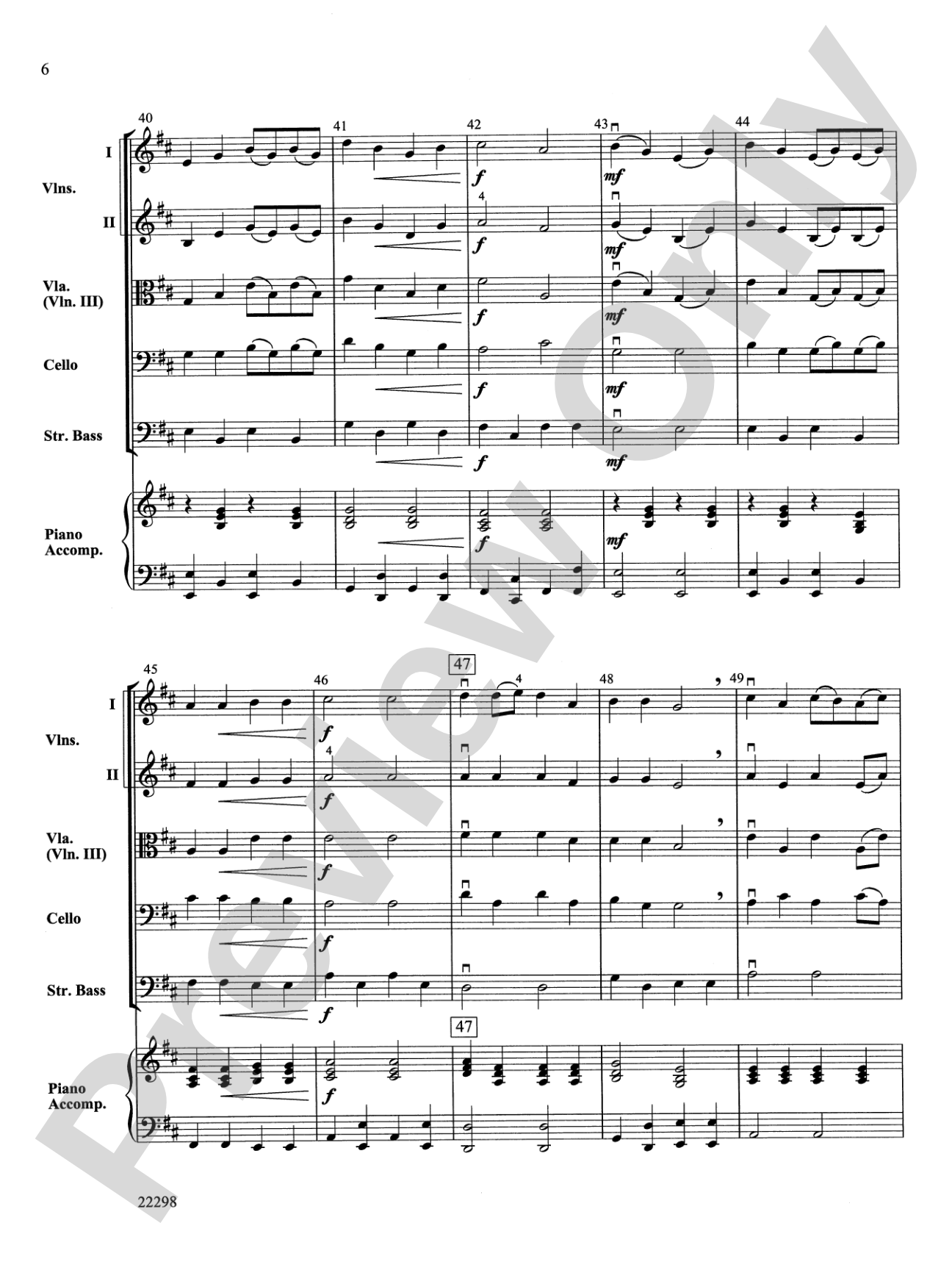
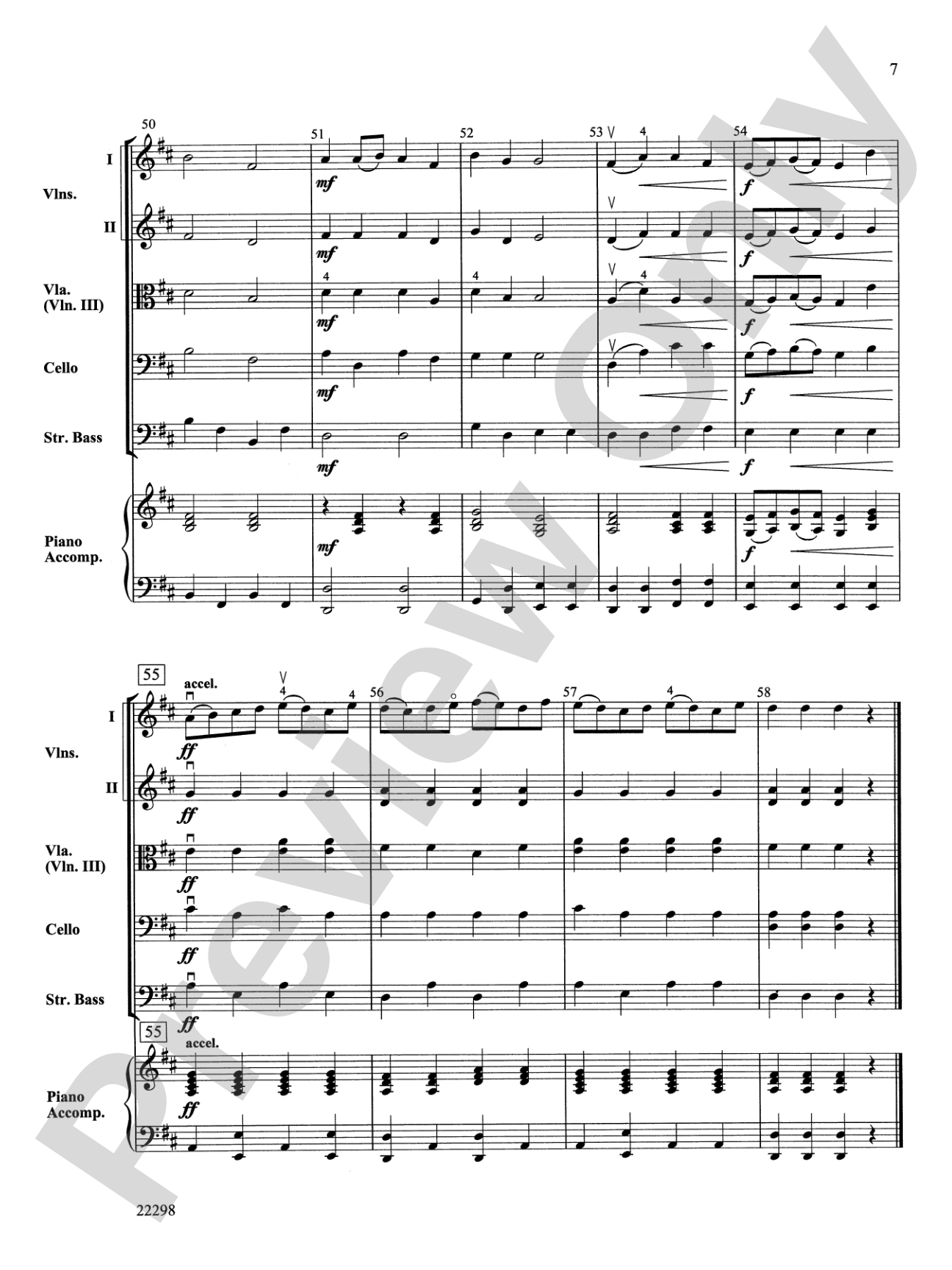


Dorian Parade: String Orchestra Conductor Score & Parts
By Edmund J. Siennicki
Grade: 1.5
Item: 00-PK-0000555

$40.00
Pickup currently not available
Buy Extra Parts (Digital PDF Download)
| Product | Price | Quantity |
|---|---|---|
| Dorian Parade: Score | $6.00 | |
| Dorian Parade: 1st Violin | $5.99 | |
| Dorian Parade: 2nd Violin | $5.99 | |
| Dorian Parade: 3rd Violin (Viola [TC]) | $5.99 | |
| Dorian Parade: Viola | $5.99 | |
| Dorian Parade: Cello | $5.99 | |
| Dorian Parade: String Bass | $5.99 | |
| Dorian Parade: Piano Accompaniment | $5.99 |
Parts Added to Cart!
Related Items
Dorian Parade: String Orchestra Conductor Score |
$6.00
|
View |
Description
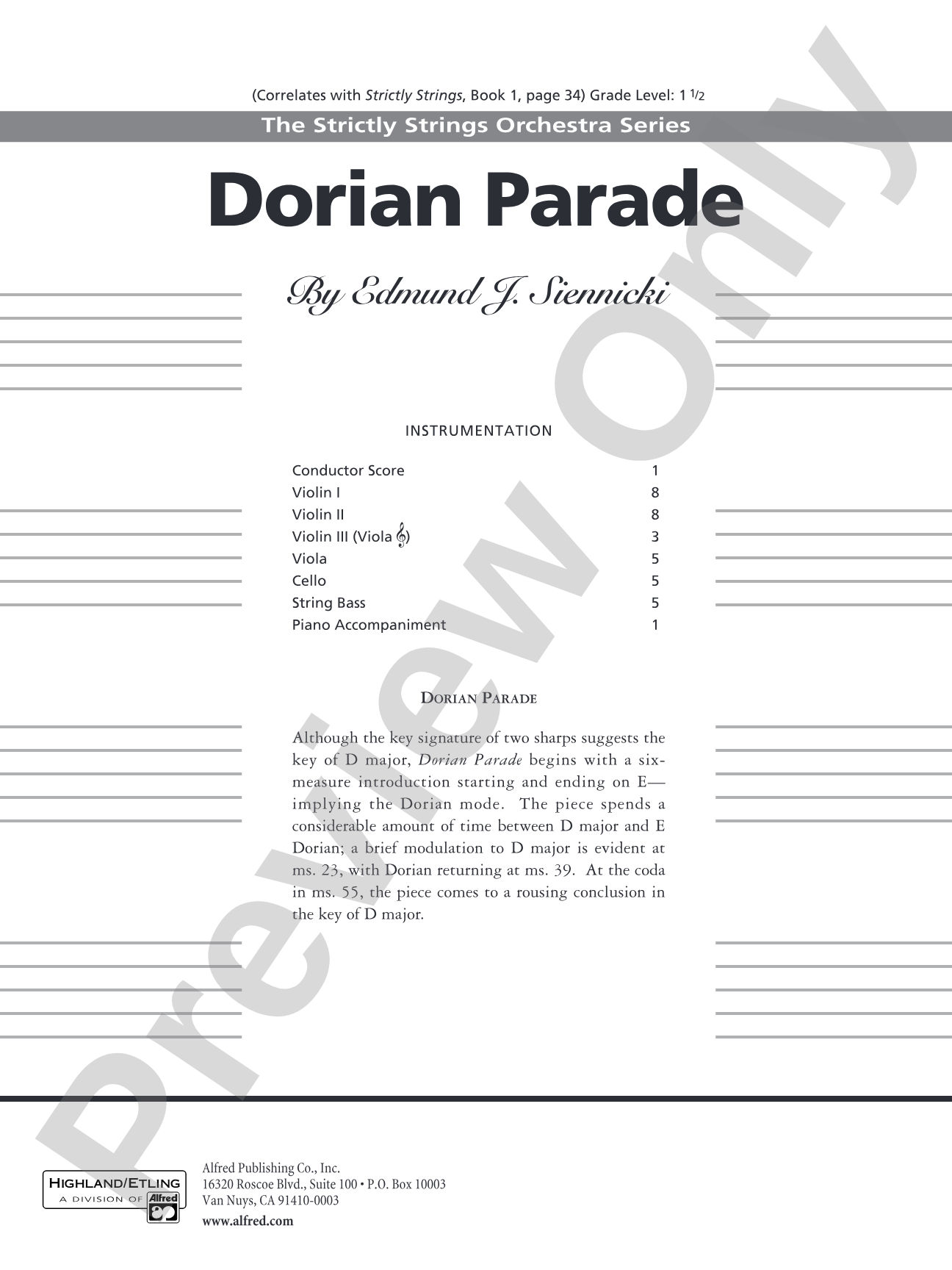
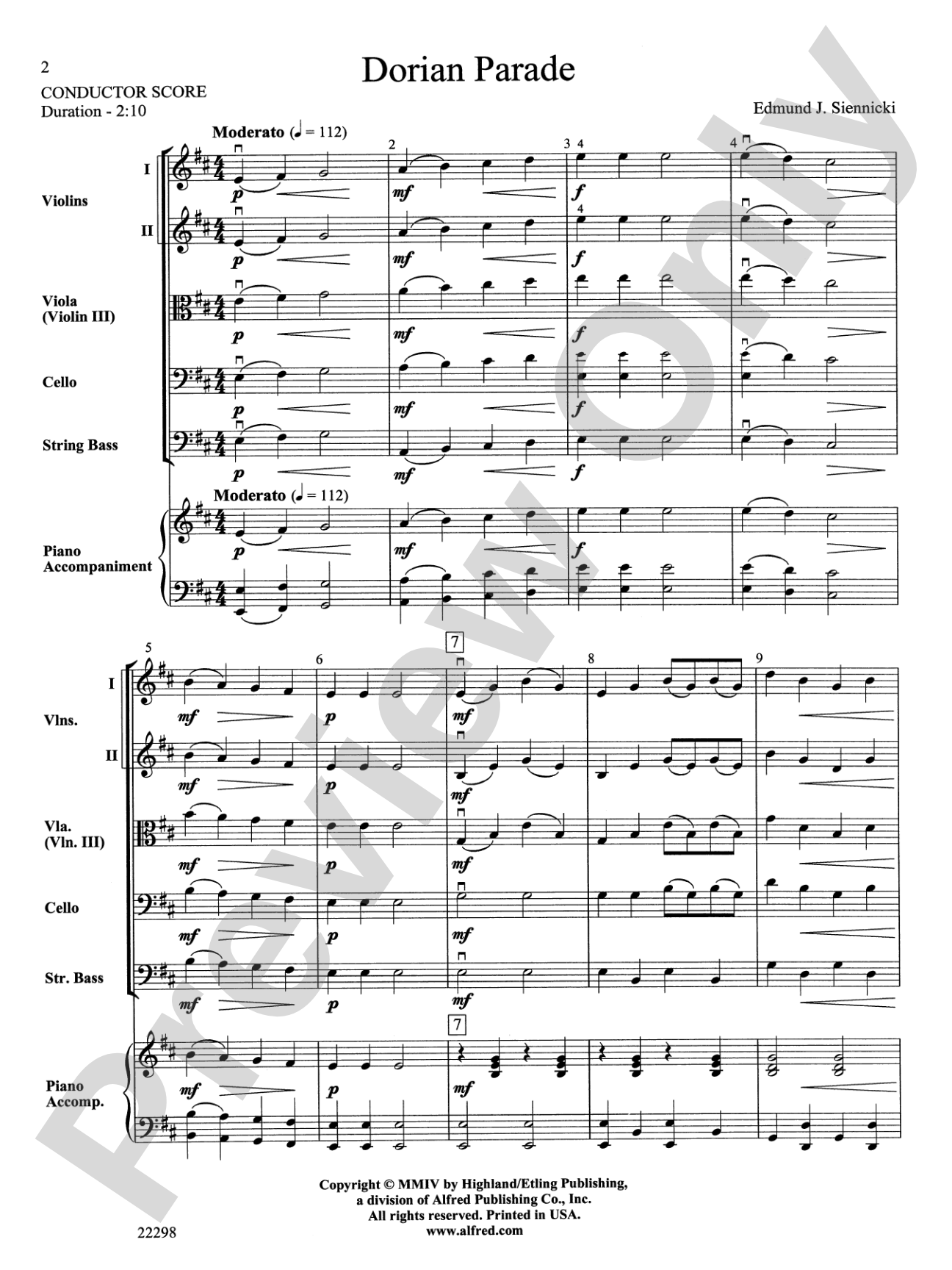
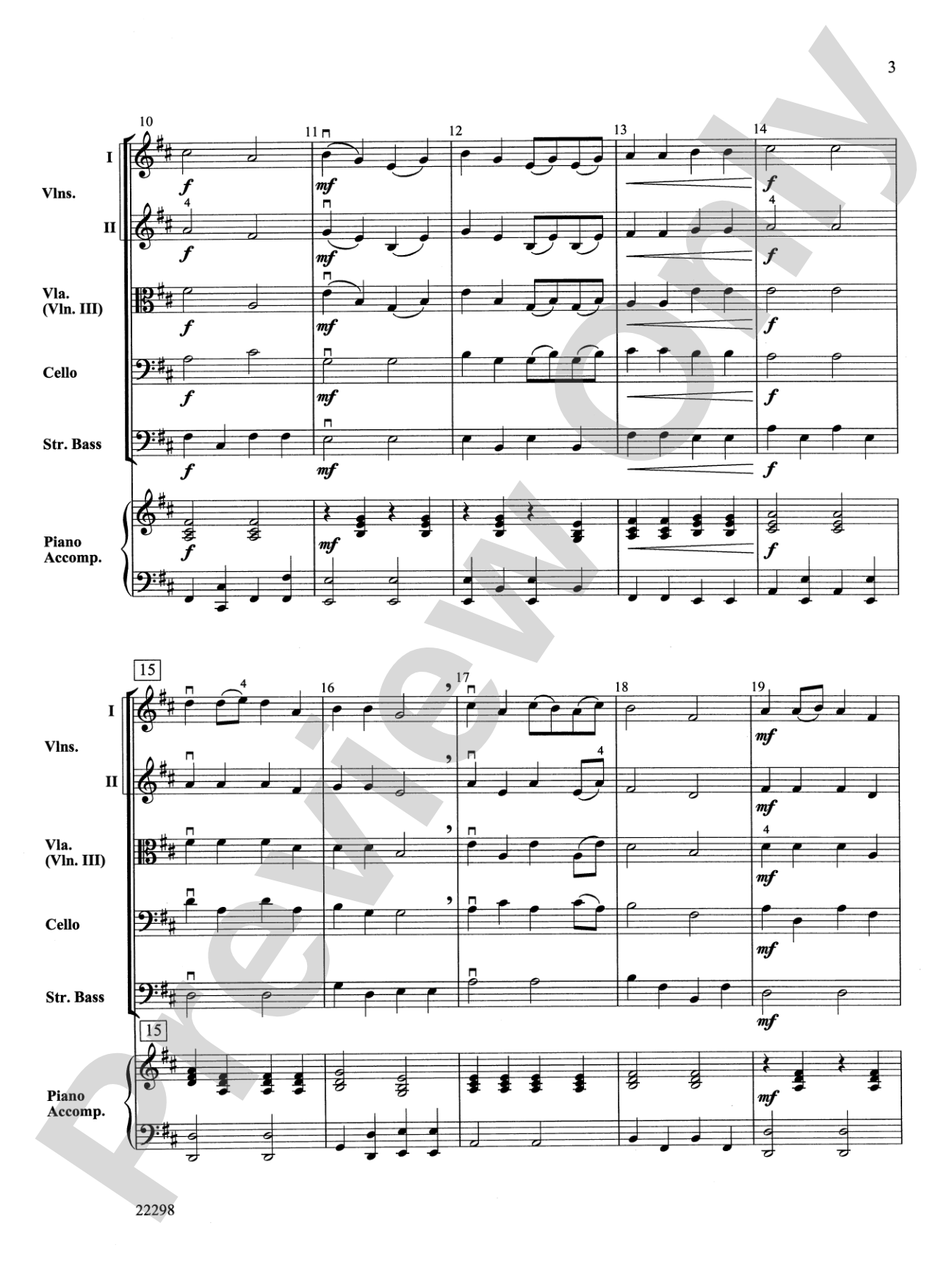
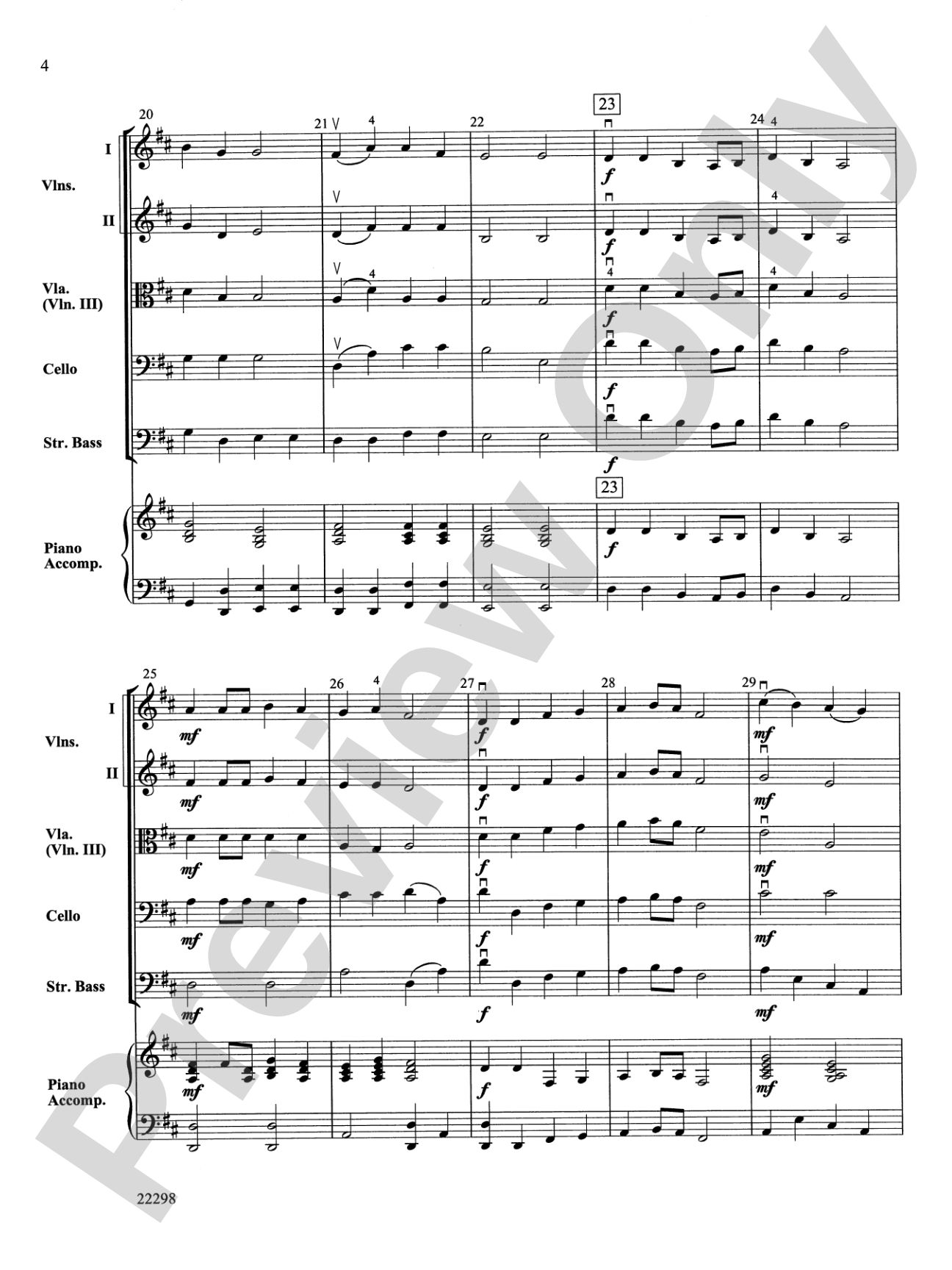
Although the key signature of two sharps suggests the key of D major, Dorian Parade begins with a six-measure introduction starting and ending on E-implying the Dorian mode. The piece spends a considerable amount of time between D major and E Dorian; coming to a rousing conclusion in the key of D major. Correlated to Strictly Strings, Book 1, page 34.


Don't just read it, hear it, play along with it, and watch your students grow with it. In MakeMusic Cloud, Dorian Parade: String Orchestra Conductor Score & Parts comes alive with professional accompaniment, adjustable tempo, and built-in practice tools that turn solo practice into real progress.
Open in the Player
Jump straight in and assign it today.
Start Your Free Trial
Open this title and explore the full library in minutes.
Sample Audio
1
Audio File
--:--
0:00
0:00
Sample Video
No sample videos found.
Additional Details
Series:
Highland/Etling Strictly Strings
Publisher:
Alfred Music
SKU:
00-PK-0000555
More about this title
About the Composer: Edmund J. Siennicki
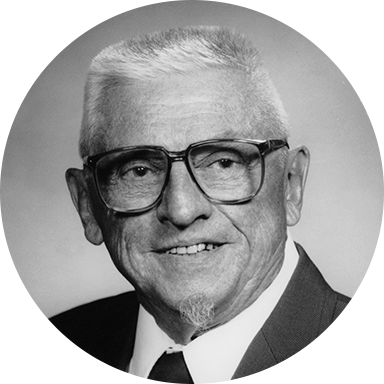
Edmund J. Siennicki grew up in Cleveland, Ohio, and at age 12 had a formative conversation with pianist Ignacy Jan Paderewski that shaped his musical direction. He earned his Bachelor's degree from Kent State University, where he composed the school's fight song (still performed at football games today), and later completed his MA at Teachers College, Columbia University. His composition studies included work with Herbert Elwell and Vincent Persichetti, and he also explored electronic music with Sergio Barroso.
Siennicki maintained a dual career as both composer and performer, playing bassoon and piano professionally while teaching in Cleveland's junior high schools and at Michigan and Kent State University. His catalog includes approximately 200 published compositions, many of which have won prizes in National School Orchestra composition contests. He served as composer in residence at the MacDowell Colony twice and has been honored with special awards from ASCAP for two decades. He continues to compose, conduct clinics, and visit schools.
Why we love this
Siennicki captures something essential about early ensemble playing: music that sounds accomplished without overwhelming young musicians. The interplay between D major and E Dorian creates genuine harmonic interest while remaining accessible, and the rousing D major conclusion gives students a satisfying arrival point that feels earned rather than handed to them.
What to expect
The music opens with an introspective E Dorian character, modal and slightly mysterious, before brightening into D major. There's a restless quality to the piece as it moves between these two tonal centers, creating gentle tension that resolves in the final section with warmth and confidence.
Who it's for
String orchestra directors working with Grade 1.5 ensembles who want to introduce modal thinking without abandoning traditional major/minor tonality. This piece works for ensembles that have solid fundamentals in first position and can manage straightforward shifting, as well as for festival or contest programming where accessible repertoire with real musical substance matters.
How to get the most out of it
- Conduct the six-measure introduction clearly in E, establishing the Dorian sonority before the harmonic shift to D major. This helps students hear the modal foundation, not simply a D major key signature.
- Balance the sections so the modal E Dorian passages don't lose definition when the ensemble moves between tonalities. Listen for clarity in the transition passages.
- Shape the conclusion with forward motion toward D major; this is where the piece announces itself, so build slightly into the final cadence.
- Use the Strictly Strings correlation as your rehearsal roadmap. If students have worked through Book 1 methodically, their bow control and intonation should handle the demands here.
How to use it
Program this early in a concert to establish a successful opening that builds student confidence. Its modest length and strong ending make it ideal for a festival or contest submission where you want to showcase early-level playing with musical integrity. The modal opening also pairs well on a concert with other contemporary or folk-inspired string repertoire at similar difficulty levels.
Skills your students will build
- Understanding modal harmony (E Dorian) within a tonal context
- Controlled harmonic shifts between E Dorian and D major
- Ensemble balance and blend in early position work
- Listening for and responding to tonal centers beyond major and minor
- Intonation accuracy in first position with multiple string crossings