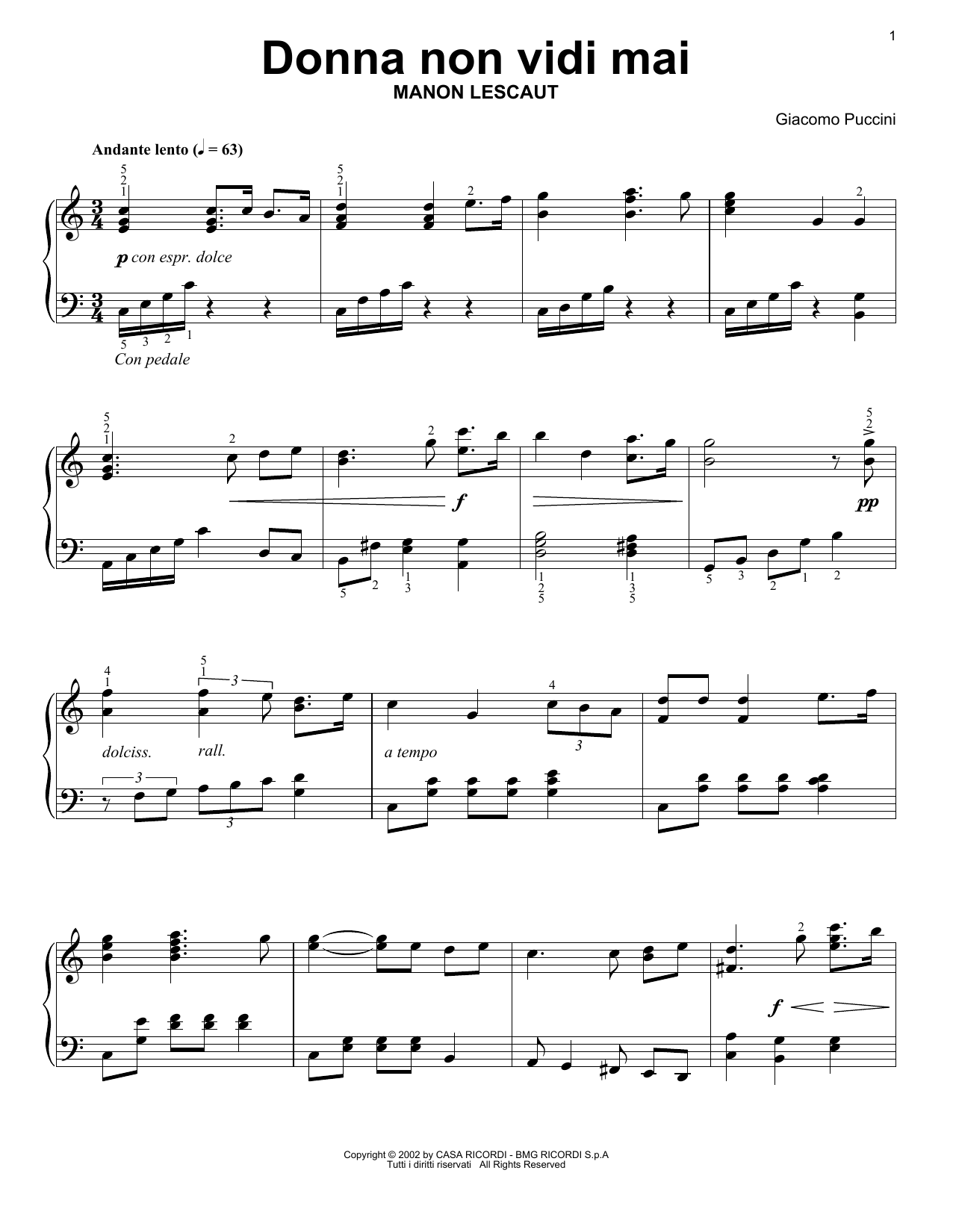
Donna Non Vidi Mai Sheet Music Preview

Donna Non Vidi Mai: Easy Piano Solo

By Giacomo Puccini

Item: 35-DS00478747

Digital Download
$4.99
Description

Discover MakeMusic Cloud: thousands of interactive titles your students can play along with today.

Sample Audio
No sample audio found.
Sample Video
Additional Details
Publisher: Hal Leonard
Page Count: 2
SKU: 35-DS00478747

More about this title

About the Composer: Giacomo Puccini

Giacomo Puccini (1858-1924) shaped operatic music through his gift for melody and orchestration. His works dominated late 19th and early 20th century stages, establishing him as a master of dramatic storytelling through music. For educators, Puccini's output represents an essential reference point: his operas contain some of the most singable, memorable lines in the classical canon, and his harmonic language bridges Romantic tradition with modern chromaticism.

Puccini's influence extends beyond the opera house into music education. His themes appear in countless arrangements and reductions, making his compositional approach accessible to developing musicians. Students who study his melodies gain insight into how lyrical writing captures emotional depth without unnecessary complexity, a lesson applicable across genres and skill levels.

Why we love this

Extracting a Puccini aria for solo piano lets students experience the emotional core of his writing without operatic demands. The melody carries immediate appeal, and at an easy level, the arrangement focuses attention on singing tone and phrase shape rather than technical hurdles. It's a chance to learn from one of history's most gifted melodists.

What to expect

Warmth and yearning define this moment from Puccini's operatic world. The melody unfolds with the kind of natural grace that feels effortless once mastered, inviting the player to inhabit its emotional space rather than merely execute notes. It captures the bittersweet lyricism for which Puccini became famous, condensed into two pages of intimacy.

Who it's for

Pianists solidifying their transition from method books to classical repertoire benefit from Puccini's singable melodies and straightforward harmonic support. Teachers seeking material that motivates intermediate students with recognition value and emotional payoff will find this accessible and rewarding to assign. It works equally well for adult learners rediscovering classical music through a familiar, beloved composer.

How to get the most out of it

  • Shape each phrase as if you were singing it yourself. Where would a vocalist breathe? Let those moments guide your phrasing and pedal changes.
  • Balance melody and accompaniment so the left hand never overwhelms the line. The harmony exists to support, not compete.
  • Listen to multiple opera recordings to absorb different interpretive approaches. You'll hear how singers approach rubato and dynamic shape, concepts that translate directly to solo piano.
  • Sustain a warm, consistent tone throughout. Avoid the trap of rushing through repeated notes or becoming mechanical in simple accompanying figures.

How to use it

This works beautifully as a bridge between early classical and Romantic repertoire in a student recital, offering a moment of mature musicality without excessive technical demands. Pair it with other opera arrangements or art songs to build a thematic concert section. It also serves as a rewarding study piece for students exploring how great operatic writing translates to the keyboard.

Skills your students will build

  • Singing tone production and phrase shaping on piano
  • Balance between melody and accompaniment
  • Lyrical expression within a simple harmonic framework
  • Interpretation of classical vocal lines transferred to instrumental writing

You May Also Like