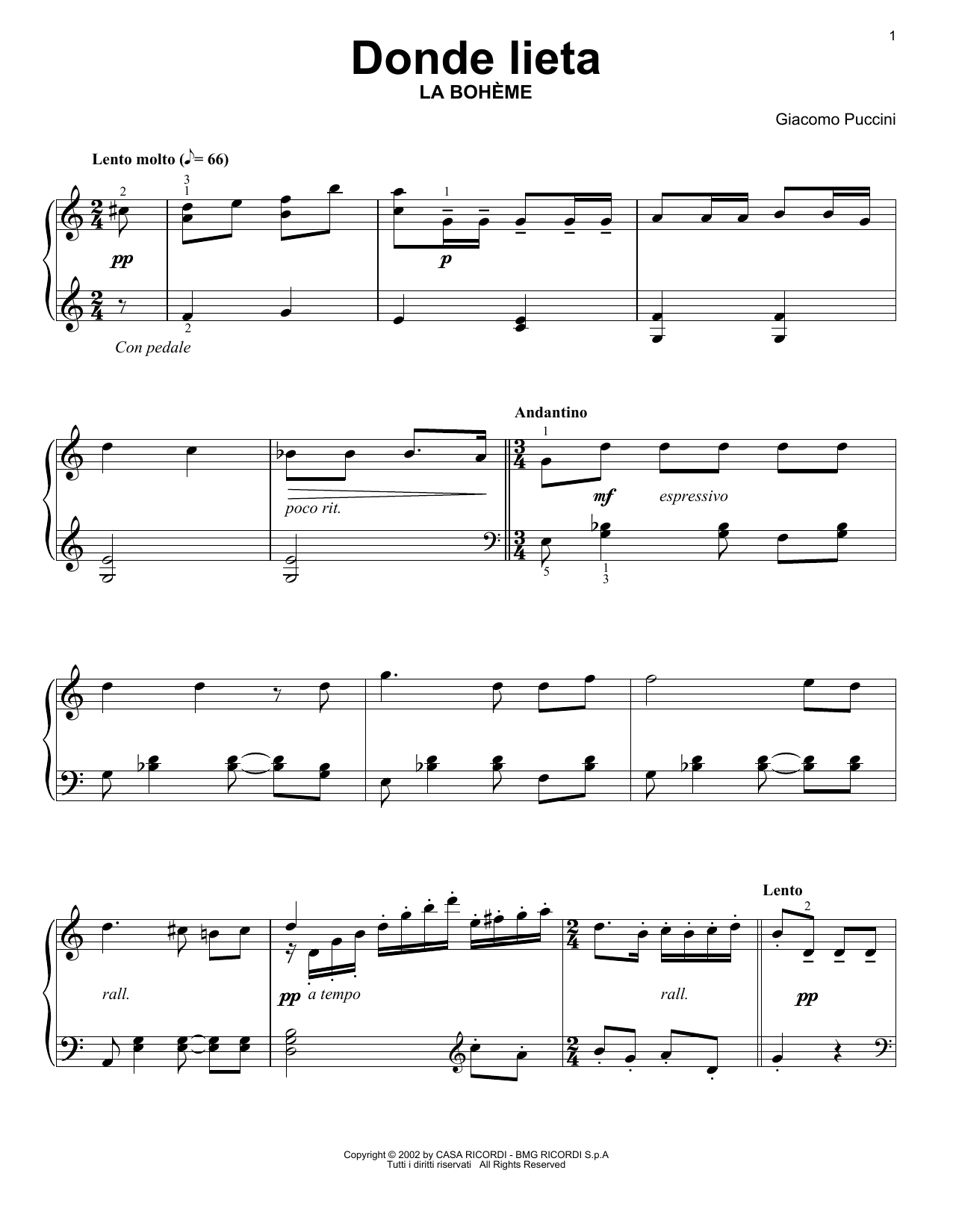
Giacomo Puccini (1858-1924) shaped operatic music for generations through his gift for memorable melody and emotional directness. His works, from La Bohème to Tosca to Turandot, demonstrate a composer who understood how to make audiences feel something immediately, without obscuring the music beneath complex harmony or dense orchestration. This clarity of expression makes his melodies enduring teaching tools.
Why we love this
Puccini's operatic music translates beautifully to the solo piano, and this arrangement captures the lyric warmth that made him one of the most performed composers in the repertoire. At an easy level, it opens his world to pianists who might otherwise encounter only simplified folk songs or generic classical arrangements. Students get to play genuine Puccini within their technical reach.
What to expect
Lyrical and unhurried, with the kind of sustained, singing quality that defines Italian opera. The piece unfolds with warmth and a gentle romanticism, inviting the performer to think like a vocalist interpreting a beautiful melody.
Who it's for
Early intermediate pianists ready for their first encounter with Puccini's melodic language, and teachers seeking accessible arrangements that retain the integrity of the original material. This works equally well as a solo piece or as part of a recital exploring operatic music away from the orchestra.
How to get the most out of it
Shape the melody with genuine legato; Puccini's lines are vocal by nature and want to sing across the keyboard rather than sound stilted or mechanical.
Pedal generously but listen closely to avoid muddying the harmony, particularly in passages where multiple harmonic layers are present.
Respect the dynamic nuance. Even at an easy level, this music relies on subtle shifts in volume to communicate its emotional arc rather than dramatic contrasts.
How to use it
Include this on a recital alongside other operatic transcriptions to introduce students to the breadth of vocal music, or pair it with art songs and romantic-era character pieces to explore how melody functions across genres. It also serves as a bridge piece for students preparing to study Puccini's complete operas in music history.
Skills your students will build
Singing tone production at the piano
Sustaining long melodic phrases without rhythmic interruption
Pedal control and listening
Interpreting dynamic shadings in a lyrical context
You May Also Like
Scan to Complete Your Purchase
Use your phone's camera to scan the code below
You'll log in on your phone and the order will be added to your account